Revisiting this conversation from May 2021 is a study in timing. German actor Oliver Masucci was on the cusp of a major international breakthrough. The global success of Netflix’s cerebral sci-fi puzzle box Dark had put him on the map but his subsequent work was about to cement him as one of Europe’s most fearless and physically committed performers. Looking at the raw transcripts from this era reveals an artist grappling with the weight of portraying real-life monsters while simultaneously navigating the machinery of Hollywood blockbuster filmmaking.
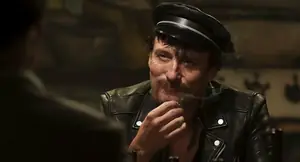
His role as the legendary and notoriously difficult filmmaker Rainer Werner Fassbinder in Oskar Roehler’s Enfant Terrible was a trial by fire. This wasn't just another biopic. It was a project mired in the kind of legal and financial chaos that Fassbinder himself would have likely relished. The film’s very existence was an act of defiance against a protective estate and a German film industry still unsure what to make of its most volatile icon.
Masucci confirms the treacherous development process. Roehler, a director he describes as a “pretty famous German party director” saw a kindred spirit in Fassbinder and had been trying to get the film made for years. The primary obstacle was the Rainer Werner Fassbinder Foundation run by his one-time partner who asserted they were married without proof. It created a legal minefield. “She always tried to intervene” Masucci says. “This was very problematic. So lots of the projects about Rainer Werner Fassbinder wouldn't happen.”
The workaround was ingenious. Roehler based the script on the memoirs of one of Fassbinder’s actors allowing the narrative to be a subjective recollection rather than a direct biographical account. “Then Oskar said, I want to do this movie about Rainer because then we have no legal problems because it's another person talking about him and her memories” Masucci explains. Even then every line was scrutinized by lawyers. It was guerrilla filmmaking born of necessity.
And then came the budget cuts. A production planned for 60 shooting days and 8.5 million euros was slashed to just 24 days and 2.7 million. The pressure was immense. The solution? Embrace the chaos. “What we did in the end was just shoot it like Rainer Werner Fassbinder would do” Masucci recalls. “We just shot it you know one scene after the other... we made this the subject of being not knowing if we would succeed.”
Masucci’s physical preparation was equally extreme. He had only one week of official prep but his primary task was a daunting bodily transformation. “I was gaining weight” he states plainly. “I was gaining 25 kilos which is about I think in pounds it's 55 or something like this. So I was very very fat and I could move not very well anymore. And I was short of breath.” The director even stocked his on-set refrigerator with heavy beer encouraging him to drink in the mornings to bloat his stomach for authenticity.
He offers a fascinating technical insight into playing drunk. “It's better for an actor it's always better to to play when you are on a little booze and to play sober than if you are sober and you have to play like you're drunken” Masucci notes. “It's easier to play sober when you're drunken because that's the thing which is I think more realistic.” It’s a candid admission about a process that pushed him to the edge. The shoot was a ride. He felt at times like he might have a heart attack.
I think we need people like Rainer Werner Fassbinder who are not politically correct. Because the time will show if we can do political correct artworks... I think it's not possible somehow.
But beyond the physical torment Masucci found a deep well of empathy for the monstrous artist. He didn’t just mimic Fassbinder; he synthesized him from the countless tyrannical theatre directors he had known over a 30-year stage career creating a “super artist.” The key to the character wasn’t the cruelty but the tragedy beneath it. “He was seeking so much for love and didn't find it and this was really tragic” Masucci reflects. “He never protected himself. He was an open target.” This vulnerability is the core of his stunning performance.
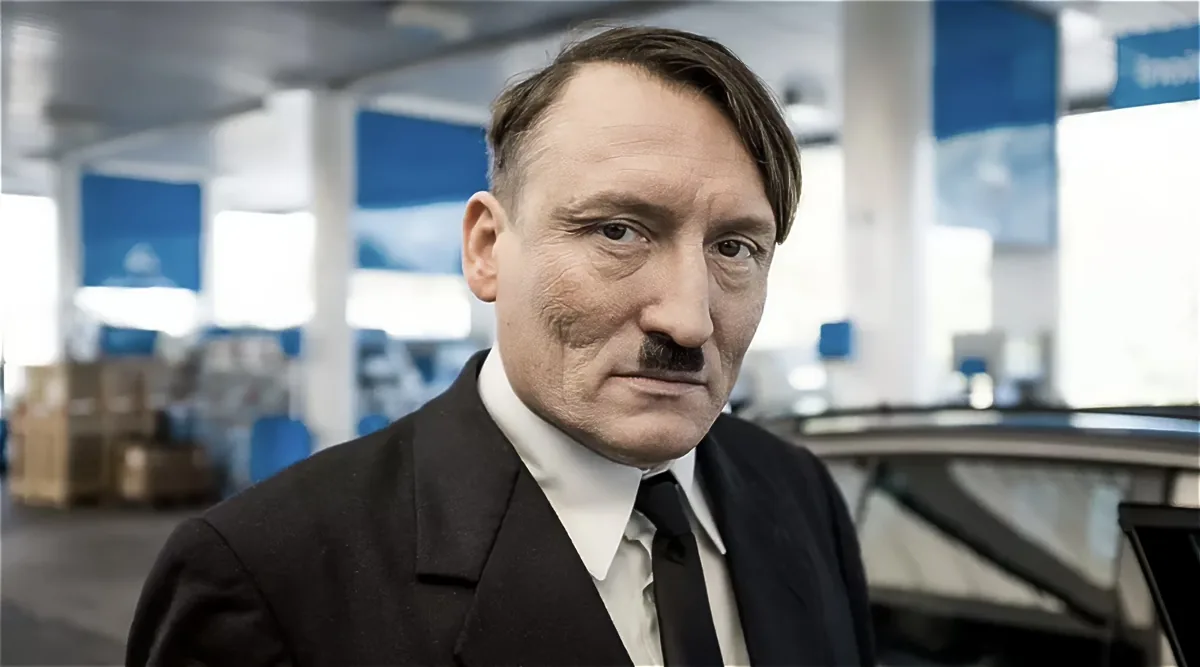
The conversation naturally pivots to his other controversial role: Adolf Hitler in the 2015 satirical film Look Who’s Back. The film’s concept was audacious. Masucci in full Hitler prosthetics would travel Germany interacting with real people in a style famously employed by Sacha Baron Cohen. The director David Wnendt specifically needed an actor who was highly skilled but not famous enough to be recognized on the street. Masucci was perfect.
The casting process itself sounds like a psychological experiment involving a five-hour improvisation with two psychologists who were told they were treating a schizophrenic man who believed he was Hitler. It was a bizarre and intense test of his abilities. But the real test was stepping onto the streets. “That was pretty awkward for a German. I was embarrassed all the time at the beginning” he admits. “To go as Hitler on the streets and interact with people was really I had to learn this. I had to cross a border.”
What he discovered was deeply unsettling. Far from being rejected people were drawn to the figure. They confided in him expressing racist and xenophobic views they might otherwise hide. “This somehow opened something in the people and then all that shit came on” he says. The film became a horrifyingly effective expose of latent right-wing sentiment in modern Germany. The absurdity peaked when he crashed a real neo-Nazi rally and inadvertently derailed it because neither the far-right nor the counter-protesting Antifa knew what to make of his presence.
Of course there was danger. He recalls being physically assaulted but notes with a dark sense of humour that the violence always came from an unexpected source. “Funny, sadly, it was only the women. It was the women who beat me up.” Bodyguards were present but trouble always seemed to find him during their lunch breaks.
Then came Dark. The show that changed everything. Masucci notes the irony that the series was initially criticized in Germany for looking too “American” while it became a word-of-mouth phenomenon everywhere else. He was oblivious to his newfound global fame until a trip to New York. “I was on 5th Avenue and people asked me to do a photo... and I asked them, but why do you want a photo with me? And this is the guy from Dark?” It was a surreal moment of realization.
This international recognition opened the door to Hollywood. He discusses working on the third season of The Girlfriend Experience shooting Fantastic Beasts: The Secrets of Dumbledore where he replaced Johnny Depp and starred alongside Mads Mikkelsen (“in Germany they always call me the German Mads Mikkelsen”) and the Netflix vampire film Day Shift with Jamie Foxx.
His story about securing a US work visa is a perfect snapshot of his career trajectory. Facing a year-long wait for an embassy appointment he needed an emergency visa. He arrived armed with recommendation letters from two Oscar-winning directors Florian Henckel von Donnersmarck and Caroline Link. But it wasn't the accolades that sealed the deal. The embassy official looked up from the letters and said “I googled you and you are the guy from Dark. You are, right? I saw this show two times.” Another officer yelled from across the room that he’d seen it three times. The visa was granted on the spot.
Masucci’s reflections on his craft reveal a clear artistic philosophy. He champions the necessity of artists like Fassbinder who defy political correctness arguing that sanitizing art for modern sensibilities robs it of its power. “A human being is never politically correct. A human being says something and does the opposite. There is always this abyss in ourselves” he insists. “And if we are only politically correct we don't see the others anymore. That makes us not human anymore.”
It’s this belief in the messy truth of humanity that connects the dots between a sadistic auteur a resurrected dictator and the time-traveling figures of his television work. Oliver Masucci doesn’t just play characters; he inhabits the abyss that lives inside them and by extension inside all of us. He seeks out the roles that demand thought from both the actor and the audience. And that is what makes him so vital.
519 Magazine Archive: We are thrilled to officially unearth the 519 Magazine Digital Vault. This isn't just a re-post; it's a high-fidelity restoration of a pivotal era in music journalism. By pairing original print dates with modern retrospectives, we’re bridging the gap between historical rock-and-roll grit and the lightning-fast performance of today’s web. These stories—once locked in physical print and lost URLs—are now back, fully searchable, and optimized for a new generation of fans.
We are thrilled to officially unearth the 519 Magazine Digital Vault. This isn't just a re-post; it's a high-fidelity restoration of a pivotal era in music journalism. By pairing original print dates with modern retrospectives, we're bridging the gap between historical rock-and-roll grit and the lightning-fast performance of today's web. These stories—once locked in physical print and lost URLs—are now back, fully searchable, and optimized for a new generation of fans.