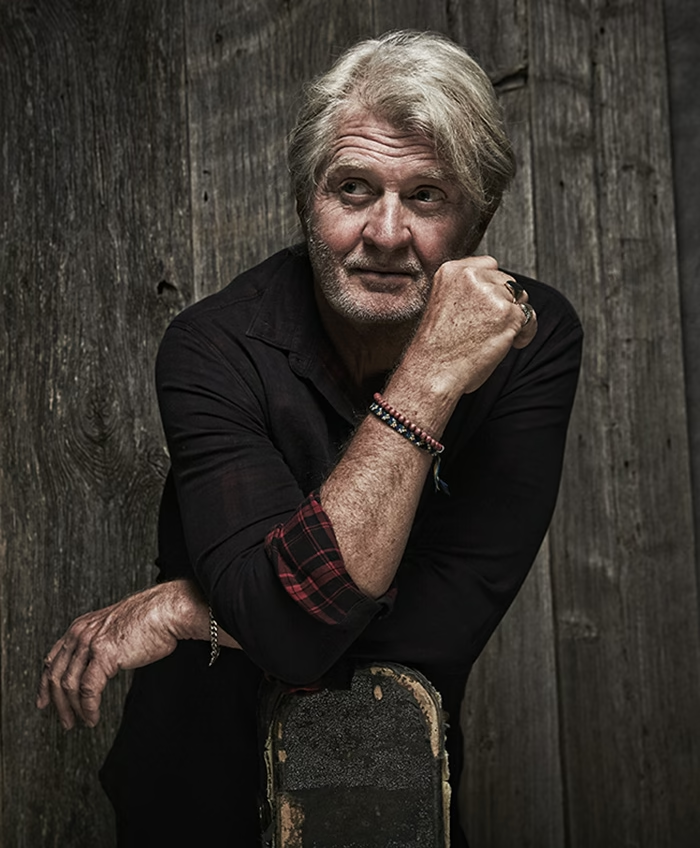

The Colosseum at Caesars Windsor has a specific kind of gravity, a weight that only comes when a genuine architect of the Canadian songbook prepares to take the stage on Dec. 5. Tom Cochrane is not just another name on a marquee; he is the connective tissue between the gritty coffee houses of the 1970s and the polished FM radio gold that defined a nation’s adolescence. With eight Juno Awards and a permanent residence in the Canadian Music Hall of Fame, Cochrane carries the kind of authority that does not need to shout to be heard.
But the industry moves fast, and it is easy to forget that the foundation of this 40-year career was laid with the 1979 debut of *Don’t Fight It*. We sat down with Cochrane to dissect the anatomy of that era, looking for the friction that created the spark. When we pointed out that his debut hit the shelves exactly four decades ago this week, the weight of the timeline seemed to hit him.
Cochrane leans back, reflecting on the milestone. "It was a Halloween release 40 years ago. Wow, that’s amazing. I feel like it was just yesterday in some ways, and then in some ways, it feels like another lifetime ago, you know?" he says.
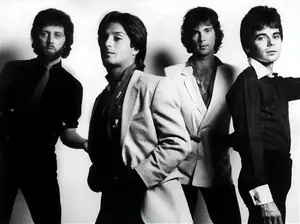
And that is the thing about Cochrane. He does not view his history as a museum piece. He views it as a series of lessons learned in the trenches. The late 70s were a volatile time for Canadian rock, a period where bands were trying to shed the "CanCon" stigma and prove they could compete with the heavy hitters in London and Los Angeles. For Red Rider, that meant surviving the birth pains of a first record.
"It was our first record, and so it was, there’s always an element of trial and error, and you have to sort through all the songs. Red Rider, we still were in that phase where we were trying to find our identity, obviously. It was the first record you know, and I’d been on the coffee house circuit and I’d also been in a couple of bands for six, seven, eight years before that. And so it was really, it was a lot of work. I guess we were learning on the job really because we were just learning how to make records and how to record and the kind of discipline it required," Cochrane explains.
The transition from a solo folkie to the frontman of a precision-engineered rock unit was not a clean break. It was a messy, loud evolution. You can hear that tension in the early tracks—the struggle to balance acoustic sensibilities with the burgeoning power of the electric era.
Cochrane describes the process with a bluntness that avoids any industry polish. "There are moments of exhilaration and there are moments of tedium. There’s moments of huge disappointment where the songs don’t quite match what you’d hear in your head. There’s that struggle between the writers and the band, and trying to find that identity that meshes with everybody and how everybody plays, there’s the awkwardness," he says.
But the real hurdle was the technical divide. In 1979, the studio was a laboratory, not a laptop. You could not fix a flat vocal or a dragging beat with a plugin. You had to play your way out of the problem.
"Because it’s a whole different dynamic, you’ve got to remember that. Back then, between being in the studio and being live and performing the songs live. So it was a bit of trial by error, and some songs made the cut and some songs got thrown out. There’s obviously that tug-of-war back then, because we were a band, and Peter Boynton was writing some songs, I was writing some songs, Kenny had a couple. And then of course, everybody wants to protect their babies, right?" Cochrane recalls.
The ego is a powerful thing in a young band. Everyone wants their name in the credits, and everyone thinks their bridge is the one that will save the song. Cochrane admits the internal politics were just as taxing as the external pressure from the suits.
"Everybody wants to protect their tunes. So there’s that struggle to find out which songs are going to make the cut and which won’t, and then there’s pressure from record company. And at that point, we didn’t have management and shortly after the record, just before it was released, we had management and they were based in Vancouver. And so we started touring, and I remember we started touring April Wine and it was an incredible tour with them," he says.
But before the bright lights of the April Wine tour, there was the grit of the Canadian highway. If you want to understand Cochrane, you have to understand the van. This was not a luxury tour bus; it was a utilitarian box on wheels, and it was the only way to get the music to the people.
"But before we did that, we drove, Robbie Baker and I, the drummer at the time, we drew the short end of the straw and we had to drive our old step van all the way out west. And at that point, we didn’t even have credit cards, and so we just had, we had a little kind of cache of money to get out there and we were going to park ourselves out there and start working clubs out there," Cochrane says.
There is a specific kind of romance in that struggle, though Cochrane likely did not see it that way at 30 below zero. He recalls a moment outside Winnipeg that feels like a scene from a movie, the exact second when the labour turned into a career.
"Resound was booking them I guess, the agency, and so he took us on management. And I remember driving south of Winnipeg and we tuned into CKY, and I remember hearing White Hot for the first time on the radio. And it was about 30 below zero, because it was in January, it was incredible. And then that song went on to the top 10 on the Canadian charts. And of course, number 45, I think it got up on Billboard charts in the States," he says.
That moment changed the stakes. Suddenly, Red Rider was not just another club band from Toronto; they were a commercial entity with a Billboard presence.
"So it was, we were off to the races. And that song helped the record go gold in Canada, and gave us the opportunity to make another record because you’re always out of a job once you make an album. You hope there’s enough songs on there that capture peoples’ imaginations that you’re allowed the privilege of carrying on with your work," Cochrane notes.
The technical pedigree of those early recordings is often overlooked. They started at Eastern Sound in Yorkville, a space with a history that predated the sleek corporate studios of the 80s. But the real magic happened when they headed south to Los Angeles, landing at the legendary Sunset Sound.
"We recorded in Toronto at Eastern Sound and it had quite a history to it, it’s no longer there in Yorkville. And then we ended up recording a lot of stuff, Red Hot included, recording the bad tracks down in the infamous Sunset Sound where so many great records that we loved were made: the Beach Boys and the band Little Feet. And as a matter of fact, Billy Payne actually played keyboards on the intro to White Hot, and he played in the great Little Feet. He loved Little Feet," Cochrane says.
Sunset Sound was not just a studio; it was a haunted house of rock history. Cochrane recounts the physical reality of the space, a far cry from the sanitized environments modern artists prefer.
I feel very blessed to be able to do this and make a living doing what I love. ...I sort of came out of that whole folk scene where songs were relevant, and I remember listening to Bob Dylan, which really changed my life in a lot of ways, and I thought, 'Wow, songwriting can be a lot more important and more relevant than just writing simple pop songs, boy/girl pop songs.'
"But also, Jim Morrison and The Doors recorded there. Pet Sounds was done there. And it was an old converted auto shop that the studio was built in, but it had a linoleum floors and fluorescent lighting, and there was a puke mark on the couch in the control room that was there, they said, 'Don’t sit there. That’s where Jim Morrison threw up.' Very protective of that historical site," Cochrane laughs.
The juxtaposition of high art and low-brow reality is where Cochrane thrives. He was in the same room where *Pet Sounds* was birthed, yet he was staring at a stain from a dead rock star. It kept the band grounded.
"And it was, so it was a magic experience being down in Los Angeles and doing a good chunk of the record there, and then also having the experience of doing it in Canada. And it was a real learning experience for us and we were learning on the job. White Hot in particular, and of course Avenue A’s a concert staple, we’ll be playing that one in Windsor and White Hot of course," he says.
The longevity of these songs is the ultimate litmus test. In an era of disposable digital singles, Cochrane’s catalogue remains stubbornly relevant. He attributes this to a conscious decision to avoid the "boy/girl" pop tropes of the time.
"Well I feel very blessed to be able to do this and make a living doing what I love. And so, you know April, I always tried to write songs that were timeless. And you don’t always achieve that right? Certain songs kind of fall by the wayside, and some songs that you think should get more attention than they do, don’t," Cochrane admits.
But the reality is that many of his peers have a complicated relationship with their past. They view their early hits as embarrassing relics of a different era. Cochrane does not share that cynicism.
"But for the most part, I feel very blessed. I feel very lucky, because I talk to some of my contemporaries and they’re embarrassed to play their old stuff. They feel it was a place and a time, and they’re pop songs that suited that time. But I sort of came out of that whole folk scene where songs were relevant, and I remember listening to Bob Dylan, which really changed my life in a lot of ways, and I thought, 'Wow, songwriting can be a lot more important and more relevant than just writing simple pop songs, boy/girl pop songs,'" he says.
That Dylan-esque influence is the secret sauce. It allowed him to write "White Hot," a song that is ostensibly a radio hit but is actually a deep dive into the life of a 19th-century French poet.
"And that’s when I kind of knew I could possibly make a hunch I could possibly make a living at it. I was lucky. I wrote White Hot and Avenue A, and those songs are still staples in our shows, we play them most of the time. Every once in a while, we’ll pull out one of the others," Cochrane says.
The depth of his writing often goes over the heads of the casual listener, but for those who dig deeper, the rewards are significant. He looks at "Lunatic Fringe" and "White Hot" as pieces of a larger puzzle.
"And then of course, we moved on. Lunatic Fringe was timeless. It’s as relevant today as it was back then. And so every record, we were lucky enough to have one or two or three songs that really, really stood the test of time. And a bunch of songs that stood the test of time that I still enjoy playing today that feel just as relevant today as they did back then," he says.
The storytelling aspect of his work is purely Canadian. It is a tradition of narrative that refuses to be simplified for an American market.
"So I really did try to setup to do that. I tried to setup to write songs that I could be proud of playing five or 10 years down the line, and not just at the time that I wrote them. And I think a lot of that comes out of that folk culture, that Canadian folk culture of writing stories and telling stories, and telling stories that are relevant. That really was a big part of my growth and my background," Cochrane explains.
When we push him on the meaning of "White Hot" today, he does not offer a platitude. He offers a lecture on Arthur Rimbaud, the poet who traded his pen for a gun.
"Well it means the same as it did back then. The song was about Arthur Rimbaud, I could relate to the song, who was a poet who had tremendous influence on everybody from Jim Morrison, we talked about, to Patty Smith to Bob Dylan. And the more I studied his life, I was fascinated by this man who was the Enfant Terrible of Europe as a poet, and just wrote basically three books of poetry and then gave it all up and traded it all in to run guns and barter in all kinds of things in Africa," Cochrane says.
This is the "Information Gain" you do not get from a standard press release. Cochrane isn't just a singer; he is a student of the "politics of the soul."
"As a matter of fact, he actually explored a tract of Africa, very much like Joseph Conrad’s a Heart of Darkness. He became an explorer, but he traded all the poetry in and that life to be a mercenary and trading all kinds of things. Some of them were really nefarious. And so I found it a real interesting study on human nature. Why somebody would turn to the dark side, why somebody would turn away from something that was as powerful as their poetry and their art and how in a way, life circumstances can change you. And that’s kind of what White Hot explores, there’s a desperation in that song, and a sense of adventure as well," he says.
Musically, Red Rider was always more sophisticated than they were given credit for. The use of the pedal steel in "Lunatic Fringe" was a stroke of genius that bridged the gap between Pink Floyd’s psychedelia and the rootsy grit of the Flying Burrito Brothers.
"So from that point of view, I still find it unique. I think some of the songs that I wrote and that we performed as a band, there’s no other songs quite like them, and White Hot was one of them. Lunatic Fringe was another, and of course that whole first side of the Neruda album. I’m very, very proud of that record," Cochrane says.
The energy of the live show is still the priority. Whether it is a full band assault or an intimate acoustic set, the song must hold up.
"But, I’ve always been interested in human nature and the dynamic of human nature. Not direct politics so much, but the politics of the soul. And White Hot explores a lot of that, and so does Lunatic Fringe obviously in a different way. But the song is exciting to play. I tell you, Bill and I do an incredible version of it acoustically. So a good song, you should be able to play acoustically or on a piano or on a kazoo. You should be able to hum it. And that song is that way, it’s exciting, there’s a lot of energy to it and there’s a lot of desperation in that song," he says.
The inclusion of Kenny Greer was the band's secret weapon. His ability to manipulate the pedal steel into a haunting, rock-adjacent texture gave Red Rider a sound that no one else could replicate.
"When I first went out and saw Red Rider downstairs at the famous Alma Combo, I was immediately fascinated with the band. They were so precise. Their musicianship was incredibly. They were very proficient at their instruments. And Kenny, Kenny stood out in particular. And you always want, well you sometimes want what you don’t have. I was coming from the whole folk scene, so I was wet behind the ears in terms of even tuning my instrument and being as precise as these guys," Cochrane admits.
Greer’s influence cannot be overstated. He brought a colour to the band that felt both ancient and futuristic.
"And so I was very, very attracted to the band because of that. And they did wonderful versions of songs like Jessica and that, but they also did these versions of songs and Kenny would add this very unique color on the steel guitar, and I was always intrigued with that. I loved Pink Floyd at the time, so that would’ve been 1979, The Wall. And David Gilmore would occasionally use the steel guitar. He’s the only one that I really know can really point out, use the steel guitar similarly to where we took it after that," Cochrane notes.
The band looked to the fringes of rock and country to find their sonic identity, citing Sneaky Pete Kleinow and Procol Harum as touchstones.
"But also bands like, we loved the Flying Burrito Brothers and Sneaky Pete’s steel playing. And he had come out of that same school where we were all influenced by a lot of the real rootsy country rock bands and folk bands. So Sneaky Pete, some of those bands. Procol also had a steel guitar player. So that’s where some of that came out of and then we just took it farther into the rock genre, and it just became a really unique color and a unique flavor to the band. And Kenny played some... The soul on Lunatic Fringe is very, very powerful and very haunting, so it adds a wonderful character," he says.
The evolution of the band’s name—from Red Rider to Tom Cochrane & Red Rider—was not just a marketing whim. it was a response to the industry’s need for a focal point. Cochrane compares his trajectory to that of Tom Petty, an artist who navigated the line between a band identity and a solo brand.
"Well, it’s funny because some of my career parallels Tom Petty in that around the same time, he released Full Moon Fever and it wasn’t with the Heartbreakers, but he utilized Mike Campbell. I started, became more and more educated and more adept in the studio. I started having my own setups at home, and that sort of all developed around the mid-80s. And then that got very sophisticated with pro tools later, but I used a thing called Digital Performer, so I was doing a lot of stuff at home. I was working with a thing called the E3, which was an emulator, and it was very much like the Fair Light, so I was doing a lot of sampling and I was creating all these song scapes on my own," Cochrane says.
But the most important piece of trivia Cochrane wants to settle is Kenny Greer’s contribution to the broader Canadian music scene. It is a point of pride for him that his collaborator was there at the start of another legendary career.
"And Kenny and I kind of just drifted apart a little bit. He started doing more production. A lot of people aren’t aware of this, and please mention this, I think it’s really important because nobody gives him credit for this. But Kenny produced the very first Tragically Hip EP. So he sure did, and you better mention that because he should be proud of that," he insists.
The transition to the "Tom Cochrane & Red Rider" moniker was also a survival tactic. After the success of their early records, the band hit a wall with *Breaking Curfew*, leading to a period of financial and professional stress that would have broken a lesser artist.
"But during that period, this was on the Victory Day record. So we’re doing pre-production for the Victory Day record which was the second Tom Cochrane and Red Rider record. Boy was the first, which we did in Wales, which was a wonderful experience over there. But Kenny, I think the reason it became Tom Cochrane and Red Rider, we were always criticized. Because again, getting back to the songs, the songs told stories and people were saying, 'These are real songs that have a personality to them, an individual personality because of the lyrics.' And people were always saying, 'People don’t know what to make of Red Rider, because there’s no one person they can relate it to,'" Cochrane says.
The business side of the music was, as it often is, brutal. Despite the hits and the gold records, the musicians were living on a pittance.
"So we had a very painful breakup with our management and Capitol Records, because after three wonderful records that were successful, Breaking Curfew didn’t do as well as expected and there was a lot of stress there. We were actually doing concerts and doing really well at those concerts, but management still had us on a $200, $300 a week salary. It wasn’t pretty, and that was back in ‘84/‘85," Cochrane reveals.
But that is the grit that makes the music work. When Cochrane takes the stage at Caesars Windsor on Dec. 5, he isn't just playing the hits. He is playing the sound of survival, the sound of a van driving through a Winnipeg winter, and the sound of a poet who traded everything for the dark side. It is a show that demands your attention, not because of the nostalgia, but because the songs are still, after 40 years, white hot.