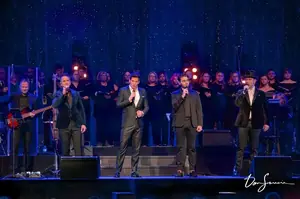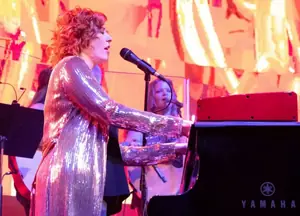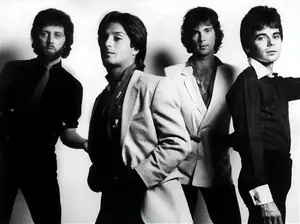

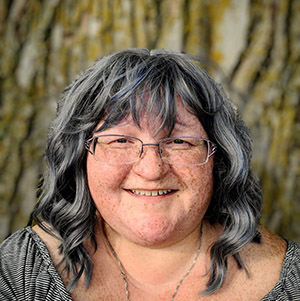
There is a specific kind of magic that settles over Southwestern Ontario when the humidity finally drops and the frost begins to bite at the windshields. It is the season where the Canadian songbook feels less like a collection of hits and more like a thermal blanket. At the centre of this seasonal shift stands Quartette—a vocal powerhouse comprised of Cindy Church, Caitlin Hanford, Gwen Swick and Sylvia Tyson. These are not just performers; they are the architects of a particular brand of sophisticated folk-country that has defined the national sound for decades.
Watching them prepare for their upcoming run—hitting Hamilton on Dec. 5, Waterloo on Dec. 7 and London on Dec. 9—you realize this is not a cynical holiday cash grab. It is a clinic in vocal arrangement. I caught up with Cindy Church to discuss the endurance of the group, the mechanics of harmony and why the road still calls after 27 years.
We began by discussing the sheer longevity of the project. In an industry that treats female artists like they have an expiry date, Quartette has ignored the clock entirely. I asked if this was always the plan or just a happy accident among friends.
"Well, in my opinion, I think a lot of times these projects that end up taking on a life of their own and lasting for a long time generally, you just go into it as a one off," Church says. "That was the case with both Lunch at Allan’s and Quartette. I mean Quartette first got together in 1993 and it was, at Harbourfront in Toronto and there was a big music women weekend that Derek Andrews was putting on. And so he wanted some kind of a country representation."
The history here is vital. You cannot talk about Quartette without acknowledging the late Colleen Peterson, a titan of the scene who was part of the original lineup before her passing in 1996. The DNA of the group was formed in that specific Toronto folk crucible of the early 90s.
Church continues the origin story: "So he got in touch with Colleen Peterson who was an original member who passed away in ‘96, and to put something together, and she got in touch with Sylvia and then Caitlin. Caitlin and I have been pen pals for a long time and when Caitlin texted me, I was living in Alberta at the time."
It is hard to imagine a time before instant file sharing, but Quartette was built on the back of the postal service and analog tech. There is a grit to that kind of preparation that modern acts often lack.
"So we said yes, we would do this," Church says. "We thought, well, we are all harmony singers, we love singing harmony, why just have it be a writer in the round thing. Why don’t we send each other cassette tapes at that time with the songs that we want to do, learn all the harmony parts, put a band behind us and make it be something big. And we did."
The result was an immediate explosion of interest that caught the industry off guard. The CBC, then the ultimate kingmaker for Canadian folk, came calling almost instantly.
"And the next thing we know, we were being asked when there’s going to be a CD," Church says. "We were on CBC, on Peter Gzowski and it just went from there. But yes, it was always going to be just getting together for that. And that was it. So here we are, 26, going on 27 years later."
But staying together for nearly three decades requires more than just a good review from Gzowski. It requires a level of interpersonal stability that most bands never achieve. The ego is usually the first thing to break a supergroup, but Church suggests they have bypassed that trap.
"For one thing it becomes as much about the friendships," she says. "I mean, we are a family and it’s a very functional family. And so it’s as much about that as just loving the music that we do. And so it really is a love of each other and a love of what we do that keeps it going. And we’ll continue to do so until whatever."
There is a weariness that comes with the Canadian winter tour circuit. The 401 is a grey, salt-stained slog in December. Church does not sugarcoat the reality of the lifestyle.
"I am just going to say the traveling gets a bit tiresome, but the being together and singing together makes it all worthwhile," she says.
The technical allure of Quartette is the blend. When you hear them live, the four voices occupy distinct frequencies that somehow merge into a single, shimmering texture. I asked Church about the shift from being a solo artist to being one-fourth of a vocal engine.
I think a lot of times these projects that end up taking on a life of their own and lasting for a long time, you just go into it as a one off. That was the case with both Lunch at Allan’s and Quartette. ...it was always going to be just getting together for that. And that was it. So here we are, 26, going on 27 years later.
"Well, you get to sing harmony," Church says. "And I know speaking for myself, I’d rather sing harmony than anything else here. I so enjoy it, I’ve enjoyed it since I was a kid. And so I think for all of us, it’s just getting to do all that blending of voices. We all love singing in harmony. So I mean when you’re doing a solo show, you might have a musician with you who might sing on a few songs, but just a lot of times it’s just you. And so I think we all really love working collaboratively and so, I guess that’s the big difference."
There is also a practical, almost blue-collar benefit to the group dynamic. In the middle of a grueling tour, having backup is a literal lifesaver.
"And if you’re sick you get a little help," she adds with a sharp laugh.
Church seems to be a magnet for these types of high-level collaborations. Beyond Quartette, she is a member of Lunch at Allen’s alongside Murray McLauchlan, Ian Thomas and Marc Jordan. It is an embarrassment of riches, and I had to ask why she keeps ending up in these "supergroups."
"They just happen," Church says. "Lunch at Allen’s, was the same thing. It was just getting together for a one off. Murray McLauchlan was offered a tour of Northern Ontario, North of Lake Superior to do, again, a songwriter in the round kind of a thing. And his agency was doing a lot of that stuff at the time. And he said, well, who do I have to use, they said what? They said whoever you want. And he and I had known Murray for a very long time as well, but I think, he talked to Ian and Mark about it, and said, it would be nice to have a girl in the group."
The chemistry in Lunch at Allen’s mirrors the ease of Quartette. It is about the hang, the dinner before the show and the shared history of the Canadian road.
"So they asked me to be a part of it and again I was just going to be for that one tour and again it took on a life of its own for all pretty much the same reasons that I talked about with Quartette," Church says. "We’re just another functional family and playing together and hanging out together is just magic."
She leans into the sentimentality of it, though she is self-aware enough to know how it sounds to an outsider.
"And as Ian often says, we get together for dinner beforehand, we are just as much fun and it’s just as important as our shows for us," Church says. "It really is about us as people and as well as the music. I know it sounds Pollyanna-ish but it’s true."
Turning the focus to the upcoming holiday dates, the Quartette Christmas show is a curated experience. It avoids the saccharine traps of most holiday concerts by leaning into diverse musicality.
"I love our Christmas shows," Church says. "They are a combination of original material and a few well known pieces, because in Quartette we do a variety of styles. So there’s some that are a little jazzy sounding, there’s some little country sounding, some more classical sounding. We do few acappella pieces. We have a three piece band who are just fantastic. And so it’s a combination of styles all based around blending of four voices in harmonies. And just lovely pieces of music. We really love doing our Christmas show."
There is a psychological benefit to these shows, too. In a world that feels increasingly fractured, a 7:30 PM start time in a warm theatre offers a rare moment of stasis.
"Oh my gosh," Church says when I suggest the country needs a bit of this spirit. "I mean just to get a break, come out for two hours, most of our shows are early, they start at 7:30, we love those 7:30 shows, there are a couple are eight. It’s just a nice way to unwind and just let yourself be enveloped by these beautiful sounds. The great thing about Christmas music, it’s very nostalgic. I think for me, when I hear certain pieces, not necessarily by us, but when I hear a Bing Crosby White Christmas album, I immediately think of my childhood. It was the only Christmas album we had as kids. It was always playing when we were decorating the tree. I mean, it’s a very nostalgic time I think. And the music is a big part of that."
For Church, the season is now tied to her return to the East Coast. After years away, she moved back to Nova Scotia four years ago, and her perspective on the holidays has shifted away from the commercial noise.
"At this point? It just means being with what’s left of my very tiny little family," she says. "I live in Nova Scotia. I moved back four years ago. So to me it means it’s not about the shopping and all of that stuff. My whole family’s that way. Most people I know who are friends of mine are that way. It’s about being together with people. I love being together with friends. I love, being with my family and just spending real time eating good food. I do love decorating a little bit. I’ve got some big fresh, beautiful berries that I picked up on the North shore of Nova Scotia on the weekend with my family. It’s just family and friends and being together and nostalgia."
The Maritime Christmas is a specific beast—heavy on seafood and outdoor activity. Church describes a routine that sounds like a postcard from the Northumberland Strait.
"Ooh, I think it’s all of the above," she says when asked to choose between food and family. "I do like a good turkey and general chilling. I think maybe a lot of people do this, and we’ve done this since I was a kid too, where you have a big Christmas Eve feast and it’s usually here. I mean in the last few years it’s been lobster and more of a seafood night. And then Christmas day is about the traditional Turkey. A big part of my life was spent around Tatamagouche Nova Scotia, on the Northumberland Strait. So that’s where I’ll be going. And there are beautiful places to go for a big hike. So we usually do that during the day, go for a big hike and when we comeback, we have dinner and I just love it and we’re in the country, so that’s another nice part of it. But I guess I do like Christmas. I sometimes think I don’t but I do."
Her memories of childhood in Bible Hill, Nova Scotia, are vivid. She paints a picture of a 1960s Maritimes upbringing that feels frozen in time.
"I would say they kind of congeal into one," Church says of her favorite memories. "I grew up in the Maritimes in Bible Hill with my brother and I. He was 18 months younger than me. And we just both loved the whole magical element of Christmas when we were kids, our imaginations ran wild and it was just so magical. We decorated the tree, do you remember the tinsel that you’d hang on trees?"
The detail of the tinsel—that messy, reflective, silver strands of plastic—is a touchstone for anyone over a certain age.
"So from my room, if I could stretch my neck a little bit, I could see that tree anytime I woke up during the night," she says. "And it was just so magical, and my grandparents cooking the big feast and that kind of a thing. I remember one year being part of a Christmas Eve church service at our church and I was in the choir and we did this thing where all the kids stood around the periphery and it was just all lit by candlelight. It was just one of the most beautiful things. After that, we all went down to my grandparents and had the big feast. I guess it’s just a combination of the excitement and that build up in the magic and it was just special as a kid. It was just so wonderful."
In the modern landscape of linguistic tiptoeing, Church is refreshingly indifferent to the "Merry Christmas" versus "Happy Holidays" debate. She is a traditionalist who lacks the desire to be a culture warrior.
"Well, I mean Christmas is something that I’ve always celebrated, but I don’t have any problem with whatever people say," she says. "If you want to say Happy Holidays, I don’t really care. It doesn’t matter to me, I’ve always celebrated Christmas and I always will. But I have no problems with Happy Holidays either."
The focus eventually turned to her solo career. It has been over a decade since her last solo record, and while Quartette and Lunch at Allen’s take up the lion’s share of her schedule, the itch to return to her country roots is still there.
"Well, I think about that. My last one was in 2012 so it’s been a while and it may happen," Church says. "My younger sister who’s 30 and she’s kind of my musical compadre and she keeps wanting me to do a country thing. It was what I grew up with and what my career was largely based around with traditional country stuff and I would love to do that. So I haven’t ruled that out. So we'll see."
As we wrapped up, I asked for a piece of insider info—something the fans wouldn't expect. Church hesitated, then pivoted to the group’s most legendary figure, Sylvia Tyson.
"Oh, gosh, I don’t have a clue. That’s a hard question April," she says. "I think sometimes people are really surprised within Quartette about how funny Sylvia is, because she’s very refined and eloquent and all of that. She’s also absolutely hilarious. I think people are always really surprised by her humor that comes out. We certainly see lots of it off stage, but it also happens on stage. So I think people are surprised by that."
If there is a takeaway from Church's perspective, it is that the music is the byproduct of the bond. When Quartette takes the stage in Hamilton, Waterloo or London this month, you aren't just hearing four voices. You are hearing nearly 30 years of shared meals, long drives and a stubborn refusal to let the harmony fade.