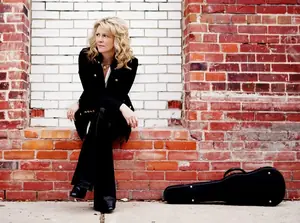

The Mary Webb Centre in Highgate is one of those rare architectural anomalies that makes a critic stop and stare before the first note even hits the rafters. It is a former church, one of only two round churches in North America, and the acoustics inside that heritage wood frame are notoriously unforgiving but incredibly intimate. On Saturday, Dec. 14, this space hosts a sold-out crowd for "A Celtic Family Christmas," featuring Natalie MacMaster, Donnell Leahy and their remarkably talented brood.
For performers who have built a career on the bedrock of family tradition, the venue is almost too perfect. But this isn't just another holiday gig. It is a homecoming of sorts for a sound that has defined Canadian folk for decades. Natalie MacMaster has been at this for 42 years. That is a lifetime in any industry, let alone the fickle world of touring musicianship. She looks back on the current momentum with a mix of veteran poise and genuine surprise.
"It's been an amazing run of shows. Yeah, we're thrilled," she says, leaning into the energy of the current tour.
There is a vulnerability in her voice when she talks about the recent past. The industry-wide hiatus of the last few years hit performers like MacMaster harder than most because her entire brand is built on physical connection and shared space. You cannot replicate a Cape Breton kitchen party over a Zoom call.
"I'm just so happy to reach people. I've had withdrawal experience over the past few years. It's made me appreciate it more anytime you have an audience. I've been doing this for 42 years and I'm amazed that people still want to unite in this way," she says.
The Christmas tradition started as a solo endeavour when MacMaster was in her 20s. It was a seasonal pivot, a way to dress up the fiddle tunes in holiday tinsel. But the brand shifted significantly after she paired up with Donnell Leahy.
"I would say I was in my 20s when I did my first Christmas shows. Every couple of years I would do a tour at Christmas time, but then when Donnell and I got married, I'd say maybe seven or eight years into our marriage we started doing some Christmas shows and we eventually developed this Celtic Family Christmas theme which has been going on, I think for 12 or so years now," she explains.
To understand the MacMaster appeal, you have to look at the lineage. She is not a manufactured product; she is the result of a specific geographic and cultural ecosystem. In Cape Breton, the fiddle is not an instrument you choose; it is an inheritance.
"The musicians in my family are my aunts and uncles and cousins. My dad had a fiddle in the house. He played the fiddle from time to time. Not to be confused with Buddy MacMaster, who was such a well-known fiddler. Dad would never call himself a fiddler, but he can play some tunes and he was my first teacher. I was nine when I received a three-quarter size fiddle from my granduncle. That's what got me started officially. But I'd been step-dancing before that. My mom taught me to step-dance when I was five. She was a well-known step dancer in her day and I had been singing Gaelic songs and courting to tunes and things like that when I was very young," she says.
The "Celtic Family Christmas" show is a calculated balance. It avoids the trap of being a kitschy, over-produced holiday special. Instead, it leans into the technical prowess of the performers while maintaining a grounded, emotional core. It is not just about the fast fingers and the high-energy jigs.
"It's a blend of both with the ultimate goal of wanting to put people in Christmas spirit, good energy, positive, uplifting, but connecting to something that's deep and broad rather than just happy fiddle tunes, let's drink beer. It's got some depth to it. I had one lady tell me the other night, 'I cried 12 times during the show,'" Natalie says.
That emotional resonance is not accidental. MacMaster and Leahy are meticulous about the "vibe" they project. They treat the setlist like a psychological roadmap for the audience.
"We just want to put people in the right frame of mind. Donnell and I analyzed that a lot. Is it sending the right things? Are they going out the door with the right energy and spirit? So we feel that we've considered everything and made the show so that it does what we wanted to do and I wouldn't change a thing now. We have it right where we love it," she says.
The nostalgia she taps into comes from a childhood where Christmas was a marathon of community engagement. In Cape Breton, the holiday is less about the retail frenzy and more about the "drop-in" culture.
"We went to church on the 24th and opened gifts on Christmas morning from Santa Claus, went to visit family over the next couple of days, and went to various functions. A lot of house parties, always with live music, fiddlers, people dancing and good cheer. And even before Christmas, the prep for that was very typical. Getting a tree, the decorations. Mom would always start baking a couple of weeks before, sometimes putting it in the freezer for when people would drop in. And people did drop in," she recalls.
Today, the MacMaster-Leahy household is a chaotic, beautiful extension of those roots. They live on a farm, and the holiday prep involves more chainsaws than department store trips.
"We do what you would imagine, the big turkey dinner and the same things that I grew up with, but, I think we have a little bit more of our own traditions, too. Like, Donnell will always go out and get a tree in the woods. This year, it was brought up that maybe we could just go buy a tree and everyone was like, you can't do that! So, we have all this video footage over the years of the kids going out in lots of snow and Donnell with the chainsaw, and they go pick out a tree and cut it down," she says.
And they do not stop when the calendar hits Dec. 26. They are proponents of the full 12 days of Christmas, a liturgical and cultural pacing that feels increasingly rare in our "post-Christmas clearance" society.
It's a blend of both with the ultimate goal of wanting to put people in Christmas spirit, good energy, positive, uplifting, but connecting to something that's deep and broad rather than just happy fiddle tunes, let's drink beer. It's got some depth to it. I had one lady tell me the other night, 'I cried 12 times during the show.'
"We also think of it more purposefully as an Advent season and a Christmas season. We celebrate the 12 days of Christmas, which I find even for me growing up, too, there wasn't as much focus on the fact that Christmas Day was the start of Christmas and it goes till January 6. So, while some people are taking down their decorations on December 27th, we're just getting going. That starts the beginning of party season. First, it's Advent, then Christmas Eve and goes for 12 days," she explains.
The logistics of managing a large family while maintaining a world-class touring schedule is a feat of engineering. The farm is not a hobby; it is a working operation that requires constant attention.
"We have a large family up in these parts with Donnell’s siblings, and he farms with his brothers. It's constantly a juggling act between the three boys here. When some are gone, we take over, and when we're gone, they take over. And thank goodness. It always seems to work out," she says.
The next generation is already making waves. Their oldest daughter, Mary Francis, is not just participating; she is leading. But do not mistake this for a parent-pushed hobby. This is a grind.
"She is very eager, and I've never seen anyone more dedicated to something. She is really passionate about it and focused and very prepared to work her butt off because that's what it takes," Natalie says.
Despite the heavy Celtic influence in the home, the kids are not immune to the pull of modern pop culture. It is a hilarious reality that the children of fiddle royalty might find the genre a bit... secondary.
"Our music is the bottom of the barrel when it comes to their musical taste. It’s in there, but it's at the bottom. They're really into a wide, diverse range of music. They all will from time to time, put on some Celtic music but it's a small percentage. Mostly it's popular or jazz. I don't know how they find it, but the old hits of the 80s, which are my faves. They say 80s music, by the industry standard, is not great. And I'm like, 'Are you kidding me? It's awesome!'" she laughs.
There is a genuine joy in watching her children discover the neon-soaked sounds of her own youth. It is a bridge between generations that does not require a fiddle bow.
"I was born in 72, so in the 80s, I was a teen. These are the years when kids just go along with whatever's popular at the time. It can be good; it can be bad. It doesn't matter if it's popular. And that was me. And mind you, a lot of it was genuinely really good. But whether it was or wasn't, it didn't really matter. It was the music at the time. So, to hear my kids listening to that stuff, it's kind of fun. It takes me back," she says.
Musically, the pairing of Natalie and Donnell was not an immediate slam dunk. To the untrained ear, fiddle music is a monolith. To the expert, the differences between Natalie’s Cape Breton style and Donnell’s Ontario-based approach are massive.
"I think a lot of people think that they can't differentiate between fiddle music. It just all kind of sounds the same. I understand that. But once you get listening to it, like anything, there are dramatic differences. Donnell and I are really different players. We do both play Celtic music, but man, it's as different as it can be. We found that especially when we first started playing together, we weren’t very good together. It's taken a little while," she admits.
The friction came from the very thing that made them stars individually: their distinct ornamentation and rhythmic structures.
"If we played a tune that we both knew, like a traditional, typical Celtic fiddle tune, it was really bad together because he had learned it a certain way, played a certain style and very decorative music that he plays," she explains.
"And for me, I will have learned it a certain way, play it my style. And it's very Cape Breton and it has a real culturally distinctive sound. You put those two together and one person covers up the other. That's all it was. We just did not match. So it just took some time playing together. I think the biggest thing that changed it for us was just learning to listen. That's a tough balance because as a musician, you're concentrating very much on your own playing, like making sure it's in tune. That's a constant thing for me. I have to always listen for that."
This hard-won synergy is best heard on their collaborative album, *Canvas*. One of the standout tracks, "So You Love," features the legendary Yo-Yo Ma. It is a piece that feels more like a cinematic score than a pub tune.
"We loved creating that. It took several months to put the whole thing together. Although the second part came together first. I can remember going to Cape Breton saying, 'Donnell, I'm going to write a first part to this thing.' Because we didn't know what it was, it just was melodies that came out. We're like, what is this? What's this going to be like? We didn't know. And there was a friend of ours from Ireland who played guitar, Tim Edy, and he came over and added a little bit more to it and it was broadening our mind. So I said, I'm going to Cape Breton. And I spent a whole day on that first part, alone at my parent's place. Anyway, just interesting how it came together," she says.
The track was a living organism, growing with every new collaborator and every new idea.
"And then we took it to our producer and he added another part, where the bass and drums come in. It was a piece that just kept growing," she adds.
But don't let the high-art collaborations fool you. Life on the road with a family is still about the basics: pizza and hotel pools.
"Sometimes we'll order pizza after the show, go back to the room and watch TV till midnight, because we don't get back to the room till 11, sometimes 11:30. So that little thing is kind of exciting for them. Or the pools in the morning. Especially when our kids were younger, that was a big lure. Staying in a hotel and going to the pool," she says.
And then there is the labour. The unglamorous side of the industry that the audience never sees. The heavy lifting, the maintenance and the sheer exhaustion of the holiday circuit.
"There is work involved though. Just hauling all the equipment around and setting everything up and sound checking, ironing the clothes. They have to be done every day. The dance shoes always need some work. There's always a screw missing or something when you're tired. A lot of late nights and early mornings. While touring is hard work, we cherish these moments together," she says.
Looking toward the future, MacMaster is expanding her reach into the literary world. Her upcoming book, "I Have a Love Story," was born out of a moment of profound reflection during a particularly dark news cycle.
"Maybe it was six years ago, could be seven years ago now. I got the first inspiration to write this book based on just a lot of devastating news that was in the media. I don't ever read the news, but my husband does, and he's the guy who will update me on things. Just a lot of tough things going on in Cape Breton. Like this girl we knew died of a drug overdose among other things and I had this sense after I got off the phone, I was driving in town by myself which was a rarity in those days when the kids were younger. And I started pondering how, gosh, we're not safe anywhere. We're not safe from evil that just lurks around in various ways," she says.
In that moment of fear, she found an anchor in her own life. It was a realization that her mundane, beautiful reality was a story worth telling.
"Being a mom now, I was thinking of my kids, and I was really down about that and I just started trying to get myself out of that. And I started thinking of how much I love my family and how great it is to be a mom and live where we live. And I was filled with gratitude and I had this realization that I had my own love story. I know that sounds silly maybe, but I kind of had a flash of my life, and I'm like, oh, my gosh," she admits.
The book is an answer to the question she has been asked in every dressing room and green room for two decades: How do you do it?
"Growing up watching all these rom-coms and things like that, there's a story in all of them. I was just kind of discovering my own story, and I thought, oh, my gosh. I had done an interview earlier that day, and every interview I've ever done, they always asked some form of the question, 'How is it balancing family life and career?' And so, people are so curious about that and I had this moment of maybe it's a good thing to spread this love that I grew up with and received from my parents and live with my husband and my kids. Maybe it's good to share that," she says.
She is not claiming to have the secret to a perfect life. But in a world that feels increasingly heavy, she wants to offer a counter-narrative of simplicity and kindness.
"Maybe people are curious and maybe it's a positive thing to read about and can contribute in a positive way instead of all this weight. And then I thought, maybe people don't know how to love or they don't know what it looks like. There's all sorts of different stories in the world, and mine isn't anything special, but it exists and it's very simple," she explains.
And ultimately, that is what the Highgate show represents. It is a collection of simple stories told through the medium of four strings and a bow.
"It's just simple little stories about simple ways to love, the way I was loved by my family and how my life unfolded, and just little decisions that you make along the way based on being good to your neighbor and basic things," she concludes.