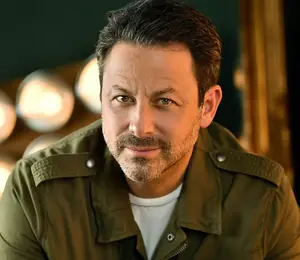


Bourke Floyd was once the reliable glue of early 2000s television, a face that anchored the teen angst of *Dawson’s Creek* and provided a steady foil in studio comedies like *Big Momma’s House 2*. He was the kind of actor directors kept in their back pockets—a professional who showed up, hit his marks and disappeared into the frame. Then, he actually disappeared. For 11 years, the momentum stalled, the credits dried up and Floyd became a ghost in an industry that usually forgets you in 15 minutes.
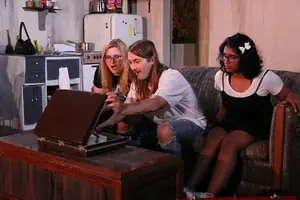
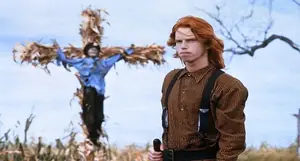
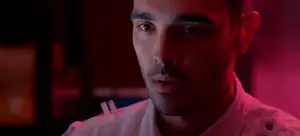
But the hiatus is over. Watching Floyd in his latest turn, the crime-thriller *Sour*, now hitting VOD platforms, there is a sense that the time away added a layer of grit that wasn't there during his WB days. The film follows a detective whose luck has run dry, moving into a house with his niece that suggests he isn't as alone as he thought. It is a low-budget exercise in tension that relies heavily on Floyd’s ability to sell the unease of a man living on the edge.
When I ask him about the project, he is quick to distance it from the typical jump-scare factory that dominates the streaming charts. Floyd says, “*Sour* is really cool, it’s a thriller, really suspenseful, kind of a crime whodunit—actually, it’s less a whodunit and really concentrated almost. Again, horror films are such easy ones to peg right now because there’s so much to compare things to that are horror, but this one’s got a little different twist to it.”
The film functions more as a psychological pressure cooker than a slasher flick. It trades in the currency of the "slow grind," a technique that requires the actors to carry the weight of the silence. And Floyd is clearly looking at the modern indie thriller for inspiration rather than the polished studio horror of his youth.
“It’s more like *The Rental* with Dave Franco that came out earlier in 2020,” he says. “It’s a thriller, and it’s uncomfortable and it’s interpersonal, it’s really close and in your face with only a couple of jump scares in there. Most of it’s really about that slow grind of uncomfortable. It’s a really cool, cool feature. I’m happy to be a part of it.”
The real draw here is Marcus, a character Floyd describes with a mix of fascination and wariness. Marcus isn't your standard antagonist; he is a man who weaponizes his own social ineptitude. To find the character, Floyd had to look at his own social anxieties and then distort them until they became something predatory.
“Marcus is an absolute loon,” Floyd admits. “He is way out there. I think what I related to, what I used and applied to Marcus, that actually are me, are the parts where Marcus is in an awkward situation, what would be an awkward situation, what would be uncomfortable, and how he pivots, and tries to apply charm to smooth over something, even though he’s oblivious to the reality of the situation that he’s the awkward thing.”
This is where the performance gets interesting. Most actors play "crazy" with a capital C, but Floyd plays the "deflection." He uses the human instinct to fill a silence with a joke or a smile, but he curdles it. It is a sharp observation of how people behave when they know they are failing a social test.
“He’s the thing driving the awkwardness of the scene. Or that moment, that’s the exchange, right? And yet he tries this charm approach,” Floyd says. “And I guess what I used from my own personal life is that when things are awkward, we’re all human beings, we all have exchanges that are awkward or different. I’m quick with a joke to try to deflect from being awkward.”
And that organic quality is what makes Marcus dangerous. If the character felt "shaped" or overly rehearsed, the tension would evaporate. Floyd wanted the audience to recognize the behaviour even if they hated the man.
“I tried to make Marcus’s deflection really organic, like ours are as human beings. I tried not to make that look like a shaped piece of him. I tried to make it feel that’s just how he is when it’s awkward, he does this,” he says. “The trick to it was to make his personality and his quirks feel as natural as ours, like mine being a joke. There are tons of people that make jokes about awkward situations. That’s their natural deflection, and we are all accustomed to it. Marcus obviously has a flair for the extraordinary and evil and insane, but I had to try to make it feel just natural, just like it is for us with the handshake. Are we going to handshake or we’re going to fist bump or we’re going to elbow?”
The production of *Sour* was a lean affair, directed by Clay Moffatt. It was a baptism by fire for Natalie Maher, who was making her feature debut. Floyd credits the chemistry—or lack thereof—between their characters to a specific lack of rehearsal. They didn't want to smooth out the rough edges before the cameras rolled.
“There would be circumstances where that would be really difficult. There were certainly challenges to it, but the entire cast and the director Clay Moffatt. For Natalie Maher, this was her first feature film, this was her debut, and she was so integral in making it easier,” Floyd says.
The technique was simple: block the scene, set the lights, but don't actually act it until the red light is on. They wanted the genuine, first-time reactions that can only happen when actors are truly discovering each other’s rhythms in real time.
Floyd explains the process: “She was doing that dance, that character dance with Marcus—her character was really playing in and out of what we were doing, and it wasn’t improv. But we didn’t over-rehearse either, because again, that’s where that awkwardness comes from. We shot a lot of reversals, we would block it, figure out where we were going to go, figure out cameras and lights and all of that, but not actually run the scene until we were picture up and then we would film that first rehearsal. And I dare say, without knowing, because I wasn’t in the editing room. I feel like there are probably several of our tapes that I remember being like, oh that’s right. That was the first one because there’s so much awkwardness. It’s really cool.”
The timing of the shoot was a bizarre historical footnote. Floyd was filming in early 2020, just as the world was beginning to tilt on its axis. He recalls flying to London in February, a time when "Corona" was still just a headline in a distant newspaper and the concept of a global shutdown felt like bad science fiction.
“When I flew to London, with no one even asking me about my temperature, or anything, no screening, nothing. I had heard of COVID at that point, or maybe I’d only heard of it as Corona at that point. But that’s all there was at the airport. There was absolutely no masks, there was nothing at all. It was February or so and I flew back from London,” he says.
Even in the prosthetics, Martin’s ability to make faces and to be expressive, even with the prosthetics, is legend... He’s a comic genius. He really is of that next level. At one point, I actually messed up a scene and he was so cool. He told me a story from filming Bad Boys 2... We make mistakes. Don't worry about it. We’ll get it on this one.
The shift happened mid-trip. The first-class lounge at Heathrow became the first place he encountered the new reality of temperature checks and medical scrutiny. It was a jarring transition from a standard work trip to the precipice of a pandemic.
“I remember flying back, just to get into the first-class lounge at London Heathrow. They took my temperature. And I only remember it was that lounge. That’s not ‘Ohhh, I was flying first class’, it was for work. I only say that, because I remember that it was the first time and I was like, Whoa,” Floyd says. “We filmed in seven or eight, maybe 10 days total, and we were done. Then everything shut down. It was literally a window. I count myself very fortunate that I wasn’t sick after my trip.”
Coming back to the industry after 11 years is not as simple as showing up to set. The technical language changes, the pace accelerates and the self-doubt is a constant companion. Even on a high-profile project like *Swagger*, Floyd found himself battling the "rust" that accumulates when you aren't flexing those creative muscles every day.
“Absolutely. I worried about being able to shake the dust off. I worried about it, I still do, don’t get me wrong,” he says. “I think the day you are performing, and you just don’t have any nerves or don’t have any excitement, any sparks inside of you, probably hang it up for a little bit maybe or pump those brakes and rethink what you’re doing that day. But I definitely still had some self-doubt, even on *Swagger*. I was definitely having a little ‘fake it, till you make it’ for lack of a better term.”
He describes his career trajectory with a modesty that borders on the self-deprecating. Despite the credits and the high-profile co-stars, he views his survival in Hollywood as a series of fortunate accidents.
“I Forrest Gumped my way through life, in almost all ways. So, I always count myself really fortunate. But yeah, there was some rust, to be honest with you,” he admits.
His family remains the grounding force in this second act. His son, Luca Bear, is only eight, meaning he missed the first wave of Floyd’s fame. To him, seeing his dad on the Food Network or a streaming service is just a weird quirk of the household, like a family video that everyone else happens to be watching.
“They’re incredibly supportive. My son, Luca Bear is really funny, though. I think he just saw me at his friend’s house, I think it’s something on the Food Network, maybe *Guy’s Grocery Games*. I’ve done the Food Network a few times for charity,” Floyd says. “He calls at some point and he goes, ‘Dad, you're on the TV, at my friend’s house.’ He is eight, so the realization that these are family videos of me hanging out with Guy Fieri, these are things that are on TV. Yeah Luca Bear it’s everywhere. It’s everywhere my son.”
And while the work has been steady since his return, Floyd is honest about the grind. The "booking" is only a small part of the life; the rest is a relentless cycle of auditions and rejections. It is a reality that many actors hide, but Floyd wants to be clear about the labour involved.
“But my wife has been amazing about it really, really incredibly supportive. I think it helps that I came back and again, really, just by the grace of God, no chance that I would have expected the work to come. And to be clear, I’ve not booked, I’ve auditioned for tons of things over this time since I’ve come back that I haven’t booked,” he says. “It’s the idea, the fact that I’ve been consistently working has been amazing, I’ve also been consistently not being booked for things. So, anybody out there listening, it’s not like, ‘Oh, these are the only audition, yeah everything I audition I book.’ But the fact that the work has been so consistent, and I think makes it easier for the family to go, ‘Hey, there you go.’ The income is real, and the opportunities are endless.”
Floyd’s history is littered with encounters with the titans of the industry. He has shared sets with Tom Cruise, Bruce Willis and Sir Anthony Hopkins. But when you ask about approachability, the answers are rarely who you expect. Hopkins, for instance, carried a gravitas that was initially terrifying until the ice was broken.
“It’s tricky, because the person I’m going to say was incredibly open and giving and fun, but wasn’t the most approachable because I would have never spoken to him had he not started speaking to me,” Floyd says. “But once he spoke to me, and I spoke back, we started having a conversation. I was like, ‘Oh, you’re so cool, I can’t read this’—and that was Sir Anthony Hopkins who insisted that I call him Tony. But he wasn’t the most approachable, right?”
The friendship that developed on the set of *Hearts in Atlantis* gave Floyd a front-row seat to the genius of a master. Hopkins wasn't just a dramatic powerhouse; he was a mimic who could turn his skills on his co-stars with startling accuracy.
“But that was my fault that had nothing to do with him as a human being or a fellow actor. I felt like I shouldn’t talk to him. I’m not gonna talk to that guy. No, no, no, no, no, guys like this don’t talk to guys like me. But he talked to me and I spoke back, and we ended up becoming work buddies on *Hearts in Atlantis*. And he was amazing, I was shocked. His ability to do impersonations and impressions will blow you away. He’s hilarious, they’re spot on. I’ve seen him do an impression of me. And it’s surreal,” Floyd says.
Then there is Tom Cruise. The reputation of Cruise as a tireless micromanager is well-documented, but Floyd saw it as a form of extreme dedication. Cruise isn't just the star; he is the architect of the entire environment.
“Tom Cruise was actually incredibly kind and giving as an actor, but he wears 50 hats on set. So, he’s constantly working on everything. He’s looking at where every atmosphere actor is, in addition to everything else. So, it’s not to say that he was abrupt with me or short with me or unapproachable. But almost any time, somebody would have said something to him, other than Steven Spielberg, they would have been interrupted, because he is a diligent, constantly working on set,” he says.
But the real lessons didn't always come from the A-list. Floyd points to Mark Joy, a fellow Richmond, Virginia native, as the actor who truly shaped his understanding of the craft. Joy’s work in *Beast of Burden* was a lesson in the "invisible" style of acting—the kind where the audience never catches the performer at work.
“Mark Joy who is an actor I did *Beast of Burden* with. Mark’s been in tons of things, he’s a native from Richmond, Virginia, where I’m from. On *Beast of Burden*, it was just like Mark didn’t win an Oscar or doesn’t have 50, 100-million-dollar movies, but his work? Absolutely. Mark Joy is where I learned the most from and it was more from wanting, studying and really trying to watch and just see how he works in and out of a scene. That made it really cool and how you don’t see him act. You never catch him act. It’s just so natural and organic,” Floyd says.
Comedy, however, is a different beast. It’s physical, it’s exhausting and it’s often painful. Floyd’s time on *Big Momma’s House 2* involved being kicked in the groin by Martin Lawrence in the sweltering heat of New Orleans. Lawrence, ever the professional, was wearing a cooling suit beneath the prosthetics, while the rest of the cast dealt with the humidity.
“I can't imagine being on a scene with Martin Lawrence dressed up as Big Mamma and keep a straight face. That’s for sure. It helps if he’s gonna kick you in the groin. It helps knowing that at the end of it, you’re gonna get kicked in the groin a bunch of times and you keep panicking. We filmed that in New Orleans. And it was so hot and humid. He had a space, glycol tubes underneath that suit, another suit underneath it of this coolant refrigeration stuff pumping through it, and he and Zachary Levi were filming *American Underdogs: The Kurt Warner Story*,” he says.
Even through inches of latex, Lawrence’s comedic timing was undeniable. Floyd recalls a moment when Lawrence, only partially in costume, managed to floor the room with a single look.
“I will say, even in the prosthetics, Martin’s ability to make faces and to be expressive, even with the prosthetics, is legend. I mean, I’ll never forget it. He's supposed to be on the stool in front of me and we were just running the scene for everything and just looking at it, roughing it out, basically. I remember he turned around and he had only the face on, they hadn't put the body on yet, and he turned around and made this expression. Even now thinking about it, it was hilarious. He’s a comic genius. He really is of that next level,” Floyd says.
Lawrence also showed a level of grace that Floyd hasn't forgotten. After a botched take, Lawrence shared a story from the set of *Bad Boys 2* to put the younger actor at ease.
“At one point, I actually messed up a scene and he was so cool. He told me a story from filming *Bad Boys 2*. He said, ‘Oh, you think that was bad? Wait until you hear what I did.’ And then he told me the story. ‘We make mistakes. Don't worry about it. We’ll get it on this one.’ It was really cool for him to share this. It was a really funny story too. Zack Levi and I are still buds and I surprised him and my son with a little zoom audition recently, too. So that was a lot of fun. That was a great experience,” he says.
When it comes to his own preference, Floyd is torn between the mental gymnastics of comedy and the raw honesty of drama. Comedy requires a level of "mental acuity" that can be draining, a constant chess match with the audience’s expectations.
“When the material is great. That's also the most exhausting because how you have to be playing chess, not checkers the whole time. So there's a lot of mental acuity to delivering comedy. That's my favorite and it's also probably the one that's the most exhausting too,” Floyd says. “I really love the honesty of dramatic scenes. There are a lot of qualifications to what I'm saying. Drama doesn't have to be sad, but feeling that vibe can really be heartfelt and organic.”
Looking ahead, the projects are getting weirder and more experimental. *Peach Cobbler* is described as an R-rated throwback to the raunchy ensemble comedies of the 70s and 80s, featuring Oscar nominee Eric Roberts and his wife Eliza.
“A lot off the wall! I'm not even sure that *Peach Cobbler* has walls to be off of. It’s no holds barred. It's raunchy, *American Pie*, *Animal House* style. Oscar nominee Eric Roberts is in it. His wife Eliza, who's actually in *Animal House* is in it. It's really fun. It's a great time R-rated comedy,” Floyd says.
Then there is *Prankster*, a project that bridges the gap between traditional cinema and the wild west of YouTube. Working with Nex, a creator with millions of subscribers, Floyd is stepping into the role of the "jerk" in a script that sounds like controlled chaos.
“I'm super excited to start filming on *Prankster*. We'll go into production here in about a month. Nex is on that poster. He has a YouTube following of well over two million subscribers and he just makes these prank videos. He does all these giveaways and makes jokes and he's just such a great spirit and high energy. I’m the jerk in the movie, but pranks don't always go as planned. It’s just a melee of a script. I've seen so much of Nex's YouTube stuff, I'm really looking forward to being on set for that. I'm also really looking forward to the gag reel because I can only imagine with live pranks what that gag reel is going to look like since so many times pranks happen but the wrong direction,” Floyd says.
Bourke Floyd is back, but he isn't the same actor who left. There is a grit here, a hard-earned perspective that only comes from walking away and finding your way back. In an industry that loves a comeback story, Floyd is writing a particularly interesting one. He isn't chasing the spotlight; he’s just happy to be back in the game.