
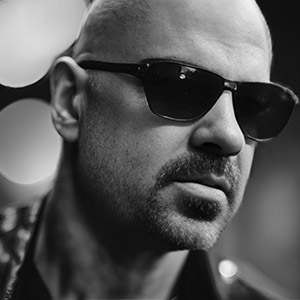
Sitting across from Courtney Gains in a dimly lit corner of a Toronto hotel bar, you realize the man is a living map of American cinema. He has that weathered, character-actor face that casting directors used to kill for—the kind that suggests a thousand stories before he even opens his mouth. We are here to talk about his latest turn in *Queen Bees*, but you cannot ignore the shadow of Malachai, the ginger-haired zealot from *Children of the Corn* who haunted the nightmares of every kid in 1984.
Gains has survived three decades in a business that eats its young. He has moved from the cornfields of Gatlin to the suburban paranoia of *The ‘Burbs* and the time-bending stakes of *Back to the Future*. Now, he is sharing screen time with the likes of Ellen Burstyn and Jane Curtin. It is a pivot from the macabre to the geriatric-comedy circuit, but Gains treats it with the same blue-collar intensity he brings to every set.
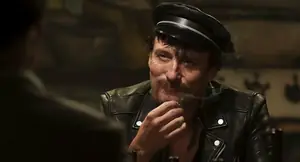
The conversation naturally starts with *Queen Bees*, a film that feels like a victory lap for Hollywood’s old guard. Gains plays a biker—a role that fits his aesthetic like a worn leather jacket. He got the gig through a long-standing connection with the director, Michael Lembeck.
"The director, Michael Lembeck, who has done a ton of comedy films and television. I took a class that he and his sister Helaine teach—the Harvey Lembeck Comedy Workshop—their father originally taught it and they’ve taken over," Gains says. "When I found out he was doing a project in Atlanta, I talked to him about, 'Hey, you know, I’m out there part-time, what do you have going?' and he offered me a small part. It’s a cameo, but it was a chance to work with Ann-Margret, Ellen Burstyn, Loretta Devine and Jane Curtin, so I was like, 'Absolutely.' Then I was really surprised it made the trailer and it turned out to be a really funny scene in the movie. So I couldn’t be happier."
But there is a strange synchronicity to the *Queen Bees* cast. It features Christopher Lloyd, marking another shared credit between the two actors, though they never actually shared the frame. It is one of those Hollywood anomalies where two performers orbit each other for decades without ever colliding.
"That’s true. And that one, I didn’t work with him either, so I’ve been in two movies with Christopher Lloyd, but I haven’t actually had the pleasure of working directly with Christopher Lloyd, which would be great," Gains notes. "I’m a fan all the way back to the *Taxi* days—some of the funniest television ever, him in *Taxi*."
This pattern of recurring faces is not just a coincidence; it is the fundamental mechanics of the studio system. Casting directors develop a shorthand. They know who plays well together, even if the "together" is just sharing space on a call sheet. Gains understands this tribalism better than most.
"I think sometimes—for instance, having done *Can’t Buy Me Love* with Patrick Dempsey, which was picked up by Touchstone Pictures, which is Disney. Then when they did *Sweet Home Alabama*, and they cast him, that might have been a bit of a tipping point for me to get that Sheriff, because it was like, 'Well, he’s been part of our family before and Patrick’s in this one. So that’s a good sign. Let’s put them together again.' So I think sometimes things like that happen."
And then there is *Back to the Future*. It is the juggernaut of his early career, a film that exists in the permanent cultural consciousness. Gains entered the production during that frantic 1980s period when he was booking everything that was not nailed down. He was a young actor caught in the orbit of Steven Spielberg and Robert Zemeckis before they were the untouchable titans they are today.
"Well, I was on my 80s roll at that time; I was just booking and working. I went on a five, six-year run. I was excited about it because I knew that Spielberg was involved," he says. "I really didn’t know Zemeckis was going to turn out to be Robert Zemeckis, right? The biggest connection to that project for me was that I had worked with Crispin Glover before in the first thing I ever did. It was an American Film Institute project, and I always forget the title—I should figure it back out—but it’s interesting since there were three versions of this short done, one by Crispin and one by Sean Penn. It’s called *The Beaver Trilogy*, which you can still actually get to this day. It’s always nice to come on a set and you’ve actually worked with somebody before, especially if they’re now a lead in it and they come and greet your trailer; it makes you feel welcome."
But the real story of *Back to the Future* is the one that happens at the bank. Gains was part of the original shoot with Eric Stoltz before the famous mid-production pivot to Michael J. Fox. For a supporting actor, that kind of upheaval is a financial windfall. It is the type of industry luck that keeps a career afloat during the lean years.
"Mainly it’s the horror stuff, mainly it’s *Children of the Corn*, but I certainly do sign *Back to the Future* posters at every convention," Gains explains. "Somebody is always bringing up posters; they want every single person on there if they can get them. But to be part of the biggest trilogies of all time, I’m thankful, and I tell this story that financially it’s been one of the bigger blessings in my career because I was on the movie before Eric Stoltz got let go. So when they did reshoots, they already knew I was on the payroll for five weeks where they did reshoots for a job that I probably shouldn’t have worked three days on. So the residual income from it has been a blessing in my career. It’s helped me pay the bills many times, so I’m very thankful."
There is a certain irony in the fact that Stoltz’s professional heartbreak became Gains’s mortgage payment. But that is the business. It is brutal and opportunistic. Gains acknowledges the difficulty of what Stoltz went through while remaining pragmatic about his own gain.
"Yeah, every once in a while some of those things fall in place. But nothing’s been a big windfall in that regard as *Back to the Future*," he says. "As much as I ended up working with Eric Stoltz in *Memphis Belle*—great guy and great actor—it was a very tough thing for him to have gone through; it was a blessing for me."
In *Back to the Future*, Gains plays Dixon, the guy who pushes George McFly aside to dance with Lorraine. It is a tiny role, but it is the hinge upon which the entire plot swings. If Dixon stays on that dance floor, Marty McFly ceases to exist. Gains has a knack for finding these pivotal moments in small packages.
"That’s the thing—sometimes you could have a small part, but it has an impact, like in *Queen Bees*," Gains argues. "It’s only one scene, but that scene is a real bonding moment for them when they all stand up against me and have a bonding moment for these women. It’s a very pivotal part in *Back to the Future*—if that kiss doesn’t happen, then the whole family disappears, right? So it’s a very pivotal moment. If you’re going to have a small part, try to have one in a pivotal moment."
But don't mistake his success in cameos for a lack of ambition. Like any true craftsman, Gains wants the heavy lifting. He wants the arc. He wants the space to breathe into a character, though he is wary of how the industry has begun to devalue the supporting player in favour of "local hires" and cost-cutting measures.
"I’m looking for a character with the biggest arc I can get. Of course, you know, whether that’s the lead or not—if you’re the lead, then you’re in every scene and that’s a lot of work," he says. "My career has been essentially a supporting actor in terms of supporting cast, and I think there’s a lot of value in that. I think nowadays, with so many things being shot where they’re hiring locals and this and that, or they don’t want to pay the money anymore, I think that supporting casts are weakening and I don’t think they’re valued the way they used to be."
Gains points to the golden era of ensemble filmmaking as the benchmark. He laments the loss of the "guest star" as a meaningful title, noting that the middle class of acting is being squeezed out by series regulars and one-off cameos.
"If you look at some of my favorite movies, say like *Cool Hand Luke*, to me that’s got just an amazing supporting cast. It’s amazing how they were able to have so many people in that movie as a cast, an ensemble, but you know everybody’s plotline, story and who they are. I feel that art has gotten lost," he critiques. "Nowadays in TV, they used to be—the guest stars were really a big deal and each episode kind of helped carry the show. Now, it’s really about the cast that’s the series regulars and the guest stars are getting smaller and less significant. And if they are very significant, they’re making offers to a big actor, so that helps them get a bump in the ratings."
He has seen this shift firsthand. In the 90s, Gains was a staple on the procedural circuit, popping up in everything from *Seinfeld* to *CSI*. But the landscape has changed. The rooms are more crowded, and the stakes for a single day of work have never been higher.
"In the 90s, I did a ton of guest stars and that was my bread and butter for a long time; I’m still doing them. I just did a show called *Tales* for BET. That’s a 10-episode anthology and this is their third season, so each episode is completely different—different cast, get recast—but it’s gotten tougher. It’s turned into a lot of one-day guest stars out there as opposed to getting paid for the whole week. It’s gotten a little tougher for actors out there that are not series regulars."
The competition is fierce. You can be Courtney Gains, with a resume that spans 35 years, and still find yourself in a waiting room full of veterans fighting for a single scene on *Bones*. It is a humbling reality of the trade.
They had this friend of theirs who was a real prankster who they wanted to get back and he was deathly afraid of Molokai, my character from “Children of the Corn”... He literally could not utter a syllable for about 45 minutes. So at that point, I could kind of call my shot and so I was like, Well, can I get up and do a song with you guys? They’re like... done. I got to go and play with them in front of 8,000 people, that’s the most I’ve ever been in front of by far as a musician, and it was really fun.
"I’ve had a very good run in guest stars; like I said, it was a time where I was getting on so easily after having established a film crew that I was sort of taking them for granted," he admits. "And now it’s at a point where you’ll come in a room—for example, the *Bones* episode. I auditioned for *Bones* many times before I got it. It was a one-day guest star on that show, one scene. When I walked in the room to audition, every guy in that room had a resume—they could have basically just walked in there, closed their eyes, spun around and picked one of us. We all were more than capable of doing that role. But that’s the level of competition now, just to get a one-day guest star. When I used to feel like I was taking jobs away from other actors, if I go in for a one-day guest star, I feel like my resume was bigger than theirs or whatever. But now it’s competitive just to get a damn show."
And when you do get the show, the environment on set can be hit or miss. On a one-day shoot, you are the outsider. You are entering a well-oiled machine where the regulars have their own shorthand and inside jokes. Some leads make you feel like part of the family; others treat you like furniture.
"It all depends on the tone of the show. Some people in a series with a regular cast have the mentality of, 'You’re only here a day or you’re only here a week, so I don’t care about you, you’ll be gone.' And then there are other people who go out of their way to make you feel welcome, and it does make a big difference," Gains explains.
He points to Mark Harmon of *NCIS* as the gold standard of set leadership. In an industry rife with egos, Harmon’s approach was a revelation to Gains.
"I gave an example of a one-day guest star that was fun to do: *NCIS*, Mark Harmon. You got this guy—he's just a class act. He had them wire him on the microphone and walkie-talkie when I was coming up; he opened the van door to greet me and then took me out and introduced me to the rest of the cast. That’s unprecedented for a lead actor in a series to do something like that. But it shows you that he takes leadership and takes pride in his show, and he wants to make his actors feel welcome. Psychologically, it makes a big difference—you feel much more comfortable immediately, and you can just get to work. So it really depends on the tone of the people on the show. The ones that make me feel welcome. Even on *Queen Bees*."
That welcoming atmosphere extended to the set of *Queen Bees*, where Gains found himself being recognized by a comedy legend.
"When I got introduced to the ladies, Jane Curtin goes, 'I know you, you’re in everything.' It’s like, 'Wow, Jane Curtin just said that to me, how sweet.' It just puts you at ease and makes you feel welcome, and that goes a long way."
Filming *Queen Bees* was a unique experience for Gains, primarily because of his pre-existing relationship with Lembeck. There is a comfort that comes with working for a director who has seen you at your most vulnerable in a classroom setting. It removes the need for the "getting to know you" phase and allows for immediate creative shorthand.
"Like I said, there was familiarity because I’d worked with Michael. I worked for Michael in a comedy class for two years. So I knew, essentially, how he liked to work. It was interesting to take it from a class setting and apply it to a film. But to have an already established relationship with a director—that’s obviously a distinct advantage. So I was very comfortable with that. I just didn’t want to let him down, basically, was where I was coming from. We’ve worked together and he believes in me; I want to do a good job for him. But I also knew that if I needed another take or something like that, I could easily ask and would probably be granted that, where somebody else wouldn’t know him. It was a good experience because of that and because I got to work with and watch these great ladies work in the scene."
Watching Gains talk about watching other actors is where his expertise shines. He spent half a day just observing the mechanics of legend. He wasn't just waiting for his cue; he was studying the different "methods" at play.
"The first part of it, I’m watching them at this coffee house having a conversation, because I’m looking for the moment like stealing Ellen Burstyn's purse. So really, the first half of the day, I just get to watch these four great actresses work. And that was really cool, because they all have different methods and approaches, but they’re all very established in what they do in their own way. So from a purely acting point of view, I really enjoyed how each one worked differently, but how they all work together with their strong suits working off each other. It’s a really good experience."
But does a veteran like Gains actually enjoy watching the finished product? Or is it just another day at the office? For him, it is conditional. The quality of the experience on set usually dictates whether he wants to see the final cut.
"It depends on the film. Certainly *Queen Bees* I was, for various reasons. Michael directed it, great actresses to get to watch, a couple of great actors as well—James Caan and Christopher Lloyd—so I was looking forward to watching that. But it depends on the film. Sometimes it’s like, 'Yeah, you’ve worked with the actors and may or may not have had a good experience, or maybe you're just not that big a fan of their work.' It’s like, 'Nah, I don’t need to see this guy the whole movie, or this lady?' But it depends; like I said, if you had a good experience, it’s the same like meeting an actor you admire. If you have a good experience, you take that with you every time you watch their projects and remember it. If you have a bad experience, I really don’t want to see them in anything ever again, because I just remember they were a jerk. So the experience you have dictates to me pretty much everything. You just don’t know how you get on a set and how that’s going to go."
The first time Gains saw himself on screen was for *Children of the Corn*. There was no glitzy premiere, no red carpet. Just a family trip to Hollywood Boulevard to see an independent horror flick that would eventually become a genre staple. The feeling of seeing your own face projected two storeys high never truly goes away.
"I remember distinctly *Children of the Corn* because there was no premiere. It was an independent film. But back then, everything was a theatrical release. I remember going on Hollywood Boulevard with my family and friends on opening night and going to the movie. I remember just being petrified. What is it going to look like? And all your friends are there and your family. And I remember I was just overwhelmed. But really, it’s not that different to this day—the first time seeing myself on a film is always nerve-racking. And I have a real hard time having any objectivity because I’m remembering everything we did that went into each one of those scenes."
For Gains, watching his own performance is a process of mental excavation. He is not seeing the story; he is seeing the 2 a.m. call times and the freezing temperatures. He has to watch a film three times before he can actually judge the work.
"It’s like I’m flashing back. I’m like, 'Oh yeah, that was two in the morning, and I was freezing my ass off.' So I have to watch a movie about three times before I can get any kind of objectivity to the performance. I’m a character person—hopefully my behaviours are different, or my cadences, or my movements. And when I first see it, it looks very strange to me, because I’m moving and behaving differently than I know myself to move, which is my job. But it’s still very weird to watch. So I have to watch it a few times and remind myself: 'What were the choices I made?' and then see whether I executed those choices well or not. That’s at the end how I would need to base it. So it’s a very strange feeling. It still is after all these years—to see your head two storeys tall, you never really get used to it. It’s an amazing thing to see yourself on a big screen like that, but it’s also always very surreal."
The reality of being a working actor for nearly four decades is that you cannot always wait for the "perfect" role. Sometimes, you just have to work. Gains is refreshingly honest about the financial realities of the business. The "pasty white boy" roles aren't always in high demand, and the industry’s obsession with the "new" can be a hurdle for veterans.
"It depends, right? Like I said, I’m looking for the best character I can find. And I’m looking for the best arc I can find. And I’m looking for the best story I can find. But sometimes I just have to get back to work," he admits. "I’ll be honest—sometimes I haven’t worked for months, and I need to pay the bills. When you’ve done it 35-plus years, and this is how you make your living, sometimes you have to keep working, keep having current credits, keep being relevant, because the industry is very fickle that way."
Gains recently experienced a "TV drought," a period where the phone stopped ringing despite his extensive resume. He even moved to the Southeast to tap into the growing production hub there. It was a strategic pivot that eventually led to his role in *Tales*.
"I feel like a 50-year-old, pasty white boy right now is not the *du jour*, and most of the 50-year-old actors I know are in LA struggling a bit, which is part of why I made the pivot to come out to the Southeast as well and open that door up. It’s worked out well for me. Not that it was easy—I had to do a lot of auditions out here before I booked stuff—but I’m just getting this *Tales* that I just got for BET; that was a bitter drought. It’s been a few years since I’ve done a guest star, so it was really good to get back on it. I was close on a pretty big show recently in New York, and that was a question: 'You know, what has he done? What has he done lately?' Even though I had a long resume of guest stars, they want to know what the last two, three years look like. It can be very tough that if you fall out of the loop a little bit, they may be like, 'Oh yeah, well, that was the past, what have you done lately?' That is always the question, so you’re trying to just keep finding work to stay busy. Then you just try to do the best job you can with the material you get."
When asked about his all-time favourite role, Gains hesitates. It is like naming a favourite child. But he eventually lands on a passion project he produced called *Benny Bliss and the Disciples of Greatness*. It was a rock and roll comedy that allowed him to merge his acting with his musical aspirations.
"A film role that I had a lot of fun with that I talked about—that’s not a very well-known film—was something I produced, as well as a movie called *Benny Bliss and the Disciples of Greatness*. It’s a rock and roll comedy with an anti-technology bent," he says. "One of the things I love about it is that I wrote four of the songs in it; I perform all the songs live in it with a live band—no cut-in vocally or anything like that. It culminates with a concert in the desert, a 30-minute show that we do live. That was probably the most 'without a net' as an actor I’ve been in a movie before. You’ve got 200 extras that have to come out, and you’ve got this band—you’ve rehearsed with some, but you’ve never done the whole set. You’re going to do not only the 30-minute set, but you’re introducing other acts coming in and out and things for like 30 straight minutes; you’re just rolling like a real concert. That was a wild experience. We talked to some of the extras after, too, and we did that twice. They could not believe it was the first time that band ever performed."
This "rock star moment" wasn't just confined to the screen. Gains has a bizarre and brilliant connection to the jam band Phish. It began with hitchhiking and ended with a legendary prank in a Las Vegas penthouse involving his *Children of the Corn* character, Malachai.
"I got to go on stage and perform with Phish in Vegas once in front of 8,000 people. That was a crazy experience," Gains recalls. "The story is, I met Mike Gordon, the bass player from Phish, before they ever broke. He picked me up while I was hitchhiking. This was right before *Can’t Buy Me Love* came out, and I was hitchhiking across countries. A friend of mine got married in Nova Scotia, and I was hitchhiking back to Detroit to see a girl, and they were not established. They were just playing in Nectar’s in Burlington, Vermont, which is a great college jam town. That’s where they came out of—that music, improv, jam kind of thing."
Decades later, that connection turned into a prank. The band had a friend who was terrified of Malachai. They brought Gains to Vegas, hid him in a bedroom, and waited for the perfect moment to unleash the horror icon on their unsuspecting friend.
"They finally came up with a good idea in Vegas; it wasn’t hard to get to from LA. They were going to throw this party up in a penthouse of one of the MGMs, so it was good. What they do is they throw this party. Then they took the guy out, they got him wasted, they took him out to go gamble, and they came back—it was dark down there and they were playing *Children of the Corn*. So it was just the band members and him watching the movie. And then one by one they peeled out, Trey being the guitar player being the last because he’s a redhead. He looks similar to me. I was waiting in the master bedroom, I put on his jacket, I come back and I sit next to the guy. And he turns and he sees me."
The reaction was not the scream they expected, but something much more profound: pure, unadulterated shock.
"They’re hoping for a big scream or something, right? But you can just see the fear in his eyes, right? He’s like, 'Hey,' and he gets up and he walks away slowly into the next room. And they’re like, 'Was he scared? Was he scared?' Then they went to talk to him. And he literally could not utter a syllable for about 45 minutes. He was just like, 'Yeah...' and luckily the next day I saw that he was a great sport about it because he’s a prankster himself. The band was ecstatic because they’ve been trying to set this guy up for years. So at that point, I could kind of call my shot and so I was like, 'Well, can I get up and do a song with you guys?' They’re like... 'Done.' So I got to go and play with them and Larry and Les from Primus and, like I said, just in front of 8,000 people. That’s the most I’ve ever been in front of by far as a musician, and it was really fun."
But no matter how many rock concerts he plays or how many bikers he portrays, Gains will always be Malachai. It is his most iconic role, a character that has outlived the film’s initial release to become a multi-generational horror staple. He views it as both a blessing and a curse.
"I don’t know if it’s my most important film, but I would say it’s the most recognizable role. I’d say it’s the most iconic character. And I think it’s crazy because it was my first—so who knew that this little horror film, when horror was not the mainstream like it is now, would go on to have such a lasting legacy? And what have they made—eight or nine plus a remake on Sci-Fi plus, now they’ve done a prequel. I think, coming out later this year, they’re calling it *Children of the Corn* just like the original, not part 1, 2, 3, or 4. But it’s really a prequel they shot out in Australia during the pandemic, and it’s got some big producers involved, which makes me think it’s not going to be garbage. So we’ve made it all the way to the prequel."
Malachai is the shadow that Gains can never quite outrun. It established his reputation for playing bad guys—ruthless, boundary-crossing individuals who operate outside the rules of polite society.
"It’s been that gift that’s kept on giving. I mean, I wouldn’t be able to do conventions all these years. Certainly, my reputation for playing bad guys was started there, without a doubt. It’s kind of a blessing and a curse, right? I’ve come to the understanding that there’s going to be no living it down. It has a life of its own. It’s bigger than me, no doubt, kind of like when you’re in a band and you try to break out of the band, but you’re never able to and the band’s bigger than you are. So it’s like—shorten the cord—and Malachai is bigger than me."
Gains reflects on why the character resonates so deeply. It is about the chemistry he had with John Franklin’s Isaac and the universal theme of teenage rebellion.
"Yeah, a lot of the bad guys—I think is the reason that role is one of the more recognized roles—it’s also one of the better roles I’ve had an opportunity to play. He had a really good arc and John Franklin—what he brought as Isaac—we were a very good team. Just the theme of that movie, particularly coming out in the 80s, was metal angst out there for teenagers. It transfers, like rock and roll transfers to every generation; the idea of these kids rebelling against their parents and killing them and taking over the town is going to appeal to a certain portion of young individuals, teenagers, of every generation, just like people discover Led Zeppelin. I think people are going to discover *Children of the Corn*. So it was just a lot of themes laid out perfectly."
While Malachai is the peak, Gains points to *The Killing Grounds* as another example of his "bad guy" prowess. It is a lesser-known indie film from the 90s, but it features a full-circle moment with John Franklin.
"A lot of tough guys I’ve played had similar ruthlessness and similar willingness to cross the boundaries. And what makes bad guys fun is that they are rule breakers. They’re where you and I wouldn’t do it in real life because we know the consequences. These guys are not worried. I would say maybe the closest is *The Killing Grounds*. It’s not a well-known film; I did it in the 90s. But actually, in fact, John Franklin is in it again—talking about looping around—and I actually killed him in that one. He killed me in *Children of the Corn* and I get to kill him in *The Killing Grounds*. Even though it’s not a really well-known film, it’s one of the better bad guys I’ve done. I’m there to the end. I have this great fight scene with Priscilla Barnes and then I get blown away and I take five, six squibs. I have to hit this mat falling back like six feet. If you missed the mat, you’re going to crack your head and it’s one take and it’s a really nice piece of work. So if you’re looking for a decent indie film to see and you want to see me play a bad guy, I recommend *The Killing Grounds*."
Then there is *The ‘Burbs*. If *Children of the Corn* is the convention king, *The ‘Burbs* is the cult queen. Gains played Hans Klopek, part of the weird, possibly murderous family living next door to Tom Hanks. The film has a dedicated following that Gains didn't fully appreciate until he started meeting fans face-to-face.
"Yes, and what I didn’t realize—how much of a cult following that film had until I started doing conventions. *Children of the Corn* has been a number one seller at the table; *The ‘Burbs* is number two. And there’s just a ton of diehard, undefined fans out there. I mean like diehard—people who see it once a month, people who see it when they’re depressed; it’s their go-to movie to feel good and laugh."
We end our conversation with a story from the set of *Children of the Corn*. It was Gains’s first day on a professional film set, and it involved a prank played on Linda Hamilton. It is a reminder that even in a horror movie about murderous children, there is room for a bit of levity.
"So the first scene I did in the movie was actually the first scene in the movie, which is you see me come out of the cornfield for the first time and I start walking toward the car. So that’s kind of cool," Gains says with a grin. "In the story, they had run over this kid, right? And then she has this dream sequence, because she was kind of knocked out and Burt’s looking for stuff. And the kid jumps up. Well, they actually snuck the real kid underneath the blanket and scared the crap out of her. It’s still to this day the best prank I’ve ever seen done in a film. I mean, she jumped like six feet back. Linda Hamilton is a great lady, good-natured. She was like, 'You sons of bitches!' The whole crew was cracking up. So the first scene I ever did was the best prank I’ve ever been part of on a movie set."
Courtney Gains is still here. He is still working, still observing, and still surviving the cornfields of Hollywood. Whether he is a biker in *Queen Bees* or a cult leader in the 80s, he remains one of the industry’s most reliable assets—a man who knows that even a small role, if played at the right moment, can live forever.