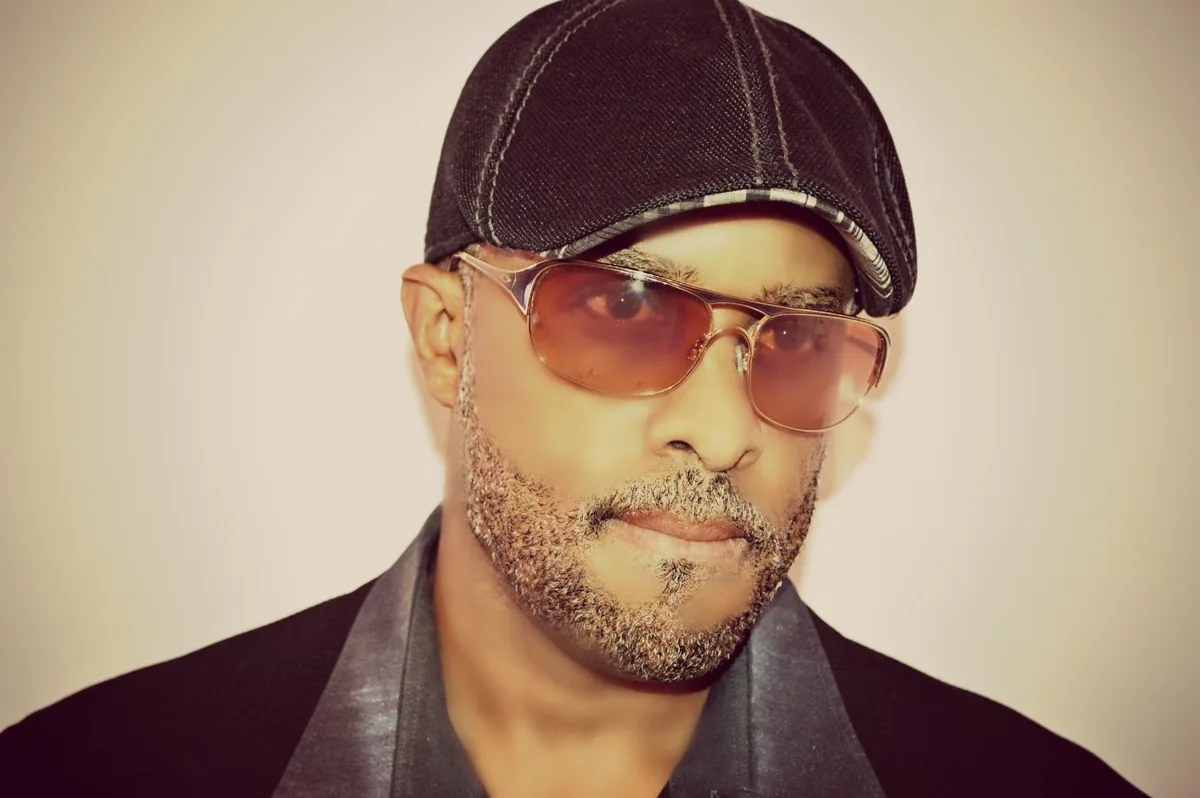

Looking back at these archival tapes from Nov. 2, 2010, is a trip. The digital hiss can’t hide the tension. Here was Marlon Campbell, a veteran of the music and film trenches, about to drop a literary grenade called What TMZ Didn’t Tell You. And the primary target was clear: his first cousin and entertainment monolith, Tyler Perry.
This wasn't just another celebrity cash-in. Campbell framed it as a necessary correction of the public record. He was reclaiming his own narrative from the long shadow cast by Perry. Listening to him then, you can hear the exhaustion and the resolve. The book, he explains, is an “in-depth, up close, and personal conversation type of piece where I’m talking about the 23 years in the entertainment business and the trials and tribulations and the ups and downs.”
But let's be real. It was about the feud. Campbell is quick to pinpoint the exact moment the foundation cracked. It wasn’t when the media got wind of their family connection. The real fracture happened earlier, at a pivotal moment in Perry’s ascent. “I think it all imploded… when he went from stage plays to major motion picture with Lionsgate,” Campbell states, dismantling the common perception. “We were quite frankly feuding before that even happened.”
That detail is everything. It reframes the conflict not as a petty squabble over press clippings but as a fundamental break over business power and creative control at the very instant Perry was handed the keys to the Hollywood kingdom. The transition from the Chitlin' Circuit to a major studio deal changed everything, and according to Campbell, it left him on the outside looking in.
And then he drops the hammer. Campbell paints a portrait of Perry that is violently at odds with the man’s carefully cultivated public image of faith family and forgiveness. He speaks of a deep-seated animosity known only to those within their inner circle. “To our entire family, it’s known that Tyler has always been mean-spirited. He’s always been angry. I mean, I’m talking since we were three, four years old that I can remember.”
It’s a brutal, almost unbelievable claim against one of the most successful Black creators in history. Yet Campbell seems less interested in tearing Perry down than in creating what he calls an “identity separator.” He even encourages the public to hold onto their positive image of Perry, a strange but calculated move to position himself as the reluctant truth-teller, not the bitter aggressor.
Campbell’s take on the media’s role is surprisingly sophisticated. He doesn't blame the initial outlet that broke the story. “No, I don’t blame TMZ. I believe TMZ was doing what TMZ does,” he says. “I think TMZ was pretty much on point, quite frankly, with how they reported it.” The real damage, he argues, came from the second wave: the blogs and ancillary outlets that spun the core facts into wild fiction about ten-million-dollar lawsuits and fistfights in downtown Atlanta.
It wasn't a brawl. It was a food fight. You know, I'm not ashamed to say it. Not ashamed to say it was a food fight.
The one valid critique of Campbell’s strategy, looking back, is that by centring his book so heavily on the Perry conflict, he risked defining himself permanently by his relationship to his more famous cousin. It’s a classic industry trap. While attempting to step out of a shadow, you can inadvertently make it a permanent part of your silhouette.
But the interview pivots, revealing a career far richer and more varied than just the Perry drama. Campbell’s history in the music business is a chaotic tour through late 20th-century pop culture. He recounts opening for Nirvana at a place called Gator’s Chuck and Jive, a culture clash of the highest order. He wasn’t just a supporting act; he found a strange kinship with Kurt Cobain.
Their conversation was heavy, touching on the suffocating nature of sudden fame. “He was kind of experiencing the same thing,” Campbell recalls. They had a “real serious conversation about life and philosophy and being careful for what you wish for.” The encounter left a permanent mark, ending with a chilling premonition. “I just remember this dark feeling that I would never see him alive again. And unfortunately, it ended up being true.”
His stories are a Rolodex of music royalty. There’s a run-in with LL Cool J in New Orleans that started with ego and devolved into a full-blown food fight over who would open a show. “It wasn't a brawl. It was a food fight,” Campbell insists, laughing. “French fries and tea and hamburgers… I’m not ashamed to say it.” It’s a hilarious, humanizing moment that captures the raw energy of the era.
Then there was Whitney Houston. Campbell became an unlikely hero by pulling strings to get a young Bow Wow to Bobbi Kristina’s 11th birthday party while Bobby Brown was in jail and Whitney was on tour in Russia. The gesture of kindness led to a multi-year working relationship. He speaks of her with immense respect, recalling a tour in Europe where a dehydrated and sick Houston still delivered a flawless show. He saw her as a “consummate professional” away from the media circus.
His transition to film was directly tied to Perry. Campbell was instrumental in the early strategy to film Perry’s stage plays and sell them directly to a hungry home video market, a move that generated a fortune and laid the groundwork for the entire Tyler Perry empire. When that partnership dissolved, Campbell launched his own company, A Match Pictures, and acquired a studio in Florida, determined to build his own legacy.
At the time of this interview, he was buzzing about his new project, Mama and Me, starring Bernadette Stanis of Good Times fame. He describes the set as the most fun he’s ever had, a magical experience that finished ahead of schedule. He also had a slate of other films, including a thriller called Oblivious and a fascinating romantic comedy, Beyond the Cliche, with gender-swapped emotional roles.
Listening to this tape now, more than a decade later, it serves as a time capsule. It captures a creator at a crossroads, fighting to control his own story while navigating the treacherous intersection of family and business. Marlon Campbell’s career is a fascinating journey through the heart of the industry, a testament to a survivor who has seen it all, from food fights with hip-hop legends to quiet, haunting conversations with rock icons on the edge of oblivion.
519 Magazine Archive: We are thrilled to officially unearth the Rockstar Weekly Digital Vault. This isn't just a re-post; it's a high-fidelity restoration of a pivotal era in music journalism. By pairing original print dates with modern retrospectives, we’re bridging the gap between historical rock-and-roll grit and the lightning-fast performance of today’s web. These stories—once locked in physical print and lost URLs—are now back, fully searchable, and optimized for a new generation of fans.
We are thrilled to officially unearth the 519 Magazine Digital Vault. This isn't just a re-post; it's a high-fidelity restoration of a pivotal era in music journalism. By pairing original print dates with modern retrospectives, we're bridging the gap between historical rock-and-roll grit and the lightning-fast performance of today's web. These stories—once locked in physical print and lost URLs—are now back, fully searchable, and optimized for a new generation of fans.