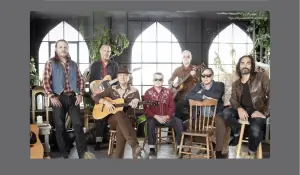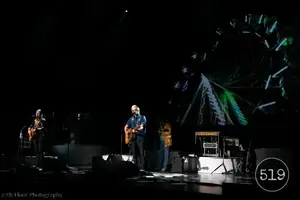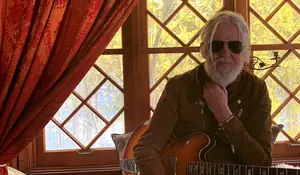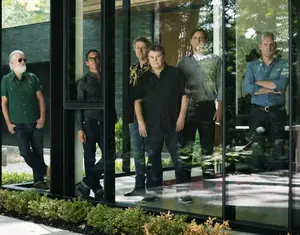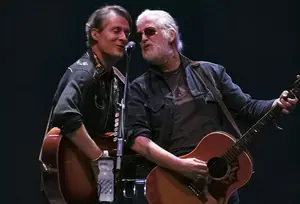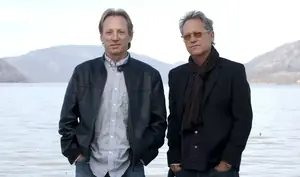
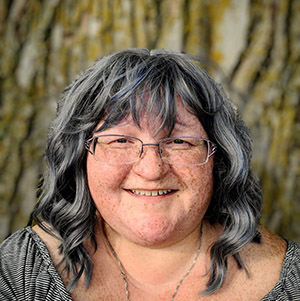
Sitting across from Jim Cuddy, you don’t just see the face of Canadian alt-country royalty; you see a man who has successfully navigated the treacherous transition from barroom brawler to elder statesman without losing his edge. We are backstage at a venue in London, Ont., the air smelling of stale beer and expensive cologne, a fitting backdrop for a guy who has spent three decades bridging the gap between the two.
The occasion is a milestone that makes anyone over the age of 40 feel a bit creaky in the joints. It is 2020, and *Casino*, the album that arguably solidified Blue Rodeo as a permanent fixture in the national psyche, is turning 30. For a band that started in 1984, the math is staggering. But Cuddy takes it with the kind of relaxed shrug only a guy who has sold four million records can afford.
"You can imagine that as the years have gone on, we've had so many anniversaries. I did not realize that. Was it 2020? I guess that's right, huh? Wow, 1990. It all seems so long ago," Cuddy says.
And it was long ago. 1990 was a pivot point for the band. They had just come off the massive, messy success of *Diamond Mine*, and the industry was watching. The decision to head to Los Angeles to record at the legendary Capitol Studios was a power move, a declaration that they weren't just a Queen Street West phenomenon anymore. They were playing in the big leagues now.
"Oh, in those days we were working so much... do I remember? I don't think I remember writing. I certainly remember recording, because it's the first time we went down to Los Angeles, and we used Pete Anderson, and we worked in the Capitol recording studios. So it was all a bit of a walk through music history. It was exciting being down there. I certainly remember all the recording, the mixing, and being very happy with the results. I remember being in the studio, writing Trust Yourself, and sitting there with an electric guitar writing that," he says.
The choice of Pete Anderson as producer was a deliberate attempt to rein in the band’s more chaotic impulses. Anderson, known for his work with Dwight Yoakam, brought a Nashville-via-California discipline that Blue Rodeo hadn't yet embraced. If *Diamond Mine* was a sprawling, psychedelic country experiment, *Casino* was the sober morning after. It was lean. It was tight.
"Well, the mission was more to distill a bit of what we'd done. We'd just done Diamond Mine, which was a big, huge, and sprawling, anything you want to put onto it goes. And we wanted to do something that was a little bit more streamlined. And that's one of the reasons that we got Pete Anderson. We liked his records with Dwight Yoakam and some other people," Cuddy explains.
But the "streamlined" approach wasn't a permanent shift. It was a specific tool for a specific time. By the time they got to *Lost Together*, the band was already itching to get back to their more expansive, improvisational roots. It’s a classic artistic tension: the desire for perfection versus the need for soul.
"Yeah, it was more an exercise in editing than just putting everything down on record. And I think you can also understand that the next record, Lost Together, was back to our old ways. We realized that's the way we liked to make records," he says.
You can't talk about *Casino* without talking about "'Til I Am Myself Again." It is the quintessential Blue Rodeo track—catchy enough for radio, but carrying a weight that most pop songs can’t handle. It’s a song about the waiting room of the human condition, specifically the hollowed-out space of addiction.
"It was written to acknowledge a friend's struggle with addiction. I think that if anybody knows anybody that has struggled with substances... you say, 'What are you doing?' And they say, 'Look, I know what you mean. I'm absolutely going to give it up, but January 1, I'm done.' There's always some kind of deadline in the future. So that was more what it was, is that the idea of the song is, 'I will go back to my life when I feel like myself again,'" Cuddy says.
The Blue Rodeo of 2020 is a different beast than the one that prowled the stage in 1990. Back then, they were trying to prove they could rock as hard as anyone else. Now, they seem more comfortable in their own skin, leaning into the "roots" label that they once might have found limiting.
"Well, I think the band that released Casino in 1990 was more of a rock band. And I think now we're more of a roots band. It's such a broad palate now to draw from. We're very happy dipping into country, folk and rock. But we're certainly less of a rock band than we used to be. I think we've found so many other avenues besides just pounding away. And it was sure fun pounding away when we were in that stage," Cuddy notes.
But music isn't the only thing that has evolved. Cuddy has branched out into the world of viticulture, a move that often smells of vanity for most celebrities. But with Cuddy, it feels like a natural extension of his obsession with craft. He isn't just slapping a label on a bottle of rotgut; he’s actually paying attention to the soil.
"I've been a wine enthusiast for a long time, probably since about 1991. We were touring that record. The road manager, Kevin Douglas and I, we just admitted to each other that we were so sick of beer, and the common libation of rock bands. We just started to say, 'What about wine?' And we got a magazine and we read about some stuff. In those days you could buy a first-growth French wine for $50, we'd split it, 25 bucks each. And we'd read about it, then we'd try it in the little Solo red cups in the back of the bus, and we could understand it. We thought, 'Yeah, I get this,'" he says.
The transition from Solo cups to his own line at Tawse Winery was a decades-long process of education. He saw the "celebrity wine" trap from a mile away and decided he wasn't going to be part of the problem.
"It just went on, because traveling is very conducive to wine appreciation. You go to different places, you smell the air, you'd see the agriculture, you'd taste the wine, and it all sort of connects. I'd been very interested in a long time, and I started to do some annual winery gigs, one being at Tawse Winery. Believe it or not, on the very same day, I'd been thinking about it. Other people had wine, and I thought most celebrity wine was terrible. If you'd ever go to some celebrity event, they'd be serving one of the celebrity wines? They're terrible. Undrinkable," Cuddy says.
His standards were high, and the partnership with Tawse was the result of a serendipitous lunch. Now, he’s got a portfolio that includes a red, a white and a sparkling, with a whiskey on the horizon.
"So, I thought, if I ever did this, I'm going to make a good wine. And on the very same day, we got two offers. One was just for me personally, it was Tawse Winery. We had lunch and made a deal. So now I have a red, a white, and a sparkling. And soon to have a whiskey," he adds.
When I heard about his Alzheimer diagnosis, I was absolutely floored... I thought how unfair it was that one man would put so much tragedy on one man. He'd already so bravely fought cancer. I think one of the greatest fears for a musician is being lost and bewildered onstage, and John weathered that for at least two years... Everybody admired his bravery, and they loved him, and it was just very, very sad to watch.
When asked what makes a good wine, Cuddy doesn't get bogged down in pretentious descriptors. He’s practical. He wants something that delivers value without sacrificing character. He’s aiming for that $25 sweet spot—accessible but respectable.
"Well, Tawse is a very good winery, so they're not going to make bad wine. I really think it's simple. I'm not making a particularly expensive wine, just $25. So, it's a little above, perhaps, what people are used to spending, but it delivers with some characteristics. And really, the whole point is, it's not bad. It's not a bad wine," he says.
There is a technical critique to be made here: the Ontario wine market is flooded with sugary, mass-produced whites that masquerade as quality. Cuddy’s Chardonnay is a refusal to play that game. It’s dry, it’s honest and it’s local.
"So often people are having cheap wine, and they think, 'Well, this is good enough for me.' But they don't really like it. They like it enough. Maybe there's some sugar in the white. But I just tried to make a wine that resembled good wines that had a particular character. And mine is a chardonnay, it's from their blocks, and it's relatively dry. I mean, it's totally dry, but it's not very oak-y. It's a very pleasant and character full wine. For good price," he explains.
Despite the success of the label, don't expect to see Cuddy pouring his own vintage for his friends at dinner parties. There’s a level of humility there that prevents him from being his own biggest fan.
"Frankly, it's a pretty small run, right? I'm not looking to blanket the world. It's mostly just in Ontario It's certainly in all the liquor stores, and I have lots at home. But it would be embarrassing for me to serve my wine, to my guests. So, I let other people do that," he says.
Shifting back to the music, his solo project *Countrywide Soul* feels like a return to the basics. Recorded in his barn, the album is a masterclass in atmosphere. It’s the sound of a band that knows each other’s breathing patterns, playing live off the floor without the safety net of digital correction.
"Primarily, I wanted to make a record at my farm, in our barn. Beautiful upstairs to the barn. Really sounds gorgeous. I'd written a lot of songs up there. Nice vibe, wanted to get up there. I wanted to highlight what musicians I have in my solo band. Ann Lindsay, Colin Cripps, Bazil Donovan... they're both in Blue Rodeo, but Joel Anderson and Steve O'Connor? They're just absolutely seasoned professionals. Beautiful, sensitive musicians," Cuddy says.
The album allowed him to revisit songs he felt he had "rushed" during the Blue Rodeo years. It’s a rare thing for an artist to admit they didn't do their own work justice the first time around. Songs like "Dragging On" and "Clearer View" get a second chance here, bathed in the natural reverb of a wooden barn.
"I did a couple of covers. I wrote a couple of songs. And then I just mined my own catalog, to see if there was something I could either get some new meaning out of like All in Time, became a different song or finish songs that felt that I had rushed. The two Blue Rodeo songs, Dragging on and Clearer View are ones that post-recording, I didn't feel that I had done them justice. And Countrywide Soul because that was going to be the name of the record I wanted to just push it. I don't know why I was reluctant at the time to make it more countrified? Push it in that direction, and have a pedal steel play on it. A really fun, rollicking, very country," he explains.
The process was as much about the lifestyle as it was about the recording. It sounds like the kind of session every musician dreams of—working hard during the day and then decompressing with a swim and a outdoor dinner.
"Some didn't change. Maybe sometimes it sounds almost exactly the same. That's what we did before. But it's an exercise. We just did it live, off the floor in the barn. I wanted to just show off these musicians. You know, all those solos are done at the time. Just everybody listening to each other playing. We'd start at 11:00. We'd be finished by 7:00. We'd be having people going for a swim, and then we'd have dinner on the lawn at eight o'clock. It was just such a pleasurable experience, and I think the record reflects that," Cuddy says.
One of the standout tracks is a cover of Glen Campbell’s "Rhinestone Cowboy." It’s a bold choice. Campbell’s version is so ingrained in the cultural consciousness that covering it is a risk. But Cuddy finds the complexity beneath the pop sheen.
"When I was growing up, the Glen Campbell songs are hits, but I don't think much about them. I think they're pop hits, and I wasn't really into that kind of music. So I don't even think about them. Later, when I started signing more, I sort of realized that Glen Campbell had a pretty amazing voice. I mean, quite a range. Rhinestone Cowboy is thought of as just a pop song, and yet, it's a very complicated little pop song. It has very beautiful, and slightly complex, chord structure. It's got quite a wide range. It tells a great story. I saw somebody do it and I thought, 'Wow, that's a great song. I should cover that.' And it is that funny song that people know, and they don't always know why they know it. But they know it," he says.
The future of Blue Rodeo remains a bit of a question mark. It’s been a few years since *1000 Arms*, and while Cuddy is always writing, the band operates on a democratic—and sometimes slow—timeline.
"That's sort of up to the collective will. I am writing songs, and I'll be ready. So one way or another, if Blue Rodeo wants to do another record? I'd love to and I'll be ready. But if everybody wants to do their own thing? I don't know. That's a difficult question to answer. That requires everybody to sort of step forward and say, 'Let's do this!' That could happen. It seems like it will, but I don't know," he says.
In the meantime, Cuddy has been busy with collaborations. Working with Corey Hart was a full-circle moment for two guys who dominated the Canadian charts in different ways during the 1980s.
"I love Corey. You know, Corey? We kind of came up at the same time. Corey was very, very big, and so we just sort of watched him from afar. I think I got to know Corey just through this. I think it came from Bob Ezrin. And I think, honestly, it was started by a fan. This woman named Jacki, who's a huge fan of Corey's, she suggested that he sing with me. I thought Bob Ezrin had thought of it, because I'd worked with Bob Ezrin in the past, but I guess it came from Jacki. And then I tell you, the song? I was keen on it. And then, just the process of getting to know Corey. He's an absolutely lovely man. He's a very talented guy. I sang the song with him at his amphitheater show in Toronto, and it's been a really nice relationship to start," he says.
He also lent his voice to Sharon & Bram’s "Talk About Peace," a move that shows his lack of ego. When children’s music legends call, you answer.
"What are you going to do when Sharon & Bram ask you to do a song? You're not going to say, 'Let me hear the song.' You're going to say yes! And I think it's lovely. I do think putting anything out there that promotes harmony and peace is a good thing, so I was happy to do it," Cuddy remarks.
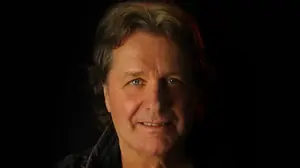
But not all collaborations are born of joy. The recent passing of John Mann from Spirit of the West hit the Canadian music community hard. The recording of "Home for a Rest" was a bittersweet tribute to a man who fought a brutal battle with Alzheimer’s.
"Well, we not only came up at the same time, but we were label-mates. They had the first couple of records when they signed with Warner. We got close, played a lot together. Knew them, loved them. We got together, we do charity trips, and it used to be raising money just for Olympic athletes. Now it's for a music and food charity as well. They were on a few of those trips. Our lives were very intertwined. I knew about John's cancer battles, and that seemed like he would win that battle. Of course he did. When I heard about his Alzheimer diagnosis, I was absolutely floored. We were riding somewhere and I had to pull over. I couldn't even catch my breath. I thought how unfair it was that one man would put so much tragedy on one man. He'd already so bravely fought cancer," Cuddy says.
The recording process for that tribute was a testament to the tight-knit nature of the Canadian scene, led by Alan Doyle in the most unlikely of studios.
"Anyway, if there was one good thing, it was that it showed what a cohesive and supportive group of musicians work in Canada. Allen Doyle was the engine behind that recording. He just set up in the bathroom of the Commodore, and he would just pull people into the bathroom, they'd sing their line, he'd got out, got it all mixed up, all played. He did a great job. Everybody wanted to honor John, because everybody loved John, and they watched him through the last couple of years. I think one of the greatest fears for a musician is being lost and bewildered onstage. And everybody's staring at you and you not knowing what to do next. John weathered that for at least two years. The iPad would keep him going, but if he stumbled, it would be really lost. So, I think everybody admired his bravery, and they loved him, and it was just very, very sad to watch," he adds.
Cuddy’s connection to Southwestern Ontario is deep. He’s played every room from the smallest dives in Hamilton to the grandest theatres in London. He remembers the days when the "bar circuit" was the only game in town.
"Oh, absolutely. We've been coming to those cities since either the first record, or even just before. Because once you were a little bit big on Queen Street, there were bars in Hamilton that you could go to. And there were bars in Kitchener. Even when we started with the Hi-Fi's, the bar scene was what everybody did. There wasn't a concert scene, really, for original bands. And so, there were huge bars, like Lulu's. Those are the bars that we all aspired to play. It only changed in the late '80s when so many bands had records and got more popular. And now everybody has a beautiful venue, but prior to that it was pretty much a bar circuit. And it was a lot of fun," he says.
Despite the miles and the years, Cuddy still brings a fierce athleticism to his performances. When he sings "Try," he isn't just going through the motions. He’s challenging himself.
"I think there's a little bit of gymnastics to it. Vocal gymnastics that's always fun to do. And I think that as I get older, I think people look at me and figure, 'Well, he's not going to be able to hit those high notes.' So I like just proving them wrong!" he says with a grin.
Beyond the music and the wine, Cuddy remains committed to social causes. Whether it’s Artists Against Racism or MusiCounts, he uses his platform with a sense of duty that feels increasingly rare.
"I think that being a member is signing your name to a petition. But I think what music does, and what musicians do, is go out there and provide entertainment for everybody. And so when you look out at your audience, you hope you see a lot of diversity, because this is something that people are enjoying together. How else can we make bridges, other than with some kind of communal activity? So I think that musicians feel like that's the work their doing anyway," he notes.
His work with MusiCounts is particularly personal. He understands that music isn't just a hobby; it’s a language that needs to be protected in schools.
"Well, I'm pretty near and dear to Music Counts. Music Counts is a charity that provides grants for schools to buy instruments. And I've been involved with them for about 10 or 12 years. First of all, it's amazing how the need keeps rising. You'd think that that would be something that you could eradicate. But because every time the grant is used, that school probably has instruments for 20 years. But the need? It just goes up, and up, and up as music programs are more threatened. And I think that's such wrong-headedness. And I don't think everybody should be guided towards a tech career. I think there are a lot of languages to speak, and music is one of them. So, I work hard for that one. And then just numerous other ones," he says.
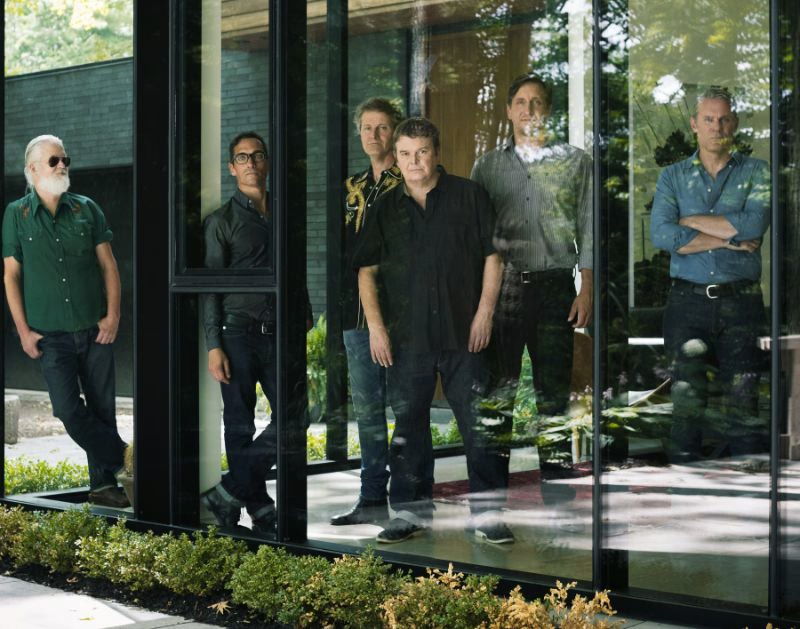
Blue Rodeo is more than a band; they are a Canadian institution. With 15 albums, countless Junos and a spot in the Hall of Fame, they have nothing left to prove. But as Cuddy prepares for another winter tour through St. Catharines, London and Kitchener, it’s clear that the "pounding away" phase may be over, but the fire is still very much alive.
The band will be hitting St. Catharines on Feb. 7, London on Feb. 8, Kitchener on Feb. 20 and Hamilton for a two-night stand on Feb. 21 and 22. If you haven't seen them lately, go. Just to see if he still hits those notes. Spoiler alert: he does.
Get Tickets