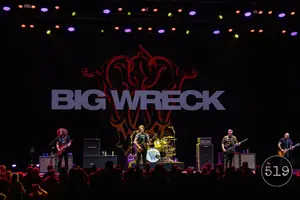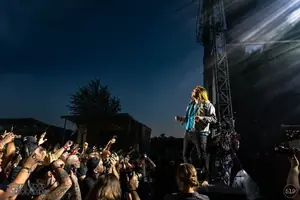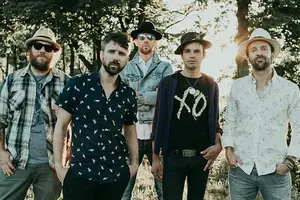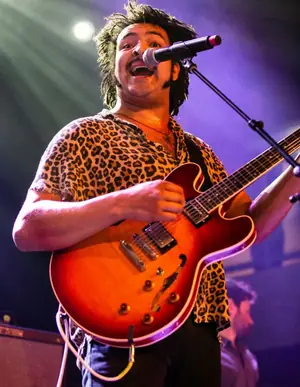

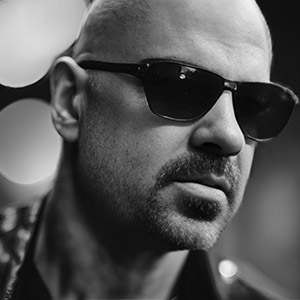
Sitting in the dim glow of a studio monitor, the opening crunch of *But for the Sun* hits like a physical weight. It is thick, unapologetic and drenched in the kind of high-gain saturation that most modern rock bands are too timid to touch. Big Wreck has always been a bit of an anomaly in the Canadian circuit—too sophisticated for the beer-and-darts crowd, yet too heavy for the indie elite.
The band is currently hauling this sonic wall across the country for their 2019 tour. They are hitting the usual suspects: Guelph Concert Theatre on Nov. 22, London Music Hall on Nov. 23, Hamilton’s FirstOntario Concert Hall on Dec. 4 and a heavy-hearted return to Sarnia’s Imperial Theatre on Dec. 5.
It is a bittersweet victory lap. The group emerged from the hallowed halls of Boston’s music scene in the early 90s, eventually dropping *In Loving Memory* in 1997. That record went double platinum in Canada, fueled by the staggering technicality of "The Oaf" and the melodic ache of "Blown Wide Open." But the narrative changed this past June.
Founding guitarist Brian Doherty, a Sarnia staple and the band’s tonal anchor, passed away following complications from cancer. It left a void that most bands would have collapsed into. Instead, frontman Ian Thornley chose to lean into the noise.
I caught up with Thornley just as the tour gears began to grind. He sounds tired but resolute. When I mention that the new record feels like a massive, loud return to form, he does not disagree.
"Yeah, that’s the sort of mission statement that we carved out for ourselves at the onset, for sure," Thornley says.
There is a certain '70s swagger to the new material. It reminds me of an era when rock albums were treated as complete works rather than a collection of potential singles. It is dense. It is demanding. And it sits comfortably in a discography that has seen Thornley oscillate between the Big Wreck moniker and his solo project.
"I look at all of our albums as sort of unique and individual. Yeah, it’s hard for me to stand one up against the other. Right now it’s my favourite, but that’s probably just because it’s the most recent. But I love them all for different reasons. It’s kind of like your children. You don’t love one more than the other," he explains.
He shifts in his seat, likely thinking about the technical evolution from their previous outing, *Grace Street*. That record was more experimental, perhaps a bit more atmospheric. *But for the Sun* is the pendulum swinging back toward the riff.
"I love rock and roll and I love raw sort of riff based, a little bit more adrenaline. I love that kind of sound and it’s something that we’ve definitely done before. But on a personal level, I don’t think it was time to go there with the previous album. So Grace Street was a statement of where we were at that time, and I think But For The Sun was, I think musically it was the right time for us to go in that direction," he says.
Thornley is a gear-head and a purist. He knows when to push the tubes and when to pull back. This record is clearly a push.
"It’s not really a hard left or right, it’s in keeping with what we do. But yeah, it was just it felt like the right time to sort of turn things up a bit," he adds.
But even with the volume turned up, the Canadian prog-rock shadow looms large. Last year, the band tipped their hat to Rush for the 40th anniversary of *A Farewell to Kings*. It seemed like a natural fit for a band with Big Wreck’s chops, but Thornley’s relationship with the Holy Trinity of rock is more complicated than you might think.
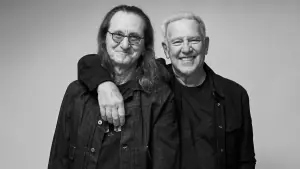
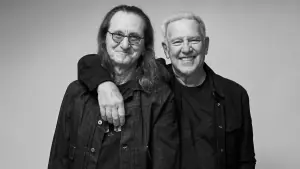
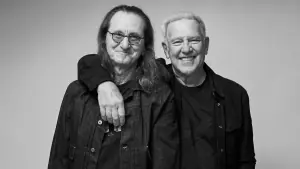
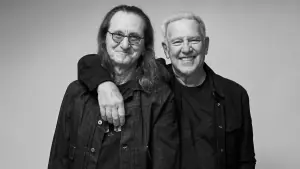
"Ironically, no. It came about, we shared management and a label for several years there, and I’ve come to be friendly with Alex Lifeson just over the years of being in the sort of Toronto scene, and he’s a lovely guy. I’ve met Ged several times and he’s a lovely guy. I’ve never met Neil. I have infinite respect for what they’ve done and how they’ve done it, but musically it was never really my cup of tea. There are moments obviously that I think are beautiful, but on the whole, it was just... I don’t know, maybe it’s just when I was coming of age sort of musically where my tastes were sort of across the street from where they were, you know? But I mean, I can stay if it’s on the radio, I’m not changing the channel. It’s just it’s not something I ever really sunk his teeth into. But who knows, maybe I will sometime in the future. But of course being a Canadian kid, I heard all that stuff on the radio constantly," Thornley admits.
The conversation inevitably turns to "Voices," the opening track of the new record. It is quintessential Big Wreck—soaring vocals paired with a guitar tone that feels like it could peel paint. Given the timing, it is hard not to hear it as a tribute to Doherty.
"You know, the record was completed while he was still with us. And yeah, I think lyrically a lot of the references are just sort of subconsciously snuck in there. I listen to it now and I have a hard time with some of the lyrics because I’m like, 'How would I have said that if I...?' Because we were still of the mind that he was going to be fine. I don’t know, maybe it was just the idea of losing someone that close that I’ve known for that long. I don’t know. I tend not to edit myself too much if it feels natural and it’s from the heart and it says what I want to say. I tend not to look at it too closely. If there’s something that’s making me feel uncomfortable and I’m like, 'Ew,' sometimes that’s the right thing and sometimes it’s not, but I tend to not look at it too closely," he says.
The creative process is often a haunting. You write what you feel before you even know you are feeling it. Thornley acknowledges that the ghost of Brian is baked into the very DNA of the new music.
"I mean, it’s hard to say where this stuff comes from, and I’ve had discussions with other guys and I think maybe it’s just like it was in the back of my mind, like a what if kind of thing. I don’t know. But no, certainly the whole record ought to be a tribute to Brian, and I think every show that we play from here on out is a tribute to him," Thornley notes.
It’s still felt on a daily basis and it’s still discussed, and there’s a lot of unspoken things that don’t need to be said on stage. ...We’re getting Bri-slammed. If you’re at the mic and you’re concentrating and doing your thing, and all of a sudden he’ll pop into your head and it’s just like you just get choked up and thrown off course, that’s a Bri-slam.
The loss is still fresh. You can hear it in the way he pauses between sentences. Doherty wasn't just a sideman; he was a founding pillar of the Big Wreck architecture.
"Yeah, yeah, it did. Yeah, and it’s still felt on a daily basis and it’s still discussed, and there’s a lot of unspoken things that don’t need to be said on stage. It could just be a look from Dave or from Chuck, and it’s like you can just tell that he’s there in some way or fashion, even if it’s just in our thoughts. We have an expression for it because these last few months of shows, it’s just been a bit of a roller coaster emotionally getting through it. And the expression we’ve come up with is we’re getting Bri-slammed. If you’re at the mic and you’re concentrating and doing your thing, and all of a sudden he’ll pop into your head and it’s just like you just get choked up and thrown off course, that’s a Bri-slam," he reveals.
It is a brutal, honest term for grief. But there is a levity to it as well—the kind of dark humour that only exists between lifelong bandmates who have spent too many hours in a van together.
"And then Dave and I were talking about it, and I said, 'On some level somewhere I know he’s chuckling whenever that happens.' I’m going for some really high note and all of a sudden my throat just seizes, and I’m sure he’s getting a chuckle out of it," Thornley says.
Continuing the tour required a new presence on stage. Enter Chris Caddell. Bringing someone new into a grieving unit is a delicate operation, but Caddell seems to have provided the necessary ballast.
"But it has been something that we’re trying to be as open as we can about and try to communicate as clearly and as often as we need to, because I think a tour like this could easily go sideways at any moment. And Chris Caddell, the addition of him I think has really helped, not only musically but personally. He’s got such an upbeat and positive energy, that I think that helps everybody keep their head above ground, you know?"
Caddell is a known quantity in the Toronto scene, a player with enough soul to respect the parts and enough ego to make them his own.
"Well obviously he’s a completely different musician than Brian. I mean it’s a different energy than Brian. But I think as long as the chemistry works, and he’s obviously put in the time this summer while we were playing as a three piece, I had already tapped Chris for the tour. Once everything went down with Bri, it was like, okay well there was no one else that I would have asked. I’ve known Chris a long time, and he’s a great friend and also a great musician, a great player, and a great singer in his own right. Yeah, once that all went down and we sort of resurfaced, I tapped Chris," Thornley explains.
The transition wasn't instantaneous. There was a learning curve, a period of shedding his blues-heavy skin to fit into the complex, often jagged arrangements of Big Wreck.
"He’s another local guy, he’s a Toronto guy, so we’d spend some time going through songs and going through parts and going through tunings, and he’s got a great ear. He picked it up quickly. But it’s a little bit different from what he does normally, because he’s usually more of a blues based thing. Not that we aren’t, it’s just a different focus with the Big Wreck stuff. I think once he really sunk his teeth into it, he’s just blossoming and every show is better than the last," he says.
And while the band experimented with being a trio during the summer, the wall of sound that Big Wreck is known for really requires that second guitar. It is about the "fairy dust"—the small, intricate layers that separate them from the standard rock fare.
"Yeah, musically it’s just different. It feels different. Of course we miss Bri terribly, but it’s not like it’s a completely different song book. It’s not like we’re playing different songs. Everything is being covered, it’s just in a slightly different way. Nobody has the hands of Brian, and conversely, nobody has the hands of Chris or myself. It’s just a matter of chemistry. Sometimes it works, sometimes it doesn’t, and luckily with Chris it works. It just works in a different way than it did with Brian, you know?"
I ask if he ever seriously considered staying a three-piece. The logistics are easier, but the sonic compromise might have been too great.
"Yeah. Yeah, we did that for the summer, and I did think about it because we started to get pretty good at covering a lot of the parts. We started to do different things sonically and arrangement wise I’m trying to cover two or three parts while I’m singing. It’s a challenge and I’m always up for a challenge, but there is just something about having two guitars. You can cover so much more ground musically. And especially with the kind of music that I like to record, I tend to put a lot of layers and counterpoint parts, and I love parts," he says.
The "parts" are what make Big Wreck. It is the seasoning that turns a basic meat-and-potatoes riff into a five-course meal.
"Sometimes you can get by just on the raw energy and the impact of the song itself, but I love hearing the fairy dust and the other bits that sort of adorn a song, you know? All the seasoning, if you will," Thornley notes.
He seems settled now. The lineup is solid. The energy is right.
"I mean, it feels great right now. I wouldn’t change it," he says flatly.
"I don’t think I’d want to go back to the three piece thing. I don’t know. Chris might have something else. He might have other plans. I don’t know," he adds with a shrug.
We talk about the *Albatross* era, the 2012 comeback that reignited the flame after the Thornley solo years. It was more than just a name change; it was a liberation from the industry grind that had tried to sanitize his sound.
"Oh, big time, yeah. It wasn’t just a changing of the band name, which is essentially all it was. But we had changed labels and our management, which was SRO, which also Anthem records is attached with SRO. SRO was our management, and then we just, once we got out of the 604 thing, we were able to go with Anthem. And then it just creatively, it was like, 'Okay. Go in the studio and do what you do.' And it was like, 'Oh God, thank you.' There’s nobody saying, 'No, no, no, no, no, it has to be under three and a half minutes. No, no, no, no, no. No guitar solos, no big words, no chords with numbers in them,'" he recalls.
That freedom is what brought the Big Wreck spirit back. It was about reclaiming the right to be complicated.
"I felt like out of the cage. I was just sort of able to do whatever I wanted, and I think that shows in the music. I think that whatever that is, it did sort of hark back to the Big Wreck thing and I’m sure a lot of it had to do with the fact that Bri was back in the fold," he says.
The transition back to the original name was almost accidental, born out of a studio session where the energy simply didn't fit the "Thornley" solo label anymore.
"I mean, essentially we went in as Thornley, but we were a five piece Thornley, right? We went into the studio as Thornley, but it was somewhere during the first few weeks of tracking, it was either Nick Raskulinecz or Eric Ratz, one of the two said, 'We should just call this a Big Wreck album. We’ve got a new label and a new this and a new that, and Brian’s back in. Let’s just call it Big Wreck,'" he explains.
It was a point of contention at first. The legacy of the original lineup was something Thornley held sacred.
"And both Brian and I were like, 'No way, man. Forrest and Henning aren’t here, so it wouldn’t be right.' But then we sort of warmed to it. One of the guys put a sticker on the track sheet, put a Big Wreck sticker on the track sheet. It was like, all right. I mean, the music could fall into that, so why not? And then, everybody was behind it. Everybody was into it. We’ve accomplished far more on this side of it then we did previously. This is our fourth album, I think, since Albatross. Yeah. So I guess it was the right move, whoever suggested it," he says.
After 25 years of highs and lows, I ask him what he treasures most. It isn't the platinum plaques or the chart positions. It is the ritual of the road, even if that "metal tube" of a tour bus is a nightmare for his back.
"I have a lot of them that I treasure, of course. I wouldn’t be still doing this. I mean, it’s not easy. It’s not an easy way of life being on the road and living on a metal tube that never seems to find a smooth road. Yeah, I wouldn’t be doing it if I didn’t. There are moments almost nightly that I treasure, and that’s sort of the goal and the reason why I do it, you know? It’s all part and parcel with striving to make everything better than it was the last show. And then of course, every once in awhile you realize that you can only control so much and then something really beautiful happens. I think those are the moments you really treasure," he says.
As they head back into Southwestern Ontario, the connection to Sarnia remains the emotional core of this run. Doherty’s hometown will undoubtedly be a heavy night, but Thornley remembers the area for more than just the loss.
"Yeah, plenty. I have some friends there. And of course, you know when Brian was there, yeah, I have a lot of fond memories of the Sarnia area for sure. Whatever that big festival was that you guys had many, many years ago, Bayfest was it?"
I confirm. Bayfest was the pinnacle for a long time.
"We played one of those, and I made a couple of friends down there that they’re still friends of mine to this day. So yeah, and I’ve gone and stayed at their place. The water down there, down on the beach there, yeah I loved it down there for sure," he says.
The tour rolls on. The amps are loud. Brian is still there, somewhere in the feedback and the "Bri-slams." And Big Wreck continues to be the loudest, smartest band in the room.
Get Tickets