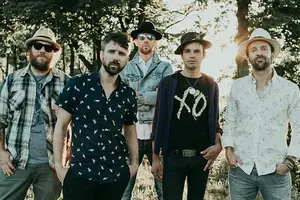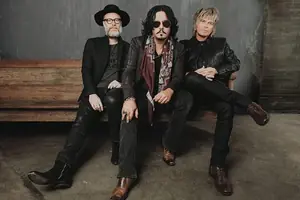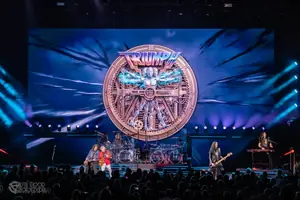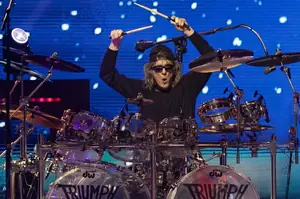
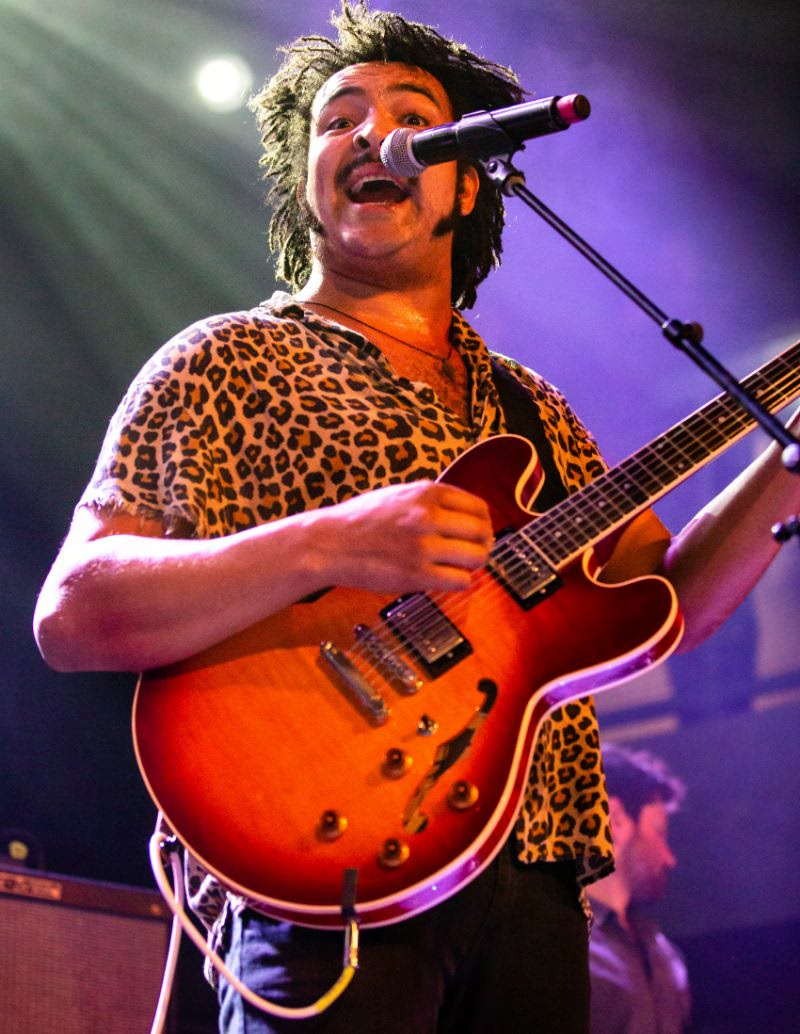
Standing in the back of a sweat-slicked club in London, Ontario, you can feel the floorboards groan under the weight of Texas King. This is a four-piece rock outfit that understands the geography of a riff. They do not just play music; they occupy the room with a high-energy live show that feels less like a performance and more like a blue-collar exorcism. The lineup is a tight-knit collective: lead singer and guitarist Jordan Macdonald, guitarist and vocalist Colin Gray, bassist Phil Spina and drummer Melvin Murray.
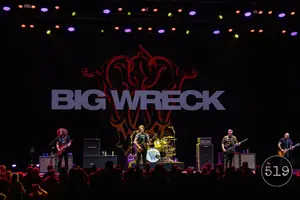
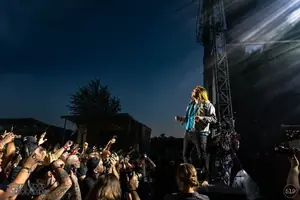
The year 2019 was a massive pivot point for the group. They spent the better part of it opening for Big Wreck on the “But for the Sun” tour, a massive undertaking that saw them criss-crossing Canada and the U.S. and sharpening their hooks in front of audiences that demand more than just a catchy melody. We sat down with Macdonald to talk about how a kid who started on drums in a church ended up fronting one of the most promising rock acts in the province.
The Big Wreck gig was not just a lucky break. It was a result of being in the right place with the right attitude. Macdonald recalls the moment the stars aligned at a summer festival.
"Well we actually played with them in the summer at Sarnia Bluewater Borderfest along with Tokyo Police Club which was cool because Tokyo Police Club was one of my favourite bands growing up," Macdonald says. "We ran into Big Wreck after the show and thanked them for having us out. I was chatting with Ian Thornley and he asked us what we had going on and I told him our booking agent actually submitted us to the list of bands applying for the Big Wreck Tour. We had been waiting for a while to find out if we were going to get it and that was Friday night, Monday morning we got the offer."
But the road has a way of humbling even the most prepared bands. During a stop in Washington, D.C., Macdonald found himself in a musician’s worst-case scenario. A photo circulated of him on his back, staring at a guitar that had been snapped at the headstock. It is the kind of image that makes any gearhead wince.
"I can laugh about it now but it wasn’t funny at the time," Macdonald says. "I tripped on my monitor in DC and that was a guitar Heritage Guitars had just so graciously given me and it was only our third show. It snapped, and thank goodness Ian’s personal guitar tech Shane was able to fix it within a week, he just did it in his hotel room. It’s still a little rough around the break area but he sanded the back of the neck so you can’t really tell when you’re playing it. I honestly think it plays better now, a little looser."
That "looser" feel seems to define the band’s current trajectory. They are not overthinking the process. Instead, they are focusing on the ground game. Converting one fan at a time at the merch table is a lost art, but Texas King is reviving it.
"I think so, it’s hard to gauge but we got a lot of good feedback at the merch table and I always made a point of saying, you gotta come back next time we come alone, jump on board for our team, you know?" Macdonald says. "That’s why we’re heading back to the U.S. again in a few weeks and hitting Philly, Boston, Asbury Park, Buffalo where we got good feedback and get back right away while we’re still fresh in their minds."
The reality of the Canadian music circuit is that the hustle never stops. Even with major opening slots for The Sheepdogs and Glorious Sons, the band members maintain a dizzying array of side projects and businesses to keep the lights on. It is a pragmatic approach to a volatile industry.
"All of us sort of do stuff on the side," Macdonald says. "For example, Colin and Melvin have a screen printing business so they have a bunch of clients of their own and they also do all the work for the band. It cuts costs a lot and it’s convenient. Phil works in production, he works at London Music Hall and for a couple of freelancers setting up staging at events. For me, I do a lot of acoustic gigs, private parties, corporate gigs and a couple of residencies at bars in London."
And while the full band is a high-octane affair, Macdonald and Gray have roots that are much more stripped back. They met at Fanshawe College in the Music Industry Arts (MIA) program, a legendary incubator for talent in Southwestern Ontario.
I can laugh about it now but it wasn’t funny at the time. I tripped on my monitor in DC and that was a guitar Heritage Guitars had just so graciously given me and it was only our third show. It snapped... I honestly think it plays better now, a little looser.
"Actually Phil, Colin and I all met at Fanshawe in the MIA program, only our drummer has changed since then," Macdonald says. "Colin and I sometimes work together if there’s a request for an acoustic version of Texas King but most of the time he and I do our own solo acoustic shows. In contrast to my antics with the full band, I’m usually sitting on a stool for my acoustic shows."
Watching Macdonald on stage, the idea of him sitting on a stool feels like a temporary restraint. He is a magnetic frontman, possessed by a kinetic energy that seems to have been brewing since his childhood. He admits that his school days were defined by this restlessness.
"I was always bouncing off the walls as a kid, class clown, getting into trouble at school," Macdonald says. "It’s funny now because a few of my high school teachers have come out to shows and I’ve had beers with them after the show and asked, 'So, do you think I turned out ok?', and they’ve said yeah, I think you put all of that energy into a good place. My English teacher used to send me to the office all the time and she came out to a show once and brought her daughter with her, it was pretty surreal."
That energy found its first outlet behind a drum kit. Macdonald’s musical education began in the pews and the pulpit, providing him with a rhythmic foundation before he ever picked up a six-string.
"I started playing drums in my dad’s church when I was six," Macdonald says. "When I was 13 I was getting bored with sitting in the back so I started learning guitar at home and singing a little bit. In grade nine I got in my first band as a drummer and after about 5 months, the lead singer and I switched spots. Once that band broke up I couldn’t find anyone I really liked to play with until I moved to London for school. I didn’t get in to the MIA program the first year so I just took general arts, but it turned out for the best because the next year I met Colin and we gelled right away and then Phil’s bass playing was the thickening agent we needed."
The band’s first EP dropped in 2013, a time when the industry was still figuring out how to monetize the post-iTunes world. It was a learning experience more than a commercial breakthrough.
"Not really, the good thing about the EP was it gave us an excuse to go play a lot," Macdonald says. "Spotify wasn’t a big thing yet and we didn’t get a lot of downloads on iTunes. The best thing off of the EP was probably the song Come Find Me, one of the first songs Colin and I wrote together. Who knows, we might re-release that song some day."
When it comes to the actual craft of songwriting, Macdonald provides the skeleton, but the band provides the muscle. It is a collaborative environment where the "thickening agent" of Spina’s bass and the rhythmic drive of Murray are essential.
"I would say I write most of it but it’s definitely a collaborative effort with the rest of the guys," Macdonald says. "We go through the form a lot then change the structure together. I’m never saying you should play this or you should play that. If we do have ideas we can share it. I usually write the main bones of a song then bring it to the band."
The visual side of Texas King is just as deliberate. Their video for "Only One" captures the chaotic, lived-in feel of their music, thanks to a partnership with local filmmaker Ed Platero.
"It was a collaborative effort between the band and Ed Platero of Platero Visuals out of London ON, we had a great time working with him," Macdonald says. "I had the idea that it should be a house party and he thought it would be cool to do it in one continuous shot. The first day we had a lot of extras and it rained a bit and we cancelled the shoot. We were going to have three sets of gear set up originally to do it in one take and it became too big a deal. It worked out for the best on the second shoot."
The band’s name itself carries a personal weight that many fans might not realize. It is a clever nod to Macdonald’s own history and his birth name.
"I was adopted at 5 days old and my birth name was Austin James," Macdonald says. "I was trying to think of a name for my solo projects before we formed a band and I went with a play on words, 'Austin Texas and King James'."
When asked to choose between the staples of the rock and roll diet—beer or whiskey—Macdonald is quick to avoid the binary choice.
"Why do I have to choose?" he asks.
Touring has taken the band from the rugged beauty of the Rockies to the historic theatres of the East Coast. Macdonald has a particular fondness for the venues that offer a sense of scale.
"We played an amazing place with The Sheepdogs in Banff once," Macdonald says. "That was probably the most beautiful place we ever played, it was surrounded by mountains. The Imperial Theatre in St John, NB. was my favourite place we played on the Big Wreck tour."
As for what 2020 holds, the band is sitting on a stockpile of material. They are mining the creative sparks that flew during those long sound checks on the Big Wreck run.
"We’re going to go back to the vault," Macdonald says. "We have a bunch of stuff demoed out already and there’s some new stuff that we were writing during sound checks and stuff like that during the Big Wreck tour we just finished. We’ll get together and see what we can put together but there will definitely be some new music released in 2020 whether it’s an EP or album we don’t know yet."
And if the momentum of the last year is any indication, whatever they pull out of that vault is going to be loud, honest and impossible to ignore. Texas King is not just a band from London; they are a band that is quickly outgrowing the city limits.