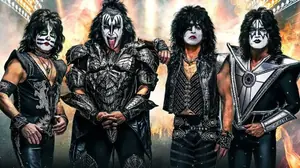
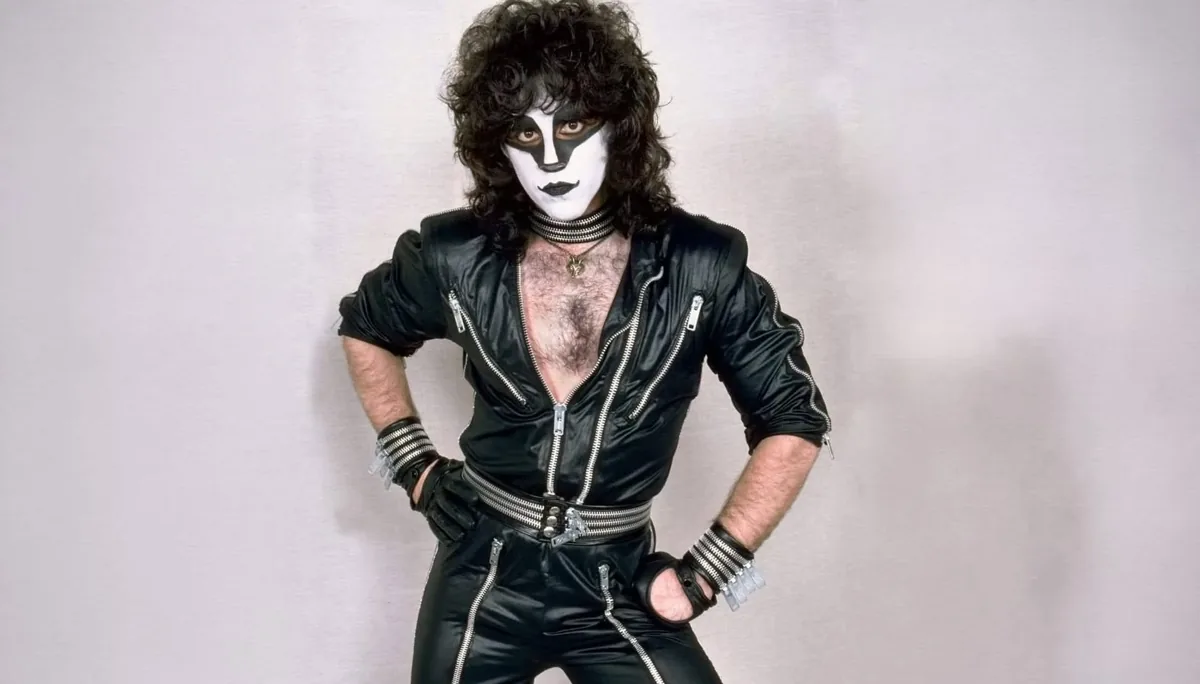
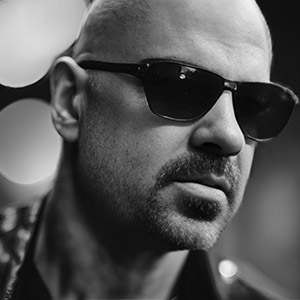
Listening back to this raw 2011 tape of Dan Savoie's chat with author Greg Prato feels like cracking open a time capsule. It’s a dispatch from a moment when rock journalism was still grappling with the legacies of the 1980s, a decade often dismissed by critics but fiercely loved by fans. Prato, a prolific chronicler of rock’s unvarnished truths, was on the line to discuss two ambitious oral histories released simultaneously: one on the life of KISS drummer Eric Carr and another on the birth of MTV. A decade later, his insights feel more vital than ever.
The first question is the most obvious. Why Eric Carr?
For Prato, the answer was rooted in a specific sound, a thunder that rescued KISS from the brink of self-parody. “I wonder if there are more intriguing albums; for me, it has always been Creatures of the Night,” Prato says on the tape, his voice clear. “That's an album I think is probably their most underrated and I think a huge part of what made that album so special is Eric Carr's drum sound. I really think he drove that album and really made it sound as great as it does.”
And he’s not wrong. That 1982 album was a sonic reset, a desperate course correction after the conceptual train wreck of Music from The Elder. Where Peter Criss was a swing-influenced, almost jazzy backbone for the 70s material, Carr was a Bonham-esque titan. His cannon-fire drums, drenched in that iconic 80s gated reverb, were the engine of the band’s return to heavy metal. It was a statement. KISS was done with orchestras and fantasy storylines. They were here to crush.
Prato’s book aimed to do what so many other KISS chronicles refused to: take the 80s seriously. The 70s makeup era gets all the glory and the 90s reunion tour gets the victory lap. But the decade in between, the unmasked years, is often treated as a footnote. This was the era of lineup changes, trend-chasing and a palpable identity crisis. Prato saw Carr as the anchor in that storm, a talent who was perhaps criminally underutilized.
“I kind of felt like he was more talented and he wasn't maybe given the amount of room to show his songwriting and playing and also singing skills in KISS,” Prato explains. It’s a sentiment shared by a legion of fans who saw Carr as more than just a replacement. He was a powerhouse vocalist and a multi-instrumentalist whose potential contributions were often sidelined by the Gene and Paul show.
The book promised to tell his side of the story, or at least the version closest to it, assembled from the people who knew him best. His sister, Loretta Caravello, provided a crucial window into his pre-fame struggles, a time when Carr was nearly broken by false starts and broken promises in the music industry. It’s a classic rock and roll narrative: the desperate artist on the verge of giving up just before landing the gig of a lifetime.
But with that gig came the internal politics. Prato details the band’s disastrous foray into art-rock with The Elder, an album Carr openly disliked. “He made it pretty clear that he was not a—he didn't think that it was a good move,” Prato recounts. “He thought that KISS should have been getting back to their heavy metal roots… he basically felt that they should be doing an album just like Creatures but they should have been doing that in 1981 as opposed to 1982.” Even then, the new guy knew the brand better than the founders did.
The record label had difficulty at that time getting those two videos played on the channel and by finally those videos being played, that broke down the whole barrier and then finally black artists were accepted and also played by the channel.
One of the more fascinating aspects of Prato’s work is his conversation with Bruce Kulick. Kulick and Carr were the longest-serving non-original members, the so-called “hired guns” of the 80s. Prato notes that Kulick was incredibly candid about this dynamic. “He gives both sides of the story about what exactly it was like to be Eric and Bruce in KISS throughout the '80s,” Prato says. He describes their status as contractors, not full partners like Gene and Paul, a reality that created a complex and sometimes frustrating environment.
The only real critique one could level at such a project is the unavoidable absence of its central character. While assembling a narrative from family friends and bandmates provides invaluable insight, it remains a portrait painted by others. The definitive story, in Carr's own words, was tragically lost in 1991. Prato's work is the closest we'll ever get to setting the record straight.
Then the conversation pivots. From the Fox to the Box. Prato’s other project was a deep dive into the chaotic, game-changing birth of MTV. He focused exclusively on the channel’s first five or six years, what he considered its golden age. This was before the playlists tightened, before reality shows took over, when the channel was a glorious and unpredictable firehose of sound and vision.
It was a cultural earthquake. Prato correctly identifies it as one of the few true revolutions in the music industry, on par with the advent of the compact disc or the later disruption of digital downloads. For kids in the suburbs, MTV was a window to the world. “Suddenly you had people with like Flock of Seagulls haircuts and dressing like Duran Duran, whereas if you were in Texas or Kansas maybe just a few months before the channel was on the air, were still wearing cowboy hats and cowboy boots.”
But the channel’s early days were not without a significant stain. Prato tackles the network’s infamous colour line head-on. He recalls the official excuse: MTV was a “rock” channel and rock radio at the time was predominantly white. It was a flimsy argument that ignored rock’s deep roots in Black music and artists like Jimi Hendrix. Prato interviewed Chuck D and Jello Biafra, who were vocal critics of the channel’s exclusionary practices.
The wall came tumbling down because of one man: Michael Jackson. Prato explains how the directors for “Billie Jean” and “Beat It” confirmed the label had to fight to get them on the air. “They both went on record saying that they know that they had difficulty or that the record label had difficulty at that time getting those two videos played on the channel,” Prato says. “And by finally those videos being played, that broke down the whole barrier and then finally Black artists were accepted and also played by the channel.”
It’s a staggering irony. The videos that MTV was reluctant to play became the very clips that turned the channel from a niche cable experiment into a global cultural phenomenon. Without Michael Jackson, there is no imperial phase of MTV. Period.
Of course, that golden era couldn’t last. Prato is scathing in his assessment of what the channel became, calling it “pretty much just one big bad reality show.” He pinpoints the moment the money moved in as the beginning of the end. Commercials arrived, playlists were formatted and risk was eliminated.
“It just seems like once business enters it then it's just a matter of time until it all basically goes down the toilet,” Prato says, his cynicism sharp and well-earned. The VJs with distinct personalities were replaced by scripted hosts and eventually by the manufactured drama of shows that had nothing to do with music.
The art of the music video itself was also warped. Prato discusses how the mega-budget production of Michael Jackson’s “Thriller” created an arms race. Suddenly, every band needed a cinematic short film, flushing hundreds of thousands of dollars into productions that often looked identical. The creative, quirky, low-budget charm of early videos was bulldozed by corporate largesse.
Looking back from today's vantage point, where YouTube has completely democratized the music video, Prato’s oral history of MTV feels like a eulogy for a lost monoculture. For a brief, shining moment, one channel dictated the look sound and feel of popular music. It was a kingmaker and a cultural gatekeeper.
Prato’s work, both on Carr and MTV, serves the same vital function: it preserves the messy, complicated and often contradictory stories that official narratives try to smooth over. He gives voice to the people in the trenches—the producers, the girlfriends, the behind-the-scenes crew—to build a more complete, human picture of rock history. This 2011 interview was a preview of that mission, a mission that remains as necessary as ever.
519 Magazine Archive: We are thrilled to officially unearth the Rockstar Weekly Digital Vault. This isn't just a re-post; it's a high-fidelity restoration of a pivotal era in music journalism. By pairing original print dates with modern retrospectives, we’re bridging the gap between historical rock-and-roll grit and the lightning-fast performance of today’s web. These stories—once locked in physical print and lost URLs—are now back, fully searchable, and optimized for a new generation of fans.
We are thrilled to officially unearth the 519 Magazine Digital Vault. This isn't just a re-post; it's a high-fidelity restoration of a pivotal era in music journalism. By pairing original print dates with modern retrospectives, we're bridging the gap between historical rock-and-roll grit and the lightning-fast performance of today's web. These stories—once locked in physical print and lost URLs—are now back, fully searchable, and optimized for a new generation of fans.