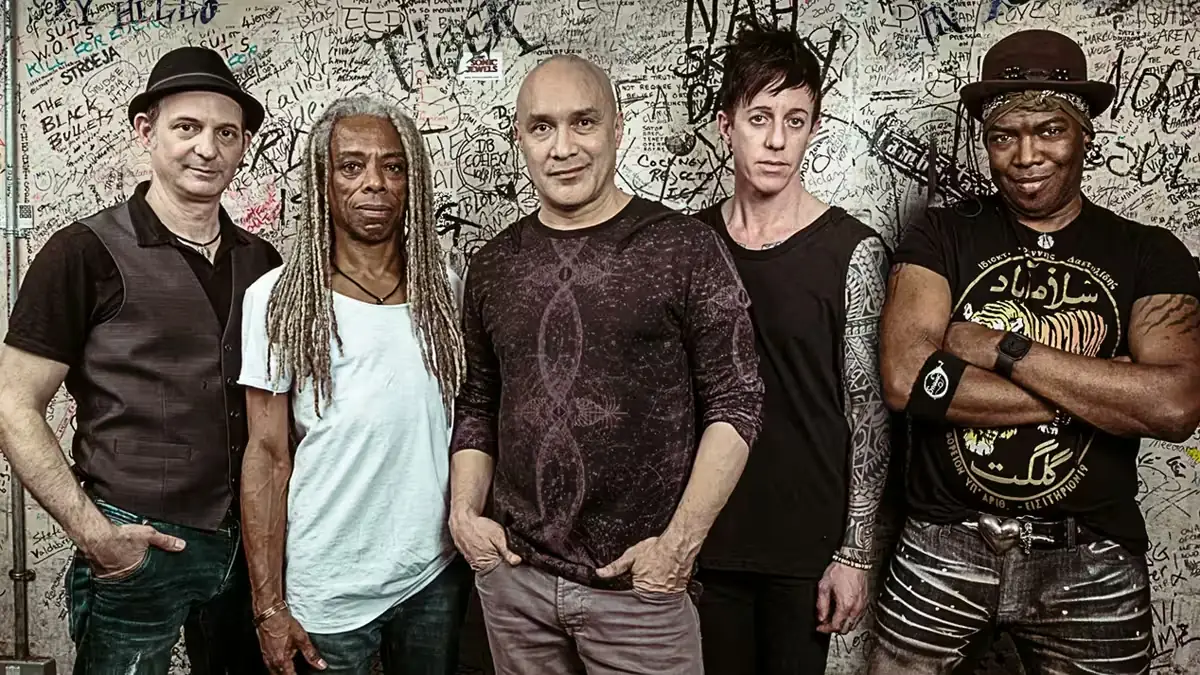
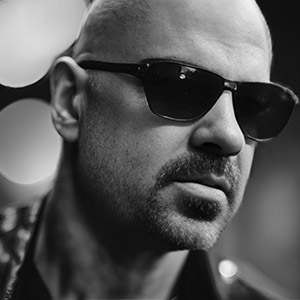
Looking at the raw transcripts from this May 2022 conversation with Dan Reed it’s clear the world was still spinning from a collective hangover. The pandemic’s shadow loomed large politics were a dumpster fire and social media had fully metastasized into the cultural battleground we now know and loathe. And right in the middle of it all was the Dan Reed Network dropping Let's Hear It For The King an album that felt less like a comeback and more like a necessary course correction.
Reed was candid about the mission. The band had made a vow. After the respectable but perhaps too-polished releases of Fight Another Day and Origins the group felt a disconnect from their primordial funk-rock soup. “We felt we never really got back into the groove of our first music our first album especially” Reed admits. Their solution was brilliantly simple: go back to the absolute beginning.
They resurrected “Mind and Body” the very first original song they ever played together in the clubs of Portland. That track became the foundation for the new song “Supernova” a deliberate and powerful tether to their past. It was a conscious effort to recapture the sweat and swagger that made their 1988 debut such a standout in a sea of hairspray and hedonism. This wasn't just about nostalgia. It was about reclaiming an identity.
But the album is far from a simple throwback. It’s an aggressive and pointed record with a central theme that feels more relevant now than it did even then. The title itself is a piece of biting sarcasm. “Let's Hear It For The King is really kind of saying let's hear it for the humble people in the world that don't get any praise at the expense of the people that get too much praise” Reed explains. It’s a direct shot at the culture of manufactured celebrity a world he astutely observes has changed everything.
“Social media I think has given everybody the opportunity to be David Lee Roth now” he says. “You can be a rock star without having to get a record deal.” It’s a sharp diagnosis of our times where follower counts have replaced record sales as the currency of fame. The album grapples with the fallout of this democratization of power questioning whether it’s used for ego or for genuine connection.
The conversation inevitably turned to Canada and one of our most legendary producers Bruce Fairbairn. The connection was immediate. I noted that the new album’s sonic attack reminded me of the work they did with Fairbairn on 1991’s The Heat. Reed’s affection for the late producer was palpable. He wasn't just a knob-turner. He was a mentor and a true collaborator.
Reed described Fairbairn as “the sweetest guy in the world” with “no ego” and a killer work ethic. The most telling detail was Fairbairn’s process. “He rehearsed us for two weeks before we cut any tracks” Reed recalls. This wasn't about just capturing a vibe. It was about deconstructing and rebuilding every kick drum pattern every drum fill every song structure in a theatre before ever stepping foot in Vancouver's iconic Little Mountain Sound Studios. That meticulous preparation a lost art in today’s world of Pro Tools and punch-ins is what gave Fairbairn’s records their explosive and airtight feel.
And that work ethic was echoed by another industry giant who shaped the band’s early career: Bill Graham. Reed’s memories of the legendary promoter are a lesson in what it means to be a performer. Graham’s philosophy was brutally simple. “He said if the tune is honest and good then people will show up and and and follow you” Reed states. But it was Graham’s view on the live show that truly resonates.
Social media, I think, has given everybody the opportunity to be David Lee Roth now. You can be a rock star without having to get a record deal.
“People are paying money traveling getting a hotel parking coming to see a show” Reed recounts channeling Graham’s spirit. “And if we get you know pompous about it or do a half-ass performance... then you're a piece of shit is the way Bill looked at it... You're a fucking entertainer entertain.” In an era of cancelled shows and phoned-in performances it’s a stark reminder of the contract between an artist and their audience.
This old-school ethos is fascinatingly blended with a very modern production approach on the new record. Reed revealed that a surprising number of tracks started as EDM experiments from guitarist Brian Tilse. Songs like the Zeppelin-heavy “Unfuck My World” began life as a “little drum machine beat and this kind of droning synth stuff.” It was Reed who heard the rock potential layering in the heavy guitar riffs that define the final product. It’s this willingness to deconstruct and collaborate that prevents the band from becoming a pure nostalgia act.
Lyrically the album is a minefield of contemporary anxieties. “Pretty Karma” tackles the treacherous slope of censorship head-on. Reed a political exile who left the U.S. during the Bush era is fiercely protective of free speech even for voices he abhors. “If you want to censor Donald Trump take him off Twitter for example and I'm no Donald Trump supporter you risk it when the Republicans are in control because then they will silence your candidate” he warns. It was a prescient take as the debate over online speech and “misinformation boards” was just beginning to boil over.
His argument is rooted in a belief that pushing extreme ideas into the shadows only makes them stronger. “Let the light shine on their insane comments” he argues. It’s a classic liberal stance that feels almost quaint in today’s polarized landscape where de-platforming is seen as a moral imperative by many. Reed’s perspective is that of someone who has seen the pendulum swing and knows it always swings back.
This disillusionment with power structures isn’t new for him. It’s what drove the band apart in the first place. He speaks of a time when the business became more about merchandising than music. The pressure to co-write with hitmakers like Desmond Child and Diane Warren left him feeling “spiritually dirty.” He asked a simple question: “Why did I get a record deal if they don't trust me to write songs?”
His response was to walk away. He shaved his head not as a brave rock-and-roll statement but as an act of self-humbling. A suggested one-year break from his managers at Q Prime famously turned into 16 years. It was a radical act of artistic self-preservation a decision to save his soul even if it meant sacrificing his career. It left his bandmates hanging a fact he readily admits was “not wise” and “not nice” but one he felt was necessary to combat his own dark thoughts.
That deep-seated passion for the art of creation is what ultimately brought him back. He describes playing live as “better than sex” and “better than lobster with butter.” But the ultimate high for him is the act of songwriting itself. “Grabbing a guitar and going where should this chord go to next... that's the best drug I think.”
It’s this love for the craft that informs his opinion of his own back catalogue. He’s surprisingly dismissive of “Ritual” the band’s biggest hit calling it “maybe one of the least” favourite songs and “the most inane lyric wise.” He gravitates towards more complex and nuanced tracks like “Salt of Joy” and “Long Way to Go.”
But he holds a special place for “Rainbow Child” a song born from a truly mythic rock and roll moment. He wrote it without a guitar in the parking lot of a Grateful Dead show after partaking in one of Jerry Garcia’s “special little cookies.” He saw the assembled hippies and vendors as “the rainbow children” and the song simply arrived out of the ether. It’s a perfect anecdote illustrating the difference between a song that is manufactured and one that is truly inspired.
Revisiting this conversation it’s clear that Dan Reed is an artist who has spent a lifetime wrestling with the friction between art and commerce integrity and compromise. Let's Hear It For The King is the sound of that struggle. While the deliberate attempt to recapture the magic of their debut can at times feel more like a calculated course correction than a seamless evolution the album’s raw honesty and lyrical bite are undeniable. It’s the work of a band that went back to the beginning to figure out how to move forward.
519 Magazine Archive: We are thrilled to officially unearth the 519 Magazine Digital Vault. This isn't just a re-post; it's a high-fidelity restoration of a pivotal era in music journalism. By pairing original print dates with modern retrospectives, we’re bridging the gap between historical rock-and-roll grit and the lightning-fast performance of today’s web. These stories—once locked in physical print and lost URLs—are now back, fully searchable, and optimized for a new generation of fans.
We are thrilled to officially unearth the 519 Magazine Digital Vault. This isn't just a re-post; it's a high-fidelity restoration of a pivotal era in music journalism. By pairing original print dates with modern retrospectives, we're bridging the gap between historical rock-and-roll grit and the lightning-fast performance of today's web. These stories—once locked in physical print and lost URLs—are now back, fully searchable, and optimized for a new generation of fans.