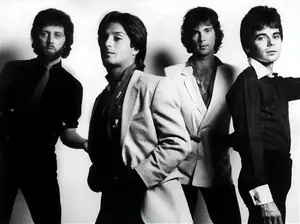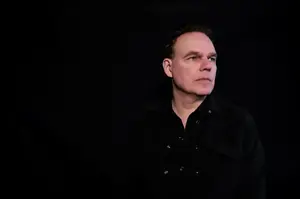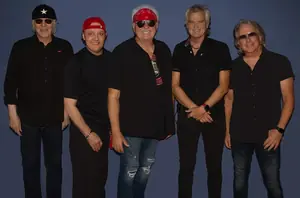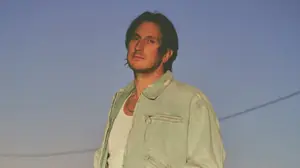


Listening back to these archival tapes from our late 2010 interview with Nick Workman is a trip. The digital hiss can’t mask the raw ambition in his voice. At the time, Vega was a brand-new entity, a fresh signing to the Italian melodic rock powerhouse Frontiers Records, and their debut album, Kiss of Life, was about to drop. The scene was crowded with legacy acts and studio projects, but this felt different. It felt like a real band with real hunger.
It was a long road to get there. Workman was already a known quantity from his time fronting the band Kick, a group that had earned the admiration of two key players in this story: Tom and James Martin. And looking back, the origin story Workman lays out has the distinct flavour of rock and roll fate, a series of near misses that finally connected.
“My band Kick at the time, Tom and James were big fans,” Workman recalls on the tape, the connection crackling slightly. “They came to see us performing when we were supporting Thunder about ten years ago.” A first meeting happened, but Workman was committed to Kick. A few years later, the Martin brothers tried again, asking him to front their current band. Again, the timing was off. But the third time was the charm.
The real catalyst was a phone call from on high. Frontiers Records president Serafino Perugino gave the Martin brothers the green light for a new AOR project. This time, Workman was in. “And they said that they got the go-ahead from Serafino at Frontiers to sort of put together a project at the time, an AOR project. And would I be interested? And I thought, well, why not give it a go?”
But a studio project it was not destined to be. The chemistry was immediate and explosive. “We wrote in succession 'Into the Wild,' 'Stay With Me,' and 'Kiss of Life',” he says, his excitement still evident a decade later. “We just knew from that moment that this wasn't going to be a project. It was a full-on band that deserved 100 percent attention. And it just grew from there into this monster that is now Vega.”
That monster had a very specific DNA. Frontiers’ own press release at the time was almost a perfect summation: a mix of classic Bon Jovi and Def Leppard with a pinch of U2 and Journey. For Workman, two of those names were scripture. He pinpoints a single year as his personal ground zero for rock stardom.
“1987 was really the year that I think rock solidified, particularly for me,” Workman explains, “because it was the year that we had Slippery When Wet, Hysteria, Whitesnake’s 1987, Appetite for Destruction, and for Europe, The Final Countdown. It was such an amazing year. And I think for any sort of like teenager at that time, that was it. That was what you were going to do. You wanted to be a rock star.” (Editor's Note: *Slippery When Wet* and *The Final Countdown* were both released in 1986.)
And there it is. That’s the sound. It wasn’t just about aping their heroes; it was about capturing the gloss, the scale and the massive, undeniable hooks of that era. The Leppard and Jovi influences were baked into every harmony and guitar riff. The Journey comparison pointed to the Martin brothers' melodic sensibilities, while the U2 nod hinted at an atmospheric texture that set them apart from the straight-ahead rock pack.
They kind of live nocturnally. They kind of work through the night and then sleep through the day. Whereas I'm the other way around... literally, within 24 hours, we go from nothing to something. None of these songs took longer than 24 hours to write.
The album’s title track, “Kiss of Life,” became the band’s mission statement. It was the song that convinced them this was more than just a gig. “It just totally turned what was a project into a band. And it just, I guess, reinvigorated us,” Workman says. The song wasn’t about literal resuscitation but a metaphorical one. “It’s about anything that gives you sort of like a kick in the ass to get going with something... I think for all of us, it just sort of gave us a lift.”
Lyrically, the album was a cut above the standard genre fare. Some songs were observational, others deeply personal. “Into the Wild” was directly inspired by the Sean Penn film, a story Workman felt deserved a “big, bollocking rock song” as its soundtrack. But then a track like “Too Young for Wings” hit closer to home, an anthem about the fierce, protective instinct of being a parent.
That blend of the cinematic and the sincere was brought to life by a uniquely prolific creative process. The Martin brothers were night owls, crafting the musical beds in the dark. Workman was the day shift, laying down melodies and lyrics as they slept. The result was lightning in a bottle.
“They kind of live nocturnally,” he says with a laugh. “They kind of work through the night and then sleep through the day. Whereas I'm the other way around; they do the night shift, I do the day shift. Normally, what would happen overnight, they'd come up with a backing track. And then while they're asleep throughout the day, I come up with the vocals and lyrics. And literally, within 24 hours, we go from nothing to something. None of these songs took longer than 24 hours to write.”
This insane workflow explains how they generated 25 songs for the debut. It also highlights the Martin brothers’ role as key cogs in the Frontiers machine. Two tracks, “River of Love” and “As I Live and Breathe,” were handed over to vocalist Issa. Workman is clear they were good songs, but they just didn't feel like Vega. They lacked the poppier edge the band was honing. It showed a sharp curatorial sense from a band that hadn't even released its first record.
But a great record is one thing. Being a great live band is another. And this was Vega's core ambition. They were determined not to be another faceless studio project. They were a six-piece live unit ready to hit the road, which brought Workman to the brutal reality of the UK’s melodic rock scene at the turn of the decade.
He offers a candid assessment. “I don't know whether it's because the fans of melodic rock aren't getting any younger and there's no new blood coming through,” he muses. “They're not prepared to go to a club where your feet stick to the floor. So it’s just the UK is tough to get people to come to little independent gigs.” He mentions a recent gig with Danny Vaughn of Tyketto that drew 300 people despite heavy snow, a small victory in a challenging market.
The real prize, however, was North America. A prize that, for most European bands of their genre, was financially out of reach. “The big thing really is finding someone who's prepared to pay for us to come over,” he states plainly. “We are ready to play. It's just literally someone just needs to send us an email or make that phone call, and we'll be there without a shadow of a doubt.” It’s a stark reminder of the logistical walls that existed pre-streaming dominance.
Even their visual identity was a product of smart, independent thinking. The video for “Kiss of Life” was self-financed, forcing them to be creative. They filmed in a cinema, using a curated film reel projected onto the screen behind them as the primary lighting source. It was a brilliant hack, bathing the band in vibrant reds and oranges, giving the video a slick, colourful and professional look that belied its budget.
This is the one area where a critique feels valid. The aesthetic, while perfectly executed, leaned so heavily into its 80s influences that it risked being pure homage rather than a modern update. It was a tightrope walk between nostalgia and novelty, one they navigated well, but the danger of pastiche was ever-present.
What’s most striking, listening back, is how far ahead they were thinking. “You know, we've already written the second album, for God's sake,” Workman admits, almost sheepishly. They had finished Kiss of Life in November 2009 and spent a year waiting for its release. Instead of sitting still, they just kept writing. They were a band with a surplus of ideas and a desperate momentum.
This old recording captures the genesis of a band that would become a standard-bearer for modern melodic rock. It’s a snapshot of a group of musicians with a shared history, a telepathic creative chemistry and a clear-eyed view of the industry’s challenges. They knew exactly what they were, what they wanted to sound like and where they wanted to go. And they were just getting started.
519 Magazine Archive: We are thrilled to officially unearth the Rockstar Weekly Digital Vault. This isn't just a re-post; it's a high-fidelity restoration of a pivotal era in music journalism. By pairing original print dates with modern retrospectives, we’re bridging the gap between historical rock-and-roll grit and the lightning-fast performance of today’s web. These stories—once locked in physical print and lost URLs—are now back, fully searchable, and optimized for a new generation of fans.
We are thrilled to officially unearth the 519 Magazine Digital Vault. This isn't just a re-post; it's a high-fidelity restoration of a pivotal era in music journalism. By pairing original print dates with modern retrospectives, we're bridging the gap between historical rock-and-roll grit and the lightning-fast performance of today's web. These stories—once locked in physical print and lost URLs—are now back, fully searchable, and optimized for a new generation of fans.