
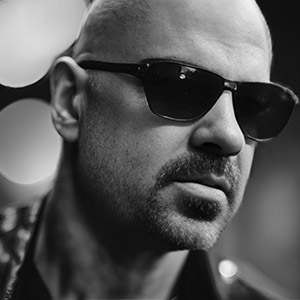
Toronto’s JP Saxe is the kind of songwriter who makes you feel like you’ve accidentally stumbled upon someone’s unlocked iPhone notes. It is raw, uncomfortable and entirely engrossing. He has managed to navigate the notoriously fickle music industry with a speed that looks like luck but smells like a decade of sweat.
From a massive nomination at the Grammy Awards to picking up Breakthrough Artist of the Year at the Junos, the trajectory for the "If the World Was Ending" singer is pointing straight up. He also happened to steal the heart of pop royalty Julia Michaels along the way. Life is undeniably good for Saxe.
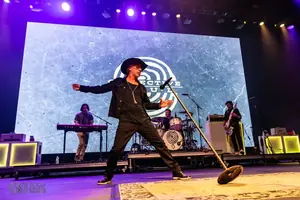
But the real test comes now. The Canadian singer-songwriter dropped his debut album, *Dangerous Levels of Introspection*, on Sony Music earlier this year. It is a record that demands you pay attention to the lyrics instead of just the hooks. To support the release, he is hitting the road, playing theatres and halls across the US and Canada. The run kicks off in Calgary in Oct. and winds its way to a hometown hero moment in Toronto on Nov. 2.
Sitting down with Saxe, you realize he isn't some manufactured pop product. He’s a guy who has been grinding since he was a kid. When I ask about the Juno win and the Grammy nod coming before the debut album even hit shelves, he is quick to point out that this "start" has been a long time coming.
"Yeah, it’s a good question," Saxe says. "In a lot of ways, this feels like the very beginning and something I’ve been working towards for 15 years. I had my first weekly gig in Toronto at a piano bar called Statler’s, when I was 14 years old. They hired me to play at their Sunday brunch. So that was a first gig. Then, for five years, I played every possible open mic I could find in the GTA. And I had a dad who was lovely enough to be driving me around all of those places and enjoyed hanging out at these singer-songwriter clubs. So every night I could find one, I was at one."
That level of parental support is the secret sauce for many Canadian artists, but Saxe had the drive to match it. He didn't stay comfortable in the Toronto scene for long. At 19, he packed his bags for the West Coast, a move that many attempt but few survive.
"Then at 19, I moved to Los Angeles, which felt like a huge adventure," Saxe says. "It might have been just a reckless dive into the uncertainty. But it all felt so exciting. It’s been nine years now since I moved to Los Angeles, and I’ve just put out my debut album. So as you said, it feels like the beginning of something. But yes, I’ve been working towards this for a very long time."
The album itself, *Dangerous Levels of Introspection*, acts as a manifesto for his brand of hyper-honesty. In an era of glossy, over-produced pop, Saxe is leaning into the messy parts of the human psyche. He isn't interested in being a character; he wants to be a mirror.
"My priority with my songs is always just being sincere for a lot of reasons," Saxe says. "Songs have always been where I feel like I’m figuring myself out and where I feel closest to myself. So if I can figure out what being honest means in my song, that is cathartic for me. First and foremost. If I’m not being honest in the songs, it’s confusing for me to go back and play those songs over and over again, if they’re not fully myself. If they’re not fully truthful, it feels like I’m lying every night singing them, and that messes with my sense of self. So both because of my creative philosophies, but also just as a person, I really want to be candid in the songs. For this first album, I would say that these are songs directly out of my journals from the last five years."
The title track is particularly telling. It captures that specific LA brand of desperation and hope. Holding the physical pressing of the record, you can feel the weight of those five years of journaling. Saxe wrote the song with heavyweights Amy Allen and Greg Kurstin, but the inspiration was grounded in the grit of his early days in California.
"We just talked about being 19 and moving to Los Angeles, and how that was this grand, uncertain, scary thing, but also this extremely exciting adventure," Saxe says. "I think with a ton of uncertainty also comes a ton of possibility. I wrote that song with Amy Allen and Greg Kurstin. The morning of the session, I was kickin’ it with my friend Chris, who was one of the first producers I’ve worked with in LA. When I met Chris, he was signed to Babyface. He brought me in for a session, and it was the first time I was in a really big, beautiful LA studio, and it felt so fancy. We did a session, and then he was like, all right, this was great. I might text you to come back. Literally, I was sleeping in my car outside the studio the next few nights hoping you would text me to come back to the studio because I didn’t have an apartment yet. That was the time in my life when I was going to open mics in LA and trying to make friends so I could sleep on their couch. I would wake up, not knowing how any of the days were gonna go, to the point where I’d be sleeping. So we were talking about this, and in retrospect, it was just poetic, romanticized, exciting memories that were entirely inaccurate from what it actually was. Sure it was poetic and beautiful and exciting, but it was also fucking terrifying. But the danger of nostalgia is that you cover up a lot of the memories that made it bad sometimes when you’re looking back. So that song 'Dangerous Levels of Introspection' is sort of my take on that. You get too caught up in analyzing a memory for all of its beauty and you can start taking all the magic out of the present because you’re comparing it to a past that didn’t actually occur."
It is a sophisticated take on the "starving artist" trope. Saxe recognizes that we often lie to ourselves about how hard things were just to make the story sound better. His debut is a culmination of this realization. While many debuts are rushed out to capitalize on a single hit, this feels like a curated collection of a life lived.
Songs move me the most, when I don’t feel like someone is trying to tell me something specifically, they’re just letting me in on their thought process a little bit... What feels the most sincere to me, is to write songs that feel like a moment of the process, a moment of a very confused, emotional, human process.
"The first writing of this album was in spring of 2018," Saxe says. "So spring 2018 till now is a song on the album called '4:30 in Toronto'. And '4:30 in Toronto' is actually the song where I first wrote, 'If the World Was Ending, You’d Come Over, Right?' It was the chorus for that song. But it never felt totally at home in that song. I love that line, but they just didn’t fit perfectly together. So, that line stayed in my journal, and a year later, an earthquake in LA reminded me of that, so I brought that to a session with Julia, and it became another song on the album. So there’s a lot of thorough lines throughout it. I think often my next song will start as a failed attempt at finishing the previous one, which I’ve always thought of as a little bit of a metaphor."
His style isn't traditional storytelling. It doesn't always have a beginning, middle and end. Instead, it feels like a stream of consciousness set to melody. It’s a pouring of thoughts that avoids the neat resolution most pop songs provide.
"Yeah, I think songs move me the most when I don’t feel like someone is trying to tell me something specifically, they’re just letting me in on their thought process a little bit," Saxe says. "It feels disingenuous for me to write songs that feel like finished thoughts, because I have very few finished thoughts and to write songs that feel like answers, because I have very few emotional answers. What feels the most sincere to me, is to write songs that feel like a moment of the process, a moment of a very confused, emotional, human process."
Music is clearly in the DNA here. His grandfather was a Grammy-winning cellist, providing a high bar for excellence within the family. But rather than feeling pressured, Saxe seems to have found a way to translate that classical discipline into the pop world.
"I see why you would say that, yes," Saxe says. "I am extremely grateful for my grandfather for a number of reasons. He was a classical cellist. So that’s a different world entirely from the one that I have pursued. But having the lineage that I have, and having a grandfather who had the kind of illustrious life in music that he had, made the idea of me pursuing music as a career slightly less absurd to my parents, as I think it is, for most people who make the decisions I’ve made. There were the hurdles of convincing my family that I wasn’t entirely ruining my life by skipping college to write songs, I think it wasn’t quite as high of a hurdle as it is for most of my colleagues. Another way that my grandfather inspires me to this day is his philosophies about music making, although with a solo classical instrument. We’re this endless pursuit of beauty. What are the most minute intricacies of playing my instrument that can create the most subtle, nuanced moments of beauty? Like how deep can I get into it? He talked about the process of getting better and better at the cello finding smaller and smaller points of tension and release. And that’s an endless pursuit. I don’t play a solo instrument, but I do try and be as uncompromising with lyricism and storytelling in pop songwriting, as I admired my grandfather to be with his cello."
Then there is the Julia Michaels of it all. The two didn't just write a hit together; they fell into a whirlwind romance that the public has watched with bated breath. It is the kind of industry pairing that usually feels like a PR stunt, but with Saxe and Michaels, it feels annoyingly genuine.
"It all happened quite simultaneously," Saxe says. "Julia and I met the day we wrote 'If the World Was Ending', so that was a very good day for me. I highly doubt there will ever be a day in my life that will be quite as impactful as getting a girlfriend and the Grammy nomination. I asked her to be my girlfriend, like a gentleman, nine days after meeting, in that we are coming up on our two-year anniversary in a couple of weeks. I want to get her something really nice. Any suggestions? Because if you came up with something really good, I don’t think she will see this interview, just because she’s not super on top of her Windsor publications. So if you had a really good idea, and you shared it, I think we could keep it a secret, huh? What’s the best gift you’ve ever given someone?"
I suggest a surprise trip. There is something about hitting the road with no destination that grounds a relationship. Saxe lights up at the idea, noting that they spent much of the lockdown doing exactly that.
"Julia and I did that a ton during quarantine, that was our move, we would hop in the car and just pick a direction and go," Saxe says. "Yeah, I love that. We do have a specific destination in mind for our anniversary. So I know where we’re going to be. I just need to find something to put in the box, even if it’s an invitation to an adventure. But I think an invitation to adventure might be a good idea."
The pandemic was a strange time for Saxe. While the world shut down, his career exploded. "If the World Was Ending" surpassed one billion streams, becoming the unofficial anthem for a society in isolation. It was a surreal moment for a songwriter who wrote the track as a hypothetical.
"Well, don’t get me wrong, I did a lot of eating chips and watching Netflix," Saxe says with a laugh. "I think 15 months in, it’s hard to summarize any 15-month period with one emotion, one tone. I feel like there’s been many areas of the last 15 months for me and most of my friends. So yeah, some of it was quite productive. Because I had just happened to write a song six months prior to the pandemic that was about what was on a lot of our minds. When we wrote 'If the World Was Ending', we were thinking about a hypothetical catastrophe that would get in the way of your reasons not to talk to the people you love. It was real when we wrote it, it was a real relatable feeling for a lot of people because when petty bullshit gets in the way of the relationships you have with the people you love, it’s a natural thing to imagine some scenario where your reasons wouldn’t seem so big anymore. Now, we had no way of anticipating, obviously, that we would stumble upon a world where it just wasn’t the hypothetical to be imagining that situation and we would just be in that situation. We saw the song relating in a much more present immediate way, which at first was a little confusing. It was a new experience seeing a song taking on that sort of universal relatability that fast. But ultimately, I think the song at its core just speaks to putting love first. I was grateful to that song for putting me in the middle of a conversation about something that I care about during an otherwise extremely confusing period."
Saxe’s roots in Toronto remain deep. He frequently mentions Micah Barnes, formerly of The Nylons, as a pivotal figure in his development. Barnes is a legend in the Canadian scene, and his influence on Saxe’s vocal delivery and stage presence is evident.
"He was one of my first songwriting and singing mentors when I was 13," Saxe says. "My dad used to run an art gallery in Toronto. He now still, once again owns an art gallery in Toronto because we reopened it together. It was called The Saxe Gallery he had it in the 80s and now we have a Saxe Gallery again, there’s just two Saxes now. But back then, Micah would play in my dad’s gallery. So he and my dad were old friends. When I started showing interest in singing and playing the piano, my dad introduced me to Micah and he brought me into a little studio when I was a kid, and I played him some songs, and he became my teacher. I did all his workshops, and played him all my songs, and he was just the most supportive, loving, kind mentor I could have possibly had. Then, when it looked like I was starting to take it on as a profession, he became even more involved in my life and helped me get over being terrified of playing on stage and feeling comfortable in my own voice and still a really important part of my life to this day."
The debut album also features some heavy hitters, most notably John Mayer. For a guy who grew up on *Continuum*, having Mayer play on the record was a full-circle moment that bordered on the religious.
"John Mayer is one of my favorite songwriters on the planet," Saxe says. "When I found the album *Continuum*, as a teenager, it honestly changed my life. I didn’t know what it felt like to get punched in the heart by a lyric, and when I heard John do it on *Continuum*, I thought, that’s what I want to do. That’s how I want to make people feel songs. Almost a decade after listening to that album, to be making my first album and invite John to come listen to it in the studio, for him to say yes, for him to like it enough to want to play on one of the songs was just one of the most fucking unbelievable days of my life. Meeting John, have him play on the record, he was just the most gracious, kind person. You know, they say, don’t meet your heroes, but if your heroes are John Mayer, meet your heroes. Then getting to performing on The Late Show with Stephen Colbert, just the two of us, that was just entirely surreal to me. Because, he’s been a part of my life longer than he knew he was part of my life. So just to have him have my back for this album, it’s been really special and really encouraging. Occasionally, don’t tell him this, it’s embarrassing, but occasionally in moments of insecurity, I will read back texts that he has sent me saying nice things to remember that John Mayer thinks I’m doing something valid, then it must be true."
The collaborations don't stop there. Maren Morris also makes an appearance, a partnership that started in the most modern way possible: on social media.
"Well, it began that way," Saxe says. "I tweeted that I was quite a fan of Maren Morris’s songs, and she responded that she liked my songs too. So I went to Nashville, my first ever session in Nashville was with Maren Morris, which was fun because it took me a very long time to get into a session quite that good in Los Angeles. So to arrive to Nashville at the top of the Nashville songwriting circuit was pretty cool. And Maren’s just a brilliant writer, a brilliant singer, just a genuinely wonderful human being. I loved meeting her, and like a lot of my favorite songs that have been a part of it came so directly from the conversation, we just enjoyed kickin’ it with one another and talking and out came a song that is free flowing, just like meeting each other and having a conversation."
Despite the global success and the high-profile friends, Saxe is still a Canadian at heart. But he isn't interested in blind patriotism. He’s observant of the struggles the country is facing, particularly regarding its history and the path toward reconciliation.
"Yeah, you know, living in America for the last 10 years, I think can create a skewed perspective on Canadian pride," Saxe says. "Because my Canadian pride has been in indirect contrast to living in a country, especially over the last four years that represented my values so vastly differently than the way I felt they’ve been represented by Canada. With that said, moments like these when we are reckoning with our own very dark Canadian past, is a reminder that painting any country with one broad brush is a mistake. I think this Canada Day, just like this Independence Day, and just like any moment celebrating the heritage of a country, a blind celebration is inappropriate, but rather a conversation about where we have entirely fucked up. But also where we intend to do better, is an important thing to recognize. I thought a lot about whether I was going to participate in this Canada Day celebration but we looked at the lineup of people and decided that if the First Nations artists who were a part of the event, felt they still wanted to be a part of the event, we would still be a part of the event too, and vice versa."
It is this thoughtfulness that sets Saxe apart. He isn't just writing hooks; he’s navigating the world with a critical eye. Whether he's discussing the danger of nostalgia or the complexities of national identity, he remains one of the most vital voices in the current Canadian export market. Catch him in Toronto on Nov. 2 if you want to see what real introspection looks like on a stage.