
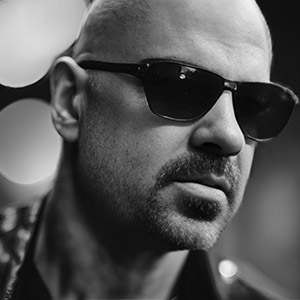
Southwestern Ontario gets sandwiched between two huge nights this fall. Squeeze plays Toronto's RBC Amphitheatre on Aug. 31, then Detroit's Masonic Temple on Sept. 27, with new wave icon Adam Ant and Britpop veterans Haircut 100 along for the ride. It's a tour built on nostalgia. But the record behind it is something much stranger: a lost album that's been sitting in a drawer since 1974.
That album is called Trixies, and it did not come from a songwriting session last year. It came from two teenagers in a London bedroom, five decades ago, dreaming up a concept record set inside a fictional nightclub. Squeeze co-founder Chris Difford was a teenager when he and Glenn Tilbrook wrote it. They shelved it. Life happened. Careers happened. Hits happened.
And then, two years ago, it happened to resurface on a tour bus.
"When we first wrote it and recorded it, it wasn't something that we were comfortable with musically as a band," Difford said in an interview. "The idea of doing a concept record when we were teenagers was a bit far-fetched for us. So we just put it in the background."
It stayed in the background until Owen Biddle, the band's bassist and producer, heard it. "Two years ago, Owen Biddle, our producer and bass player, was on my tour bus, and I played it to him, and he said, well, this would make a great album, why don't we do that?" Difford said. "And he's done a fantastic job of redefining what it should be like, and making it sound amazing."
Biddle's résumé includes work with The Roots, John Legend and Al Green, and his fingerprints are all over the finished record. Critics have noticed. SPIN called Trixies the duo's personal masterpiece. FLOOD named Difford and Tilbrook one of the great songwriting duos of their era. Brooklyn Vegan singled out the complex melodies that somehow still sound effortless.
What's remarkable is what the songs reveal about a band that got boxed in by a label it never fit. In the U.S., Squeeze got filed under new wave, a tag Difford still isn't sure was fair.
"There was a period of time when we only played colleges in America, and I think college radio was something that defined who we were and what we sounded like," Difford said. He remembers the band's first American tour as a six-month crash course in being misunderstood. "It was a journey, a learning curve, where people really didn't want to hear Squeeze. They wanted to hear Foreigner and ZZ Top and stuff like that. Who are these skinny guys from London playing a hundred miles an hour?"
Listen to Trixies now and the mismatch makes more sense. There's glam in it. There's R&B. There's more musical range than a three-minute new wave single ever had room for.
I couldn't master geography, history, or English in the way that other kids could, but I could turn a pencil and make a story, and write a verse or a chorus.
"I think you're hearing the influences musically that Glenn was bathed in at the time," Difford said. "You can hear Sparks, you can hear Paul McCartney and Wings. You can hear Todd Rundgren. But ultimately you hear Squeeze."
Difford credits two producers above all others for shaping the band's sound over the decades: Elvis Costello and John Cale. Costello, he said, pushed his lyric writing harder than anyone. "When I thought, hold on a minute, I'm going in the studio with Elvis Costello, I would work really hard to get the lyrics to amuse him. I was always looking for the apple on the table with Elvis." Cale took a rougher path to a similar result, tossing out a batch of songs Difford now calls too sweet. "He dismissed all the pop songs that we had written up to that point, where they were kind of sweet, gentle songs, and he brought a kind of tension and aggression to us that we would never have thought of having."
Then there's Tilbrook. Fifty years of writing together hasn't made them close, and Difford is at peace with that.
"Glenn has been quoted as saying, we've never been friends, and I think he's probably right," Difford said. He compared it to something he once heard from The Who's Pete Townshend over dinner. "He was telling me that he didn't even know where Roger lived, and he'd never had a Christmas card from Roger. And I said, that's interesting, I don't know where Glenn lives, and I've never had a Christmas card from him." What's kept the partnership alive, Difford said, is distance. "Not hanging out with each other, I think, is important."
Difford also opened up about something less discussed in Squeeze's story: a lifelong struggle with what he believes is undiagnosed dyslexia, and how it pushed him toward writing instead of away from it.
"I didn't have a lot of friends. I would use my imagination and have imaginary friends, and stories would build from that," he said of his school years. "I couldn't master geography, history, or English the way other kids could, but I could turn a pencil and make a story, and write a verse or a chorus." He still writes every day. "It makes me feel secure, and it makes me feel like this is what I'm here to do."
At 72, Difford isn't chasing the old dream anymore, the one where a hit record buys you a house with a pool.
"The industry has changed so much that I'm not thinking I'm going to buy a house with a swimming pool with this record, which I did when I was 20 years old," he said. "I'm just lucky to get a new pair of boots out of it."
What audiences will get in Toronto and Detroit is a set built around two pillars: the hits and Trixies. Don't expect the deep cuts.
"It's really simple at the moment. You know, we do Trixies and we do the hits," Difford said. "People buy a ticket, it's a contract that they have with you. They want to hear Tempted, they want to hear Pulling Muscles from the Shell, and they're delighted when they hear some of the new stuff as well."
That means room for the songs that made Squeeze a household name in the first place: "Up the Junction," "Tempted," "Cool for Cats," and "Pulling Muscles from the Shell" among them, songs that built a catalogue wide enough to draw covers and props from artists as different as Erykah Badu and The Shins.
He's aware there's no winning that particular argument. He recently toured with Christopher Cross, who ran into the same problem in reverse. "He's been putting all these deep cuts in there to make people interested, and the audience thought they were too deep."
Squeeze isn't done. Difford said there's a stack of unreleased material from those same teenage years, songs he thinks are just as strong as anything on Trixies. Whether any of it sees daylight is still an open question. What isn't in question is the tour rolling through Southwestern Ontario's backyard this fall, with a fifty-year-old nightclub fantasy finally getting its night out.
Squeeze, with Adam Ant and Haircut 100, plays Toronto's RBC Amphitheatre on Aug. 31 and Detroit's Masonic Temple on Sept. 27.