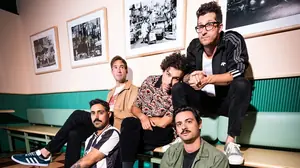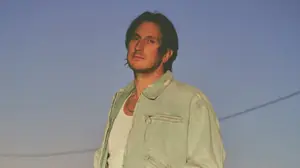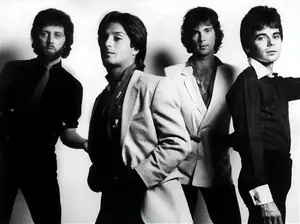


Thunder Bay is not exactly the place you go to find sunshine and easy answers. It is a city built on grit, industrial labour and the kind of isolation that either breaks a band or turns them into something formidable. The Honest Heart Collective falls firmly into the latter category. With their third studio effort, *More Harm*, the four-piece rock outfit has delivered a record that feels like a bruised knuckle—sore, honest and proof of a fight.
The album is a sprawling exploration of the human condition, or at least the messy parts we try to hide. We are talking about mental health, the slow decay of friendships and the jagged edges of relationships that have overstayed their welcome. But here is the trick: they wrap these heavy, leaden themes in instrumentals that feel like they belong on a summer festival stage. It is a record that demands a second spin because your first impression will likely be wrong.
Holding the physical copy of the record, you see the fire before you hear the feedback. It is the perfect soundtrack for the deep, dying colours of a Canadian autumn. The band is no stranger to the grind, having shared stages with heavyweights like The Glorious Sons, The Sheepdogs and Danko Jones. They know how to command a room, but *More Harm* suggests they are now more interested in commanding their own narrative.
Vocalist Ryan MacDonald sat down at the critic’s desk to break down the mechanics of the new record. He is direct, lacking the usual PR polish that ruins most interviews. When asked about the core of the new project, MacDonald is blunt about the stakes.
“It’s called *More Harm*,” MacDonald says. “This record is very personal to us as far as the lyrical content goes. It touches on things like mental health, friendships and relationships, and it’s really an introspective record and we’re really proud of it.”
That pride is earned. In an era where most rock bands are content to recycle the same three chords and a chorus about "the road," MacDonald is digging into his own psyche. The title itself feels like a warning, a play on words that suggests the band is leaning into the pain rather than running from it.
“It was, it’s sort of a play,” MacDonald explains when asked if the personal nature of the songs dictated the title. “The opening song has a lyric that says, ‘In this voice of mine, some hope, more harm, ever opposing sides.’ And that ‘more harm’ phrase just kind of stuck out to us. It’s that balance to show a lot of our songs have sad or darker undertones as well. That’s the story. There’s not much of a story behind it, but it was a cool name and it meant a lot at the time when we first brought that line into the equation.”
But the title is only half the battle. The visual identity of the album is just as striking, featuring a house engulfed in flames. It is a stark, surreal image that serves as a violent sequel to their previous work.
“Very much so,” MacDonald says regarding the symbolism of the cover. “The last record was called *Grief Rights*, and it was shot from the inside of an old abandoned house. So all of the cover art in the back cover and everything was all inside of an old abandoned house. When we gave the record to our designer to work on something, he came back with this concept that the record was the old stuff inside of a house, and now this record is setting all that on fire. So he wanted to have this very stark image of a house burning down and make it very fantastical and sort of surreal, and still very striking. I think it came together perfectly, and it ties in with the band really well.”
This isn't just aesthetic posturing. The fire represents a literal and figurative clearing of the slate. The recording process for *More Harm* was a slog, a multi-year endeavour interrupted by a global catastrophe that forced the band to sit with their thoughts longer than they perhaps intended.
“We recorded the record over a couple years, because of COVID-19,” MacDonald says. “It’s just the way everything worked. We started working on this record in 2018 and we did a couple of the songs, summer 2018. Fast forward, we had a couple more songs late spring of 2019. Then just based on our touring schedule and life, and we were supposed to wrap it up at the end of 2019. But then we had to cancel those sessions for some personal reasons.”
The delay could have killed the momentum. Instead, it gave the songs room to breathe—or perhaps room to ferment. When the world stopped in 2020, the record was shelved, waiting for the right moment to be finished.
In late 2017, we hit a patch of black ice and we flipped our van trailer down into a ditch. It was a 20 foot embankment that we rolled down, the van rolled about three and a half times. It was very scary to be in a dark, Northern Ontario Highway in a ditch and your van is in pieces and your gear is everywhere. ... The accident symbolized just another setback for us as a band.
“Then we went to go start up again, in the beginning of 2020, and a pandemic hit,” MacDonald says. “So then the record got shelved for a little bit, until we could get our producer up to Thunder Bay to do the rest of the record. We wrapped it up in Oct. 2020. The whole thing was a big learning process.”
For MacDonald, that process was as much about survival as it was about art. You can hear the shift in his vocal delivery—a certain weight that was absent in their earlier work. It is the sound of a man who has done the work.
“For me, especially, I feel like I’m in a way better place than I was when we started this process,” MacDonald says. “Just kind of doing a deep dive into my mental health and starting to see a therapist and just really putting in the self-care and effort on making myself a better person through this process, and better to other people and to myself. It was very important for me.”
That honesty anchors the album’s first single, "11/17". The track isn't some metaphorical exercise; it is a visceral retelling of a night that nearly ended the band on a dark stretch of highway near London. Anyone who has driven the 519 in the dead of winter knows the terror of black ice.
“In late 2017, we were heading down to London, Ontario, to play a gig with some friends of ours in this band called Texas King,” MacDonald says. “And on our way down, we hit a patch of black ice and we flipped our van trailer down into a ditch. It was a 20-foot embankment that we rolled down; the van rolled about three and a half times. It was very scary to be in a dark, Northern Ontario highway in a ditch and your van is in pieces and your gear is everywhere. It was a very scary experience. It was kind of nerve-wracking to see everything that you’ve built and everything that you’ve worked towards scattered on the side of a highway, but luckily nobody was severely hurt.”
The aftermath was a test of the band’s resolve and their connection to their audience. The community rallied, but the financial and emotional toll was significant.
“Our fans started a GoFundMe for us,” MacDonald says. “We were set back a couple $1,000 by the end of it. We are replacing some things in insurance and the GoFundMe wasn’t going to cover it. It was a big, big deal and a big endeavour, so for us writing a song like '11/17'—which was a cool song for us to write on a musical level because it all started with the drums, not a guitar riff, which usually is what sparks writing our songs.”
But the song is more than just a crash report. It captures the exhaustion of the independent music circuit, the feeling that the universe is actively conspiring against your success.
“But it was just on a lyrical level, we always sort of feel like we’re one step forward, two steps back with this band,” MacDonald says. “And when are we ever going to do the right thing or put out the right song or play the right show or something like that. So that’s where the whole mentality of that song came from; the accident symbolized just another setback for us as a band. And it’s just been more setbacks that we would have liked to have had in our eight-year career so far.”
The band continues to push boundaries with their second single, "If You Wanna Leave", a track that sees MacDonald stepping outside of his own skin to examine the friction of his lifestyle.
“'If You Wanna Leave' stems from this feeling of duality—wanting a home, wanting roots, wanting somebody at home, versus having that desire to just run free, and travel the world and see things and meet new people,” MacDonald says. “It’s somebody else singing to me. So I’m singing it from someone else’s perspective about myself. And it’s just that if you want to leave, you’re free to go. Like, you don’t have to be here. You don’t have to do it. I was thinking about that song as the irony of wanting to be at home with somebody, but then also, at the same time, thinking about being somewhere else with anyone else.”
Writing from a different perspective is a dangerous game for a songwriter. It can easily slip into melodrama or cliché, but MacDonald used it as a psychological tool.
“Not necessarily,” MacDonald says when asked if the shift was difficult. “It’s just basically trying my best to put myself into other people’s shoes, like people that I have spent considerable amounts of time with and hoping I’m getting it right. But knowing how I would feel had the roles been reversed. But just getting out of your own head is a big exercise I’ve been trying to do a lot lately. And my therapist and I talked a lot about that. It was a song that was sort of an exercise for me to write in that regard.”
There is a technical frustration that simmers beneath MacDonald’s words when discussing the industry at large. The Honest Heart Collective is a band that believes in the sanctity of the long-form record, even as the world moves toward 15-second soundbites.
“I prefer a full record,” MacDonald says. “We haven’t done one in a while. And we’ve never really done one the way we want to do a whole album yet because it’s always in pieces. It’s always been patchwork. *Grief Rights* was started with one producer and then we ended up working with Derek and then I did a song by myself here in this room. And then Derek mixed the whole thing and it became that record.”
The struggle for cohesion is real. Their debut, *Liar’s Club*, suffered from a similar fragmented timeline. In the age of the algorithm, the "album" is becoming a relic, a reality that MacDonald finds difficult to navigate.
“Our first album *Liar’s Club* was not the same thing but we did it all here, but over a two-year period of time, until we actually got it done,” MacDonald says. “There is this thing where the industry is shifted into this singles mentality and trying to stay relevant in Spotify playlists. It’s been tough to try to work at it. A large part of this album is just a collection of the singles that we’ve put out over the last couple of years. We just wanted to package together as a record so people can have something tangible to hold onto this chapter of the band’s career before we start the next one.”
The most fascinating aspect of the band remains the jarring contrast between their sound and their substance. They are the masters of the "sad banger"—songs that make you want to jump around while simultaneously contemplating your own failures.
“Sometimes it’s fun to play as a full band, it works out really well because everybody’s still having a good time,” MacDonald says. “There is that funniness when there’s people you know, laughing and having a great time singing along to songs about parents getting divorced, getting broken homes and things like that. But then when you tear the songs down to the root and say I get hired to play an acoustic set at somebody’s birthday party, that upbeat feeling doesn’t translate necessarily.”
It is a valid artistic critique. When you strip away the distorted guitars and the driving percussion, what is left? MacDonald is aware of the limitations of his own gloom.
“So one of the things we’re trying to work on is maybe have a little bit more happier tunes,” MacDonald says. “If that makes sense. It made me not even more happy—happy is a bad word—but positive songs that you could play that no matter which way you play them, they’re going to invoke a good feeling. But for me, it’s always been easier to write darker songs. You get into that mood, you get into that mindset and then it’s easier for me to create it from a place of struggle than it is from a place of joy.”
*More Harm* is the sound of a band refusing to choose between the struggle and the joy. It is messy, loud and occasionally heartbreaking. But in a world of manufactured pop and safe rock, The Honest Heart Collective is a necessary reminder that the best music usually comes from the wreckage.