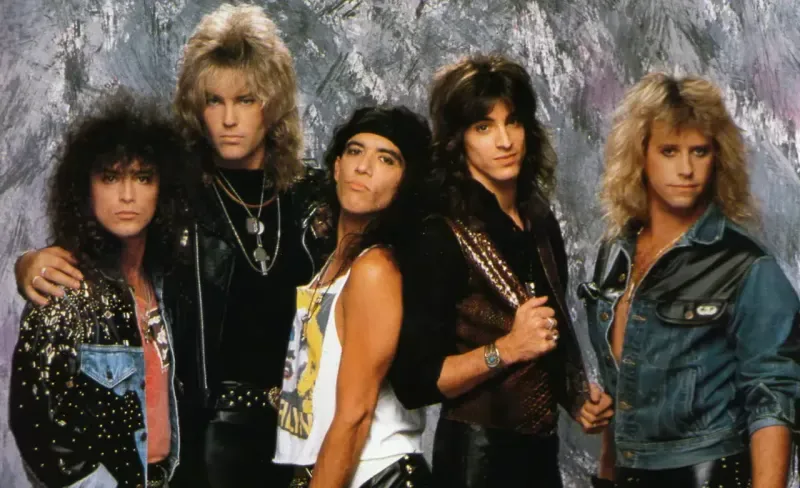

Listening back to these raw archival tapes from Mar. 24, 2010, the hiss on the line can’t mask the quiet confidence in Warren DeMartini’s voice. It was a pivotal moment. Ratt, the undisputed kings of Sunset Strip sleaze rock, were back with Infestation, their first studio album in 11 long years. The world was a different place. The industry had been gutted and remade by digital disruption. And the question hanging in the air was brutal. Was this a genuine creative resurgence or just another legacy act cashing in on nostalgia?
The band was attempting to reclaim its territory after a decade of internal fractures and deafening silence. DeMartini, ever the articulate anchor of Ratt’s sonic identity, sounded less like a rockstar phoning it in and more like a general plotting a difficult but necessary campaign. The comeback was real and it had been a long time coming. But the lineup had changed, a crucial detail for a band defined by its chemistry.
Stepping into the formidable shoes of the late Robbin Crosby was Carlos Cavazo, late of Quiet Riot. This wasn’t some kid hired off the street. This was a peer, a veteran of the same trenches. DeMartini reveals the move was years in the making. “About three years ago, we thought we were gonna need to replace a guitarist,” he says. “And so we started to assemble a list of possibilities and Carlos was at the top of my list.”
It was a shrewd calculation. Cavazo understood the riff architecture and the unique demands of the dual-guitar attack that DeMartini and Crosby had perfected. It had to be seamless. DeMartini confirms the immediate chemistry. “It was very natural and it fit right away. It was just really obvious to me,” he recalls of their first jam session. It was a crucial first victory. The engine felt right.
But what about the music itself? Infestation was a deliberate, calculated throwback. It wasn’t an evolution. It was a restoration. DeMartini is refreshingly direct about the album's mission. He admits there wasn't a grand, complex plan. Instead, the goal was to capture a very specific moment in their own history.
“We wanted to revisit the kind of energy that Out of the Cellar had, Invasion of Your Privacy,” he explains. “If there was any real planning on the concept, it was to sort of create something that might fit in between those records or maybe come just after Invasion of Your Privacy with respect to the tempos, the colour, you know, the energy.”
This was a band looking into its own rearview mirror for directions. And in a way, it worked. The album was a tight ferocious collection of songs that felt authentically Ratt. DeMartini also notes the writing process mirrored their early success, with every member contributing significantly. “This record was similar to that,” he says, comparing it to Out of the Cellar. “Everyone has at least two songs on the record.” It was a return to the gang mentality that first put them on the map.
The conversation inevitably turns to the seismic shifts in the music business. DeMartini speaks with the authority of someone who lived through the analogue glory days and survived the digital apocalypse. He paints a vivid picture of the old world, a world of massive two-inch tape machines the size of appliances and the painstaking physical labour of splicing takes together with a razor blade. He calls the digital revolution a “double-edged sword.”
They interviewed Joe Benson and they knew about this part of the story and I just couldn’t believe that they didn’t use it. Because that to me is what rock and roll is all about.
While he appreciates the time saved by modern technology, there’s a clear sense of loss. He mourns the ritual of the record store, a pilgrimage that defined a generation of music fans. “I used to love going to the record store on the day that a record I was looking forward to was released,” he reminisces. “Making the trip to the store, finding it in the store, paying for it, going home, listening to it, you know, looking at the album artwork. That’s what I grew up on.” It’s a sentiment that resonates deeply, a lament for a lost tangible culture.
Of course, you can’t talk about Ratt’s history without acknowledging the albums that got caught in the crossfire of changing tastes. DeMartini points directly to 1990’s Detonator as a work that suffered from terrible timing. It was a polished, powerful record produced by Desmond Child and Arthur Payson, but it landed just as the Seattle grunge scene was about to detonate everything the 80s stood for.
“I think that if we had put Detonator out in 1986, that record would have done a lot better than it did,” he muses. “But it kinda came out on the cusp of hard rock shifting to grunge…it just came out a little bit too late, I think, for it to do what it really could have done.” It’s a candid admission of being on the wrong side of a cultural tidal wave, a fate that befell many of their contemporaries.
This sense of a misrepresented history bleeds into his sharp critique of the band’s infamous VH1 Behind the Music episode. The show was a ratings juggernaut, but its formula often prioritized melodrama over accuracy. DeMartini pulls no punches, confirming that the documentary felt like a hatchet job from the inside.
“Based on the footage that I personally provided and seeing what they used from that footage and the way that they used it, it was definitely not something that was created by a neutral party, put it that way,” he states flatly. He felt a foundational part of their story was deliberately excised to fit a pre-written narrative of rock and roll excess.
What was missing? The entire origin story. The grit. The hustle. DeMartini lays out the real narrative, the one that didn't make the final cut. He details how the band scraped together enough money to record their own six-song EP, which featured the track “You Think You’re Tough.” That song found its way to Joe Benson, a DJ at the legendary Los Angeles station KLOS.
Benson had a show called “Local Licks” that showcased unsigned talent. “He would play a song or two songs from an unsigned band,” DeMartini explains. Playing their track on that show during drive time was the spark. That grassroots radio support created a local frenzy that directly led to their major label deal with Atlantic Records. To see that story completely ignored by VH1 was more than an oversight; it was an insult.
“They interviewed Joe Benson and they knew about this part of the story and I just couldn’t believe that they didn’t use it,” he says, the frustration still palpable. “Because that to me is what rock and roll is all about.” He’s right. It’s the story of a band willing itself into existence, a narrative far more compelling than the clichés the documentary chose to focus on.
This desire to set the record straight fuels the band’s return. The Infestation tour was set to kick off in the most symbolic way possible: a show at the very first club Ratt ever played, the legendary Gazzarri’s on the Sunset Strip. It was a powerful full-circle moment, a declaration that they were reclaiming their own history on their own terms.
DeMartini even recalls a moment from 1986, hearing club owner Bill Gazzarri on the radio boasting that his stage was where Van Halen, The Doors and Ratt all got their start. “I'll never forget that,” he says. “It was a real moment for me.” To return to that same stage to launch a new album was a masterstroke of stagecraft and storytelling.
Looking back from today, this interview from 2010 feels incredibly significant. Infestation would ultimately be Ratt’s final studio album, the last great creative statement from a band that defined an era. This conversation captures the defiance, the intelligence and the clarity of a group of musicians fighting to control their own legacy.
They were no longer kids in leather and eyeliner. They were veterans who had seen the mountaintop, survived the wilderness and returned to plant their flag one last time. The sound on this old tape is of a band that understood its past, contended with its present and was determined to write its own future. And for one last glorious album, they did just that.
519 Magazine Archive: We are thrilled to officially unearth the Rockstar Weekly Digital Vault. This isn't just a re-post; it's a high-fidelity restoration of a pivotal era in music journalism. By pairing original print dates with modern retrospectives, we’re bridging the gap between historical rock-and-roll grit and the lightning-fast performance of today’s web. These stories—once locked in physical print and lost URLs—are now back, fully searchable, and optimized for a new generation of fans.
We are thrilled to officially unearth the 519 Magazine Digital Vault. This isn't just a re-post; it's a high-fidelity restoration of a pivotal era in music journalism. By pairing original print dates with modern retrospectives, we're bridging the gap between historical rock-and-roll grit and the lightning-fast performance of today's web. These stories—once locked in physical print and lost URLs—are now back, fully searchable, and optimized for a new generation of fans.