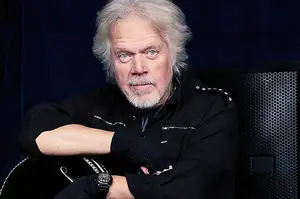
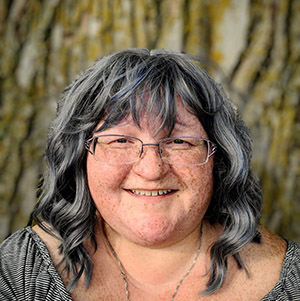
Sarnia is a border town that breathes heavy industry and river mist, a fitting backdrop for a man whose entire career was forged in the foundries of Flint, Michigan. Standing backstage at Bluewater Borderfest, the humidity off the St. Clair River hangs like a wet wool blanket, but Mark Farner does not seem to notice. He is 70 years old, yet he carries the kinetic energy of a man half his age, a living relic of a time when rock stars were expected to be both poets and power-plant turbines.
Farner was always the engine. As the primary songwriter, lead vocalist and guitarist for Grand Funk Railroad, he was the one who pulled that massive, blue-collar machine to the summit of the charts. He did it with a specific kind of Midwestern grit that lacked the artifice of the Laurel Canyon scene or the gloom of the British invasion. It was loud, it was funky and it was unapologetically American.
But the history of Grand Funk is as much about the friction as it is the fame. Fifty years after the release of *On Time* and the self-titled "Red Album," Farner finds himself in a strange position: he is the voice and the pen behind the hits, yet he is locked in a perennial tug-of-war over the very name he helped immortalize. He is bringing his current outfit, Mark Farner’s American Band, to Sarnia on Aug. 10 to share a bill with Dennis DeYoung. It is a pairing of two titans who have both been estranged from the corporate entities that bear their former band names.
When we sit down to talk about the legacy of those early records, Farner is quick to point out how much the mechanics of the industry have shifted. The transition from the late 1960s to the mid-1970s was a wild west for radio, a period before the airwaves were sterilized by corporate consultants.
Farner recalls, "Well, all that early stuff from ‘69 up to ‘76 was all before the deregulation of the FCC, and so a lot of our music was played not only on the AM, but it was switching over at that time and FM would play I’m Your Captain - it’s nine minutes and something. And, I’ve been complimented and thanked by so many DJs over the years that said, 'Dude, you gave me the opportunity to have a smoke, to take a leak, to get a little bite to eat before I had to get back to my microphone.'"
There is a technical brilliance in a nine-minute track that survives on the radio. It requires a narrative arc that keeps the listener from changing the dial. "I’m Your Captain (Closer to Home)" is that rare beast—a sprawling, orchestral rock epic that feels intimate despite its stadium-sized ambitions. It resonates because it does not dictate the listener's emotions; it invites them in.
Farner has a theory about why that era of music feels more permanent than the visual-heavy medium that followed. He argues that the rise of the music video actually narrowed our collective consciousness, stripping away the listener's ability to build their own internal worlds.
"I believe that music videos took away from the effect that music was having prior to them, which was all the videos that we had personally as fans listening to this music, and imagining this movie of the song going by in your mind," Farner says. "And, I remember a guy in New York City told me that they polled 100 different people, and asked them the meaning of the song Bridge Over Troubled Water, by Simon and Garfunkel, and they got 100 diversely different definitions. Well, you wouldn’t have that if they watched the video. They’d have one take, and that’s it. And, when somebody reads a book, and they go to see the movie they go, 'Man, that movie sucked compared to the book.' It’s because their movie was running through their imagination. And, that part of us, I think, is being stifled by just being entertained to death. We’ve lost our ability to free think and break away from that stuff."
And he is right. We are being entertained to death, force-fed imagery that dictates exactly how a song should "look." But back in the early 70s, the only thing that mattered was the output. Grand Funk was a factory. Between 1969 and 1976, they churned out 12 albums. That is a staggering pace that would cause a modern indie band to have a collective nervous breakdown.
But for Farner, the grind was the point. It was about feeding the beast and staying connected to the people who were actually buying the records.
"It couldn’t do anything but help because it got more of the Grand Funk out to the fans that were really waiting on it," Farner explains. "And, I talked to them at every performance. They’re still there, people. We were just up at a casino on Upstate New York, and people that were at Shea Stadium were there, and showed us the tickets, and it was great. It’s all about the influence of people in what we were listening to back then on the radio, but now we have no influence on what we’re listening to on the radio because it’s corporately, conglomerately controlled, and I’m sorry, but those guys got no ears."
I’ve been trying to give the fans back because I’m a fan of The Beatles. I was disappointed because those guys could not put whatever it was to bed. They couldn’t bury the hatchet, and just do it for us fans. Just get back together, and go out and play, so we could come and see them. And so, I have that within me, and I know for the fans’ sake that we could make a hell of a lot more money as Grand Funk, the original Grand Funk, and going out and doing what we should be doing, than separately going out.
That lack of "ears" in the executive suites is a recurring theme. Farner’s worldview is deeply rooted in a specific type of Michigan patriotism—one built on labour, family and the freedom to fail or succeed on your own terms. It is not the performative patriotism often seen in modern politics; it is something more visceral, born from tragedy and the assembly line.
His father was a World War II veteran and a Flint fireman who died in the line of duty when Farner was only nine. His mother was a pioneer in her own right, a woman who took up a welder’s torch during the war.
"My father was a War II veteran, and a fireman for the city of Flint. He died when I was nine years old, him and a fellow fireman were broadsided by a train, and they were both killed," Farner says. "So, my mother anyways, was the first woman to weld on Sherman tanks, which was the type my father was driving of course. And, at Fisher Body in Flint, Michigan, and so, their involvement, and the love that they had through it all, and was passed to us children is what drives me, and it’s my patriotism for family, and for the freedom to have family, and to express love, and to express it unconditionally, and to have the freedom of religion, and to have the safety of this freedom. This is what makes me proud to be an American."
But that pride has been tested by the legal systems of the country he loves. The battle over the Grand Funk Railroad name is a messy, litigious swamp. Recently, a judge ruled in Farner’s favour, allowing him to use the name "American Band," but the war is far from over. It is a cautionary tale about the intersection of art and intellectual property.
"It sure hasn’t prevented them from trying to prolong this thing and trying to tell me we’re going to do depositions," Farner says, his voice tightening. "It’s all a bunch of horse crap because they’re getting their butts kicked right now, and I never went out and proclaimed that I was Grand Funk. I wouldn’t do that. I am honest, I wouldn’t do that to a fan. But, other people will, and I don’t condone it, I never have, but they just jumped on the bandwagon of a bunch of other bands, a bunch of fake bands that are out there."
The "fake band" phenomenon is the dark underbelly of the classic rock touring circuit. You see the name on the marquee, you buy the ticket, but the person who wrote the songs is nowhere near the stage. It is a legal shell game that Farner finds abhorrent.
He brings up an anecdote from the road: "They advertise as a certain name of the band, and there’s not even an original member in there. It’s because someone owns the copyright of that name. And, when that is registered like that, federal registration, there’s one guy, Gunnar Nelson from the Nelson Twins, we were doing a radio interview, and he told me. He said, 'Farner, there’s 126 groups that’s called The Platters that go out, and this one guy licenses all of them, and he gets a chunk of whatever their take is collectively.'"
It is a bizarre reality where a brand name carries more weight than the actual human being who created the brand's value. To Farner, it is a betrayal of the audience.
"And, they can do it legally because it’s corporately owned. It’s just crazy," Farner says. "To me, it’s crazy because any real Grand Funk fan knows that that’s not Grand Funk that goes out that way without the guy that wrote and sang over 90% of the music. How could somebody say that? But, there’s a lot of fans that just are following the name. They don’t know about the individual members. They’re not really hardcore fans, so they go to see all these other fake bands. We call the guys that used to play with, The Faux, F-A-U-X Funk. But, I really want to take it back, and give it to the fans."
There is a lingering sadness when he talks about his former bandmates. He looks at the history of rock and sees missed opportunities for reconciliation, citing the most famous breakup in history as the ultimate tragedy for music fans.
"I’ve been trying to give the fans back because I’m a fan of The Beatles," Farner admits. "I was disappointed because those guys could not put whatever it was to bed. They couldn’t bury the hatchet, and just do it for us fans. Just get back together, and go out and play, so we could come and see them. And so, I have that within me, and I know for the fans’ sake that we could make a hell of a lot more money as Grand Funk, the original Grand Funk, and going out and doing what we should be doing, than separately going out. And, I’m going out, Mark Farner’s American Band, but I do a lot of all my Grand Funk music because that’s what the fans know me for, and that’s what they expect."
Despite the legal headaches, Farner’s current touring life seems devoid of the ego-driven drama that plagues many heritage acts. He describes a backstage environment that is more like a family dinner than a high-stakes production.
"Absolutely, but the guys that I have with me, we all feel the same. We’re just blessed to be able to take that stage, and we’re very thankful to be where we’re at," Farner says. "There’s no kind of start them trips or posing as something that we’re not. We come in, and we eat lunch with the crew. There’s none of the separation that takes place in our industry that I see, but I don’t want to be that part."
That lack of pretension is likely what allowed him to record one of the biggest party anthems of the 70s—the cover of "The Locomotion." It was a spontaneous moment of studio magic facilitated by the eccentric genius of Todd Rundgren at Farner’s rural studio, "The Swamp."
"Actually, what lead to that recording was Todd Rundgren was in the studio, and we were recording, doing the bed tracks for the album at our place which was lovingly called The Swamp," Farner recalls. "And, it was a little recording studio that we had a tape machine, but it was out in the country. And, I went across the road, I walked up the driveway, it was a snaky, little driveway, so people wouldn’t just be able to look back in there, and, I’m walking back from lunch, and I start singing, 'Everybody’s doing a brand new dance now' And, I hear the guys that are out having a smoke in the parking lot, they’re doing the backgrounds, 'Come on, baby. Do the locomotion ...' And, Rundgren, because the door was open to the studio, they were letting some fresh air in, and, Rundgren comes out, and he goes, 'What the hell was that?' And we said, 'What do you mean what was that? That’s Little Eva, that’s The Locomotion.' He says, 'Everybody in here right now, come in. We’re doing that song.' And, it was we got on it instantly, and we just did it off the top of our heads, and it was a big hit. I mean, it was just a party song. He came out, he was clanging ashtrays, he was singing all like real high falsetto stuff. We were having a blast, and it really transferred to the tape."
That connection to the local scene extends across the border into Windsor. Farner has long been a fixture in the Detroit-Windsor corridor, frequently crossing the Ambassador Bridge to scout talent or just grab a drink in a "funky" club. It was in one of those Windsor haunts that he found his current secret weapon: guitarist Dusty D’Annunzio.
"Oh yeah. I’ve been in Windsor, I’ve been to a few of the clubs," Farner says. "My partner is out of Windsor, Dusty D’Annunzio goes out, and does the acoustic gigs here in the States, and Mexico, wherever we get booked. I first saw him at The Dugout up there in Windsor. It’s a funky club, and, when I walked in, he was doing the song, Superstition, and the place was rocking. And I’m going, 'Yeah man, this guy has got it together.' And, I ask him if he wanted to go out, and do some of my solo stuff because I was doing it by myself, and I thought, 'Geez, a two-part harmony would be better than just one guy singing this stuff.' And then, we got my bass player from the band going with us now. So, we got three-part harmony, and we go and do acoustic stuff all over the place."
D’Annunzio brings a technical proficiency that allows Farner to strip these massive rock songs down to their skeletal remains without losing their power. It is a rare thing to find a player who can match the intensity of an original frontman while adding their own flavour.
"He brings an energy that is seasoned by youth," Farner says of D'Annunzio. "He plays every day, he goes to bed playing, wakes up playing, and early on, somebody says, 'If you’re going to add to what you’re doing, make sure you get somebody that’s better than yourself.' So, I got somebody who’s a better player than I am. So, he can express that even beyond my expectations, and he has because he’ll play the bass part, he plays the flute part, and the harmonics on the guitar. He plays all the parts, and very convincingly in time. It’s crazy, but a very good addition, and a great guy really. He’s historically plugged in. He’s a patriot to who he is, and the country of Canada, and I appreciate him for his knowledge of what’s really going on."
As Farner prepares to take the stage in Sarnia, it is clear that he is not just coasting on nostalgia. He is still the engine. But now, he is an engine that has been refined by decades of road wear and legal battles, running on a mixture of Michigan grit and Canadian harmony. And honestly, that is exactly what a rock ‘n’ roll icon should sound like.
Get Tickets