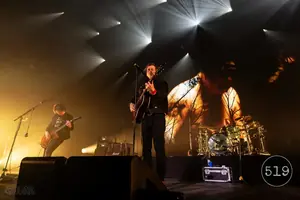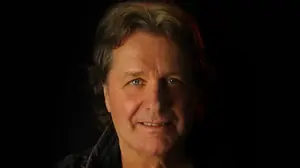

Standing in the wings of the Royal Oak Music Theatre, you can practically smell the history of the Detroit circuit. It is a room that demands a certain level of respect, and John Lodge, the long-standing bassist and melodic anchor of The Moody Blues, knows exactly how to command it. He is here to celebrate the 55th anniversary of *Days of Future Passed*, an album that essentially invented the symphonic rock blueprint. But this isn't some dusty museum piece or a hollow nostalgia trip. Lodge is treating the material with the kind of reverence usually reserved for high liturgy.
The tour has been snaking across the USA, and Lodge seems genuinely struck by the cross-generational appeal of a record that was once considered a risky experiment by Decca Records. He is seeing faces in the crowd that were likely born decades after the Mellotron first hummed to life in 1967. It is a strange, beautiful phenomenon to witness.
"I have to say I'm really pleased," Lodge says. "Not that I'm just bringing the album to a new audience, but it's an audience that's rediscovering the album and a new audience that's experiencing the album for the first time. And I'm really pleased about that because I think the album was such a changed my life and the Moody Blues lives forever and I think it's an integral part of the music of America now."
He is right about the American connection. While the Moodies were quintessentially English, their brand of cosmic pondering and lush orchestration found a permanent home in the American FM radio dial. *Days of Future Passed* was the turning point. It was the moment they stopped trying to be a R&B cover band and started looking inward.
"We should write our own English blues music, really," Lodge explains. "And that's how we conjured up Days of Future Past, really, with a record comedy. The record company wanted to make a particular record and we got a particular stage show and it was a collision of ideas."
That "collision" was the spark. Decca wanted a demonstration record to show off their new Deramic Sound System, a stereo recording technique that promised more depth. They wanted a rock version of Dvorak’s *New World Symphony*. Instead, they got a concept album about a single day in the life of an everyday man. It was a bold move that could have ended their careers before they truly began.
To get it done, the band had to vanish into the studio. They became creatures of the night, existing in a vacuum where the only thing that mattered was the sound coming through the monitors. It was a gruelling, immersive process that modern bands, with their home studios and digital convenience, rarely experience.
"We said to the record company, can we have the studio on lockdown 24 hours a day so we could go into the studio anytime when we wanted to be creative?" Lodge recalls. "You can become more creative at 04:00 in the morning and you need to capture this. And that's what we'd be recording at 04:00 in the morning. We take a camp bed, put it on the studio, fall asleep, wake up record, and were there 24 hours a day."
And that is where the magic happened. But performing this live in 2024 presents a unique challenge. Lodge is the primary custodian of this legacy now, and he has to fill the shoes of his former bandmates while maintaining his own identity. It is a delicate balancing act of vocal performance and emotional projection.
No idea at all. We were just young musicians, excited to be in the studio for 24 hours a day, total lockout. ...We never thought about the success of it, never thought about what's going to happen to it. Nothing at all. It was just magic recording our own songs for an album.
"When we recorded the album? The album has got a really nice feel about the album," Lodge notes. "There's space in the album, there's places where you can travel to in your mind with the album. And that's how I approached it on stage because obviously the other guys sang the songs as well. But I realized that I had to immerse myself into the lyrics of the other guys. If it's a song of rays, I had to immerse myself in that lyric, so in a way, I had to think I'd written that song myself. Because when you perform a song vocally, you have to really live that song. Believe in it. And I've had a great time relearning and becoming those songs."
Watching him on stage, you see that immersion. He is not just playing the notes; he is inhabiting the persona of the weary traveller in 'The Sunset' or the hopeful dreamer in 'Dawn Is A Feeling'. But back in the late 60s, none of them realized they were building a monument. They were just kids with a key to the toy shop.
"No idea at all," Lodge admits. "We were just young musicians, excited to be in the studio for 24 hours a day, total lockout. And that was really the height of our recording, was being in the studio, recording our own songs. We never thought about the success of it, never thought about what's going to happen to it. Nothing at all. It was just magic recording our own songs for an album."
There is a technical honesty to Lodge’s perspective that is refreshing. He does not romanticize the limitations of the past, but he acknowledges how they forced a certain level of discipline. When you only have four tracks, every decision is final. You cannot fix it in the mix later because there is no "later."
"I don't think so," Lodge says when asked if his perspective on the music has shifted over five decades. "It's become more. When we first started recording Days of Future Passed, recorded on two four track machines. Nowadays, in a recorded studio, it's added fun item, you can record forever. At the beginning, you would commit yourself to part on the bass, commit yourselves to part on the drums, guitar, because once you've recorded it, he was there forever. You couldn't go back and change him anything like you can today. So that's big. The biggest difference that for today, you can look at the track and not rerecord it, but you could look, oh, perhaps it would better to go this way than that way. In the earliest days, didn't have that opportunity."
But the most moving part of the current show is the presence of the late Graeme Edge. The band’s drummer and resident poet passed away in 2021, but Lodge found a way to keep him in the room. It is a haunting, beautiful use of technology that avoids the "hologram" kitsch and goes straight for the heart.
"I went to Graham and I said, 'I'm going to do 'Days Of Future Passed' on stage and I would really like you to record the poetry for 'Days Of Future Passed,' and I'd like to film you. On stage, you will always have a place with me,'" Lodge says. "And he said, 'John, keep the Moody Blues music alive.' The audience reaction when Graham's face comes up on the screen is amazing. I met Graham when I was 17, and he was in another band whom I liked very much, and I didn't know at that time I was going to share a stage with Graham for 50 odd years together. It's very special to see Graham narrating his own poetry."
It is this loyalty to the original spirit that makes the show work. Lodge is not interested in "reimagining" the songs into something they aren't. He understands that the fans want the cathedral, not a modern glass office building. He has kept the architecture intact.
"No, I don't think so," he says regarding any evolution in his feelings toward the tracks. "I really try to get into the songs themselves and every song really means something to me, like 'Dawn Is A Feeling,' 'The Sunset.' They're really integral parts of my life and the story of my life as well."
But he did make one concession: the sound. In an era where audiences expect crystal-clear high fidelity, Lodge has ensured the production values match the ambition of the music. He wants the audience to feel the vibrations of the bass and the swell of the orchestral arrangements.
"I wanted to keep the album as true as possible to the original album, so the fans who were there at the beginning could rediscover it, but also a new generation of people," Lodge explains. "I want them to discover the album for themselves. The only thing I really did was make sure audibly the sound is as best I could get it on stage. The sound has got to be right. And also, I think I didn't want it to be like a listening process playing the album. There are parts of the album where I've got the audience to participate with me as well, so they're involved with the album as much as I can get them involved."
The tour also coincides with the 50th anniversary of *Seventh Sojourn*, another titan in the Moody Blues catalogue. For Lodge, the music is inseparable from the people he plays it with. His current band includes two Detroit natives, which brings a certain grit and soulful empathy to the performance.
"I'm just a singer in a rock and roll band," Lodge muses. "That's who I am and that's who I want to be. That's what I do. I've been doing it since I was 15 years of age. The 'Seventh Sojourn,' my band, two of the guys from are from Detroit and they're credible musicians and they play my songs and Moody Blues songs with such love, empathy and respect. And it's fantastic."
And there is the Detroit connection again. There is a reason he chose the Royal Oak for this leg of the tour. The city’s industrial backbone mirrors his own upbringing in Birmingham, England. Both cities are built on the labour of the motor industry and the escapism of loud, ambitious music.
"Fantastic memories with Detroit," Lodge says. "And of course, I'm from Birmingham, which was called the Second Motor City. The first Motor City, of course, is Detroit. We've got a relationship there heavy manufacturing, motor cars, but great music, some incredible music obviously came out of Detroit and incredible music out of Birmingham. For me, Pine Knob will always have a special place in my psyche, in my heart, because I loved performing at Pine Knob."
As the lights dim and the first notes of 'Morning Glory' drift through the theatre, it is clear that John Lodge isn't just playing a show. He is maintaining a legacy. He is the bridge between the four-track magic of 1967 and the digital clarity of today. And for the audience in Detroit on July 21, that bridge is as sturdy as it ever was.