
Holding the heavy, 180-gram silver vinyl of the *Classics* re-issue feels like holding a piece of Canadian rock history that has finally been given the respect it deserves. For decades, "Greatest Hits" packages were the industry’s way of squeezing the last few drops of revenue out of a legacy act’s contract. But this isn't that. This is a curated, double-LP correction of a 30-year-old oversight.
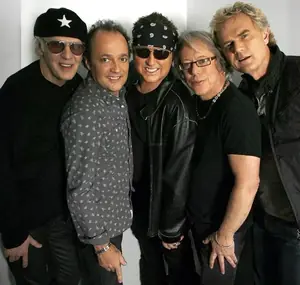
Triumph remains the quintessential "power trio" of the Great White North, a band that managed to bridge the gap between progressive complexity and arena-ready hooks. They were inducted into the Canadian Music Hall of Fame in 2008 and finally received their star on Canada’s Walk of Fame in 2019. It was a long time coming for a group that defined the sonic texture of the late 70s and 80s.
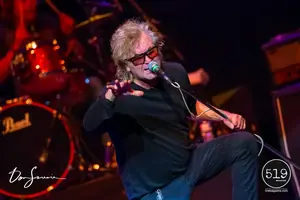
Bassist Mike Levine sat down with 519 for a marathon day of press, looking back at a career that saw them conquer the US Festival and command the kind of pyrotechnic spectacles that would make modern touring budgets weep. He is sharp, unsentimental and deeply protective of the band’s legacy.
The conversation naturally drifts to their recent, hush-hush performance for a handful of diehard fans. It wasn't a stadium tour. It was something far more intimate, staged at the Metalworks complex—the world-class studio facility founded by Triumph drummer Gil Moore.
"It was pretty cool, but it wasn’t because of us, it was because of the fans that we’re there," Levine says. "It was a really neat event that the film company, because they’re doing a documentary, they wanted to stage something and they figured out it’s a long story. But anyway, 150 of Triumph’s most ardent fans ended up out at the studio and in the metal works complex and we were just going to do a Q and A and we figured 'Ah, what the heck? Let’s surprise them and play.' And so we did, and it was crazy. It was like back in the 80s. It was really nuts. And it’s hard to believe that with only 150 fans, but it was. They were totally surprised. They had no idea we were going to play."
That element of surprise is a rare commodity in an era where every setlist is leaked on Reddit before the first encore. For Triumph, it was about capturing a specific energy for the cameras.
"Yeah. And then in the film, I hope they get that impact in the film because it’ll be really cool," Levine notes. "I don’t think you could reproduce it, but you can get close to it because it was very emotional."
Emotional weight is something Levine reflects on often when discussing the band's peak years. Between 1979 and 1981, with the release of *Just a Game* and *Progressions of Power*, Triumph was a relentless touring machine. They weren't just musicians; they were endurance athletes of the rock circuit.
"Oh geez. The hard work and the amount of fun we used to have," Levine says, looking back 40 years. "Because without the fun, I mean, I think the reason we lasted as long as we did is that we laughed. And it didn’t matter what it was, it could have been the worst disaster in the world for us. But we’d chuckle our way through it somehow. Somebody would come up with something funny and then we’d all fall on the floor laughing. So we never let anything get in our way or get us down. And I think that was, aside from the music and the touring and all that, that was a part of our success and it’s like we liked to have fun. And our shows were fun. Our shows were not that serious. Our concerts were fun to be at."
And that’s the secret sauce. The 80s arena rock scene was often bloated with self-importance, but Triumph kept a certain Canadian humility intact. But don't mistake that for a lack of ambition. They owned those stages. They understood the theatricality required to reach the back row of a hockey arena.
"Yeah, for sure. You were there for a reason and you were up there to entertain the fans and that’s why you traveled," Levine says. "That’s why you went to a radio station before the gig. That’s why you did interviews with press before the gig. For that hour and a half that you were going to be on stage, that’s what you led up to. And that was really the only real fun you had. The rest was just plain hard work. The fun part was playing. Because that’s what you did. That was your life. That’s why you were there."
The industry has mutated since then. The infrastructure that built "rock stars" has been dismantled and replaced by algorithmic churn. Levine doesn't sugarcoat the current state of the business for emerging artists.
It was pretty cool, but it wasn’t because of us, it was because of the fans that were there. ...we figured 'Ah, what the heck? Let’s surprise them and play.' And so we did, and it was crazy. It was like back in the 80s. It was really nuts.
"I don’t envy any bands in today’s world. It’s not a pretty place for music. That’s unfortunate, but that’s the way it is," he says.
This realism brings us to the *Classics* re-issue. Originally released in 1989, the compilation was a product of its time—and not in a good way. It was a utilitarian release, a "best of" meant to satisfy a contract rather than celebrate a career.
"Well, it’s the 30th anniversary, which is a good anniversary. 30 is a pretty good number, that’s when that record was issued," Levine explains. "But when it first came out, it was what we called in the business a contractual commitment album, which means the record company can do whatever the hell they want with a greatest hits record. So as in most cases, the record company puts out the cheapest piece of product they possibly can to make the most money for themselves. And that’s what they did."
The band has spent decades living with that subpar version. The new iteration, released through Round Hill Records, is the antithesis of that cheap 80s pressing. It features 11 original tracks, including "Lay It on the Line" and "Hold On".
"We’ve been living with that for a long time now. And we thought this is a perfect time to really upgrade the whole thing, the package, and make it look like it’s a proper greatest hits," Levine says. "So we went all in cooperation with our new record company, Round Hill Records and it’s on silver vinyl. It’s the best vinyl you can press on. It’s a gatefold package, lots of pictures and fun stuff with the lyrics and everything’s in it and we’re ecstatic with it. And it sounds great, speaking of vinyl, which I love the sound of vinyl now, but always does sound spectacular."
The decision to go with 180-gram silver vinyl wasn't just a marketing gimmick. It was a deadline-driven realization that the 30-year mark was approaching fast.
"Yep. We have to do it in a hurry because we hadn’t thought about it. Like, 'Oh yeah.' Somebody said, 'This is the 30th anniversary of Classic.' We went, 'Whoops, you’re right.' Let’s get on it," Levine admits.
Levine is a self-confessed "student of sound." He spent his formative years in studios, obsessing over frequencies and the warmth of analog gear. For him, the medium matters as much as the message.
"Yeah. I love listening to great music on great equipment and it doesn’t matter what it is, it could be classical music. If it sounds great, I’ll love it. I may not listen to it very often, but I’ll check it out. It’s just I’m a student of sound. That’s how I grew up. I mean, musician in the studio. So you appreciate the efforts that go into making recordings and vinyl is the best reproduction. If it’s good vinyl and it’s done properly, it’s the best reproduction process," he says.
The *Classics* re-issue also includes two live cuts that serve as essential historical markers: "Never Surrender" and "Blinding Light Show/Moonchild". The former is a relic from the 1983 US Festival, a massive California event that saw Triumph perform for hundreds of thousands.
"That’s a good question and I don’t have a good answer. They were suggested by various people around the band. Number one I get the reasoning was important. Never Surrender was from the US festival, which was probably the biggest show that was ever done in North America of which we were part of. And we played great and that song was just smokes," Levine says.
The inclusion of "Blinding Light Show/Moonchild" offers a nod to the band’s early, more experimental roots. It’s a track that never found a home on Top 40 radio but became a staple of their live identity.
"And then the Blinding Light Show was the centerpiece of our concerts for, I’d say the first three years of the band, and never really ever got any airplay or whatever. But the fans loved the song. So we thought we have the live version of that from the Sweden Rock reunion show we did in 2008. So put that on too. And I think they’re both good choices personally," Levine adds.
Naturally, the conversation turns to the potential for new music. While the trio hasn't toured properly in years, the creative itch remains. Levine and Moore recently contributed to guitarist Rick Emmett’s solo work, proving the chemistry is still there, even if the logistics are complicated.
"Well, Phil and I played on Rick’s last solo record. We played on a song that Rick wrote, but he asked us, 'Hey, can you guys play on this? I wrote it as an old Triumph and it’d be great if you guys could play it.' And we said, 'Sure, let’s do it.' So we did that. We’ve been fine since we’ve spent so much time together now in the last three months that we were talking about maybe if somebody comes up with a good song or two, we might go in the studio and mess around, if everybody’s got the time and the inclination to do so. It’s like anything, you just never know what’s going to happen," Levine says.
Fans often wonder why the 2008 reunion didn't turn into a full-scale global comeback. The answer, as it turns out, was less about internal friction and more about the global economy. The Great Recession of 2008 killed the momentum.
"We were planning when we reunited in 2008 for Sweden Rock and the show in Oklahoma, both shows went really well and we started talking tour and Live Nation came to us and said, 'Okay, here’s what we want to do and do this amount of dates in Canada, this amount of dates in America.' And then the recession hit and we all sat down and said, 'This may not be as good an idea as we thought it was anymore,' because a lot of the key markets got crushed financially. People lost their jobs and their homes and all that. And we didn’t want to go out and not have a good time so to speak. So we just put it on hold. And that recession lasted four years, in America at least. So we just kind of went, 'Probably it’s not a good idea anymore,'" Levine explains.
But the Triumph story isn't over. With a documentary slated for next year and several "pipeline" projects in the works, the band is as busy as they have been in decades.
"Well there’s the documentary coming next September probably. There’s that and there’s a couple of more projects down the pipeline that I can’t talk about right now. But that’s we’ve had so much on our plate, it’s been really, really busy for us. So we’re taking a breather for at least a month over the holidays. And then there’s a bunch of stuff we have to deal with the film and, onward and still promote the Classics LP," Levine concludes.
For a band that spent the 80s in a blur of laser lights and power chords, Triumph is navigating their legacy with a surprising amount of grace. They aren't chasing trends. They are simply making sure that when the history books are written, the audio matches the legend. And on silver vinyl, it sounds exactly the way it should.