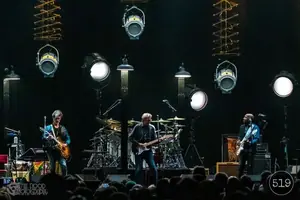
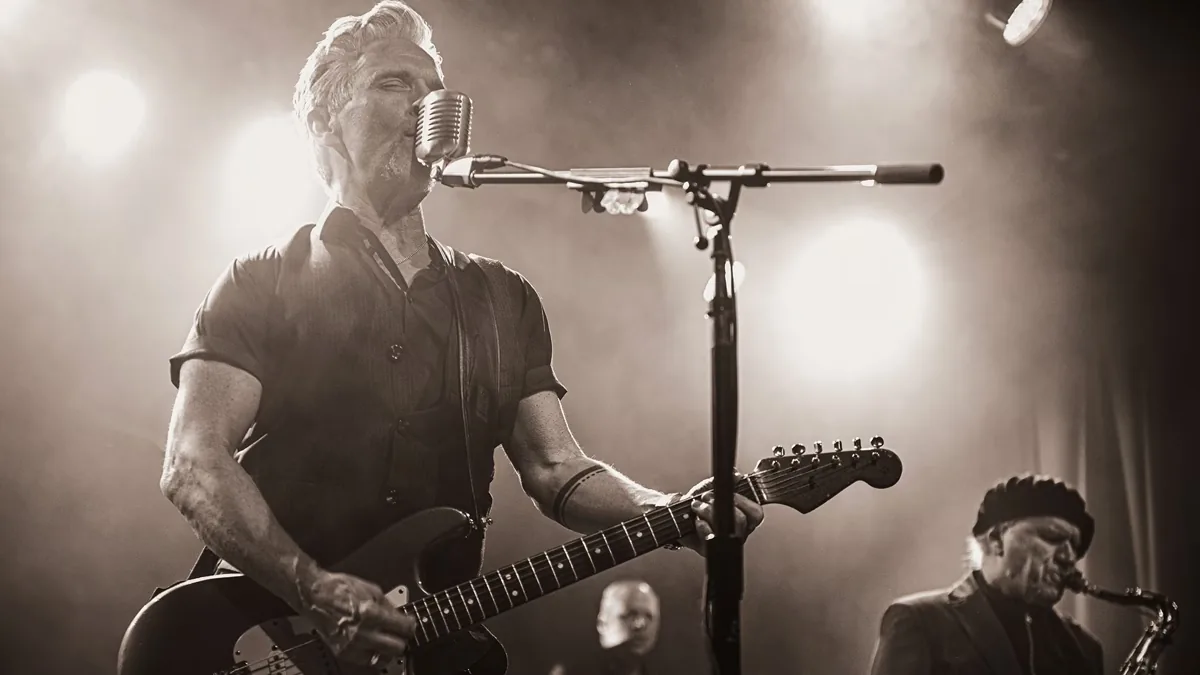

Standing on the edge of the Detroit River, the humid July air thick enough to chew, you can hear the sound check bleeding through the fence at the 2018 edition of Bluesfest Windsor. It is a familiar, biting Fender Stratocaster tone. It belongs to Colin James, a man who has spent three decades proving that a kid from Regina can actually possess the soul of a Delta bluesman without it feeling like a cheap costume. James is the Friday night headliner, and while the crowd is here for the nostalgia of the late 1980s, the man himself is preoccupied with the future.
He is Canada’s premier blues export, a journeyman who transitioned from a teenage prodigy opening for John Lee Hooker to a Juno-heavy veteran with 20 records in the chamber. But don't expect him to throw a party for himself. When I ask if it has really been 30 years since his self-titled debut hit the shelves, he shrugs it off with the casual indifference of a guy who measures time in tour dates rather than anniversaries.
"Well it was in ‘88 and my first single came out, I think before that, which was 'Five Long Years' which was an extended EP. So I think yeah, it has been," James says. It is a staggering timeline for an industry that usually eats its young, yet when asked if there are plans for a grand celebration, he is characteristically blunt: "No not really, I’ll just be out there working."
That work ethic is what kept him afloat when the hair metal of the 80s gave way to the grunge of the 90s. Looking back at the 1988 sessions, James recalls a different world—one where a 20-year-old with a guitar could still find a mentor in a burgeoning legend like Bob Rock. It was a time of raw ambition and hand-delivered physical media.
"Well there are two different things that happened. The extended EP that I did, that was with Bob Rock. So that was the first time I really got in with a serious producer. You know of course Bob ended up doing all records for Bon Jovi and everybody, so I remember us being young and eager. I was 20—I think I was around 20—and it was kind of a big deal working with him, even though I hadn’t been signed to a major label yet. We started getting some airplay in Seattle and Vancouver just by hand delivering the EPs to other people and then it wasn't all that long after that that I got signed to my first American record deal," James says.
The voice you hear on those early records—the one that propelled "Voodoo Thing" and "Why’d You Lie?" onto the charts—is almost unrecognizable to the James sitting before me today. There is a technical maturation that only comes from thousands of nights under hot stage lights. He is the first to admit that his early work was more about mimicry than mastery.
"Oh my god, so much," he says when asked about his personal evolution. "But you know back then, I think you know when you're starting out you, you emulate other singers that you love and you could probably emulate too much and you don't just be comfortable in your own voice and I think I hear those early records and I sound so hot my voice is so high. I just think I grew in to be a better singer over the years. I think you know in the initial days I was kind of a guitar player. And then as time went by singing became much more important to me."
There is a specific kind of artistic torture involved in playing a song you wrote at 19 for the rest of your life. For years, James struggled with the weight of his own hits. There was a period of rebellion where the "big" songs were shelved in favour of artistic purity, particularly during his swing revival phase. But time has a way of softening the ego.
"Well, sure. You know, you're always, through your whole career you're always like… ahhh. There's been times when I won't play some of the old stuff—some times in my life where I wasn’t enthused and I'm not playing it anymore. You know I think I went through a few years where I would refuse. When I was doing the Little Big Band records of course I didn't have to do it because we were doing a whole other thing. Lately, at the end of the day you realize at how lucky you are to connect with a song in a big way with people. I think, as time goes on you realize how lucky you were to get songs like, 'Just Came Back' or 'Voodoo Thing' or 'Keep On Loving Me Baby', that really connected with people so you know you end up being kind of less weird about it as time goes by. You kind of think… ahhh, why not and you do it and you try to enjoy it," he explains.
The Windsor setlist reflects this newfound peace. It is a lean, blues-forward attack, influenced heavily by his recent output. James has spent the last few years digging back into the crates of his idols—Howlin’ Wolf, Freddie King and Buddy Guy. He is currently riding the wave of *Blue Highways*, but he is already looking toward his next project, *Miles To Go*.
The thing about Regina and what it did for me was, I was about the only one or two that played blues in the city when I was 16 years old. And I firmly believe that if had I been somewhere else I might not have had those opportunities open up for John Lee Hooker when I was 16. There was something about being the only one of two blues bands in Regina, Saskatchewan that gave me a sense of individuality.
"It'll probably be more blues focused, being that I've just done two blues records in a row. But, I’ve always had one foot in the blues all my life. Right now, you know, we're starting to do a few more of those blues cruises in America and some of those big boats that go out of Fort Lauderdale and down into Puerto Rico and back. We always try to mix it up though. In fact, there is a new record is coming out in the fall. In Sept. we have a new blues record coming out and kind of like *Blue Highways*. It will be along that same lines. I have three original three on the record but again it's a pretty traditional blues record," James says.
He is remarkably candid about the current state of the industry. He knows the "Rock Star" era is dead and buried, replaced by a "classic rock" radio format that treats new music like a contagious disease. It is a brutal reality for a man who is still writing at the top of his game, but he has found a way to navigate the wreckage.
"And it's kind of been fun, you know through all these years of knowing that I love the blues myself but still having to perform on rock radio and get song on the radio there was always a bit of a fight there between the blues and the rock thing. For someone like me now there's really there is no more rock radio. As you know, classic rock has really shut down and they just play recurrent songs—including me. They play my old songs but they won't play my new songs. You know what I mean—it kind of shows. So for me I'll do a bit of everything. This is my 20th record coming out in the fall. So we always given a nod to all the records over the years because a lot of them had enough blues in them and I could do it. The nice thing about having that many records under your belt is you can call a song that you haven't played for five shows in a row and call it out of the blue and that's fun. It keeps everyone on their toes," he says.
Choosing which classics to cover is a delicate science. You can’t just play the hits; you have to find the ones that fit the grain of your throat. For *Miles To Go*, the process was exhaustive.
"I’ve had favorites that I’ve always carried with me over the years. I've already done three Little Big Band records, done maybe three full scale blues records now and a lot of the songs that I loved I've done. So it becomes a rarer commodity to find songs—now I have to dig a little. On this new one which is going to be called *Miles To Go* no one knows that yet, so you get a scoop on this new one. Basically, we recorded a lot of material on this last one. So on *Blue Highways*, I think we recorded 30 songs and we narrowed it down to 12. On this new one we did the same thing—recorded about 25 and then narrowed it down because sometimes you might love a song, but it might not fit your voice. But occasionally you get that sweet spot where a song works with your voice, your thing, and then you always know what that is," James says.
One cannot discuss Colin James without mentioning the 1993 pivot to the Little Big Band. At the time, it was a massive commercial risk. He was a rock radio darling who suddenly decided to front a swing orchestra. During that tour, he famously told audiences that if they were there for his rock hits, they were at the wrong show. It was a move of pure, unadulterated confidence.
"You know I really have to thank other people for pointing me in the right direction, when I was about 17 or 18. I lived in Winnipeg and there was somebody that said, 'You got to come to my house and listen to this record'. And they sat me down and they made me listen to Johnny 'Guitar' Watson, Roy Brown and Jackie Wilson. Well Jackie, I may have discovered on my own, but Rosco Gordon was a huge part of my Little Big Band records because I kind of fell in love with his delivery. I‘d really have to thank other people for pointing me because they weren't that obvious to me. They weren't the guys like Muddy Waters and Howlin’ Wolf, but these guys like Rosco Gordon were kind of under the radar and I really needed people to show me. In 1993 when the first Little Big Band came out, it was a chance for me to show that I really had a connection with that music without worrying about the commercialism of it. And ironically, it did almost better than any other record I've ever done. Often when you're not looking for the obvious and you're really just trying to reaffirm your love of something, that’s when the magic happens," he says.
That tour was a masterclass in production, featuring a roster of musicians that most artists would kill for.
"Well, I had to on that tour because I had all these American horn players that were really prestigious. They were maybe the finest swing/horn section in the world, you know. I had Chuck Leavell, from the Stones on keys and it was a real chance for me to dive right in. And I’m still proud; I'll still play the blues thing with a smile on my face. I love 'Keep on Loving You Baby', that song, that's a Willie Dixon song. I mean I'll never have a problem playing that song. But I think it was a chance for me to say this is not going to be the same old thing. It’s going to be me trying to stretch out a little bit," James recalls.
Despite the global touring and the Vancouver home base, there is still a piece of the Saskatchewan prairies in his DNA. He left Regina at 16, but the isolation of the plains is what gave him his edge. In a city where no one was playing the blues, James became the default authority.
"Not in a day to day way because I left there pretty early. I left when I was 16. I moved to Winnipeg. I never really lived in Regina again and I ended up in Montreal for a while. That's when I came back, and then I moved to Vancouver in 1984. When I go there, you know there's a certain amount of sentimentality because you know some people, but the thing about Regina and what it did for me was, I was about the only one or two that played blues in the city when I was 16 years old. And I firmly believe that if had I been somewhere else I might not have had those opportunities open up for John Lee Hooker when I was 16. There was something about being the only one of two blues bands in Regina, Saskatchewan that gave me a sense of individuality. That I kind of carried with me, so I carry that with me, but I ‘m a Vancouverite now and I've lived there a long time," James says.
There is a romanticism to the prairies that he still carries, even if he prefers the temperate climate of the coast. He describes the landscape with a painter's eye, recalling the eerie beauty of a Saskatchewan morning.
"Yeah that’s for sure. You know I had an amazing experience growing up in Regina. I remember some of those mornings on the prairies at 5:00 in the morning when you haven't gone to bed yet and you look at the birds or you're out in the prairies. I mean it's gorgeous—it's got to be. I know I was lucky enough to go across the prairies on the food bank tour on the train and I got to see Saskatchewan by train and it's gorgeous," he says.
That connection to his roots even led to a surreal cameo on *Corner Gas*, the definitive Saskatchewan sitcom. It was a full-circle moment that reunited him with a figure from his brief foray into the theatre world.
"That was cool. You know Janet Wright, who played Brent Butt’s mom on the show, directed me in theatre. I did a bit of theatre when I was about 20. I did about a year of live theatre and she was my director on her show back then. So, that was cool to see her again. That was great," he says.
As he prepares to take the stage in Windsor, James isn't slowing down. The festival circuit is just a warm-up for the grind of a new album release and the subsequent tour. For him, the road isn't a burden; it’s the only place that makes sense.
"Well you know we tour every two years, we go across the country and elsewhere. The new record is coming out Sept. and I think we'll tour the new record in the New Year. Summer is a great time to be on the road. Like last summer, I played two or three shows with Buddy Guy. Beautiful outdoor places, and it's a great vibe. It's nice to be outside and play in some of those beautiful summer festivals like Bluesfest in Windsor," James concludes.
Watching him later that night, silhouetted against the Detroit skyline, it’s clear that James isn't just "out there working." He’s preserving a craft that is increasingly rare. In an era of programmed beats and ghostwritten hooks, Colin James is a reminder that there is no substitute for a man, a guitar and a lifetime of blues.