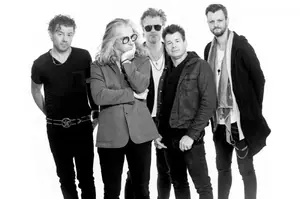
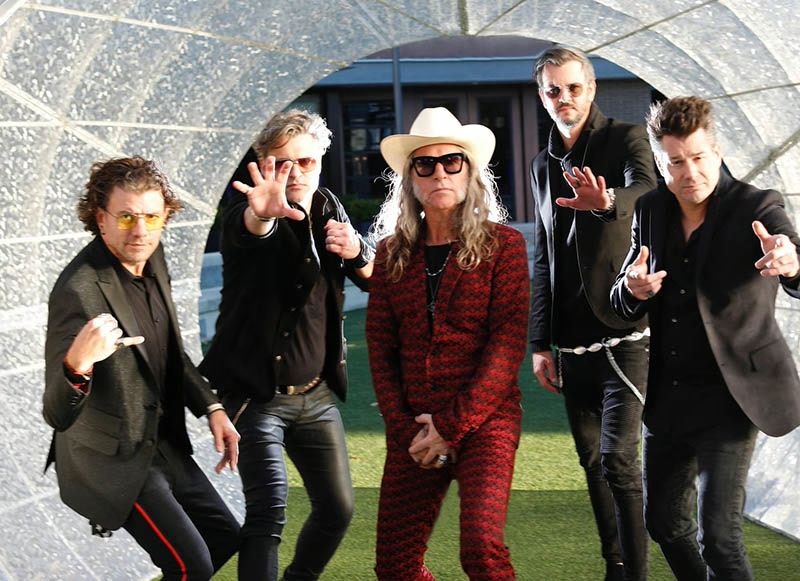
Sitting in the back of a dimly lit venue, watching the road crew haul Marshall stacks across the stage, you realize Collective Soul is one of the few survivors of the post-grunge gold rush that actually has something left to say. They aren't just a heritage act collecting a cheque. With their new record *Vibrating* already in the can and slated for a Feb. 2022 release, the Georgia boys are currently tearing through the US in a post-COVID Phase 3 blitz.
Thirty years is a lifetime in this industry. Most bands from the class of '92 are either playing state fairs or are locked in legal battles over publishing. Collective Soul found a different path. They carved out a niche as a unit that produces nostalgic hooks with a sharp, cutting edge. It is a recognizable sound, sure, but they twist the dial just enough to keep the engine from stalling.
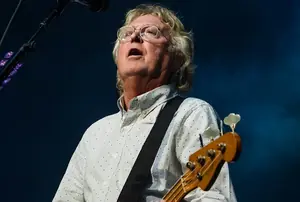
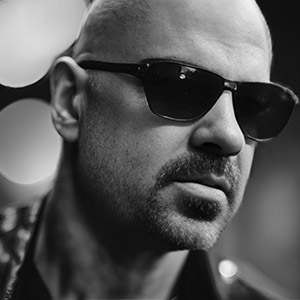
I sat down with bassist Will Turpin to talk about the mechanics of the band, the ethics of bootleg recordings and the weight of family legacy. He is relaxed, lean and carries the air of a man who has seen the top of the charts and the back of a tour bus and prefers the view from the stage.
We haven't spoken since 1995. Back then, the band’s second album was the biggest thing on FM radio. A lot has changed in the industry, but the triad of Ed Roland, Dean Roland and Turpin remains the immovable object at the centre of the band. I asked Will what keeps that engine running after three decades of friction.
Turpin leans back and thinks about the geography of their youth. "It probably goes back a few generations. My grandfather knew their father and both families were in that county for a long time. I think their father knew my great grandfather, he was Postmaster General of Henry County. My grandfather was superintendent of schools, and then their father was the Minister at the big Southern Baptist Church. I just think growing up together and having that bond, my entire memory I’ve known who Ed and Dean Roland were, and they’ve been my brothers for now, the last 27 years."
It is a rare bit of rock history that is rooted in the pews of a Baptist church rather than the gutters of the Sunset Strip. You can hear that Southern communal spirit in their harmonies. But stripped of the guitars and the gold records, would they still be in each other’s orbits?
"Yeah, we’re definitely good friends," Turpin says. "The band is our hub, it always has been and that’s what brought us together. So I can’t imagine not being in there. We have fun hanging out together at casual events."
The conversation shifts to 1995. That was the year of the self-titled "Blue" album. It was the moment Collective Soul proved they weren't a fluke. They were transitioning from the indie-produced *Hints Allegations and Things Left Unsaid* to a major label powerhouse. Turpin remembers the shift in pressure and the luxury of a real studio.
"I remember, it was self titled, because of how the first record was put together," Turpin says. "I remember us being really excited about people wanting to hear what we could do, if we actually got to record an album. Atlantic Records just kind of put their stamp on the independent release, because “Shine” was so big. In our heads, we were at one point, we were thinking, we’re gonna re-record the whole first record. And then things are moving so fast, it wasn’t a smart idea, which was great. Because I love the way it sounds so different, you can tell people the story."
There is a rawness to that era that defined the mid-90s. The band ended up at Criteria Studios in Miami, a legendary room that has hosted everyone from Derek and the Dominos to James Brown. For a group of guys from a small Georgia town, it was the big leagues.
"Part of its success is why it sounded so different," Turpin continues. "But, I remember just being proud to be able to go record, to record the criteria at Miami, we had a blast down there. I remember that the end the big induction into ‘Oh, here’s how major record label pays for you to record a record’, and luckily for us, I also remember that they didn’t, because of how the first record happened, and it sold, a million platinum and a half in the States. The label wasn’t too much in our business. So they let us record the second record pretty much exactly how we wanted to record it, no one was telling us what to do. So looking back on it, I think that was kind of important too, because that could have been interesting having somebody in there all of a sudden trying to tell us what to do, because we all had the same vision, we all thought the same way. We grew up in the same small town."
That autonomy is what saved them. Most bands get crushed by the sophomore slump because the label gets too "helpful." Collective Soul just doubled down on their own instincts.
"We knew what we wanted," Turpin says. "Man, I tell people back then, it was laser focused on how quickly we could get on the same page. And go for our goal, and go for the ending or whatever, finish this or finish that, or make this, do this. I just remember being proud of being able to make a record that we thought would be our band, our first band record, and that was right."
The irony is that their "first" record was essentially a collection of demos that blew up. I asked Will what specifically bothered them about that debut that made them consider re-recording the whole thing.
"That’s what I’m saying. It’s not like we thought it," Turpin clarifies. "It was just for a brief moment, because we thought about it as a demo. It was a collection too and some were recorded as a band. You can’t tell the difference if the ones a record. But I mean, there’s even a drum machine on “Shine” so I think it’s not like we thought about it. We thought, hey, here’s our game plan. It’s more like we were just assuming that would be the best way to go. And then things were just moving so fast. It was like nah, let’s just leave it like it is and record another record as soon as we can."
The pace of the 90s was relentless. You didn't have time to second-guess a drum machine when you were playing 200 shows a year.
"We were back in the studio less than a year," Turpin says. "We were in Miami, we toured, we played over 200 shows and 94 on the first record. And by the end of that year, we had gotten “Gel” on a soundtrack and recorded it while we were on the road. By December, the end of that 94 year, we’re in the studio recording what we thought would be the quintessential first band record for Collective Soul. We knew “Gel” would be on it. Also, we had recorded “Gel” jail while on tour so we could get it on that soundtrack."
The self-titled album was recently re-issued, and for the completionists, the Japanese edition always held the holy grail: a cover of Elvis Presley’s "That’s All Right". It is a weird, frantic little cut that shows a different side of the band.
"Ed was just a great fan of Elvis’s performances, and we sat there and recorded it," Turpin explains. "Honestly, wasn’t a whole lot of fall behind it. It just became something that Japan wanted to release. You mentioned stuff that we recorded in the gem would be to go back in time and find all the ones that nobody’s heard. Especially on the earlier records, there are at least two to four songs on every record that nobody heard."
This is the stuff that drives fans crazy. The idea of a vault filled with 90s alt-rock gold just sitting in a climate-controlled room in Georgia. I asked if those tracks would ever see the light of day.
"I think that’s a good idea for us to release it," Turpin says. "I think people would really be interested to hear and it’s stuff that’s 20 something years old. There are songs people haven’t heard that we recorded that are from all the different areas. But definitely in the earlier days, we recorded more. Now we were pretty wide, at which ones to totally finish. And we don’t have as many that aren’t released. But back in the day, we would record so many and go so fast that there’s definitely some more from back in the day. But there’s some that we recorded three years ago that nobody’s heard."
He isn't exaggerating. The sheer volume of material they produced during their peak Atlantic years is staggering.
"It’s a bit like Prince’s vault that’s nobody’s heard," Turpin says. "You know he’s got hundreds of those songs. We could find 20 that would be close enough to being completed that we can make something, I guarantee we can find 20."
It feels like a crime to hide 20 songs from a fanbase that has stayed loyal through the collapse of the CD era.
The label wasn’t too much in our business. So they let us record the second record pretty much exactly how we wanted to record it, no one was telling us what to do... Man, I tell people back then, it was laser focused on how quickly we could get on the same page. I just remember being proud of being able to make a record that we thought would be our band, our first band record, and that was right.
"Yeah," Turpin admits. "You know, we just figured out which ones were the strong ones and those came on the record and then we get so busy. We just move on. We’re always on to the next thing, we’re thinking about that song that nobody heard."
But why were they cut? Was it a lack of quality or just a lack of fit? The technicality of a record's flow often kills great songs.
"I think you’d like to hear them," Turpin says. "I think maybe the answer will be both, I think you’ll hear some that maybe didn’t quite fit or maybe you’d hear some that just didn’t quite have the enthusiasm, didn’t quite have the magic. I don’t know. I’d be interested to do it myself. I know they’re there. I can’t remember half of the names right now."
Sometimes the "magic" is subjective. Turpin has his own list of songs that he thinks were robbed of their chance at radio dominance. Specifically, a track from the *Rabbit* record.
"No, I think sometimes there are songs that I feel really should have been a single instead of the other ones," Turpin says. "I’ve always felt like “Fuzzy” from the Rabbit record should have been a single that more people should have heard, it’s just too catchy and it never was released or focused on marketing or as a single."
The machinery of a label—in this case, Roadrunner Records—often dictates what the public hears, regardless of what the band feels in their gut.
"I remember thinking it and saying it but that was Roadrunner Records and they were heavy into helping make decisions on that stuff," Turpin says. "So I was like, Well, whatever. Because I mean, I’ve been doing this so long I’ve been like, Oh, yeah, “Precious Declaration” should definitely be the opening single. But I’ve also been like, I remember when Ed was adamant that “December” was a single. And I’m like nah, “December” is not a single. You can think all you want, but it’s hard, you’re never gonna to know for sure. And then sometimes you just want to state your opinion and then not worry about putting the stake in the ground because you could be wrong."
It is a humble admission. "December" became a massive, career-defining hit, winning Rock Song of the Year. Turpin was dead wrong about it, and he’s the first to admit it.
"Yeah, but I was wrong about “December”," Turpin laughs. "I was like, Oh, I don’t know, man. I don’t think that should be a single, and it was rock song of the year. Nobody listened to me on that one. Ed was adamant. He’s like, no, this is it. I’m like okay. Cool. All right."
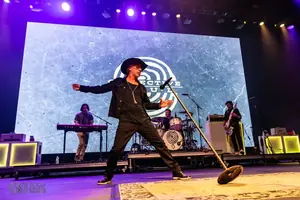
The current tour sees Collective Soul pairing up with Styx. It is a smart bill—two bands that understand the value of a big chorus and a tight live show.
"We do know them pretty well, and we know them even better now," Turpin says. "But I’m glad you thought was a great match. I think it’s a really cool match too. The ticket sales were great. The crowds were amazing. We worked up a really cool arrangement in December and Tommy Shaw comes out right in the middle and we do this extended solo thing and everything. So he played in our band for eight nights in a row. That’s how I frame it up. Anyway, Tommy Shaw played in our band for eight nights."
He laughs at the thought. Shaw, a legend in his own right, jamming with the Georgia boys is the kind of crossover that makes the summer tour circuit worth the sweat.
"We get along great," Turpin says. "We just went out there not wanting to fuck anything up and we didn’t fuck anything up and therefore we made better friendships and they trust us and want to tour with us even more. So I think we might have more dates in the future."
The tour is heading toward Michigan, a state that has always been kind to the band. Detroit, in particular, has a reputation for being a meat-and-potatoes rock town that doesn't suffer fools.
"Heck, yeah. I love Traverse City and The Cherry Festival," Turpin says. "Detroit Rock City, especially back in the day, you knew, that we were going to deliver, the crowd was going to deliver, you knew there was going to be a serious rock show going on. But yeah, I mean, the memories, man. It’s hard. It’s hard to just dial them up. Sometimes you just have to start talking about things and you start remembering more. Detroit, that’s a real listening Rock & Roll crowd. I remember playing there for the first time with Aerosmith. At a popular amphitheatre I don’t even think is here anymore. I’m like oh, that’s why they call it Detroit. There’s actually a bootleg of Collective Soul out and half of those songs, I think, if not all of them were from the Detroit performance opening up for Aerosmith. You can find it pretty easy."
Bootlegs used to be the lifeblood of a hardcore fan's collection. Before YouTube, you had to hunt for these things in the back of dusty independent record stores.
"We used to," Turpin says when asked if he keeps tabs on them. "Now, it’s not the same. You don’t get to go into these mom and pop, cool music stores and look for bootleg. No artists of the past to go along. Nobody really does anymore. But I’ve documented them and I love them. And especially in the early days. I was glad somebody documented that for me."
The band itself wasn't exactly diligent about recording their own board feeds in the early days. They were too busy trying to survive the road.
"In Audio? No, not a lot of them," Turpin says. "We were young and we’re playing through analog gear. It was very hard to record your stuff back then. Took a lot of planning. We were lucky to get to the next town. Our crew set up our stuff and everything be working for the live show."
That lack of official documentation makes those fan-recorded bootlegs even more valuable as historical markers.
"Yeah, they absolutely are man," Turpin says. "There’s three or four that are pretty good from 94 and 95. But there’s one from Chicago. “Sweet Home Chicago”, I think it was called. I think they were trying to do a reference on the southern boys."
Last year, the band leaned into the vinyl revival with *Half & Half*, a Record Store Day release that featured a mix of originals and covers. It was a chance to pay homage to their influences.
"They had some cool songs we wanted to record," Turpin says. "And then we thought we’d do some cool covers, which we don’t do a lot of especially recording. So, we had a lot of fun recording the Neil Young tune. Then we’ve been out playing REM, “One I Love”, we’ve been out playing it in 2019 with a Gin Blossoms, Robin would come on stage and sing “One I Love” with us every night. We recorded our version of that as well. It was like, we didn’t have time to record a record. So we’re like, hey, let’s put this together. And it’s just cool to be part of Record Store Day, and we enjoy that we like putting some marketing and some energy towards something fun for people. You know, keep that vibe around a little bit?"
Having seen the band multiple times since 1995—including their stop in Windsor in 2019—it is clear they have hit a stride. They occupy a space between nostalgia and the cutting edge. They don't sound like a museum piece.
"It sounds killer to me," Turpin says of the assessment. "For a matter of fact I’m going to have to remember that quote and quote you from here on out. Because Yeah, we are nostalgic in love, and still love playing “Shine”. Our new stuff at 50 years old. I mean, I don’t really wear rose coloured glasses. We’re still crushing it on how we’re creating and how we’re performing. So, hopefully the stars keep aligning and will be able to keep doing it. We don’t over think the set or our vibe. We just really enjoy playing music together. And I think that’s a big deal, too. It just really comes across. And yeah, I love that quote, cross between nostalgia and cutting edge."
The sound is honest. It feels like five guys in a room, not a series of ProTools plugins.
"Yeah, but like I said, it all boils down to emotion at some point," Turpin says. "So we’ve got a great way we approach going in there and record, it’s not a technical approach. It’s kind of like, you can’t break the rules until you know them all and we understand all the technical rules, but we’re not thinking about a single technical rule when we’re recording a song, we’re trying to create something new. We focus on the things with a nice hook, we focus on the vibe and the core so we can tell what Ed’s saying and somehow it’s just when it feels right we know it’s right and you can’t put it down in a manual and tell somebody how to do, it’s a feeling that we’re real comfortable with now."
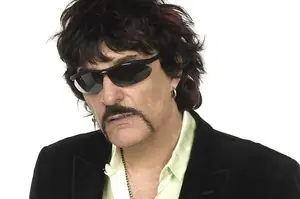
The current lineup—including Johnny Rabb on drums and Jesse Triplett on lead guitar—has brought a fresh energy to the veteran core.
"Yeah, like you said that the incarnation of the band at this moment, me and Johnny Rabb are extremely tight, definitely on the same page when we hit something right we know how to replicate it, we know it’s right. Jesse on the guitar man, he’s a great guy, great creator, keeps his ears open again. Your ears are your best weapon, not what you put out it’s what you take in and then use that to put into the output. We do love our lineup and we all get along a whole hell of a lot now too. That goes into play when it comes into the live scene. Like I said, we view it as a celebration of life, man, when we play live for the audience and for us. This is it and this is what we all live for, the memories and the music."
With *Blood* now two years in the rearview mirror, fans are hungry for the next chapter.
"Yeah, I was wanting to release it this summer, but it’s gonna be February next year, the record’s called “Vibrating”," Turpin confirms.
Outside of the main band, Turpin has been busy at his own facility, Real 2 Reel Studios. He released a solo album a few years back that allowed him to explore textures that don't always fit the Collective Soul mould.
"I love the whole thing, it’s kind of an overall concept," Turpin says. "I learned that being able to create outside of Collective Soul is good for all of us, and it makes us stronger when we come back together. It was also awesome just to be able to create with a totally different vibe. Mark Wilson, a dear friend, and exceptional bass player, played bass on half the track and I didn’t play bass, so it’s just good to have these songs that come from a little bit of a different place. I start most of the songs on piano and/or Wurlitzer or something like that. It’s just good to flap your wings a little bit outside of the Collective Soul thing. And then when you come back to the Collective Soul circle, you feel stronger, and I think it makes the band stronger."
There is more on the way, too. He is currently deep in the writing process for a follow-up.
"Yeah, I’m working on it right now," Turpin says. "Matter of fact, on the way to the studio today, running through my head is how I’m going to organize, going about doing it. But I’ve already have the bulk of the songs written, like eight strong tunes. So trying to figure out my plan of attack on how to get it done the best, and the most efficiently. But yeah, there’ll be at my studio, Real 2 Reel Studios down here."
Balancing a solo career, a world-touring rock band and fatherhood is a logistical nightmare that Turpin has navigated for decades. His kids are older now—23, 18 and 15—but he grew up in this world. His father was a musician too.
"Probably affects them more than it affects me," Turpin says of the family balance. "I know we all have a good relationship, and they’re older now. I feel like I’m now officially middle age. My kids are 23, 18 and 15. It’s always been my life. My father was in a band, and he owned a recording studio. So not only is it my life, it’s what I grew up with as a child as well. Sometimes it’s all about perspective. So for me, I don’t understand why my relationship has to be any different than anybody else’s on a father side, other than the fact that they get to do some cool things in the music industry and they get to see some cool shows and meet some musical geniuses every now and then."
In the 90s, the travel was brutal. Turpin would pull heroic stunts just to be home for a few hours.
"When they were young. It was tough and like I said, I think that questions even maybe more for them," Turpin says. "But it was tough. when they were younger, I would fly home all the time. I would literally fly home for less than 24 hours sometimes. Living in Atlanta, gave us that option a little bit because of the huge hub and huge airline Delta. So we always had a lot of options to come. Me and Ed, we’d be at hotel lobby at 4:30 in the morning, catching up, 7:30 flight out of Detroit, so we could go hang with our kids for 24 hours. And then we’d be back at the airport the next day going straight to a show. So that’s a little different. And they went for weeks without seeing me every now and then. But we had a couple barriers. Once it was two weeks, management had at least given me two days off. After I started having children in 97. I mean two days off every two weeks isn’t a lot either."
He laughs, the weary laugh of a man who has spent too much time in terminal B.
"We were still working and we’re going to do a little over 50 shows this year coming out of the pandemic and next year, we’re super excited with a new record and the tour is going to be awesome," Turpin says. "We hope to get more dates with Styx’s, even though right now we’re touring. The next phase of shows is with Better Than Ezra and Tonic who, speaking of relationships, we’ve known them now 27 years, both of those bands, and we’re all dear friends, so I’m excited to see them again and share the stage."
The conversation circles back to that small-town Georgia magic. The Roland boys and the Turpins. The Baptist church and the studio. It is a specific kind of alchemy that you can't manufacture in a corporate rehearsal space in Burbank.
"They know each other but now we don’t," Turpin says of the next generation. "I think it’s hard to kind of replicate small town Stockbridge and living so close to each other, the Baptist Church and the studio. If I tell you it was a third of a mile radius between all those things, our homes and the studio and the church. That’s over. All those things were within four blocks of each other, and it was a small town so it’s different. They know each other. They’ve grown up with each other. But we don’t live near each other. That relationship would be almost impossible to replicate and this is kind of part of life, you know, and how lucky we were to be in that small town in Georgia and we all had very nice, supportive families. That was another big, big deal. Our parents supported it."
That support is the foundation. It’s why they are still here, and why they still sound like they mean it.
"It’s definitely part of it, man," Turpin says. "For sure.