
Sitting at the critic’s desk with a weathered copy of *Head Games* spinning on the turntable, you have to wonder what took the suits in Cleveland so long. Foreigner has moved 80 million units. They have as many Billboard top-ten hits as Fleetwood Mac. They have been eligible for the Rock & Roll Hall of Fame for over two decades. And yet, it took until 2024 for the nomination to finally land. It is a delay that borders on the absurd, a bureaucratic oversight that ignores the sheer sonic weight of the band Mick Jones built in 1977.
The narrative of exclusion has haunted the band for years. While "Cold As Ice" and "I Want to Know What Love Is" became the literal soundtrack to the late 70s and 80s, the Hall kept the gates locked. Original frontman Lou Gramm has never been one to mince words, attributing the snub to a personal "vendetta" rather than a lack of musical merit. But the tide is turning. With a massive industry push and public backing from fellow nominees, the band is finally standing on the doorstep of the music world’s highest, if most contentious, honour.
Rick Wills, the man who held down the low end during the band's most explosive era, views the moment with a mix of relief and competitive fire. He sees the irony in the timing, especially regarding his old colleagues. Wills says, “We’ve waited 22 years for this to happen, not thinking it would ever happen. It’s kind of ironic that my old friend Peter Frampton who I used to work with back in the early 70’s has also been nominated. He’s very pleased and we’re very pleased so we’re very competitive about how many votes we get to make sure we’re inducted into the Hall of Fame.”
The history between Wills and Frampton is not just a footnote; it is the foundation of a specific kind of British rock work ethic. Before Foreigner, Wills was a vital gear in Peter Frampton’s Camel during the early to mid-70s. That period was a grind, a relentless cycle of van tours and small clubs that eventually birthed some of the decade's biggest hits. It was the era that broke Wills into the American consciousness, though the cost of that entry was steep on a personal level.
Wills says, “When Peter Frampton left Humble Pie in 1971, he asked me to help him out on his solo album. The one thing I wanted to do more than anything with Peter was come to America. My friends in Humble Pie said, ‘Rick, when you get to The States, you’re not going to believe how hard you’re going to work to get up that ladder, to make it. You’ve got to do every show there is going.’ So, when I joined Peter, we had to start from the bottom again. I don’t know how many tours we did, but it was a lot. I was away from England for three months at a time, and my wife hardly ever saw me. My daughter was born and I didn’t see her until she was three months old.”
That level of sacrifice defines the "classic rock" era. It was a labour-intensive industry before digital distribution made global reach a matter of a few clicks. For Wills, the 2024 nomination is not just about the hits; it is a validation of the collective effort of a lineup that functioned like a high-performance engine. He is quick to credit the architects who are no longer in the room, ensuring the legacy of Ian McDonald is not lost in the shuffle.
Wills says, “The one thing I feel satisfied about is we’re finally being recognized for the work we’ve done with Foreigner. Each member, Mick, Lou, Dennis, Al, Ian who’s not with us anymore, unfortunately. We’re so relieved in a way to be entering into something that we hoped for, The Rock and Roll Hall of Fame, because I think we’ve earned it, I really do.”
The numbers back the claim. You cannot argue with 16 top 30 hits. In an industry that eats its young, Foreigner managed to maintain a level of commercial dominance that few of their peers could touch. The "corporate rock" label often thrown at them by cynical critics misses the point of their technical precision. They were hit-makers by design, not by accident.
Wills says, “We’ve sold 80 million records worldwide, we had 16 top 30 hits, we’ve done everything we could possibly do, but obviously, we’re honored to be at last, nominated for this Hall of Fame.”
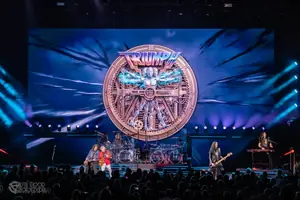
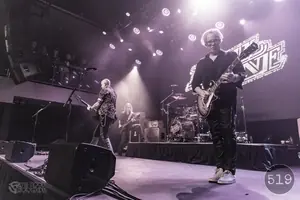
But while the nomination focuses on the classic era, the current touring version of Foreigner continues to do the heavy lifting on the road. There is a tired argument that any band without its original singer is a "cover band," but that is a lazy take. Mick Jones has curated the current lineup with a surgeon’s precision. They aren't just playing the notes; they are maintaining the specific tonal colour that defined the records.
Wills says, “They’ve done more than an incredible job because what people don’t realize is, people say they’re a cover band, that’s not true. They are put there mainly by Mick Jones, and we all agree who should be put there in that band by the quality of their playing, the quality of their singing, and the care they take in reproducing the music. They are happy as Hell to do it because they love what we’ve done, and they have a great catalog of music to choose from to do their shows.”
The current roster—Kelly Hansen, Bruce Watson, Chris Frazier, Michael Bluestein, Luis Maldonado and Jeff Pilson—has managed a rare feat. They have kept the brand alive while actually growing the audience. Selling out sheds and arenas in the 2020s is no small task for a legacy act.
Wills says, “If you put it all together, Kelly Hansen as frontman, Bruce Watson on guitar, Chris Frazier on drums, Michael Bluestein on keys, Luis Maldonado and Jeff Pilson on bass and as musical director, they’ve done a fantastic job of keeping that name not only alive but building up to a point where they’re selling out shows all the time.”
Wills himself entered the Foreigner fold in 1979, stepping into the shoes of original bassist Ed Gagliardi. The story of his recruitment is a chaotic, alcohol-fuelled New York City odyssey. It began with the explosion of *Frampton Comes Alive!*, a record that changed the financial landscape for everyone involved, including Wills, who had a co-writing stake in the monsters.
Wills says, “I co-wrote Do You Feel Like We Do with Peter Frampton. It was the first song we wrote together, and then later, a song called Doobie Wah, which was a tribute to The Doobie Brothers who we played many shows with on the west coast of America and who we loved as people and musicians. When Peter released the live album in 76, it went ballistic, it just took off. I was at home in London having just finished my work with Small Faces and I called Peter and asked, ‘What’s going on?’ He said, ‘Rick, it’s just gone nuts. Call Dee (Anthony).’”
Dee Anthony was the legendary, formidable manager who steered Frampton to the stratosphere. For a musician who had been grinding for years, the sudden shift from "broke" to "wealthy" was a shock to the system. Wills flew to New York, staying with Humble Pie drummer Jerry Shirley, before heading to Anthony’s Park Avenue office to collect what was his.
Wills says, “Dee was Peter’s manager, and we knew each other well. I called him up and said, ‘Dee, I think I’m owed some money’ and he said, ‘Rick, you’re owed a lot of money, you need to get your ass over here.’ So, I did, I went to New York and stayed with my friend Jerry Shirley, longtime friend and drummer of Humble Pie, and I was there for a couple of days before I went to see Dee at his office on Park Avenue.”
The meeting was brief and life-changing. Anthony didn't just offer a settlement; he offered immediate liquidity. In the late 70s, $35,000 was a fortune—enough to buy a house in many parts of the world.
The one thing I feel satisfied about is we’re finally being recognized for the work we’ve done with Foreigner. Each member, Mick, Lou, Dennis, Al, Ian who’s not with us anymore, unfortunately. We’re so relieved in a way to be entering into something that we hoped for, The Rock and Roll Hall of Fame, because I think we’ve earned it, I really do. ...We’ve sold 80 million records worldwide, we had 16 top 30 hits, we’ve done everything we could possibly do, but obviously, we’re honored to be at last, nominated for this Hall of Fame.
Wills says, “I went in and sat down and said, ‘Dee, tell me what’s happening?’ He said, ‘Rick, it’s just gone crazy. There’s so much money and accounting to be settled. How are you doing financially?’ Not well at all, I said, I’m pretty broke to be honest. He said, ‘Well I can help you out. I’m going to write you a cheque for cash.’ He wrote me a cheque for $35,000.00 that day. That was more money than I had ever seen in my life up to that point.”
Walking around Manhattan with that kind of paper was a liability. The bank teller at the Park Avenue branch beneath the office apparently had more common sense than the rock stars she served. She knew the city was a different beast in those days.
Wills says, “So, I go to the bank underneath his office on Park Avenue and go up to the teller and ask, ‘Can I cash this cheque?’ And she looks at me and starts laughing. She said, ‘Rick, you’re in New York, you realize that?’ I said, ‘Yes.’ She said, ‘I can’t give you $35,000.00 and let you walk out that door. You could get mugged!’ She told me to put the money in a deposit box and she’d give me a key and when I need money, come in and take cash out. It was great advice because I was over the moon about all this money coming in. Jerry and I partied for the next couple of days, let’s put it that way.”
During that celebratory bender, the Foreigner opening appeared. Gagliardi was out, and Mick Jones—whom Wills had known since their days in 1960s Paris—was looking for a replacement. Wills didn't wait for an invite. He tracked down the number and made the call.
Wills says, “During that time of partying, he had heard through the grapevine that Ed Gagliardi was leaving Foreigner, and they were auditioning bass players. So, I asked Jerry to find Mick’s number. I knew Mick from 1967 when I was in Paris with David Gilmour. I called him and said, ‘I’m in New York, I want to audition for the band.’ He asked, ‘Do you know our stuff?’ I said, ‘I bought both 8 tracks and I’ve had them in the car for two years now. I know your stuff very well, it’s great!’ He said, ‘I’m going to organize it. We’re rehearsing at S.I.R. Studios. Do you have your bass with you?’ I said, ‘No, I know you have some Fender basses I could use.’ So, he said sure.”
The audition at S.I.R. was a formality of chemistry. Wills walked in, grabbed a Fender, and locked in with drummer Dennis Elliott immediately. They tore through the hits. "Double Vision," "Hot Blooded," and "Cold As Ice" sounded like a band that had been playing together for a decade.
Wills says, “I walked in and saw Mick and gave him a big hug. He took me into the studio to meet the guys and they said, ‘What do you want to do?’ I said, you tell me what you want to do and they said alright, Double Vision. So, we did it, sounded great, did Hot Blooded, sounded great, Cold as Ice, great.”
Elliott was sold within minutes. Despite the long queue of session players and rock stars wanting the gig, the drummer knew he had found his rhythm partner.
Wills says, “Dennis Elliott, the drummer, who I thought was terrific, got off his drum kit and walked down to where I was playing and said ‘Mick, I want him in the band. He’s just right for us.’ Mick said, ‘Whoa, Dennis, we’ve got 70 bass players to audition. Do you realize how many people want this job?’ Dennis said, ‘I don’t care, I want him.’”
But Foreigner’s music is deceptively complex. It isn't just three-chord pub rock; the arrangements require a specific vocal blend and rhythmic pocket. Mick Jones needed to be sure.
Wills says, “I said, what do I do next? He said to come back in 10 days, and we’ll go over all the vocals together and work on the different arrangements because it’s quite complex, Foreigner’s music, it’s not that straightforward. So, I did that, and that went great. And they said you’re definitely in there, you’ve just got to be patient because we still have other bass players to try.”
Then, life intervened. A domestic crisis back in England nearly derailed the biggest opportunity of his career. His children were sick, his wife was overwhelmed, and the pull of family duty was stronger than the allure of New York City.
Wills says, “In the meantime, back in England was my wife and we had two young children, five and 18 months, and both of them came down with chickenpox and my wife said, ‘Rick, I can’t cope. I want you to come home.’ I said, ‘How can I come home when this is happening around me? This is the biggest opportunity in life I’ve ever had.’ She said please, so I did go back to London, and I was home for one whole night and the next morning at 8:00 am the phone rang and it was Mick Jones and he asked me how I was feeling and I said, ‘Pretty rough’ and he said, ‘Well you have to feel pretty good because you just got the job with Foreigner.’”
The turnaround was instant. Mick Jones does not wait for anyone. The directive was simple: get back to New York today.
Wills says, “I said, ‘What do you want me to do?’ He said, ‘You have to come back to New York.’ I said ‘When?’ And he said ‘Today.’ I said, ‘OK, what do I do?’ He said, ‘Go to Heathrow, go to British Airways, there’s a ticket for you.’”
What followed was a moment of rock star luxury that Wills hadn't yet grown accustomed to. Expecting the cramped quarters of economy, he was met with the reality of Foreigner’s burgeoning stature.
Wills says, “So, I did exactly that and walked up to the counter and said, ‘My name is Richard Wills, I have a ticket to New York I believe.’ She said, ‘Oh Mr. Wills, we’re so sorry, but The Concorde is full today.’ The Concorde? You’ve got to be joking! I don’t do Concorde, I sit in the back of the plane in economy, that’s where I belong! She said, ‘Not today you don’t. But I’ll tell you what we can do. We can put you in first class on a 747. Would you mind?’ I’d never been in first class in my life at that point. There was a lounge above first class, and I went up there and told the crew why I was going to New York, and they said, well, I think we should have a drink and I said I agree. By the time I was in New York, I was feeling no pain, just joy, thinking there was no way I was going to work that day.”
But the honeymoon ended the moment the wheels touched the tarmac. Foreigner was a machine that required constant input. Wills was whisked from the airport straight to the studio, fueled by nothing but adrenaline and high-octane caffeine.
Wills says, “One of the road crew was waiting for me and said, ‘Rick, I’m taking you straight to rehearsals.’ I said, ‘Oh no, I’ve had too much to drink!’ I said, ‘Take me to the first coffee shop that you can and get me some black coffee, strong as hell.’ I needed to straighten up because I knew what I was going to be asked to do. I had to go in all guns blazing and it worked out great. We went straight into the songs we were going to record, Dirty White Boy, Head Games, and they sounded terrific.”
The resulting album, *Head Games*, was a sonic shift. Produced by Roy Thomas Baker, it was intended to move the band into heavier territory. But the music was overshadowed by a marketing blunder. The cover—featuring a young girl in a men's room—sparked a backlash that, in retrospect, seems like a massive PR own-goal. It is a technical triumph marred by a lack of visual foresight.
Wills says, “What they wanted to do with this next album was beef up the bottom end. It gave them a more ballsy sound, and it worked. Roy Thomas Baker was our producer on that album, and he did a great job. I loved the sound of that album; I’ve got to be honest. It didn’t do as well as the first two albums, but I think it had to do with the album cover more than anything. A lot of people took offense to a young girl being in the men’s room trying to rub her name off the wall. It didn’t make much sense to me because it should be about the music, not the cover. We toured all year, we did all of Europe and Japan, places I’d never been to before.”
If *Head Games* was a slight stumble, the follow-up, *Foreigner 4*, was a moon landing. Mick Jones made the brutal decision to trim the lineup, firing Ian McDonald and Al Greenwood. He wanted a leaner, more modern sound. He brought in Mutt Lange, the man who had just finished making AC/DC’s *Back in Black* the biggest rock record on the planet. The sessions were legendary for their friction.
Wills says, “We knew we had to do something really special to get back up to the sales of the first two albums. Mick and Lou decided that things had to change. Ian and Al were pushed aside so to speak, which upset them terribly and rightly so, but it was a difficult decision that Mick made. He would go to England regularly and check out the music scene. It was a very different thing going on, a lot of keyboard stuff going on and he wanted to experiment more. He wanted the four of us, Dennis, Mick, Lou, and myself as the music makers, but bring in people to texture the songs to what Mick heard. Mick and Lou together were such a strong writing team, they wrote some great songs.”
Lange’s perfectionism was agonizing. He pushed the band for ten months. "Waiting for a Girl Like You" was captured early, but Lange wasn't satisfied. He wanted a monster. He wanted "Juke Box Hero." He even brought in saxophone legend Junior Walker to provide the scorching solo on "Urgent," a move that gave Foreigner a soul-inflected edge they hadn't previously explored.
Wills says, “He had a vision of how it was going to go, and we worked with Mutt Lange on that album. He was a powerhouse; we knew what he’d done with Def Leppard and AC/DC. It was at times tough because Mick had his vision and Mutt had his and they used to clash quite regularly, but they made it work together, we all stuck at it. There was a lot of re-writing going on. The first track was Waiting for a Girl Like You. We did that in two takes. I thought wow, get this done in an hour. No way. Almost a year later, we’re still in the studio, still doing rewrites. Mutt wanted an anthem. He wanted a ‘Juke Box Hero’ that we didn’t have at the time, but it came. He wanted something radically different. On Urgent, we had Junior Walker come in and play sax solo. It was different for Foreigner, but it was also very exciting to do something different.”
The gamble paid off. *4* became their definitive statement. While later albums like *Agent Provocateur* and *Inside Information* had massive hits, they never quite captured the same lightning.
Wills says, “I was kind of worried when we released the album, but the first single was Urgent, and it went up the charts and we followed it with Waiting For a Girl Like You. We were ready to tour and brought Mark Rivera and Bob Mayo along for the tour. We had a great band and the fans loved it. That year was crazy. I don’t think we ever hit the heights of 4 again, but we had some very big albums. Agent Provocateur and Inside Information were both successful and they were good.”
The inevitable departure of Lou Gramm left a void that most thought was unfillable. Gramm’s voice is one of the pillars of rock radio. The band even flirted with hiring John Waite, a move that would have radically altered the band’s DNA.
Wills says, “To replace Lou Gramm as a vocalist is not easy. He may not have been the best frontman, but he sure had one of the best voices. It was tricky, we tried one or two other people out, in fact, we very nearly hired John Waite. We worked with him for a week, and I thought it was terrific.”
The eventual arrival of Kelly Hansen saved the band’s touring legacy. Hansen doesn't just mimic Gramm; he inhabits the songs with a theatricality that Gramm often lacked. It was a recommendation from Jason Bonham and Jeff Pilson that finally stabilized the ship.
Wills says, “Jason Bonham, who was in the band in later years said to Mick, ‘We’ve got to put this back together. We need to do it like it should be, how Foreigner was, a band that worked as a unit.’ Through his connections and Jeff Pilson, they mentioned this guy Kelly Hansen in L.A. They said, ‘You’ve got to check him out, he’s got a voice you won’t believe, and he looks great too and he’s a wonderful frontman.’ He’s also one of the nicest people you’ll ever meet. He and I have been such good friends now since I first entered their world. He takes it so seriously about doing it right. I respect that, and I admire him for how he works so hard on the stage but never comes across as ‘I’m a big star’ kind of vibe. He’s not like that, Kelly’s a real person and he’s wonderful with the audience.”
The 2024 nomination is a long-overdue correction. Whether it was a vendetta or just the slow gears of the Hall, Foreigner’s place in the pantheon is non-negotiable. Fan voting is open until Apr. 26 at vote.rockhall.com. If you’ve ever cranked "Juke Box Hero" on a highway at midnight, you know what to do. Give the men their due.
Get Tickets