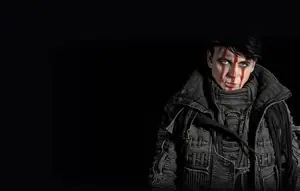
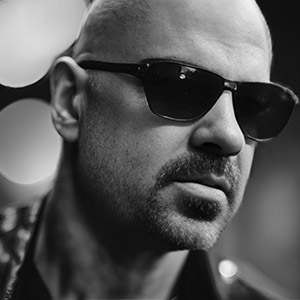
Sitting in a dimly lit studio with the heavy, tactile weight of the *Intruder* picture disc in hand, you realize Gary Numan is no longer the man in the machine. He is the machine. Most casual listeners still pin him to the neon-soaked radiator of 1979, trapped in the amber of "Cars" and its deadpan synth-pop perfection. But that is a lazy narrative. The Numan of the 21st century is a different beast entirely—darker, heavier and far more concerned with the extinction of the species than the safety of a locked vehicle.
His 22nd studio album, *Intruder*, is not just a collection of songs. It is a cinematic, industrial assault that manages to be both deeply personal and terrifyingly global. The record serves as a companion piece to 2017’s *Savage: Songs from a Broken World*, yet it pivots from the scorched-earth aftermath to the very moment of the betrayal.





When you ask him about the conceptual engine driving this new work, Numan is quick to clarify the perspective. This isn't a lecture on recycling. It is a psychological profile of a dying planet.
"Well, it’s written from the point of view of the planet: if the planet could speak, what would it say about what’s going on at the moment? How does it feel? Is it disillusioned? Is it disappointed? Is it hurt? Does it feel betrayed? Is it angry? Most importantly, is it going to fight back? Is it already fighting back? Possibly. Has it been fighting back for quite some time? Hundreds of years perhaps. And we’re in an unknown war with the planet. So that’s really what the whole thing is trying to say," Numan says.
The shift from his previous work is subtle but vital. While *Savage* was a post-apocalyptic exploration of what remains after the collapse, *Intruder* is the sound of the collapse itself. It is the planet finding its voice and, frankly, it sounds pissed off.
"The last time I did it in 2017 was connected with climate change, much as this one is, but in a very different way. That one (“Savage”) looked 100 years from the global apocalypse, so to speak. What would human beings become to survive, those of us that were left rather, what would they become? A look more into the human condition than the climate thing itself. I just used that as a backdrop for the story that it was telling. I wanted to stay with climate change with this one. I just hadn’t really got my head around how I could do that. I didn’t want to be talking about the sea level going up two inches and the ice caps are melting. I didn’t want it to be a science journal put to music, but I didn’t know what to do," he explains.

And then came the catalyst. It wasn't a scientific paper or a documentary. It was a poem from his 11-year-old daughter, Echo.
"Then just by chance, my youngest kid wrote a poem called Earth. This was two and a half years ago, just as I was beginning to start working on “Intruder”. Her poem was about the Earth speaking and he was speaking to other planets, talking about how horrible people were and all the terrible things that we were doing. It was really lovely, really cute, and it showed a great deal of understanding for a 11 year old. It had a lot of sympathy, a lot of empathy, for how the planet must feel. I thought, that’s it. That’s the angle that I’ve been looking for, so I just sort of stole the idea completely, unashamedly stole the idea, and turned it into an album," Numan says, laughing at the bluntness of his own creative theft.
But Numan is a fair businessman, even with his own kin. He did not just take the idea and run; he integrated it into the very fabric of the physical product.
"(Laughter) She’s got a full credit, though. When you open the album up, her poem is there in full with her name at the bottom of it. Even on the picture disc vinyl, you take out one of the discs and her poem is in full one side. She’s very, very well represented on it. And I paid her. I gave her a big chunk of money for it. She’s been decorating her bedroom with it ever since bit by bit. So yeah, she’s happy," he adds.
The obsession with climate change as a recurring theme might seem redundant to some, but for Numan, it became an accidental mission. He admits that he never intended to become the poet laureate of environmental collapse.
"Originally, I had no intention of doing that. When I started to write “Savage”, it really didn’t have anything to do with it. It was actually a bit about why I was really nervous making another album because the one before we got to number 20 in the charts - this is “Splinter” in 2013. That was the first time I’ve been on a chart in Britain for 30 odd years or more. It felt like a massive step forward to step back to where I used to be. I was terrified of doing another one in case it didn’t match that. And so I wrote “Bed of Thorns” about the fears and the worries of trying to repeat what was done before. Because it seemed like a very, very fragile footing back on the chart again, I didn’t feel confident, so that was how we started," he says.
The struggle to find a narrative hook led him back to a book he was writing, titled *Ruin*. But the real spark was political. The entry of Donald Trump into the American political theatre acted as a lightning rod for Numan’s frustrations.
"I can’t really write an entire album about how nervous I am about making an album, so I had to think of something else. I was struggling again to know what to write about. At the time I was also writing a book called “Ruin”, which was about what “Savage” ended up being about - these future colonies of this devastated planet. I wrote a couple of things based on ideas from the book. They really were just to get me going. I didn’t intend it to be a climate change album even then, but just as I did that, that’s pretty much the same week that Donald Trump said he was going to start running for president, saying all the things about climate change, which was, you know, pretty stupid and ignorant. I was fucking horrified by that," Numan explains.
The frustration is audible. Numan has never been one to shy away from his opinions, and the dismantling of environmental progress hit a nerve.
"It suddenly made climate change this big thing for me. I’d always been concerned about it and always been sad at the way things were going, but never really felt particularly active. I wasn’t really getting involved in saying something about it. But that did it, Trump saying all his things. I think it was because the whole political thing just happened. It felt as if the whole world had finally got together, and for the first time in human history, agreed on something that needed to be done. It was just common idea, a common message. And then fucking Trump comes along, and just obliterates it all," he says.
This anger fueled the creative fire for two consecutive records. Numan views the albums as a direct reaction to that specific era of ignorance.
"I was pretty taken aback by that and that made me want to write more about it. So that ended up being a climate change album. It’s a reaction to what Trump was saying. This need to just keep saying with it and painting this picture of what a world we will be - one I feel the earth could be. I’m not saying it’s a prophecy, but it is a science fiction album based on that on that idea. I got very involved in it at that point. With “Intruder”, I just wanted to stay in there. We didn’t quite know how to go about it. So “Intruder” and “Savage”, in a sense, owe their existence to Trump’s ignorance. In a way, it all goes back to him. I wonder if he had never announced he was going to run for president and hadn’t said all that stupid stuff, whether I’d ever written “Savage” and, therefore, probably wouldn’t have written “Intruder”," Numan reflects.
It is a strange irony that a period of global political regression coincided with Numan’s greatest artistic resurgence. He is currently enjoying what many critics call a second Renaissance. After the dizzying heights of the late 70s, Numan spent over a decade in a creative and commercial desert.
It’s written from the point of view of the planet: if the planet could speak, what would it say about what’s going on at the moment? ... We’re in an unknown war with the planet.
"It does feel a bit like that. To have had a career that started really well and then sort of go into the wilderness for quite a long time and then to slowly and cautiously emerge from that. In ‘94, I did an album called “Sacrifice”, which was the first album that had done better than the one before since about 1979, so I had this massive new, big beginning at that point, which is all very exciting and dramatic. Every album got smaller than the one before it, right up to 1992. I could barely give records away. I didn’t have a record contract and my career was pretty much dead and buried," he says.
The year 1992 was the floor. Numan was broke, unloved by the industry and convinced it was over. But that rock bottom provided a peculiar kind of freedom.
"I really thought my career was over in ‘92. So when I made “Sacrifice”, “Sacrifice” was made as a hobby, I didn’t have a record deal, didn’t look as if I’d ever get one again. I was massively in debt. By rediscovered my love for it. The previous albums leading up to that had all been about trying to save the career and listening to advice from record companies and A and R men and whoever else was offering advice. I really lost my way badly at that point. With “Sacrifice” I just ignored all of that. I stopped worrying about radio and record companies, because I didn’t even have one anymore. All of that pressure deserted me, so I went back to making music for the love of it again, for the fun of it. And so it was a hobby," he says.
This "hobby" album became the blueprint for his modern sound—dark, moody and unapologetically industrial. It was a return to the purity he felt as a teenager.
"“Sacrifice” was a hobby album. I wasn’t even sure it would even come out at all in any way. So that was an amazing experience because I realized the mistakes that I’ve been making - I realized where I was more at home, musically speaking. My creativity came back with all those pressures lifted. When I realized that my career was over and I was done, all that evaporated. I just went back to writing music for the love of it, as I did as a teenager when I wrote “Are Friends Electric” and “Cars” and all those songs when I was just doing it for the love of it and for the fun of it. I hadn’t felt the weight of it at that point, and it made a world of difference. It really taught me some very valuable lessons," Numan notes.
He has carried those lessons through to the present day. The success he enjoys now is built on the scars of those lean years. He is a better artist for the struggle.
"The new attitude I had in ‘94 with that album is one that I’ve managed to maintain ever since. Even though the success has come back now to a degree, I have not forgotten the lessons I learned from the bad years. I’m enjoying it far more now than I ever did before. I’m more comfortable and more at ease with everything. It’s been a very, very long period of time where I’ve had to overcome adversity and setbacks and so on, to get to where I am now, which isn’t true of the beginning. In the beginning, it just fell at my feet. I wrote a couple of songs. Then the second album went to number one - fuck me, I’m there," he says.
There is a humility in his voice that only comes from having lost everything. He views the industry differently now, with a level of empathy he lacked in his early 20s.
"It seemed so easy. There was no struggle, and I think the struggle is important. The struggle makes you appreciate where you are. It makes you respect more and understand the troubles other people are going through or experiencing with their careers. It makes you more sympathetic to the business around you and the other people and their roles within it. It makes you more appreciative of the PR teams or the work that the labels put in and all the people that help you make an album successful. I’m so much more aware of that now than before, so I’m just a better person now. I wasn’t a horrible person before, but I’m just so much more aware of what goes into this and I’m grateful. It’s definitely a renaissance. Without a doubt. All I know is, I’m thoroughly enjoying this renaissance as it is," Numan says.
When it comes to the actual craft, Numan prefers the structural integrity of a concept album. He likes the connective tissue that binds a record together.
"It is for me, actually, I do like that common thread that runs through the songs in an album - something that has an overall message to deliver. It’s not essential, I don’t think, but it’s certainly not something I’ve done on all my albums either. I certainly enjoyed it with “Savage”. I certainly enjoyed it with “Intruder”, and even before that “Splinter”, which was about you getting through the Depression. I think quite a few of the albums are actually, now I think about it. I think I prefer it. I prefer the songs to be intertwined with each other in some way," he explains.
His writing process is more atmospheric than mathematical. He describes a method where the soundscapes dictate the narrative, rather than the other way around.
"There is certainly a common sort of mood or atmosphere that you’re trying to create in the same way that a movie leaves you with. But in a way, the album sounds more like a soundtrack looking for a film. When I’m writing them, I do see it, before I hear it, if that makes any sense. They would translate to film quite well. I don’t know if I think it through that much when I’m writing it. I really do just walk into a studio with a blank head, sit down at a keyboard and wait to see what happens," he says.
The lyrics come last, a secondary layer applied to the sonic foundation. It’s a process of immersion and reaction.
"The lyrics are the last thing that I do. The lyrics are very much guided by the music. I come up with the tunes first, then start to work on the layers and build the whole thing up to create the moods and dynamics of the whole thing. At that point, when that’s ready, I step back and start to think about what the lyrics are going to be. I guided the mood of that music, and immerse myself in that. And that would naturally create a picture, a scene or a feeling, and so the words just kind of fall out. Each step leads you into the next step as you go along the process of writing this stuff. I’ve often thought about it more as just stumbling forward. I’m not even walking forward with confidence and purpose, because I don’t know what’s coming next. A lot like somebody that’s drunk, looking for things to grab. That’s kind of how it feels. It seems to be somewhat aimless, and yet it’s always going in a certain direction," Numan says.
For a man who helped pioneer the electronic future, his heart remains tethered to the analogue past. He speaks of vinyl with a reverence that borders on the religious.
"Yeah, I love vinyl. I don’t actually listen to music much myself at all, but as a fan of music, my favorite format has always been vinyl. And that’s what makes you sound horribly old fashioned. But there is something ritualistic about vinyl which you don’t get with CD’s, streaming and downloading things - that whole process of taking out, opening the gatefold, putting it on the deck, hearing the clunk as it goes on, just sitting back, waiting for it to start. That’s a ritual," he explains.
The tactile nature of the format is what keeps him engaged. It turns listening into an event rather than background noise.
"Sitting there with a sleeve pouring over everything - those little things that might be secretly written in all those little places. I love it. I think it’s the best way to listen to music because it makes it an experience. It makes a moment in time now that you take out an hour of your time to just sit down, listen to that. You just don’t get that with CDs or downloads. I know with downloading, you sit down for the same amount of time and you listen. It’s just not the same connection for me as opposed to the tactile part of having the sleeve and the photographs and the lyrics through there and who’s on it. It just involves you more in the experience than just streaming it and going about your business," Numan says.
And then, there is the ghost in the room: "Cars." It is the song that gave him the world, but it is also the song that threatens to overshadow everything he has done since. His relationship with the track is complicated.
"No, no, not at all. I think it’s very unrepresentative of what I’ve done over the 40 odd years I’ve been doing this. I’m proud of it as a song and I’m proud of it that it’s certainly lasted the test of time, clearly. It’s busier now than it’s ever been as far as getting covered or sampled or used on adverts or films or whatever. It’s just permanently out there doing stuff, still earning a significant amount of my living. I’m very grateful to it and I’m very proud that I wrote it, but as a song, that would sum me up musically, I think it’s way off actually. “Cars” is the closest thing to a happy song I ever wrote and its about road rage. It is a lovely thing to have in your catalog. It’s a lovely thing to be a part of your history. If you were to pick one song that represents your entire career, then that would not be the one for me," he admits.
Beyond the music, Numan is a father trying to protect his children from the jagged edges of the digital age. He sees the "social media swamp" as a legitimate threat to their well-being.
"My role is to try to steer them through the social media swamp that exists out there. Unfortunately, they’re very interested in it, they’re beginning to make their mark. They have a different attitude about it than I do and they are keen to see what people are saying in their comments. I think that’s dangerous, so I’m trying to encourage them as much as possible to understand and it doesn’t really matter - but that’s easy for me to say. I’m 63. And I’m getting towards the end of my career," he says.
The need for external validation is what worries him most. He wants them to find their worth from within, not from the fickle approval of an Instagram feed.
"They’re at the very beginning of theirs so for them, it really does matter what people think. They want to know what people think. The thing that worries me about it isn’t so much what people think, it’s this need for validation that they seem to be getting from it. When somebody says their latest photograph is very pretty, it really chews them up. Fucking hell, why do you need an absolute stranger, someone you never met, say that you look pretty to feel that you look pretty. You look in the fucking mirror, you’ve got your own eyes, be your own judge of what your worth is. These people may mean nothing to you, these are not your friends and a lot of the things that these people say they don’t even mean, good or bad. You cannot base your self esteem on the opinions of strangers. Not with your photograph on Instagram or your album when it eventually comes out. None of it. You’ve got to have your own judgment, your own value as to who you are and what you want to be. I’m really worried about that. I can see the tentacles of poison creeping away towards them already and it’s hard to know what to do really," Numan says.
As he looks toward the horizon, the question of retirement inevitably surfaces. At 63, he is at the top of his game, but the pressure of maintaining that peak is immense.
"I honestly don’t know. I don’t plan it. I’m probably writing better now than I ever have. I’m certainly more relaxed than I’ve ever been about things. I’m doing almost as well as I’ve ever done. I’m in a really, really strong position. It seems mad in a way to be thinking about when I should stop doing it. But, there are other things I want to do. I want to write books, I want to write novels. Many of the albums I’ve written, started out as novels that I just turned into albums and didn’t bother with the finished book. I’ve often used story telling as a way of getting ideas for songs and so on. So there’s a point, I think, maybe not too far away, I would feel the need to want to spend the majority of my time doing that more than the music," he says.
The creative cycle is demanding. The tour-album-tour rhythm leaves little room for other pursuits, like the long-form storytelling he craves.
"At the moment, I start books and stop them because an album comes along. Then you tour it for a year or two and then by the time you’re done, it’s time to start another album. There’s not much time in between to really lose yourself in another project. I honestly think for me, writing a book would probably be the product of a couple of years or so because I don’t even know if I got any talent for it, really. So there will be an awful lot of undoing, doing and undoing and doing, as you stumble forward with that as well," he adds.
There is also the stress. Each success raises the stakes, and Numan is acutely aware of the risk of a late-career stumble.
"I do find making an album stressful. That’s the truth of it. Each one I find a little bit more stressful than the one before. Strangely enough, the better they do, the more pressure there is, the more difficult they become to do another one because you’re worried about going backwards, career wise. There is a part of me at the moment that says yes, maybe you should stop now, just leave it there, and not risk undoing it all again. I thought about that, but I can’t see that happening," he says.
Ultimately, the love of the road and the thrill of new music keep him in the game. He isn't ready to hang up the black eyeliner just yet.
"The other thing is, I really love doing it. I love touring and I love the whole process of getting new music and taking it out on the road. I would hate to not be doing that in the future. The fact that we’re even talking about it means that it’s a valid question and it’s certainly something that does come to mind from time to time as to how much longer I can keep going. I look alright, I’m still in shape, so to speak and I definitely have years left in me, if I want it. If I want to do it. I really would like to do the book thing and I really don’t think I could do both at the same time - or if it did, the album should be four or five years between, rather than the two or three. It is possible that we could dovetail the two together. But really, I’m going to get going for a while yet," Numan says.
Watching Numan perform today, you don't see a legacy act. You see a man who has successfully navigated the "wilderness" and returned with something sharper and more relevant than ever. *Intruder* is the evidence. It is dark, it is heavy and it is a necessary reminder that the planet—and Gary Numan—still have plenty to say.