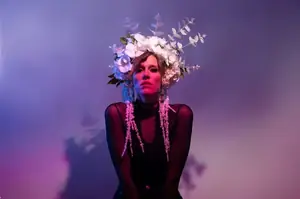

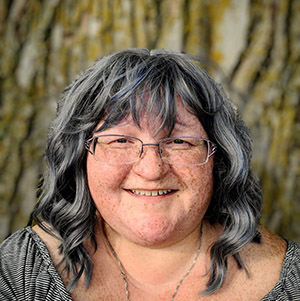
Leamington is a town built on the red-stained industry of the tomato. It is a place of hard labour, seasonal harvests and a very specific kind of Southwestern Ontario grit. But Barbara Diab decided early on that the agricultural life was a script she wasn’t interested in following. She traded the fields for the neon-soaked jazz clubs of Montreal, carving out a career that is currently hitting a high-velocity stride.
Fresh off a stint at the Festival International De Jazz De Montreal alongside Tony Coleman—the man who kept time for the legendary BB King—Diab is circling back to her roots. She hits Leamington for Rib Fest on July 19 and follows it with a marquee slot at Caesars Windsor on July 20. It is a homecoming that feels less like a nostalgia trip and more like a victory lap.
The 519 area code has a specific sonic frequency, mostly because it is caught in the gravitational pull of Detroit. For a kid growing up in Leamington, the border isn't just a line on a map; it is a source of cultural osmosis. Diab lived through that cross-pollination.
"Absolutely. We listened to the WRIF. W-R-I-F 101.3, it was FM rock radio and of course we had all the great Detroit bands," Diab says. "I was a DJ myself at the University of Windsor CJAM radio station. So of course I was in heaven because I had access to all the albums and we played all sorts of music from Detroit and from Windsor. So I was involved in the music scene very early on and my memories, especially Leamington and Windsor, it’s just nothing but pure joy. I mean I was so lucky as a child to grow up there. Very safe."
That safety provided the floor for a massive musical education. Being a DJ at CJAM is a specific kind of badge of honour in the region. It requires a certain level of crate-digging obsession. You don't just play the hits; you find the connective tissue between the genres.
The Detroit sound is a ghost that haunts most musicians from the 519. It is the grit of Motown and the polish of R&B. For Diab, those sounds were the foundation of a house she didn't realize she was building until much later.
"Absolutely, and when I got into the blues later on, I didn’t realize that’s what it was. It was just going back to my Detroit roots, like Aretha Franklin and Smokey Robinson. I mean that was more rhythm and blues, but it’s all that same root, it’s followed me," Diab notes. "It followed me all the way to Montreal. I just didn’t realize that’s what I was singing as a child, was all blues roots and jazz based music, and I had heard it before. It’s just, I didn’t know, I didn’t have a name for it when I was a child, but that’s what I was drawn to."
There is a specific regional quirk to growing up in the shadow of the Motor City. Before the era of streaming and curated playlists, you were at the mercy of whatever the rabbit ears could pull from across the river.
"I used to watch Soul Train on American TV because in Windsor and Leamington that’s all we got were American stations, at the time," she says. "So I was watching American Bandstand and of course, especially Soul Train. And I remember seeing BB King on there, a young BB King and that really fascinated me. They were such good dancers and good music, a lot of soul and funk, Oh man, those are good memories."
The transition from a fan to a performer usually requires a catalyst. For Diab, that spark came from the public school system—a reminder that the arts in education aren't just elective fluff. They are where the professionals are forged.
"I would say I was in probably my late twenties," Diab says of her blues discovery. "I had always been singing. My teachers pointed out to me in grade three, I was about eight years old and they would, always in the choir. They would get me to say Barbara sing and then the teacher later would tell me, 'you have a voice and you have a very good voice, you should keep singing.' So it was really at school that landed on me, and then they would put me in school plays and things like that where there would be singing parts."
The narrative of the small-town girl who makes it big often forgets the people who stayed behind. But Diab is keeping those receipts. She credits a specific educator for setting the trajectory of her life.
My teachers pointed out to me in grade three, I was about eight years old and they would, always in the choir. They would get me to say Barbara sing and then the teacher later would tell me, 'You have a voice and you have a very good voice, you should keep singing.' ...The teacher who I’d say discovered me, she is still alive now and she lives in Leamington and she’s 75 years old. Mrs. McCormick, I just love her. ...I haven’t seen her in over 40 years. So I just can’t wait.
"And funny enough, the teacher who I’d say discovered me, she is still alive now and she lives in Leamington and she’s 75 years old. Mrs. McCormick, I just love her. Claire McCormick and she’s going to come out and see me when I’m at the Ribfest. So I haven’t seen her in over 40 years. So I just can’t wait," she says.
Returning to the 519 is a complicated emotional beat for any expat. The landscape changes, but the bones of the place remain the same. For Diab, the frequency of her visits shifted after a personal loss, making this summer run even more significant.
"I was there at Easter. I come back about once or twice a year. I used to come back more often, but since my mom passed away, I don’t get down there as much as I’d like," Diab admits. "But when the Ribfest called me and Caesars Windsor, it was just the perfect timing and it’s always great to come back in the summer too. There’s so much to do. And now I follow everything going on in Leamington and Windsor on Facebook. So it’s easy to stay in touch."
The timing is calculated. Diab isn't just coming back to visit old haunts; she is carrying a new record. *Mojo Woman* is the latest entry in her discography, and it is a piece of work that feels deeply rooted in the history of the genre while maintaining a modern, Quebecois-influenced edge.
"It was launched on June 18 at the House of Jazz in Montreal where I launched my first album. But this one is called Mojo Woman. It’s a collaboration with some of Quebec’s finest musicians who are also my regular band. And it’s seven covers, six original. I wrote the lyrics and my guitarists composed all the original music," she says.
The title *Mojo Woman* isn't just a catchy blues trope. It is a persona that was essentially thrust upon her by the Montreal scene. It started with a physical token and evolved into a brand.
"I called it Mojo Woman because there was a man, a harmonica player in Montreal who kept coming to my shows. And I just started giving out Mojos. Because after I had been to Mississippi and Memphis and Louisiana, I learned what a Mojo hand was. So I started giving them out during my shows. And so one man termed me as the Mojo woman. So it stuck," Diab explains.
This isn't just stagecraft. There is a psychological element to the performance that Diab has leaned into. The "Mojo" became a conduit for the energy of the room.
"And for the last four years, people called me the Mojo woman. And as I gave these things away, people would come back to me and they’d say, 'You know your thing really works. What’s in it? What did you do?' So I don’t know what it was, but people would like the positive vibe that they got from me I guess, or from this Mojo, which is like a little lucky charm, you know? And it’s just taken off," she says.
But Diab is also using the title to reclaim a piece of history. The blues is often viewed through a masculine lens—the lone man with a guitar at the crossroads. Diab is quick to point out that the foundation of the recorded blues was actually built by women.
"I said, 'Well, it’s a fitting name for the album, the Mojo Woman.' Because Mojo means magic at its root. Everything that surrounds you that’s magical. And I thought, oh, I could name the album that because women are magical creatures, we really are. We do so much. We accomplished so much. We have such intuition. It’s just, we’re magical and I’m really starting to see it now as I get older and have more maturity. There are a lot of magical women around me who have helped me along the way," she says.
She is referencing the "Classic Female Blues" era of the 1920s. Before the Delta bluesmen were being recorded in hotel rooms, women were the stars of the genre.
"So I wanted to do a tribute to the women in blues. Women, they aren’t as present in the blues perhaps today, but they were the ones who kicked it all off back in the 20s. The women were the first ones to be recorded on vinyl. I think it was Mamie Smith, Crazy Blues was the first blues song recorded. So women have gone way back and I just wanted to bring them up to the foreground again," Diab adds.
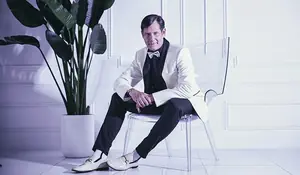
The industry cred Diab carries isn't just self-generated. Having Tony Coleman in your corner is the ultimate validation in the blues world. Coleman spent decades behind the kit for BB King, meaning he has a PhD in the "Thrill is Gone" school of music.
"We’ve known each other for seven years. He played on my first album. He sent me some drum tracks after he met me in Montreal. And I had released my first single and he had asked me, to give him my single and I told him who I was and he said, 'Well, would you have another one and can you just make it to BB?' I said, 'What?' He gave my single to BB King. He said, 'BB likes to know what’s going on in the blues scene and who is new, who is around.' So that was seven years ago. We’ve just kept a wonderful friendship since then," she says.
That level of proximity to greatness changes a performer. It strips away the ego and replaces it with a blue-collar work ethic. Coleman didn't just give her a connection; he gave her a philosophy.
"I learned that it’s a privilege to be on stage, that you should never complain about music, ever. Because it’s a privilege to be invited to play. It’s a privilege to get to play. It’s a privilege to have audience members come out to see you. So that’s what I learned from Tony," Diab notes.
In a world of cynical industry types, Coleman’s outlook is a refreshing anomaly. It’s about the transactional nature of joy between the stage and the seats.
"He is so positive and he likes the music to be about the joy that you bring people. He always says, 'You know, Barbara, we play the blues to forget our blues. We don’t want to play the blues to have the blues.' So God love him. He’s just so full of wisdom. And I’m so fortunate. He likes people, he likes to be able to teach people something or at least give you pearls of wisdom," she says.
The lesson is simple, but it is one that many touring acts forget after a few years on the road. When the lights go up, the personal baggage has to stay in the dressing room.
"When you’re on that stage, you better give 100% and more," Diab concludes.
Watching Diab perform, you see that 100 per cent in action. It is a high-energy, soul-drenched experience that feels less like a concert and more like a revival. For the crowds in Leamington and Windsor this July, it won't just be a show. It will be the return of a local who found the magic—the mojo—and decided to bring a little bit of it back to the 519.