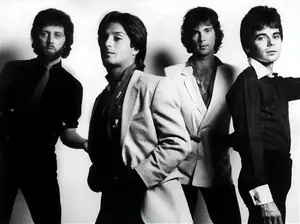


I’m sitting across from Micah Barnes, and the man still carries that effortless, big-room charisma that defined his years with The Nylons. We are looking at the physical sleeve of his latest record, *Vegas Breeze*, and you can practically smell the gin and cigarette smoke coming off the artwork. It is a throwback, sure, but it is not a museum piece.
Barnes didn't just stumble into the jazz world. He has been carving out this niche since moving to Los Angeles, shifting away from the a cappella harmonies that made him a household name in the early 90s. The latest feather in his cap is a Juno nomination for his recording engineer, John “Beetle” Bailey, specifically for the track “The End of a Love Affair.” The awards show, set for June 6, puts a spotlight on the technical guts of the record.
When I ask about the nomination for Recording Engineer of the Year, Micah beams. “I was delighted. John is one of Canada’s most beloved people in the music industry,” he says.
He continues, “He’s a brilliant engineer and working closely with him on my last two albums has changed the shape of my music. He’s an engaging deep, deep kind of person that you just want to spend time with.”
That is the thing about high-level engineering. It is not just about twisting knobs or setting levels on a Neve console. It is about the psychology of the room. If you do not vibe with the guy behind the glass, the performance suffers.
“You know, in the recording process, you’re stuck in a room for a long time, right?” Barnes notes. “And so when we got the Juno nod for that particular track, it was very special because John and I managed to get a string section on there, we were able to create a mood on that particular recording from my ‘Vegas Breeze’ album, and it just meant the world that the Juno Awards decided to focus on that track and John’s work in particular as an engineer, bringing that arrangement to life in the recording. He did a spectacular job.”
If there is a valid critique of the track, it is that the strings occasionally threaten to swallow the vocal in the mid-range, but Bailey’s mix keeps Barnes right in the pocket. It is a delicate balance.
On why he chose Bailey, Barnes explains the pedigree. “He came highly recommended from my brother, a co-producer on one of my albums and from my dear friend, Molly Johnson, who’s a wonderful jazz singer in the business. Both of them just said, I think you’re going to enjoy working with John.”
“He’s meticulous. He’s easy going. He’s a great guy. Then I listened to his recordings and was knocked off my feet. I couldn’t believe that in Canada, we’ve got someone this. He gets Grammy nominations as well. He’s one of those engineers who is world-class. So having a chance to work with him was truly a blessing,” Barnes says.
Most listeners do not understand the invisible hand of the engineer. They hear the final product and credit the singer. But the spatial placement of a muted trumpet or the warmth of the bass? That is the engineer’s signature.
“That’s a good question,” Barnes says when I ask about John’s contribution to the actual DNA of the music. “John is the kind of collaborator where I’ll bring in the arrangement, I’ll have recorded with the band and tried to make that arrangement happen. But then once we start working on the bed tracks and getting all the instruments recorded, John’s hands start to shape the music.”
“It’s funny, an engineer’s job is a little bit invisible to the general public, but if you feel the music, if you feel the drums and the bass, or you hear the voice really clearly, and the strings come swirling in and out like they do on this track (we’ve got a trumpet player playing muted and it’s very vibey with lots cool, old school nostalgic vibes for the 50s and 60s) that sound is part of John’s creative genius,” he says.
“By the time the public hears the song and the arrangement, it’s been presented to them on this gorgeous platter, and that’s John, he creates the magic,” Barnes says.
“The End of a Love Affair” is a standard, but Micah treats it like a confession. It has that mid-century grit. It is not just a sad song; it is a song about the indulgence of being miserable.
There was so much sadness for me and I wasn’t sure how to function in my daily life. So having a job that was so engaging, I think was really, really helpful. That really made a difference. I had to put a smile on it. I had to show up, I had to take a shower and show up.
“It’s a brilliant song. It was written about the end of a love affair. That’s why it’s called that. Something that happened in the lyric, it’s talking about something that’s very real for people, the end of an affair - we drink too much; we talked too much; we partied too hard; we drove too fast; we smoke; we drink; and we request bad songs that make us feel good. It’s a laundry list of all the things we do, and the singer asks the question, what else do you expect of me at the end of this love affair? Of course I’m being a bad boy,” Barnes explains.
“To me, it’s very indicative of the kind of mid-century song that Hollywood or Broadway might give us, but it’s got that jazz mood where you feel the sort of Bossa Nova happening. So when we did the arrangements, I really wanted it to be soaked in emotion, and that drenched in that feeling of sadness when you’re at the end of a love affair, but also, you’re enjoying going too far and smoking too much, being the last one at the party,” he says.
The visual side of this project was a nightmare of timing. Shooting a glamorous, high-energy dance video during a global shutdown is a logistical hellscape that would break most indie artists.
“We did it with lockdowns happening in between. So there’s a whole sequence in the video where my dancing partner, Laura Desiree, and I learned this beautiful, complicated Latin dancing that choreographed by a dear friend of mine who is a director/choreographer for ‘Come From Away’. That’s a big musical theatre hit that we took to Broadway about the 9-11 crisis and she’s a brilliant choreographer. She set the moves on our bodies, so we rehearsed while we were not in lockdown. We were there dancing and working through it. Then by the time it was time to commit, suddenly we were days away from lockdown and we had just enough time to gather the audience for the jazz club sequence in the video and to shoot Laura and I in our dance sequence,” Barnes says.
“Then we had to stop,” he adds bluntly.
“We had a whole bunch of shooting still left to do, but we had to wait many, many months, because I think it was February when everything locked down and then it wasn’t until the fall that we could continue. It feels like it’s all shot at the same time, but I had time to gain 20 pounds and then lose them (laughter),” Barnes says.
That gap in production is invisible in the final cut. It is a testament to the editing, but also to Micah’s discipline. Most artists would have let the momentum die.
“If the pandemic has taught me anything as an artist, it’s to be patient and be willing. If you trust that the music has something to offer people, then you can sit and wait. If you’re nervous and you feel insecure about what you have to give people, then of course the time table and the scheduling starts to be upsetting, but I trusted when the time was right,” he says.
“It’s the most popular video I’ve ever released. That includes those from my Nylon days, so I can tell you that the public completely embraced it and it was worth the wait,” Barnes says.
The *Vegas Breeze* concept is more than just jazz; it is showroom music. It is Jack Jones and Sammy Davis Jr. It is the sound of a tuxedo and a 2:00 a.m. set.
“I fell in love with that 50s and 60s showroom entertainer vibe through the voice of Jack Jones, who is a very underappreciated dude from back in the day. He was sort of in the template of Frank Sinatra, but his career wasn’t as big - but he had a glorious voice. I remember falling in love with him, falling in love with Peggy Lee, Lena Horne, Judy Garland, the women of the showrooms, and of course, Dean Martin, Sammy and all the rest,” Barnes says.
“I fell in love with them, but I never really thought that it was going to be the music that I make, because I’m known as a jazz singer now. It’s a little bit of the showroom singer entertainer, but I’ve got, as you can tell, talking to me, I have a pretty big personality and my kind of personality works out in front of a great big band with horns and a big showroom setting where I’m entertaining the people,” he says.
“As I started to put the songs together for the album, my band said, you do realize these songs are all Vegas showroom tunes. I suddenly realized I’d been obsessed with them,” Barnes says.
“I was trying to work out our own arrangements and eventually I wrote my own title song, ‘Vegas Breeze’, paying tribute to the world of Vegas and what it means to all of us. We’re going to have a big chance at winning a million dollars there,” he says.
“Maybe we’re going to fall in love and get married at the motel chapel, the Elvis chapel. Maybe we’re going to lose our shirt and come home with humiliation. Well, we’re going to have an experience. That’s what Vegas is to the general public and the mythology of those performers and the huge shadow they cast, especially for male jazz singers. Mel Tormé, Nat King Cole and all those guys sang in those Vegas showrooms. I really wanted to emulate that grand tradition, and that’s where ‘Vegas Breeze’ as an album came from,” Barnes says.
But we have to talk about The Nylons. It is the elephant in the room. For a generation of Canadians, Micah is the voice of that platinum-selling a cappella juggernaut.
“I got a phone call from their manager, when they were replacing the original founding baritone member, Paul Cooper. I wasn’t 100% convinced that it was the right time in my life since I had my own band in Toronto that we were looking to record with a record deal. I fell in love with harmony singing and with the guys in the room,” he says.
“They auditioned me for the boot camp situation for about three weeks where I learned the routines, dancing and singing, singing harmony, getting to know the songs and feeling my way while we negotiated the deal. Then at one point I just realized, I really love this. That’s when I knew I could do it. I wasn’t 100% sure, but they seem convinced that I was the right guy for the job, which I really appreciate,” Barnes says.
“Those first couple of concerts were terrifying. I wasn’t used to dancing and choreography with harmony parts. I was used to being the lead singer and then you’re telling jokes in between since it was very much an entertaining show,” he says.
“Flash forward pretty quickly, I was in a 24-hour situation where you’re getting up at seven in the morning to get on the flight, go to a new city, get on the ground, get to the venue, do your sound check, eat some food, do your show, get to the hotel, wake up and do it all over again,” Barnes says.
“When you’re back in Toronto at home, you’re in meetings, you’re in recording studio, and you’re in the rehearsal hall. My life suddenly was wall-to-wall Nylons. I will say that for many, many years, I really loved it,” he says.
“I really learned a lot. I learned everything that you need to be successful in this business, how to treat people, how to treat yourself and be good and kind, and self-supportive to yourself because you’re doing a hard job,” Barnes says.
And then there is the darker side to that platinum success. While Micah was touring the world, the AIDS crisis was gutting the creative community. For Micah, it hit home with the loss of his partner, René Highway.
“I’m lucky I had something great to do. I think if I’d been by myself at home, I’m not sure how that would’ve played out. There was so much sadness for me and I wasn’t sure how to function in my daily life. So having a job that was so engaging, I think was really, really helpful. That really made a difference. I had to put a smile on it. I had to show up, I had to take a shower and show up,” Barnes says.
Barnes is a survivor. Not just of the industry, but of the era. *Vegas Breeze* is more than a jazz record; it is a victory lap for a guy who knows exactly how much work it takes to make it look this easy.