
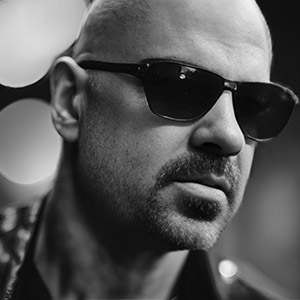
Forget everything you thought you knew about the jazz scene. BadBadNotGood isn't here to gently tiptoe through your Spotify playlists. They're here to bust open genres like a piñata at a backyard party, tossing out beats, riffs and a boatload of attitude to every corner of the music world.
Mixing hip hop's swagger, jazz's spontaneity and a magician's flair for surprise, this Canadian outfit has spent the last decade keeping fans guessing what's next. They are led by a crew that feels right at home everywhere from dive clubs to the Grammy stage. But don't let the accolades fool you; they still play with the hungry desperation of a basement band.
Formed in Toronto in 2010, BadBadNotGood (BBNG) brought together bassist Chester Hansen, drummer Alex Sowinski and saxophonist Leland Whitty. They evolved from their college jam sessions into a world-renowned band. Their collaborative fluidity has earned them Grammy nominations for their production work on projects with artists like Kendrick Lamar and Ghostface Killah. This established them as one of the most innovative acts bridging jazz and hip hop.
The revolving door of creative partners has only added to the group's richness. It makes their lineup and output as fresh as their genre mashups. In an industry that rewards staying in your lane, BBNG is constantly veering into oncoming traffic. And it works.
The third time isn't just the charm for these guys—it's the experiment and the jam. When you sit down with Chester Hansen, you realize the band's discography isn't a series of calculated career moves. It is a survival strategy for the road.
Chester recalls, "The last record, it was kind of the utility of needing more material to play as we toured since we don't usually have vocalists. We always try to feed those two creative tools: collaborations and instrumentals—always searching for new singers, rappers, and vocalists, but it's the balance that keeps it exciting."
Their iconic *Mid Spiral* release wasn't a typical album drop. It was a fragmented, intentional burst of creativity. In a world where the attention span is shorter than a drum fill, BBNG played the long game by splitting the project.
Hansen explains, "We recorded everything as part of just a one-week session, seven or eight days. To release it quickly, we split it into three parts—that way, we could finish one, move on, and create something fans could come back to for a few weeks. The music came together at once, but splitting it let us separate the moods and have a bit more time to finish the last part. It was a fun way to release it, for us and for them."
Fresh textures aren't a phase for this group—they are the band's cardinal rule. If you've caught them live recently, you'll notice the stage is getting crowded. They've moved beyond the power trio format to create a wall of sound that feels more like a collective than a band.
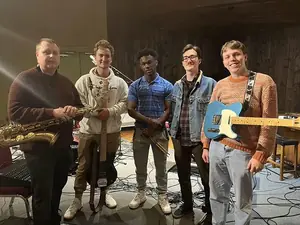
"The last few years, we've been playing with a few more musicians on stage, usually six people now. Felix on keyboards, Kaye on trumpet, Juan Carlos on percussion—they all bring their own influences and style. That keeps things exciting and lets us explore new stuff together," says Hansen. This underlines the group's team-first, ego-last ethos.
Ask about the band's creative process and you'll find zero room for academic stiffness. Flow is everything. While other jazz-adjacent acts are busy counting time signatures, BBNG is chasing a feeling. It is a refreshing lack of pretension in a genre that often smells like a library.
"This project was pretty flowing. We had everyone together, did a couple rehearsals, but it was really spontaneous—just setting up, deciding which tune, and seeing how it evolved until it felt ready to record. It was all about catching a mood, not sticking to a formula," Chester says.
Hansen's signature bass style is lauded by a new generation of imitators. But his approach is less about flash and more about old-school authenticity. Holding a physical pressing of their records, you can hear the grit of the gear. It isn't clean, and that is the point.
There's a stage for everyone checking out thirty to sixty-second videos online—stuff that's technically impressive. I can't really do that... My role doesn't exist without a song to be a part of! I try to focus on supporting everyone around me, not drawing attention. I like to fit within the structure, not be out front—at least, that's not my focus.
"I'm just really trying to replicate the sounds of players I love—James Jamerson, Donald Dunn, Nick Movshon, Pino. I serve the song in the best way I can. Our methods are generally analog, we use tape, vintage gear, flat-wound strings. I think it all feeds into what we do and keeps it honest," he reveals.
While modern players crowd social media with quick-hit solos and academic exercises, Hansen prefers to keep his focus on collective energy. He isn't interested in being a thumb-slapping virtuoso for the sake of an algorithm.
"There's a stage for everyone checking out 30 to 60-second videos online—stuff that's technically impressive. I can't really do that... My role doesn't exist without a song to be a part of! I try to focus on supporting everyone around me, not drawing attention. I like to fit within the structure, not be out front—at least, that's not my focus," he candidly shares.
Songwriting for icons like Drake and Kendrick Lamar put BBNG's behind-the-scenes magic on the charts. But Hansen views it as another aspect of their creative toolkit rather than a brush with royalty. The industry might see them as hitmakers, but they see themselves as sample-makers.
Hansen offers, "The Drake thing was just me and a friend making a sample, used by a producer, a sort of disjointed process. For Kendrick, it was the band making one to two-minute ideas, sending them around. A friend, who's a producer, made the track. It's a nontraditional way of collaborating, for sure."
Hip hop sampling isn't just a job for this crew—it's an adventure. They've become the secret weapon for producers looking for that "dusty crate" sound without the legal headache of clearing a 1970s obscure soul record.
"We've always been curious about different approaches and styles, and making samples, especially early on, kept it fresh—a way to stay inspired. A lot of it came through Frank Dukes, who we used to share a studio with. He's the person I did that Drake thing with, but we've done a lot together over the years. It's a different world than writing a three or four minute song as a band," Hansen adds.
Hearing their work sampled by other artists never gets old. The surprises are always rewarding. It is a strange loop of influence where the students have become the source material.
"It's cool—people take something we've done and do things we never thought of. That's really special. It's a way for more people to check out what we do, get exposed to different kinds of music. I think that's awesome," Hansen beams. He is a genuine fan of the fan remixes.
Much of BBNG's early buzz can be traced back to sudden internet spreads and cosigns from hip hop tastemakers. But it wasn't a PR firm that broke them; it was a genuine moment of digital discovery.
"We started out informally, just recording stuff at school for videos. Tyler, the Creator ended up seeing our first video and reposted it. That gave us so much traction and exposure," says Hansen. He credits the step from college jams to global stages to that pivotal moment.
The band's Grammy nods were never the plan. Their reactions remain authentic. In a business filled with manufactured "humility," Hansen seems genuinely baffled by the trophy case.
"Absolutely not. It's pretty far from being in college, writing music with friends. When we found out we were nominated, it was really surprising and pretty surreal," says Hansen, his modesty intact despite the accolades.
Whether playing small clubs or massive festivals, BBNG keeps the vibe personal. There is a specific challenge to playing jazz-inflected music to a field of 50,000 people waiting for a drop.
"It gets different, playing bigger venues, sometimes outdoor festivals. You're competing for attention! But we just try to connect with each other on stage, no matter the size of the crowd. Hopefully, that rubs off and people connect with what we're doing," Chester reflects.
BBNG's journey meant abandoning the classroom for the world stage. It was a gamble that paid off, but it required a clean break from the safety of the Humber College jazz programme.
"I've thought about finishing my degree, but at the time it seemed clear—there were too many amazing opportunities. We had a lot of drive, put energy into the project, and got to travel and collaborate with so many people. I don't regret it—the support from parents made it possible," Hansen admits. He is practical about what he traded for his musical path.
YouTube was key in those formative years. It offered the band more than just a platform; it was a launching point into the international circuit. Before they had a tour manager, they had a viral hit.
"That first video going crazy, then getting invited by Gilles Peterson to play a show in London, that was pivotal. We'd barely been playing for months before that. It was a mad dash early on, doing as much as possible, then things just kind of built up," Hansen recalls.
After 14 years in the trenches, songwriting, producing and scoring hits for others, the joy still lies in the studio's raw discovery. The live show is the payoff, but the lab is where the soul is found.
Fans won't have to wait long to experience BadBadNotGood's energy. The band takes the stage at the OLG Stage at Fallsview Casino and Resort in Niagara Falls, ON on Thursday, Oct. 16, 2025, at 8 p.m.
Whether they're improvising on the fly or building up layers of texture, the group's musicianship and passion promise a performance that blends live drums, synthesizers and programmed beats into one night of genre-defying soundscapes. Don't expect a quiet night at the theatre. Expect a riot.