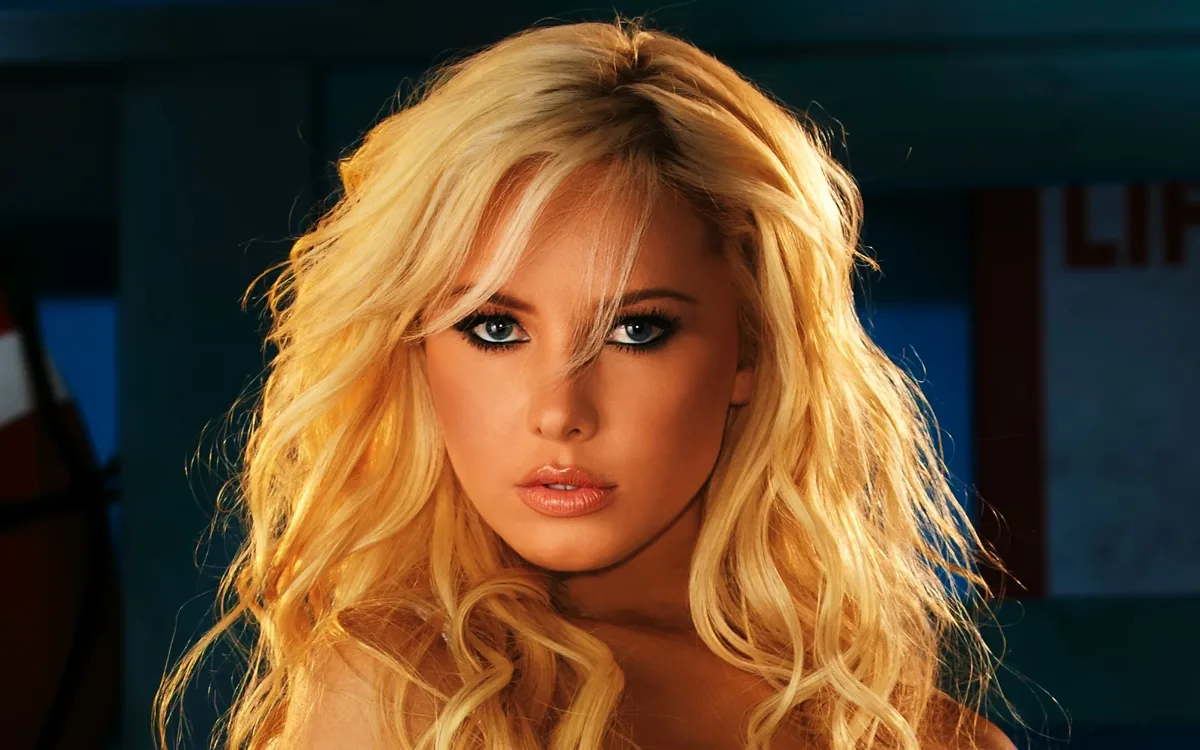
Listening back to these raw archival tapes from Oct. 5, 2011, is a trip. The audio has that thin, pre-podcast quality, a digital echo of a world on the brink. Instagram was a toddler, the idea of an 'influencer' was still gestating in marketing labs and Playboy was still the undisputed king of a particular kind of print glamour, even as the castle walls were starting to crumble. And into that world walked Tiffany Toth, the magazine’s Miss September, with a perspective that feels both of its time and strangely prescient.
This wasn't some overnight discovery narrative. Toth’s story is pure industry grind. You can hear the matter-of-fact exhaustion in her voice when she talks about the path to the centrefold. It’s a stark reminder that behind the airbrushed fantasy was a job, a ladder to be climbed. She started with Polaroids at 19, a relic of a bygone era, and got a callback. But not for the big show. Not yet.
Instead, she was funneled into the brand’s burgeoning digital efforts. “I didn't get Playmate, but I got... Cyber Girl of the week, Cyber Girl of the month,” she recalls. This was Playboy’s attempt to capture eyeballs online, a farm system for its print product. Toth worked that system for years. It was a process. A long one. Some models walked in and hit the jackpot. Toth laboured for it.
But that long runway gave her a unique advantage. By the time she was tapped for Playmate of the Month, the mystique was gone. The nerves were settled. “I was comfortable with, you know, shooting nude for Playboy because I had done it before, you know, so many times for them,” she says. There’s a weariness there, but also a confidence. She’d put in the hours. She felt she’d earned it.
And then there’s the inevitable family question, the one every interviewer asks, hoping for a sliver of drama. Toth offers none. Instead, she delivers a portrait of surprising, modern support. “My parents are really proud of me,” she states plainly. The anecdote that follows is what really lands, humanizing the entire enterprise.
“My mom was really supportive. She went with me to the studios actually the very first time,” Toth explains. “I mean, she wasn't in the room while I was shooting, obviously, but she went with me to support me and, you know, go there and hang out for the day.” It’s a detail that cuts through the fantasy, a small moment of maternal care in the heart of the Hefner machine.
Still, the dream itself was potent. For a generation of women, Playboy represented a very specific pinnacle of beauty and success. Toth was no different. “I actually would always, like, buy Playboys and I grew up, you know, wanting to be a playmate someday. That was my dream,” she says. In 2011, that dream still held its power, a gateway to a certain kind of celebrity and opportunity.
What’s fascinating, listening from the future, is how quickly Toth pivots away from that dream’s expected trajectory. The interview isn't filled with ambitions of movie roles or a reality TV show. It’s shockingly, almost defiantly, grounded. Before Playboy, she worked in a hair salon and studied business. After, she wanted more of the same, just on her own terms.
When you start out, you're kinda just working any little job and you're excited about it... at the same time, I'm like, I just wish those pictures would disappear.
She was already working as a makeup artist, straddling both sides of the camera. She built her own website when many of her peers didn't have one, a clear sign she understood the need to control her own brand, even in the early days of digital self-promotion. But the ultimate goal wasn't fame for fame’s sake.
“Maybe people expect me to wanna be, like, famous or something, and that's not the case at all,” she says, a statement that feels almost radical for someone in her position at that time. Her real ambition? A bakery. A business she could build and own, far from the flashbulbs and Hollywood hustle.
“Within the next few years, I'd like to open my own bakery,” she says. Her reasoning is simple and relatable. “I like food. I'm a big food person... I have a big sweet tooth, and I love chocolate and cupcakes and cookies.” It’s a plan rooted in tangible passion, not the abstract pursuit of celebrity.
Of course, this raises the other question: how does a Playmate with a sweet tooth maintain that physique? Her answer is a mix of genetics and a refreshingly honest lack of discipline. “Good genes,” she laughs, before admitting, “I'll, like, put my gym clothes on in the morning, but then I never end up at the gym. It's horrible.”
But the interview isn’t all cupcakes and supportive parents. Toth is candid about the industry’s underbelly. The early days of modeling are often a minefield of exploitation, and she walked right through it. She speaks with genuine regret about shoots that still haunt her.
“Working with, like, the amateur photographer, and then, like, now that you're Playmate, he's, like, coming around, like, ‘I shot this playmate,’ and they're, like, these horrible photos, and you're just, oh my gosh,” she laments. “I wish those would just, like, disappear.” It’s a raw admission of the compromises and mistakes made on the way up.
Her advice for new models, born from that experience, is direct and unglamorous. Get a legitimate agency. Have a solid portfolio. Show up on time. Be professional. It’s a warning against the legions of fakes and predators that populate the Los Angeles scene, the guys who are always “working on a movie”.
The conversation even touches on the cheerleader trope, a box she’s been put in her whole life. But her story flips the script. She quit her high school squad because she took it more seriously than her teammates. “I really wanted to, like, be there and, you know, do a good job,” she says. It reveals a core professionalism that tracks with her entire career path.
She wasn't just there to wear the uniform. She was there to work. That same ethos seems to have guided her through the whirlwind of being a Playmate. She saw it as a job, a major accomplishment, but also a stepping stone to something else, something more stable and personally fulfilling.
Looking back, Toth’s grounded perspective was her greatest asset. She entered the industry at the tail end of one era and the dawn of another. The prestige of a magazine centrefold was about to be challenged by the immediacy of an Instagram feed. She seemed to sense the shifting ground beneath her feet.
She didn’t want to be famous; she wanted to be successful. There’s a world of difference between those two things. One is about public perception, the other about private satisfaction and control. Toth, even in this 2011 snapshot, was clearly chasing the latter.
This old tape captures more than just an interview. It’s a time capsule of a specific moment in pop culture, a glimpse into the mechanics of a media empire in transition and the clear-eyed ambition of a woman who understood that the fantasy was temporary, but a good cupcake recipe is forever.
519 Magazine Archive: We are thrilled to officially unearth the Rockstar Weekly Digital Vault. This isn't just a re-post; it's a high-fidelity restoration of a pivotal era in music journalism. By pairing original print dates with modern retrospectives, we’re bridging the gap between historical rock-and-roll grit and the lightning-fast performance of today’s web. These stories—once locked in physical print and lost URLs—are now back, fully searchable, and optimized for a new generation of fans.
We are thrilled to officially unearth the 519 Magazine Digital Vault. This isn't just a re-post; it's a high-fidelity restoration of a pivotal era in music journalism. By pairing original print dates with modern retrospectives, we're bridging the gap between historical rock-and-roll grit and the lightning-fast performance of today's web. These stories—once locked in physical print and lost URLs—are now back, fully searchable, and optimized for a new generation of fans.