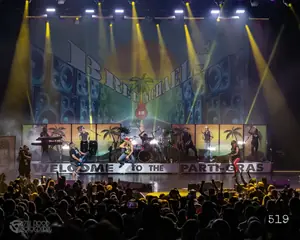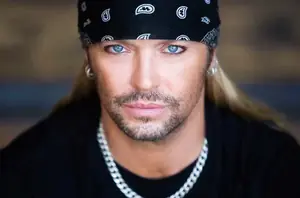

The smell of stale beer and expensive hairspray still defines the summer amphitheatre circuit. It is a specific brand of nostalgia that Bret Michaels has weaponized for his Parti-Gras 2.0 Tour. But the spectacle only works if the band behind the bandana is tight enough to keep the wheels from falling off.
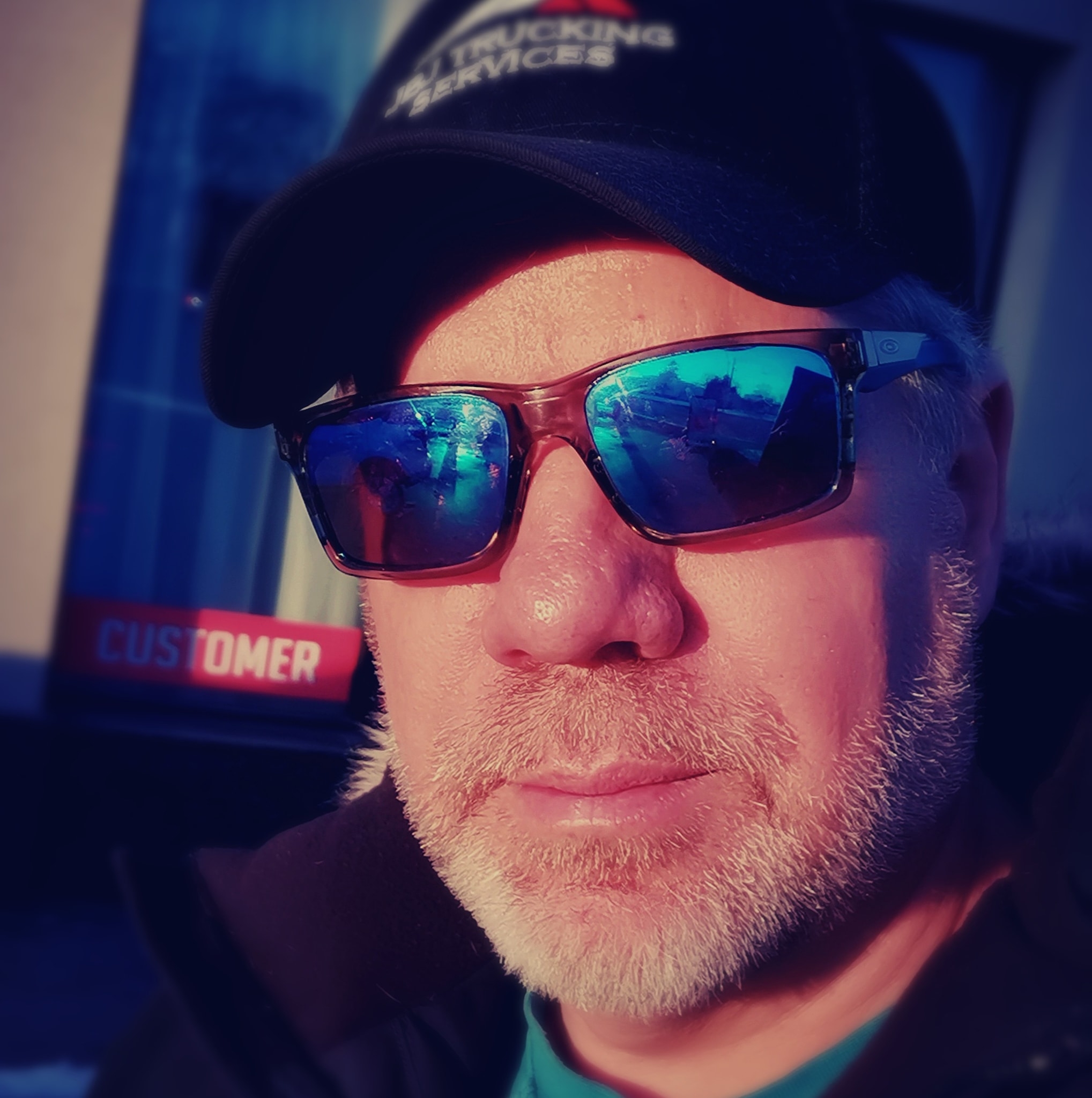
Standing in the wings at the OLG Stage at Fallsview Casino, you can feel the floor vibrate before the first power chord even hits. It is loud, it is sweaty and it is exactly what the crowd paid for. At the centre of that sonic storm is Dean "The Machine" Cramer, a man who has spent more than four decades proving that rock and roll is a blue-collar job.
Cramer is not some hired gun fresh out of a TikTok shredding video. He is a Virginia-based veteran who has been grinding since the days of cassette tapes. His rise to the Michaels camp was not a matter of luck, but a slow burn of professional consistency.
The connection came through Pete Evick, Michaels' longtime musical director and guitarist. In this industry, your reputation is your currency. Evick knew Cramer was solvent.
"Pete and I have been friends for about 20 years," Cramer says. "We played some shows together with my old band, Funny Money, and he always liked what I did."
That history matters. When you are playing massive venues like Pine Knob Music Theatre, you do not want a stranger in the bunker. You want someone who knows where the landmines are buried.
The transition from civilian life to the Michaels machine happened with the kind of speed that would give most musicians whiplash. One minute Cramer was explaining scales to a student; the next, he was packing a suitcase for the Deep South.
"Pete called me on a Tuesday while I was in the middle of teaching," Cramer says. "He asked if I could fly to Mississippi and play with Bret that weekend. Of course, I said yes. It was a no-brainer."
Most guitarists would have spent the flight panicking over setlists. Cramer just got to work. There were no rehearsals. There was no safety net. It was a baptism by fire in front of thousands of screaming fans who do not care if you have had time to learn the bridge to "Talk Dirty to Me."
It was this ice-cold reliability that earned him his moniker. Bret Michaels is a frontman who values consistency above almost everything else. He needs to know the riff is going to be there every single time he jumps off the drum riser.
"I was surprised when Bret came up with the nickname 'The Machine'. Of course, it quickly became what everybody else started saying," Cramer says.
I was surprised when Bret came up with the nickname 'The Machine'. Of course, it quickly became what everybody else started saying.
The name stuck because it was accurate. Cramer does not miss. He does not have "off" nights. He just executes. And on a tour that features a rotating door of legends like Don Felder, Lou Gramm and Dee Snider, you have to be able to hold your own against the heavyweights.
Watching Cramer share a stage with Snider is a lesson in heavy metal geometry. There is a specific way these guys lean into each other during the big choruses. It is a language of leather and loud amplifiers.
"It's surreal, sitting there going, 'There's Dee Snider,'" Cramer says. "I grew up listening to him. And now, when we do 'Highway to Hell,' he wants to be face to face with me."
That kind of validation is the real payoff for 40 years of labour. But the performance is only half the battle. The other half is the gear. Cramer’s current weapon of choice is an Iconic guitar finished in a deep, regal purple that catches the stage lights like a bruise.
"I fell in love with it," Cramer says.
He runs that Iconic through a Shure wireless system, ensuring he can roam the stage without tripping over a copper leash. His pedalboard is a curated selection of tonal choices: a King of Tone overdrive for that grit, a Line 6 DL4 MkII for the echoes, a Supro Boost and the lush modulation of a JAM Pedals Waterfall chorus.
But Cramer is the first to tell you that the gear is not a substitute for soul. You can buy the same pedals, but you cannot buy the calluses. There is a technical trap many modern guitarists fall into, thinking that more knobs equals better music.
"Steve Lukather doesn't need a $1000 pedal to make his impact. He can do it with a $50 pedal because he's Steve Lukather," Cramer says. "It's not about being complex. It's just that it'd be no different than AC/DC - there's the three chord thing again. But if you play the wrong one at the wrong time, you're gonna hear it."
That is the sharpest truth in rock. Complexity is often a mask for insecurity. Playing three chords perfectly is significantly harder than hiding behind a wall of digital delay.
When he is not keeping the Poison hits on the tracks, Cramer is digging into his own psyche. He is currently working on a solo album where the focus has shifted from fretboard gymnastics to the actual weight of the words.
"I've gotten so much inspiration and advice through music, more than I've ever gotten from a human being in my entire life," Cramer says.
It is a heavy sentiment for a guy who spends his nights in the middle of a "Parti-Gras." But that is the duality of the professional musician. You have to be the life of the party at 9:00 p.m., even if you are reflecting on the complexities of the human condition at 2:00 a.m. in a hotel room.
The tour itself is a logistical beast. It hit Pine Knob in Clarkston, MI on Aug. 23 and is scheduled for the OLG Stage at Fallsview Casino and Resort on Oct. 12. These are high-stakes rooms.
Michaels is a pro at the "local vibe," often tailoring his banter to whatever city he is currently occupying. It is a trick of the trade that keeps the audience from feeling like they are just another stop on a bus route.
"He knows how to throw down the local vibe," Cramer says. "But at the end of the day, our job is to make Bret look as good as he can."
That lack of ego is why Cramer is still working. He knows his role. He is the engine. He is the guy who ensures the star can shine without worrying about the foundation crumbling.
There is a refreshing honesty in Cramer’s approach to his career. He is not chasing trends or trying to reinvent the pentatonic scale. He is just playing what feels right.
"I play what I like and what I want," Cramer says. "Luckily, enough people have liked it throughout the decades that I'm still able to do it. I just write what I write, and if I like it, then you'll hear it. If I don't, you'll never hear it."
In a world of manufactured pop and over-produced rock, that kind of filter is rare. You either have the goods or you don't. And after four decades, "The Machine" clearly still has plenty of fuel left in the tank.