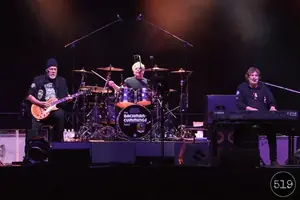

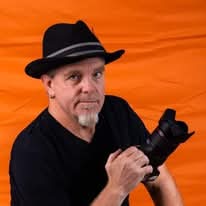
The air inside the Colosseum at Caesars Windsor carries a specific kind of electricity that you only find in border towns. It is a mix of high-stakes gambling adrenaline and a deep-seated reverence for the rock gods who once ruled the AM airwaves of CKLW. Standing in the wings before Randy Bachman takes the stage, you can feel the weight of the history. This is not just another stop on a nostalgia circuit. It is a homecoming for a man whose riffs are essentially the DNA of Canadian guitar music.
Randy Bachman is more than a treasure; he is a structural pillar of the industry. He navigated the pop-perfection of The Guess Who with hits like "These Eyes" and "American Woman" before pivot-stepping into the blue-collar, denim-clad juggernaut of Bachman-Turner Overdrive. We are talking about nearly 30 million albums sold. But the numbers are secondary to the grit. This Friday, June 14, Bachman brings the BTO engine back to Windsor for a set he describes as a "ride through musical history."
The connection to this city is not performative. In the 1970s, if you wanted a hit in North America, you had to pass through the "Big 8" gatekeepers. Randy understands the geography of his success.
"I have a great love in my heart for Windsor," Randy says, his face lit by a grin that has not dimmed since the Nixon administration.
He leans back, digging into the lore of how the band actually found its identity. It was not in a boardroom in Toronto or Los Angeles. It was at a greasy pit stop in the middle of the night.
"It was at a Husky truck stop at one in the morning and a record label told us to get a new name," Randy reflects. "It was me and my brothers and Fred Turner, and at the time, if you were called Bachman or Turner, they thought you were like Seals and Crofts, two guys with acoustic guitars singing Summer Breeze, and we were rocking our faces off."
The industry at the time was obsessed with soft-rock duos. Bachman knew they needed something that sounded like a diesel engine downshifting on a steep grade. The answer was sitting right there on a wire rack next to the beef jerky.
"I was paying at the cash register, and there were magazines beside it," Randy says. "The magazine was called Overdrive. I looked at it and went, 'Wow, centerfold.' I opened the centerfold and it’s not a naked chick. It’s the inside of a guy’s cab with leopard skin, a book, a little lunch pail, and all this stuff. And I say to Turner, 'This is an incredible name for an album, Overdrive.' And he says, 'No, it’s an incredible name for the band.' So, I grabbed a napkin and I wrote 'Bachman', and under it, 'Turner' and under that 'Overdrive'. I phoned the label the next morning and he said, 'Phenomenal name, but it’s too long.' I said, 'Well, how about BTO?' He goes, 'Wow!'"
Branding is often an accident of timing. But the visual identity of BTO—the gear—was another stroke of cosmic luck found in the dirt of British Columbia.
"We then went to get our album picture taken outside of Mushroom Studios in Vancouver," Randy explains. "We found this big hill with a little gas station and a field, and because the grass was three or four feet high, it looked like we were in the prairies. The photographer was saying, 'Randy, move over here, back up a little bit,' and I fall over backward and I look down and there’s this thing in the grass. It’s a gigantic eight-foot wooden gear. I said, 'Holy cow, this is amazing.' And Fred says, 'It looks like an overdrive gear from a Ferrari.' I asked the guy, 'What is this?' He said, 'Oh, my brother runs a sawmill in Chilliwack and that’s the gear they used to make the mold for the metal gear that runs the sawmill.' That became the front of BTO One."
And it did not just stay on the cover. Randy is a collector of history, both musical and physical. He eventually tracked that gear down to anchor his own space.
"Two years later, I was building a house, and I wanted a big room with a big wagon wheel light in the middle," he says. "My house was so big, the wagon wheel looked like a dime. So, I called the guy back and asked, 'Do you still have that big wooden gear in the back?' He said, 'Give me $100.' I bought three big hooks, a tow truck chain, sockets, light bulbs, hung it up and that became my main office. But that’s the history of the gear and it ended up being a life changer."
You cannot talk about Bachman in Windsor without mentioning Rosalie Tremblay, the legendary music director at CKLW. She was the hitmaker. If Rosalie played it, the rest of the world followed. Randy credits her for the momentum that carried them across the border.
"And then Rosalie played songs from Brave Belt, and then BTO. Boom," Randy says. "She also got us going with Shaking All Over in 65 and then with These Eyes. She was the one in Canada who played it. Nobody else would play it until it was a hit in the US, then suddenly CHUM is playing it and everybody else."
But the road has been heavy lately. 2023 was a brutal year for the Bachman lineage. In January, his younger brother and drummer Robbie passed away. Just 106 days later, his brother Tim lost his fight with cancer. It is a lot of ghosts to carry on a tour bus. Fred Turner, the voice that gave BTO its gravel-throated power, is sitting this one out, though he gave Randy the green light to keep the engine running.
"When we play a show, you’ll see Fred on the screen and Robbie on screen playing drums," Randy notes. "Fred will be singing Roll On Down the Highway and Let it Ride on screen, and everybody singing with him. I just finished a rock and roll cruise, and if you’re one of the original guys and you created the music, sang it, or played it, people want to hear that. There’s something about being together with five or ten thousand strangers, and for that moment in time, it’s like a gospel meeting where everyone is singing Taking Care of Business."
The family legacy continues through Tal Bachman, who has joined the lineup. Tal, who dominated the charts 25 years ago with "She’s So High", brings a multi-instrumental versatility to the band. He is not just a legacy hire; he is a lifeline.
"I feel very blessed and fortunate," Randy says. "He played as my drummer when my drummer broke a leg riding the forbidden motorcycle. I always say to the guys in my band, no skydiving, no motorcycle riding, none of this stupid stuff where you’re going to break something and you can’t play your gig."
The transition from academic life to the rock circuit was swift for Tal. It is the kind of father-son dynamic most people only see in movies.
Six months later, my mother says, “There’s something wrong with your report cards. It says you’ve missed 62 afternoons.” I said, “I have something to tell you. I’ve been skipping school every afternoon, but I’ve now learned five Chet Atkins and three Merle Travis LP’s and a Chuck Berry LP and Dwayne Eddie. I’m now going to be a guitar player. And my mother says, “Okay, good luck.”
"Tal drummed for me on a couple of albums and tours, and then when I had a serious issue with playing guitar he just came and sat in, and he quit school, which I thought was great," Randy says. "How many fathers call their kids and say, leave university behind, come on the road, let’s rock and roll? When he plays 'She’s So High' during our show, people go crazy. A lot of people didn’t realize he was my son, so that’s great."
The conversation shifts to the Winnipeg scene of the 1960s—a cold, isolated breeding ground for some of the greatest songwriters in history. It was a small pond with very big fish, including a young Neil Young.
"I lived in West Kildonan, which is the north part of town and Neil lived on the other side of the river, and Fred lived on the other side," Randy recalls. "We would all go to downtown Winnipeg every Saturday and two blocks apart were Hudson’s Bay, and Eaton’s. Both of them had a record department, and in between were all little record stores and music stores, and they had a restaurant. So, we would go down there every Saturday after watching Bandstand, and talk about who was on and meet Neil Young and Burton Cummings, all the musicians. We’d say, 'Where’d you play last night?' so it was like our Internet. We’d always stop in between and look in the music stores. We’d go and look in the window at these guitars that we just saw on American Bandstand. So, I bought one of the guitars. Two weeks later, Neil bought another orange Gretsch. Mine got stolen in 76 and we found it two years ago in Tokyo. There’s a documentary being done about my guitar being gone for 47 years and how it found me."
Before the Gretsch and the gold records, Randy was a child prodigy on the violin. But the rigid world of classical music did not mesh with a kid who was hearing melodies in his head rather than reading them on the page.
"I played classical violin from the age of five to 14 and all you play is melody," Randy says. "You’re either playing melody or counter melody. I realized after a time, when I auditioned for the Winnipeg Junior School Symphony for second violin, I wasn’t reading the music, I was playing by ear."
The breaking point came during a rehearsal that felt more like an interrogation.
"When I go there, I keep making the same mistake," he explains. "The guy says, 'Bar 32, 2nd violin, it’s an e flat, not an e-natural. Let’s take it from the top.' We take it from the top. I get to the same place, I play the same note. 'Second violin. What don’t you understand about an e flat?' I don’t know what an e flat is. So, there’s 85 kids laughing at me. I pack up the violin and I go home."
The humiliation at the symphony paved the way for a different kind of stringed instrument. The timing coincided with a cultural earthquake.
"My mother says, 'How’d it go?' I said, 'I’m never going back. I am quitting violin. Everyone’s laughing at me. I can’t read the music that they’re all playing.' The next day my aunt who was a little bit older than me comes over and they’re watching Elvis on Ed Sullivan. They’re going crazy in our living room watching a little black and white tv. I said, 'What’s that?' She said, 'That’s called rock and roll, that’s called Elvis, and that’s a guitar.' Well, I want to do that."
While Elvis provided the spark, it was Lenny Breau who provided the technical blueprint. Breau is a name that commands immediate respect in jazz circles, and his influence is the secret sauce in Randy’s playing.
"So, I started to play guitar, but I was entranced by Elvis because that was on the radio at the time," Randy says. "We’re talking about Winnipeg so kind of a country rock station and now they’re going to rockabilly. Johnny Cash, Carl Perkins, Elvis, a little bit of Chuck Berry coming in, and a band comes to town from Maine. The main guy was like Roy Rogers, a Nudie suit, cowboy hat, fringes. He was called Hal Lone Pine. His wife was called Betty Cody. And his son, who played guitar, went by Lone Pine Junior, real name was Lenny Breau. And they played live on the radio every Saturday on CKY at noon. I’d listen and they’d say, 'We’re going to take a break and let junior play.' And I’d hear this wonderful guitar music coming out of my radio."
Randy became a disciple, following the music to car lots and eventually to Lenny's front door.
"They went to different car lots every Saturday doing car promotion, and there would be coffee and donuts," he says. "When they played at my end of town, I’d get on my bicycle and ride there because I wanted to see junior play. There is this guy standing there playing an orange Gretsch, and it sounds like three guys playing. I’m staring at him, and I see his thumb is going, boom, boom and his fingers are playing the lead line. So, I said to him, 'I need to learn to play like that, where do you live?' He told me the address and I said, 'Wow, I’ve got girlfriends that live right across the street. They’re twins and I go to their house every day for lunch. Can I come over to your house and learn to play this way?'"
The education was informal but intense. It was a trade-off between social standing and musical mastery.
"So, the mother would make us soup and a sandwich, the twins would go back to school, and I’d go across the street to Lenny’s house," Randy says. "Six months later, my mother says, 'There’s something wrong with your report cards. It says you’ve missed 62 afternoons.' I said, 'I have something to tell you. I’ve been skipping school every afternoon, but I’ve now learned five Chet Atkins and three Merle Travis LP’s and a Chuck Berry LP and Duane Eddy. I’m now going to be a guitar player.' And my mother says, 'Okay, good luck.'"
Lenny Breau was a musical savant who lived in a world of pure sound. For Randy, he was the bridge from the prairies to the pantheon of jazz greats.
"When I met Lenny Breau, he’d been playing guitar for ten years. I played for like ten weeks," Randy says. "I was his conduit to kids his age because he quit school when he was ten. He could hardly read or write, but he was a musical maniac. He was now into Carlos Montoya, Howard Roberts and Barney Kessel. He was into jazz. I said, 'I’ve got to learn those jazz chords.' So, he got me the Mickey Baker Guitar Course. - One, two and three. I recommend those to anybody. Once you learn that, wow."
That jazz foundation is what separates Bachman from the standard three-chord rockers of his era. You can hear it in the sophisticated changes of "Undun".
"When you hear an old Chet Atkins album, he did classical and country and jazz and hillbilly and rock and roll," Randy explains. "He played on a lot of the Everly Brothers hits. Once you can play with all your fingers and you can pick it out in your head, to hear Duane Eddy play single notes like Rebel Rouser, it was a piece of cake. So, my first gig was with a band that evolved into The Guess Who."
The songwriting partnership with Burton Cummings remains one of the most successful in Canadian history. It was a clinical approach to pop.
"Burton and I wrote lyrics and music that are very pop, but if you try to play it… People have said, 'How did you write these eyes? How did you write Undun?' Well, you get this chord and play that chord and find a melody, a note in that chord and the next note in the next chord, and you make a melody line, and then some lyrics to fit the notes that you’re playing. That’s how you write songs," Randy says.
There was no singular method. It was about whatever worked in the moment.
"I wrote every song differently with Burton. Some are from a title, some from a guitar riff, and some from a chord progression," he says. "You get whatever fits. You put it together. I’ve never had and I don’t believe Burton’s ever had what they call writer’s block. You write from anything. I put on the TV and you get stuff that guys are saying on the news. Let it Ride, Taking Care of Business, You Ain’t Seen Nothing Yet. These are all sayings I heard on the street or from people yelling at each other on Jerry Springer."
His curiosity also led him to George Harrison. In 2018, he released "By George - By Bachman", a project that took him back to the roots of the British Invasion.
"I got invited to Liverpool by a friend of mine in Calgary who has the rights to the Beatles stage show," Randy says. "It was John Lennon’s birthday and the show was called 'Let it Be'. I stayed at the Hard Day’s Night Hotel in the John and Yoko room. His half-sister Julia comes and gives everybody John Lennon glasses and bakes brownies that their mother used to make. He didn’t like birthday cake, he liked brownies with walnuts in them."
The trip sparked a creative reinvention of Harrison's catalogue.
"I went to The Cavern and saw all the Beatles stuff and then I thought, well, George was the youngest Beatle and I used to sing all the George songs when the Beatles came out," Randy says. "If you’re a lead guitar player, you were designated to sing George’s songs. Our drummer sang Ringo songs and the best singer sang Paul’s songs. So, I knew a whole bunch of George’s songs and his birthday was coming up and you know the British saying, 'By George.' I’ll call it By George, By Backman. I’ll get a bunch of George’s songs and treat them as a songwriter, I can’t do any better than he or the Beatles did but I will reinvent these songs as a songwriter and hopefully put a new, fresh coat of paint on them. Some of them were really fantastic and some of them fell flat, but I didn’t care. It was just fun. I went and closed BB King’s club in New York. I was the last guy to play there. The people in New York loved it."
Currently, Randy and Tal are keeping the Beatles flame alive on the airwaves and at major conventions.
"Tal and I now do the Beatles Musical Mystery Tour on Sirius satellite," Randy says. "We’re into our third year now and we’re doing the big Beatles convention in July in Chicago. Their 50th anniversary of playing Soldier Field. We’ll be there for three days with Peter Asher and Billy J. Kramer and all these other guys who are still alive. Jerry Marsden, you know, Jerry and The Pacemakers. We’re having a lot of fun."
However, the industry has a dark side, and Randy is currently embroiled in a legal battle to protect the legacy of The Guess Who. He and Burton Cummings are taking a stand against a version of the band they claim is misleading fans.
"I’m with Burton on this, by the way. The two of us are doing this," Randy says firmly. "It’s kind of unfair to people. It’s been going on for 20 years, but we weren’t really aware of it. Because of Covid, now everybody’s sharing on Instagram or YouTube, and we’re getting complaints because people now have access to us and our websites. 'We went to see you guys and you weren’t there.' 'We drove 400 miles and paid $600.00 for four tickets.' These guys weren’t even born when the songs were hit songs. We can’t do anything to them for using the name. That was stolen and trademarked. We didn’t know about it, and if you don’t oppose a trademark or copyright, it becomes historical. But what they were doing was false impersonation, false advertising, which is what Burton got them for. And he made a good move on that to shut them down."
For the Windsor show, fans can expect the genuine article. No impersonations, just the hits and the deep cuts that defined an era of FM radio.
"On this BTO tour we do every BTO hit and we do album cuts, like 'Take It Like a Man', 'Give Me Your Money', 'Blue Collar'," Randy says. "In the old days you didn’t have singles. You had very repetitive airplay on album cuts. I also take a moment in the show and say, 'I was in another band called the Beatles, but they were called the Guess Who.' And I do a three or four-song medley of Guess Who stuff and then again later on in the set because a lot of people just want to hear Undun, and so we do it."
This is more than a concert. It is a final lap for a generation of Winnipeg rockers who conquered the world.
"This is a ride through musical history based on Winnipeg, with stories about Burton Cummings, Fred Turner, Neil Young, and myself, and how we all came out of that," Randy concludes. "We’re all still alive and rockin’ in the free world. If you get to see Neil Young, I know he’s playing London, Ontario. It might be the last time you ever get to see us because we didn’t go anywhere for three years and now, we get to go to all these places again and we can’t play them all at once.