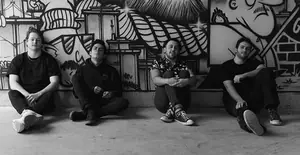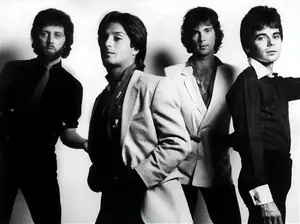

Oakville is rarely the first name on the lips of those scouting the next seismic shift in the Canadian alternative scene. It is a town defined by suburban sprawl and quiet streets, but Weigh The Anchor is currently puncturing that silence with a brand of pop-punk that feels remarkably urgent. They have already racked up 550,000 Spotify plays, a number that suggests they have moved past the local-hero stage and into a much larger conversation.
The band is currently gearing up to drop their new EP, *Right At Home*, on July 10. It is a collection of tracks that lean into the classic tropes of the genre while injecting a modern, aggressive friction that keeps it from feeling like a nostalgia trip. Guitarist Brad Gresko sat down with us to talk about the logistics of releasing music when the world has essentially ground to a halt.
But before we got into the sonics, we had to talk about the survival of the individual. The pandemic has been a brutal equalizer for the music industry, stripping away the ability to tour and forcing artists back into the mundane reality of the nine-to-five grind. Gresko is blunt about how he is navigating the boredom and the isolation.
"Been getting by just trying to take things day by day," Gresko says. "I’ve been lucky enough to still be working and not having to worry about paying the bills as they come out. But yeah, no, I was just trying to keep my head on straight not being able to see people anymore."
And that is the quiet tragedy for many emerging acts. For Weigh The Anchor, the timing was particularly cruel. They were not caught in the middle of a tour when the borders closed; they were in that fragile, optimistic phase of post-production, watching their carefully laid plans dissolve in real time.
"We were already at home, actually," Gresko explains. "We had just finished recording this new EP. We got in, in late January, early February. And then, so we were just waiting on final mixes and stuff and planning out the rest of our year. We had finished booking a big summer tour that we were supposed to be leaving for in two weeks. That will probably not happening now."
The loss of a cross-country tour is a heavy blow for a band of this size. Touring is the primary vehicle for growth, the only way to turn those Spotify listeners into a physical community. But instead of retreating into a hiatus, the band found themselves falling back into the creative process almost by accident.
There is a specific kind of energy that comes from being denied an outlet. When you cannot play the songs you just finished, you start writing the next ones. Gresko notes that the creative output has been steady, even if it was not part of the original 2020 strategy.
"Yeah, we have actually, it hasn’t been planned at all," he says. "After coming out of writing the songs and recording the EP, we still just had the juices going, I guess. And then planning out the year and not being able to actually do any of these things it seems like 2020 is just going to be a wash for shows and tours altogether. We’ve been trying to focus on, not focus on writing, but it just happened kind of naturally. And we’ve got a couple of things going, trying to see where that takes us."
The decision to release *Right At Home* on July 10 was a calculated risk. Most industry veterans would advise holding back until the live circuit reopens, but Weigh The Anchor decided that silence was a greater risk than a digital-only launch. In the current climate, attention is the only real currency.
"Yeah, absolutely," Gresko admits when asked about the odd timing. "We were contemplating that as well. After getting the songs back and planning out when we were going to release it and then all of a sudden everything changed. And so we really had to sit down and ask ourselves, 'Do we wait to release music? Do we do it anyways?' And I feel like we made the right choice in going ahead and releasing things because right now bands are just sitting here, not sure what to do with their hands. And they’re sitting there waiting for the next thing to do. And we’re able to be continuing to release music and trying to stay relevant, especially as a smaller band trying to grow and move up the ranks so to speak."
We had finished booking a big summer tour that we were supposed to be leaving for in two weeks. That will probably not happening now.
The EP itself was born out of a frantic, two-month window. This was not a project nurtured over years of rehearsal. It was a sprint. The band found a gap in their producer's schedule and decided to force the issue, a move that often leads to either a mess or something incredibly honest.
"It’s kind of hard to say what exactly inspired it," Gresko says. "It was more of a very quick decision to write some new songs and we want to get into the studio and release some new music as soon as possible and move forward with where we had been and just try to establish a little bit of a change of direction, a little bit of a new sound and new elements. We wanted to get that out as soon as possible so we talked, the three of us and decided, 'Okay, this is what we’re going to do.' Then we just actually contacted our producer, figured out when we could get in the studio and it turned out we had a two month window before we were his first and only day availability for the year was going to be. And so we just buckled down, wrote the songs in two months and then recorded them."
That kind of pressure often strips away the over-produced sheen that can plague pop-punk. When you only have two months, you do not have time to second-guess the emotional core of a track. You just play what you feel.
"We weren’t really sure if it was going to work out the way that it did, but it honestly, as different as it was for us, it was kind of nice just to have like that hard deadline and really just have that fire lit underneath us to put everything we had into these songs," Gresko says. "And so they came out just very personal and very in the moment. It wasn’t like a span of six months and a range of emotions. It was just what we were feeling at that time and we ran with it."
The first taste of this new direction came in the form of *Medicate*. It is a track that balances the band's melodic sensibilities with a lyrical depth that addresses internal upheaval. It sounds like a band trying to find their footing while the ground is moving.
"Medicate was an interesting one," Gresko says. "It was the last one, I think that we started working on and the first one that we finished, it just like I said, we just ran with it and poured out of us and we finished it really quickly and it ended up being a song for us that, as the band is going through a bunch of changes and a lot of stuff on the personal side of things, ended up being a song that was about just seeing those changes, understanding that we’re going to get through them. And then just being better on the other side of it."
Then there is *Abrasive*, a track that lives up to its name. It serves as the bridge between the struggle and the resolution, capturing the raw frustration that precedes growth. It is the heaviest moment on the EP, and arguably the most honest.
"Abrasive was the in between of the start and end of Medicate, where it was instead of just moving past all the issues and things that we were dealing with, we’d be experiencing them, feeling angry and just dealing with those emotions head on," Gresko explains.
The third pillar of the release is *Clandestine*. While Gresko notes that this track was largely steered by lead singer Andrew, it fits perfectly into the EP’s narrative of evolving beyond one's past. It is about the friction of growing up in a world that wants you to stay static.
"Clandestine, this one isn’t as personal to me, this one was more our lead singer, Andrew, he took the reins on this one," Gresko says. "But my understanding is that it was just very much about growing up and understanding how things change throughout your life and not being even stuck in any one decision. And even if you feel like you are just trying to establish new ground to move forward on."
And that seems to be the overarching theme of *Right At Home*. It is not just a collection of songs; it is a document of a band figuring out their own survival. There is a sense of resilience that runs through the tracks, a refusal to let the negative aspects of life define the outcome.
"I think so," Gresko says when asked about the underlying message. "I think by the end of it, whether it was intentional or not, it came out of being a story of battling through things and just not focusing on the negative side of things and doing what you think is right and the best for you and your situation."
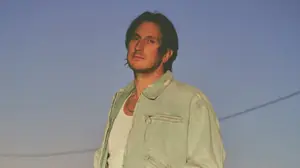
Visually, the EP is represented by a striking cover shot in California. The band worked with a photographer known as Danny D, whose film-heavy aesthetic provides a grainy, natural texture that contrasts with the high-energy sonics of the music. It gives the project a physical, tangible quality that is often lost in digital releases.
"I believe it was in California," Gresko says. "That was actually a picture that we got from a photographer we know. Oh, I’m going to mess up his name. We know him by Danny D that’s his Instagram handle. But yeah, he’s a photographer that tours with a lot of really cool bands that we’ve been able to play with and he’s shot for us before. And we really like his style. He likes shooting in a real film still, so it gets out really natural, grainy effect in the album. We hit him up and got him to send us over a couple of things that we got to choose from."
But what does a release day look like in the age of social distancing? For Weigh The Anchor, it means pivoting to the digital space. There will be no crowded release show at a local theatre, no beer-soaked celebration in a basement. Instead, they are looking at the screen.
"We’re not really sure yet on what we can do," Gresko notes. "As things are starting to open up and we’re allowed to actually get to at least smaller groups now, we’re thinking about having us all on some kind of live stream just to, like you said, commemorate the release."
Despite the lack of a physical tour, there is a sense of arrival with this EP. The band has been refining their sound for years, moving away from the generic pop-punk tropes and toward something that feels more authentic to their own experience.
"I’d like to think so," Gresko says. "I guess that that answer can change as time goes on. But I think so far, at least for us, we’re really proud of these songs and I know it’s a cliche, but we really do think these are the best songs we’ve ever written. And honestly, being musicians were usually our own biggest critics and coming out of the studio, as soon as you hear songs and you’re like, 'Oh, I’m proud of them.' It lasts for like five minutes and then you start picking them apart and wishing you did something a little bit differently, but on these ones, we hear them and sure there are tiny little things that we wish we could do differently, but overall we’re just really thrilled with how they came out. And I don’t think there’s really much we would change."
Looking ahead to 2021, the goal is simple: get on the road. The Vancouver-and-back tour remains the primary objective, a rite of passage for any Canadian band looking to cement their status. For now, they are playing the long game, focusing on content and staying in the periphery of their growing fanbase.
"Going into 2021, we’re really hoping that some shows will be back," Gresko says. "We would love to continue touring. We’d love to actually get on the road and complete the tour that we booked that was going to be out to Vancouver and back, like all the way across Canada. As for the rest of this year, that’s still a little up in the air, whether we’ll be allowed to play shows. But we’re definitely planning on keeping up with our online content and we want to be interacting with fans the best way we can and just really trying to stay relevant and stay in people’s minds.