
Sudbury has a way of hardening a man. It is a place of nickel mines, slag heaps and a particular brand of Ontario grit that does not wash off easily in the showers of Nashville. Andrew Hyatt, the man they call "The Nickel City Kid," carries that weight in his voice. He has been a fixture since *Iron & Ashes* dropped in 2017, but the Hyatt we are seeing now—the one who survived a global standstill to release back-to-back EPs—is a different animal altogether.
We are sitting in a space that feels a world away from the mines. Hyatt is coming off a massive run. He has the SiriusXM Top of the Country win in his pocket and a 2018 CMAO Rising Star award on the shelf. But awards do not keep the lights on when the world stops turning. Most artists spent the pandemic staring at the wall. Hyatt spent it making sure his streaming numbers did not just survive, but thrived.
"Yeah, surprisingly, we were just talking about this yesterday with one of my managers how for a year that was just not supposed to really yield anything, it’s been pretty wild," Hyatt says. "We put a single out that lived at Radio for six and a half months which is pretty awesome, super thankful for that, and we saw a lot of growth in all of our streaming numbers."
There is a frantic energy to the way Hyatt describes the recording process for his latest, *Wild Flowers*. It was a matter of timing and a bit of luck. He found a window in the lockdown red tape and drove a truck through it. He did not just record a song; he hammered out a legacy.
"On top of that, I was able to put a couple live versions of the songs off of the 'Neverland' EP and then release this one as well, went to record it on those few days where we were allowed to have enough people in a room together to make music," he says. "It just worked out. We had it scheduled in that timeframe already and everything opened up. We went in and hammered it out, four days later, we were done the record."
Hyatt is obsessed with the physical medium. In an age where music is a disposable digital file, he is thinking about the weight of a record in your hands. He wants a Side A and a Side B. He wants a narrative that matches the art. It is a level of curation you do not often see in Canadian country, where the goal is usually just to get a hook to stick on the FM dial.
"When we did the 'Cain' record, my goal is to constantly be able to release a side A, side B vinyl, right?" Hyatt explains. "It’s an idea that I feel makes me different, especially in Canadian country where I am doing stuff that is geared to radio, full band, polished to the nines. I also have the songs that I write that are kind of just for me, just ideas that I want to chase and pursue for the love of creating. I’ve been really lucky to be able to put out that side A, side B thing, which is what’s going to happen with this."
The *Neverland* EP serves as the first half, the shiny Side A. *Wild Flowers* is the underbelly. It is the grit under the fingernails. And Hyatt is insistent that these are not just collections of tracks. They are timestamps.
"'Neverland' will be the first half of the record, side A, and then 'Wild Flowers' will be side B, and all the art matches and it works together," he says. "I like to look at things as periods of time rather than record releases. What’s happening in my mind and snapshots of where I’m at in life and to be able to put those on vinyl feels really cool to me."
But do not call it a concept album unless you mean it. Hyatt admits that *Neverland* was largely built on pitched songs, though he snuck "Stuck" onto the tracklist. *Wild Flowers*, however, is a different beast. It is a triptych of industry archetypes: The Roaches, The Ravens and the Wild Flowers. It is a cynical, beautiful look at the people who populate the music business.
"I think 'Stuck' was on the 'Neverland' EP, so I wrote that one, but the other songs were all pitched songs," Hyatt says. "This EP 'Wild Flowers' is in and of itself a concept album, which started as an idea to write about three characters in the music industry. It started out as 'The Roaches, The Ravens, and the Wild Flowers', and that’s what it was originally going to be called but then it just felt a little long and wordy so I was like, okay, 'Wild Flowers' it is."
To get this right, Hyatt went to Los Angeles. He sat down with Martin Macphail, a man whose day job involves film scoring. That cinematic influence is all over the record. Their collaboration is a weird, disjointed dance of creativity. Hyatt writes until he hits a wall, then Macphail builds a door through it.
"I flew out to LA and I sat with my good friend Martin Macphail who does film scoring," Hyatt says. "Martin is someone who I’ve written a lot of songs with, the songs that tend to connect with people and that have made it onto the records. Our writing style is a little bit different, where I kind of sit on my own and I’ll write and write and try and get as far as I can, and then when I get stuck, I go to him and then he’ll bounce ideas off of me that just kind of shift wherever I’m stuck. It’s like he creates a lane and then we’ll work through it. It’s a strange writing thing. It’s separate but together at the same time."
The metaphors Hyatt uses are biting. The "Roach" is the industry parasite, the one who feeds off the talent without contributing a soul. It is a common figure in the bars of Nashville and the boardrooms of Toronto.
"'The Roaches, The Ravens, and The Wild Flowers' was just written about individuals that have either influenced me or changed who I am in the industry," Hyatt says. "Obviously 'The Roach' is someone who is a taker and someone who is not in it for the right reasons."
The "Wild Flower" is the survivor. It is the artist who keeps playing the dive bars until the world finally catches up. It is the flower through the concrete—a cliché, sure, but Hyatt makes it feel like a survivalist manifesto.
"The Wild Flower is the person that does whatever it is that they do until what they do becomes relevant," he says. "There’s just something so hopeful about that, it’s knowing who you are, that idea of pushing up against adversity and a flower coming up through concrete kind of summed that up for me perfectly. 'The Ravens' was just this idea of getting off the phone with friends of mine, like Jessica Mitchell, talking to JJ Shiplett, talking to Kelly Prescott and just seeing these artists that were feeling very burnt out, myself included."
The "Ravens" are the outcasts. Hyatt talks about his peers with a sense of weary fellowship. They are the ones who do not fit the "number one" mould. They are the artists who create because they have to, even when the industry is looking for something safer.
"We were talking about how our love of music doesn’t really fit into what is going number one right now," Hyatt says. "It’s just like what we create on our own and how it’s really hard to chase something if you’re not in love with it, and how we just had all decided we were going to do this and I was like, we’re not really songbirds, we’re more like the outcasts, a little bit more like ravens. And that idea was just finding that fellowship, that group of people that can just sustain you. And that’s kind of what 'Ravens' is about."
The timing of these songs is eerie. They feel like pandemic anthems, but Hyatt wrote them before the world went into isolation. It is a case of art predicting the emotional weather. The burnout he felt on the road became a universal burnout for everyone locked in their homes.
"Yeah, honestly it’s one of those things where I feel like every song kind of fits with what happened globally but most of these songs were finished about a month before the pandemic hit," Hyatt says. "For me anyway it’s more about just remaining hopeful overall and being true to yourself, and just doing what you need to do to survive."
The lyrics in "Ravens" are particularly brutal. They speak to a level of exhaustion that goes beyond physical tiredness. It is the sound of a man who has given everything to the road and found his pockets empty.
"'Ravens' especially as you know that line of, 'Brother won’t you come on home when it’s tired if it’s late, if you’re broke, if the air in your lungs is burning, like smoke' and just this idea of just burning out on the road and you’re giving all the time of yourself," he says.
And then there is the reality of the creative bank account. You cannot keep pouring out if you are not refilling. The pandemic, for all its horrors, forced that regrouping.
‘The Wild Flower’ is the person that does whatever it is that they do until what they do becomes relevant. There’s just something so hopeful about that, it’s knowing who you are, that idea of pushing up against adversity and a flower coming up through concrete kind of summed that up for me perfectly.
"You get a lot back as well, but sometimes if you’re just constantly pouring into the creative side of things, you need to take a minute and regroup and just let that bank account fill back up before anybody can take anymore from you," Hyatt says. "That’s kind of what that song is. But again, like you said, it does fit really well with just finding somewhere that feels safe and feeling like you are recharging in a pandemic world. It’s cool that you felt that way about it."
Hyatt also breaks a personal rule on "Ravens." He drops an F-bomb. It is not something you expect from a former youth pastor, but Hyatt is not interested in being a caricature of a "good guy" anymore. He is interested in the truth, even if it is messy.
"No, it’s not. That’s probably the first time I’ve ever sworn at least on record anyway, on an immortalized piece of music," Hyatt says. "It just felt like it fit there. Sometimes when I listen to music with swearing in it, it doesn’t always feel like it fits. To me it was just that idea of feeling burnt out and feeling like you’ve lost who you are because you’re chasing something that isn’t who you are and you just need to regroup. And that idea of, 'You quit the bottle, quit the blood, you still fuck but it ain’t love'."
It is a line that hits like a gut punch. It is about the hollow motions of a life lived without purpose.
"It’s going through the motions of things that don’t fulfill you or don’t make you a better person," he says. "That’s kind of what that verse is anyway. It’s like getting back to what makes you feel whole and healthy."
The most striking song on the EP is "Jesus and the Whiskey." It is a song born from a literal image of a bottle sitting on a Bible. Hyatt had hit a wall. A breakup sent him into a two-year spiral of heavy drinking that physicalized itself in his body. He needed surgery for reflux issues caused by the booze.
"I was really lucky to get to finish that song with Patricia Conroy and Karen Kosinski," Hyatt says. "We were on a trip for the CCMA SOCAN Songwriter Camp a few years ago and I had the first verse and the top of the chorus and I had gone through a breakup that just sent me into a bit of a spiral. What I thought my life was going to look like, took a hard shift and I went through about two and a half years of just hard, hard drinking to the point where I ruined my stomach and I’ve had to have surgery to fix reflux issues, and I had a Bible beside my bed on my nightstand."
The image is stark. The sacred and the profane, touching on a nightstand.
"I grew up in church so it’s just always been there and I was drunk and I had it open and I was reading through it which is such a funny image in my mind," he says. "It’s two opposite ends of the spectrum. I put the bottle back with the glass and set it down on top of The Bible using The Bible as a coaster which seems sacrilegious in some ways, but I woke up in the morning, and that’s the first thing I saw when I opened my eyes was this bottle sitting on top of a Bible. I was like, man, if that’s not a song, I don’t know what is, and it just came to me from there."
Hyatt’s relationship with faith is complicated. He was an accredited pastor. He saw the inner workings of organized religion and he did not like the view. Now, he deals with what he calls "foundational guilt."
"I struggle with what I believe pretty much every day," Hyatt admits. "I grew up a pretty devout Christian and right out of high school I was working towards being an accredited pastor. I was working in a church as a youth pastor and then I kind of swung the complete opposite way for a few years where I just saw things I didn’t love and I just was like, that’s not the God I believe in."
It is a wrestling match that never ends. He believes in something, but he refuses to put a brand on it.
"Now I wrestle with what I call foundational guilt," he says. "It’s like, what do I believe, versus what was I told to believe and what’s real to me versus what’s just something that I’ve been taught over and over again. I feel like I believe in something whether you want to call that God or the universe or some sort of spiritual force. I have a hard time putting a title on that but I’ve seen amazing things in my life that I feel like I can’t explain so I do have a belief in that. I wrestle with it for sure."
Hyatt is quick to point out that the failure is not in the divine, but in the human interpretation. He uses communism as an analogy for the church—a great theory ruined by the people involved.
"Yeah, anytime you put the human race into any scenario, they tend to muddy the waters a little bit, right?" Hyatt says. "We’re imperfect, so anything that comes out of our interpretation or our teachings if even in theory it’s perfect, it doesn’t come out perfect. Communism is a prime example of that, right? It’s a great theory but you add humanity and greed and all of those terrible things into it and it doesn’t work."
Music was the bridge Hyatt used to cross from the church to the world. He started writing at 11, right as his parents were divorcing. He had a guitar with three strings and a lot of questions.
"That was just kind of a continuation, music was always the main thing," he says. "I grew up playing in church, leading worship there and then I was writing songs on my own, both worship songs and songs that were just about life. When I left that I turned to music again to cope with the questions I had, and figuring out who I was and what I believed, and that’s always what music has been to me."
Those three strings were enough to build a foundation. Hyatt taught himself the basics on a broken instrument, and he never looked back.
"I started writing songs when I was 11, days after my parents got divorced," Hyatt says. "I didn’t know anything about playing guitar or writing songs. I grew up singing in church, that’s all I knew and I picked up this old guitar that was at my house, my grandmother bought it for me and had three strings on it. I taught myself how to play a D chord, A chord and a G chord with it missing main strings but it was enough that I was writing songs over that and from there I just never stopped."
Hyatt is a purist, but he is also a realist. He knows that to survive in country music, you have to take outside cuts. He is envious of writers who can manufacture emotion, but for his own work, it has to be blood and bone.
"Yeah, it’s always had to come from a place that’s real to me," Hyatt says. "There’s a lot of songwriters, and I’m envious of these people, who can just write a song about anything, that can just pick a scenario and write and it hits home which is why I take a lot outside cuts for Country radio because a lot of those songs put me in a time and a place that I’ve experienced, but not in a way that I would ever be able to write about in a less than heavy emotional way. So it’s been nice to be able to do both, to take outside cuts, which is a very common thing in country and then also write songs that mean so much to me and release those and have them have great success too."
The nickname "The Nickel City Kid" is now part of the brand, though Hyatt seems unsure of where it actually started. It is a badge of honour for a guy from Sudbury who made it out.
"I don’t even know, it just kind of happened man," Hyatt says. "I think somebody wrote in an article 'Like nickel bones with a Nashville soul or an old country soul or something like that.' Anything to do with the nickel city seems to stick and it comes up in many forms. I don’t even know who started it but it’s just been around."
Hyatt has found a stable home at 604 Records. It is a label run by Jon Simkin, a man who knows how to play the long game. Hyatt appreciates the freedom he is given there—a rarity in a business that usually tries to shave off an artist’s edges.
"We’ve been together now for I want to say, three years? This pandemic year feels like it doesn’t count but I think it’s been about three years," Hyatt says. "I was with a label prior to that and we parted ways for the reason that artists and labels part ways all the time, creative and financial differences, but overall, just to speak to that, I feel like I’ve been lucky in both scenarios. I have a great home now and I was incredibly lucky in the beginning with my first label to have somebody see something in me that nobody else did and be willing to invest. Eventually it’s like any relationship, right? You either grow together or you grow apart."
The 604 roster is diverse, including rock veterans like Theory of a Deadman. Hyatt sees that longevity as proof that he is in the right place.
"604 is just an amazing home. Jon and Jenna are so supportive, and our team works really well together," Hyatt says. "They’re very hands off when it comes to the creative aspect, which I feel incredibly blessed as an artist, I feel like I’ve been able to grow so much as a songwriter, creating my voice within the music because I get to just do what feels right and then from that we pick, so it’s been awesome man. If you look at the roster, Theory of a Deadman has been around since I was probably 14 years old in high school and just last year they had their biggest rock record ever. How many labels invest that long in an artist and continue believing and continue investing and then see that kind of return? Nobody rides the wave that long and Jon is so about music and about supporting arts and the artist. I feel like a lot of times he makes decisions based on his heart for music rather than the business and what on paper might make sense. But in the end, he always wins which is important."
Hyatt’s own influences are a mess of Christian rock, 90s post-grunge and classic country. He grew up listening to Delirious? and P.O.D. alongside Loretta Lynn and Stompin’ Tom Connors. It is a strange brew that explains why his country music has such a hard edge.
"It’s been a bit of an up and down, back and forth kind of thing," Hyatt says. "Because I grew up in church, a lot of what I was listening to was Christian rock, so I grew up listening to bands like Delirious? and then the bands that were the edge of Christianity like U2 and Jars of Clay and bands most people have not heard of, P.O.D., DC Talk. I loved rock music though and I listened to a lot of Default which is funny because now Dallas is one of my managers. Rock was a huge influence on me, that whole era of Seether and Creed and Stone Temple Pilots and Guns N’ Roses. I also I also loved Loretta Lynn records and Stompin’ Tom Connors, and it was great man, just like Janis Joplin records and stuff like that. It was it was pretty diverse, depending on how it was feeling, but there are definitely bands who kind of sat in that Christian rock/almost what country is now like Lifehouse and Switchfoot."
He notes that the lines between genres have blurred to the point of irrelevance. Today’s country is yesterday’s rock.
"A lot of that music can be played on country music today other than maybe lyrical content, and it’s right on the money," Hyatt says. "It’s funny how that shift just happened."
For "Jesus and the Whiskey," Hyatt wanted something raw. He wanted the mistakes. He wanted it to feel like classic country, recorded live off the floor. His producer, Derek Hoffman, helped him find that sound through a specific finger-picking style.
"That was our goal," Hyatt says. "If you heard the demo that I recorded to that song, I’m not a monster picker, I just strum chords and I sing, and that song was actually a little bit slower and a little bit more drawn out. Then we went in for pre-production and my producer Derek Hoffman was like, 'Hey, Tom (guitarist) has been working on this finger picking thing that’s kind of like a nod.' I had said, 'I want a nod like old school, like classic country. I want this live off the floor, I want the mistakes, and I want it to be pure and raw.' He starts playing this thing and I was like, 'That’s it, I’m all in.' and that’s what we ended up going with and I’m happy we did. I was a little uneasy about it at first because this is like old school but I think it works so well with the song and just gives it a real life of its own and something that feels really honest."
The vinyl release for *Wild Flowers* has been delayed, a victim of the global supply chain collapse. It was supposed to be out in Aug. but now Oct. is the target. Hyatt is looking at creative ways to bridge the gap, including potential tokens and acoustic bundles.
"It was supposed to be out mid August but we just heard back from two separate vinyl companies and everybody’s backlogged right now until October so I guess we’re waiting on this," Hyatt says. "We’re trying to figure out a couple different ways to do things, maybe sell a token or something and if you purchase that you’re going to get a vinyl, you’re going to get an acoustic show, and just bundle it all together."
Despite the delays, Hyatt is finding the EP format liberating. It allows for a tighter budget and more creative risks, like the music video he shot while backwoods camping.
"Doing stuff like this for EPs has been really freeing because there’s only so many songs, you’ve kept the budget concise, you’re able to do different things that you would not normally do," he says. "We got to shoot a video for it. I do a lot of backwoods camping so a couple buddies and I quarantined first and went off grid and into the bush and we’ve got a video coming out for 'Wild Flowers' from that. It’s just been great to create, even during a pandemic. I feel like it’s heightened my love of creating, it’s putting new value on it which I’m super thankful for."
The Wanderspace Sessions provided another visual outlet. Recorded in a Toronto photo studio with massive windows, the sessions were nearly derailed by the neighbours.
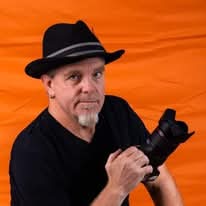
"A good friend of mine, Lane, is a professional photographer and I had seen the work he had done there and I was like, 'Oh, I love the big windows. I love that there’s different textures,'" Hyatt says. "What we did was I just called my band and one of my producers and I said 'Hey, we’re going to bring all the gear into this photo studio and we’re going to record there' and everything went almost perfectly smooth except for the fact that because it’s a pandemic, everybody in that building was working from home and it’s a live workspace."
The problem? A kick drum that was too loud for the remote workers in the building.
"So the kick drum was apparently a little bit too loud even though everything else was pretty quiet, so on one of the songs there is no kick drum that’s real," Hyatt laughs. "Jesse had to play and we killed the kick drum because we were going to get kicked out, which is a funny little tidbit about those. But yeah, they worked out great."
Hyatt has built a brotherhood around his music. The same team has been with him since the start, and they are constantly pushing each other to "level up."
"I’ve been lucky, we have this little family of music that from production, to recording, to monitoring, to videos all those guys have been with me since the very beginning," Hyatt says. "I’ve brought on people that I trust and love and we’ve become kind of a brotherhood, and we’re always trying to up each other’s visual and audio and grow as a community so I think it’s working. I feel like we’re constantly leveling up. So thanks man."
Andrew Hyatt is not just another country singer. He is a man who has looked at the bottom of a bottle and the pages of a Bible and found a way to make them talk to each other. *Wild Flowers* is the result of that conversation. It is honest, it is loud and it is exactly what we need right now.