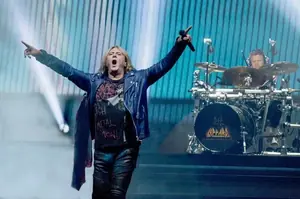
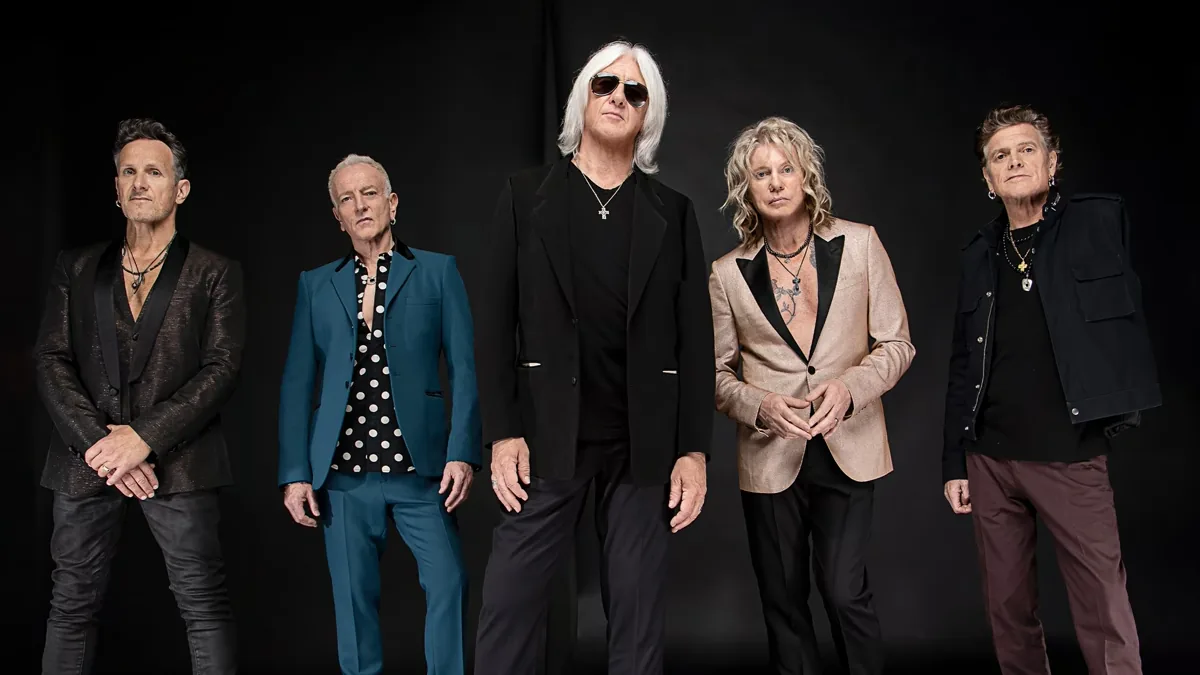
Looking back at these raw 2013 tapes for Def Leppard is like unearthing a time capsule. Here was a band, decades past its commercial zenith, not just surviving but colonizing Las Vegas, turning Sin City into a hard rock stronghold. This wasn't a victory lap. It was a strategic occupation, a powerful statement that legacy acts could do more than just cycle through their greatest hits on the summer festival circuit. They could build an empire in the desert.
The idea of a Vegas residency for a rock band felt novel then, a space previously reserved for crooners and pop divas. But as Phil Collen notes on the tape, the tide was turning. “It just opened up into a real great place for rock bands,” he says, his voice cutting through the conference call static. “You know, it’s not just Tony Bennett, Frank Sinatra anymore. It’s everyone. It’s great.” He was right. Leppard, alongside Mötley Crüe, was at the vanguard of a movement that made the Strip a viable and lucrative alternative to the punishing grind of the road.
And the benefits were immediate and tangible. The sheer logistics of a world tour are an energy drain, a blur of buses and airports. A residency flips the script. The audience travels to the band. This concentration of energy allows for a level of production and performance that’s impossible to replicate on a nightly basis in different arenas. Collen felt the shift viscerally. “It just felt more like a theatrical performance,” he reflects. “It actually felt like theatre, that kind of thing as opposed to just being a regular old touring band. It actually felt different in a really positive way.”
But choosing to perform Hysteria in its entirety was a move loaded with risk. That album isn’t a collection of songs; it’s a sonic cathedral built by producer Mutt Lange, a monument to studio perfectionism with layers of vocals and guitars that were never designed for simple live replication. Joe Elliott acknowledges the immense undertaking. “To actually just go out and pull that together in front of an audience, you know, takes some balls to be quite honest,” he admits. The album was a beast, one that even the band itself was wary of in its youth.
This is where the retrospective angle becomes so sharp. Hearing them in 2013, they weren’t the same band that struggled to bring Hysteria to the stage in 1987. They were seasoned masters of their craft. “We’re a much better band than we were back then,” Collen says with absolute conviction. “I think when we first started playing that record, we were actually a bit frightened of it. But 25 years on with the experience that we’ve got now, we’re actually a much better band, players, singers, everything. We’re actually better at it than we were then.”
That confidence was hard-won, forged through decades of triumph and tragedy. The interview touches on Vivian Campbell’s concurrent battle with cancer, a topic handled with a blunt, road-crew pragmatism. The update is positive, but it’s a stark reminder of the band’s history. They’ve faced down more than their share of adversity, from Rick Allen’s car accident to the tragic death of Steve Clark.
This history has led to a lazy, infuriating media narrative of the band being “cursed.” Elliott tackles this head-on with one of the most potent and brilliant rebuttals I’ve ever heard from a musician. He completely dismantles the premise. “My standard answer for this whole curse rubbish, which is what it is, is this,” Elliott begins, his tone firm. “You take any five random people off the street and ask them what’s gone wrong in their lives over the last 35 years, and I can guarantee that it’ll be worse than what we’ve been through, and their highs will be nowhere near as close as ours.”
I'd rather get in the studio and write a song than spend all day telling everybody I'm gonna go in the studio to write a song. I'd rather actually go in there and actually write the bloody thing.
It’s a mic-drop moment. He refuses to let the band’s story be defined by its darkest chapters. “If one of us breaks a fingernail, it’ll make page 16 of some newspaper,” he continues. “We’ve had a lot more to celebrate than to commiserate over.” He’s not just answering a question; he’s seizing control of the narrative, a skill honed over a lifetime in the public eye.
The conversation inevitably pivots to the band’s two monolithic achievements: Pyromania and Hysteria. When asked to pick the better album, Collen offers a perfect critical analysis. “I think Hysteria, personally,” he states. “Pyromania was more of a rock album... Hysteria just crossed genres and even age groups. It was kind of right across the board. It kind of did what Thriller did a little bit more, I think.”
He’s spot on. Pyromania was the album that broke the dam in North America, a flawless piece of pop-metal engineering. But Hysteria was a global phenomenon. It transcended genre, creating a multi-generational fan base that endures to this day. Elliott, ever the diplomat, can’t choose between his children. “Depending on what day you get out of bed and which side of the bed you get out of, sometimes it could be one or the other,” he says, acknowledging the unique importance of both records.
That success placed them in an impossibly exclusive club. At the time of this interview, Def Leppard was one of only five bands to have two separate studio albums certified Diamond for sales of over 10 million in the United States. The other names on that list? The Beatles, Led Zeppelin, Pink Floyd and Van Halen. Elliott remains humbled by the company they keep. “The fact that we’re mentioned in the same breath as the Beatles, specifically the Beatles and Led Zeppelin. It’s just incredible,” he says, the awe still present in his voice.
Given that pedigree, their then-exclusion from the Rock and Roll Hall of Fame is brought up. Their response is a masterclass in nonchalance. “I don’t think me and Phil are gonna lose any sleep, Gary, over the fact that we’re not in it,” Elliott quips. They know their worth isn’t determined by a panel of critics but by the millions of fans who buy the records and fill the arenas. History, of course, would prove them right with their induction in 2019.
One of the most telling exchanges comes at the very end, a discussion about social media and the changing face of the music industry. The split between Elliott and Collen is fascinating. Collen is the pragmatist, using the tools available. Elliott is the old-school purist, deeply skeptical of the narcissistic performance of online life.
“I’d rather get in the studio and write a song than spend all day telling everybody I’m gonna go in the studio to write a song,” Elliott says, his disdain palpable. “I’d rather actually go in there and actually write the bloody thing.” It’s a perfect encapsulation of his artistic ethos: do the work, don’t just talk about doing the work.
Collen takes the critique a step further, diagnosing a sickness in modern artistic motivation. “The music industry turned way more into a business than an art form,” he laments. “A lot of the time, it’s about trying to be famous... they wanna bypass all the playing in rehearsal rooms and bars and all this stuff. And they just wanna go straight onto The Voice or X Factor.”
Listening to this decade-old recording, you hear a band fully at peace with its identity. They are elder statesmen who still play with the hunger of a pub band. They are meticulous artists navigating a world that increasingly values celebrity over substance. They are survivors who refuse to be seen as victims. And with Viva! Hysteria, they weren’t just celebrating an album; they were celebrating their own enduring, unapologetic and monumental legacy.
519 Magazine Archive: We are thrilled to officially unearth the Rockstar Weekly Digital Vault. This isn't just a re-post; it's a high-fidelity restoration of a pivotal era in music journalism. By pairing original print dates with modern retrospectives, we’re bridging the gap between historical rock-and-roll grit and the lightning-fast performance of today’s web. These stories—once locked in physical print and lost URLs—are now back, fully searchable, and optimized for a new generation of fans.
We are thrilled to officially unearth the 519 Magazine Digital Vault. This isn't just a re-post; it's a high-fidelity restoration of a pivotal era in music journalism. By pairing original print dates with modern retrospectives, we're bridging the gap between historical rock-and-roll grit and the lightning-fast performance of today's web. These stories—once locked in physical print and lost URLs—are now back, fully searchable, and optimized for a new generation of fans.