
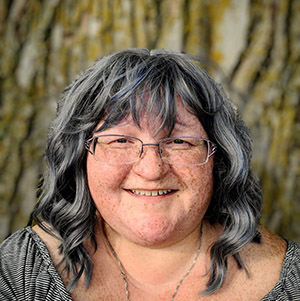
The indie grind in Hollywood is a blood sport, and Allison Volk is playing for keeps. I’m sitting here with a digital screener of her latest feature, *Deany Bean is Dead*, and it is immediately clear that Volk is not interested in the polished, sanitised versions of womanhood that the major studios keep trying to sell us. She is a writer, actor and producer who has spent the pandemic era refusing to sit still. While the rest of the industry was busy trying to figure out how to film through Plexiglass, Volk was pushing a dark comedy into the VOD wild with a level of grit that suggests she’s been waiting for this moment her entire life.
She carries herself with a certain poise that masks the chaotic energy required to get an independent film off the ground. But don't let the grace fool you. We caught up with the California filmmaker to get a taste of what’s going on in Hollywood and to find out about the murder and comedy of *Deany Bean*.
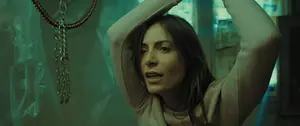
The film itself is a tightrope walk. It’s the kind of project that lives or dies on its tone. I asked her to break down the elevator pitch for the uninitiated. "Deany Bean is Dead is a dark comedy with romance about a woman who tries to win back her ex-boyfriend at his engagement party without revealing that her freshly strangled boss is in the trunk of her car outside," Volk says. It’s a premise that feels like a fever dream, blending the mundane desperation of a breakup with the high-stakes absurdity of a homicide.
But the inspiration for this particular brand of madness didn't come from a police blotter. It came from the internal wreckage of a bad season of the soul. I had to ask if there was a real-life boss she wanted to take out, or if this was just the ghost of an ex-boyfriend past.
"Who hasn’t? Just kidding," she jokes, though there’s a sharp edge to the humour. "This was not written about a specific person. It was more like I wrote the script after I went through a really challenging period of time, it was about three months where I just was plagued with this intense heartbreak, and self-doubt, and really feeling jealousy and all these dark emotions that I think have always been there, but I never truly faced them. This period of time I went through, I dove deep and I felt all the feelings, and I felt a little crazy sometimes, but when I came out on the other side I really felt more whole as a person. I realized that I think a lot of us have these really strong emotions that are shut down by our culture. We aren’t really allowed to feel those deep, deep, dark emotions. I wanted to write a script about a woman who gets to feel those feelings, and she has the whole spectrum of the experience where people tell her that she’s crazy and she knows she’s not, but at the same time she’s taking these really extreme actions, and that sets us up for some nice comedy."
Writing those extreme emotions is a high-wire act. If you go too dark, you lose the audience; too light, and the stakes vanish. Volk seems to find the funny in the nihilism of it all.
"I think so," she notes when I ask if the darker stuff is harder to pen than the jokes. "It’s challenging to dive in there, but for me it’s also impossible not to make it funny. I just feel like we all take life so seriously, and the truth is that you live and then you’re going to die, and maybe it doesn’t matter anyway, so we should just take it a little lighter. That’s my outlook, so it’s hard for me not to make it a little bit funny."
The film is out now, circulating through the digital ether. Most creators reach a point where they can’t stand to look at their own work anymore, but Volk is still engaged with the evolution of the piece.
"Yeah, I think I probably will," she says regarding whether she’ll sit down for another viewing. "We got a new score recently, and so that makes a big difference. I have family members who haven’t seen it yet, they’re really eager to watch it. I have a feeling I’ll end up sitting down with some people and watching the film again. I’ve seen it a million times at this point."
There is a specific kind of torture in watching yourself on a screen, especially when you’re the one who wrote the lines and paid the bills. It’s a dual perspective—part artist, part auditor.
"It’s a little bit of both," she admits. "I definitely have moments where I can just watch for fun, and you even kind of forget that it’s you sometimes when you’re watching, or you’re just really appreciating the other cast members performances, that’s fun. I definitely have gone through phases where I think, because I’ve been living with this movie for three years now, 'Oh my God, Allison, why did you do that?' And just think it was such an eyesore, and then a year goes by and it’s like, 'Oh, that’s not such a big deal. Why was I so upset about that?' It’s so subjective, you can never clearly see yourself or see yourself as other people see you. It’s really an interesting thing."
Volk didn’t just land the lead role by accident. This was a calculated move from the jump, born out of a creative shorthand with her director, Mikael Kreuzriegler.
"I was definitely writing it for myself," she explains. "I always knew that I was going to play the lead, and the reason it came about like that is because Mikael Kreuzriegler, the director, he and I partnered on several short films before we made a feature. I always wrote and acted, and he always directed. That was kind of our tacit agreement going into this whole project, so I already knew I was going to play that role."
The film has a distinct visual language. It feels voyeuristic, almost like we’re intruding on a private breakdown. It’s a documentary-style approach that keeps the audience off-balance.
One thing I’ve really deeply learned is how badly I want to be in creative control because on a project like that you just don’t have any control. ...I found that frustrating, which was a great thing to learn about myself because now I know that I really enjoy being at the helm. I really like getting to make the decisions.
"That was a choice that Mikael made, and I think it came off really nicely because he wanted the audience to really live in Deany’s world," Volk says. "You’ll notice when you watch the film, she’s sneaking around a lot, she’s in places where she’s not supposed to be, and the camera work really reflects that. A lot of conversations are witnessed by Deany by the camera peering around the corner, and you can kind of make it out. So very much we’re in Deany’s world, we feel her perspective very strongly through the whole film."
The pandemic has been a thief for many in the arts, stealing the physical presence of the set. While Volk can still hammer away at a keyboard, the loss of the performance aspect is a visible itch.
"Well, I can write during the pandemic, so I won’t say that I miss that because I have been writing a lot, but I do miss acting. I really miss it. Being on the Deany set was just so fulfilling and so much fun, but I do miss it," she says.
And despite the multi-hyphenate lifestyle, she’s very clear about where her foundation lies. "I think that I am a writer to the core. That’s the truth. I don’t think anything could ever stop me from writing, but there are things that could probably stop me from doing the other things. It’s all about the writing for me."
Short films have been her testing ground for years. They are the sketches that lead to the oil painting.
"I like short films. They are a nice way to test out a character or an idea or a genre without diving in headstrong to a feature which takes significantly more commitment. Short films are such a great way, especially now since we all have this technology in our pockets on our phone, to test things out and try stuff. It’s definitely a medium that people should be using and experimenting with. So yes, I guess I do have a passion for short films."
The transition to feature-length directing is the next logical step. She’s already laying the groundwork for the next project, moving from the actor-writer lane into a more authoritative role.
"Yes! I’m working on a project right now, which I cannot share at the moment, but I’ll just tell you I have a feature film script that I’m putting together all the pieces right now. I would like to direct it, and I wrote the script, and I’m hoping that we’ll be shooting next summer. So, fingers crossed."
We shifted gears to her theatrical roots. She founded the City Shakespeare Company, a move that was as much about conquering fear as it was about art. It turns out even professional actors get the shakes when it comes to the Bard.
"I’ve always really loved Shakespeare, but I felt intimidated about it as an actor, from an actor’s perspective. I felt intimidated to do Shakespeare when I first moved to Los Angeles, and I think it was because I had an acting teacher in college who was super intense and very harsh about Shakespeare, so I got this little knot of fear in myself about it. When I met Brooke Bishop, she’s the person I co-founded the company with, she’s a Shakespeare director and she said, 'I love Shakespeare. I’ve always wanted to direct Taming of the Shrew.' And I said, 'I love that play, but I’ve never had the opportunity or the guts to be in it.' We kind of looked at each other and we were like, 'Oh my God, we need to do this.' So, we started producing plays and we were very prolific. We got a ton of stuff done with some really fabulous actors in Los Angeles. We were based in Santa Monica for a couple of years, I can’t remember exactly how long, maybe three years? I’m not sure, but we got a lot done. It was really fun. It was quite a whirlwind."
The stage might be on the back burner for now, but the influence remains. "I’m not sure," she says about returning to theatre management. "My husband is a really fantastic theatre actor. He does well on screen too, but at the moment I’m more interested in working on film projects, but I could definitely see doing more theatre in the future."
Shakespeare’s DNA is surprisingly present in the dark, bloody world of *Deany Bean*. The tropes of the 16th century still work for a reason.
"It’s definitely got to be the language. He expresses the inexpressible in new, innovative ways. They’re not new anymore, but they are timeless, like you said," she explains. "Oh yeah, definitely. Some of the hallmarks of Shakespearian comedy are mistaken identity, people in disguise, mistakes or miscommunications that cause huge ripple effects, and you’ll see plenty of that in Deany. There’s a lot of miscommunication, and mistaken identities. That’s one of my favorite things to play with."
But Volk isn't just an indie darling. She’s seen the belly of the beast. Working on a massive Disney production like *The Lone Ranger* provided a stark contrast to the world of low-budget filmmaking.
"Being on that set was kind of like being in a dream because it was just so unlike anything I’ve ever experienced. The grandeur of it was astonishing. It was huge. It was for sure the most massive set I have ever been on, and the amount of time they put in, the amount of money, the amount of everything, it was like... I don’t think I’m doing a good job describing it, but it was the biggest thing I’ve ever seen. I showed up on set one day and they were filming at the Santa Anita racetrack in the parking lot, and the size of a building there was a giant green screen that was a tall and as wide as a building, and it was behind this train car set where they were going to have a horse run through. There was a bunch of broken glass that they had already broken that day before I got there, it was just beyond. The size was just huge, but I guess that’s Disney and they put a lot into their projects, which is really fantastic to witness."
And yet, all that money doesn't buy creative satisfaction. For Volk, the blockbuster experience was a lesson in what she didn't want: to be a cog in a machine.
"One thing I’ve really deeply learned is how badly I want to be in creative control because on a project like that you just don’t have any control. It’s mostly, 'Hey, go wait in your trailer, and get your costume on, and go to make up, and then just wait.' And you have no idea what’s happening, and you have no idea when you’re going to get to go on, and you have no idea what it looks like on the monitor. I found that frustrating, which was a great thing to learn about myself because now I know that I really enjoy being at the helm. I wouldn’t say no to another Disney project, that’s for sure, but I really like getting to make the decisions."
That drive for control started early. Her first paid gig was a bizarre introduction to the industry, involving North Hollywood locations and paternity tests.
"My first paid gig was a non-union, independent commercial, and I got it because I auditioned, but they said I was too young. On the day of the shoot, the woman who was supposed to play the character that I auditioned for didn’t show up, so they called me totally frantic and it just happened that they were shooting not far from where I was living in North Hollywood. I was like, 'Oh my God, yes!' I showed up and it turned out that it was a little bit of a strange commercial for this product where it was a home DNA test kit specifically to determine paternity. The theme was I was a mom, and I was in the kitchen with my husband, and there was a kid that we were swabbing his cheek, and we’re all smiling. In my head I’m thinking, 'Oh my God, if this was really happening and I thought there was a chance this kid wasn’t this guy’s, I would be freaking out right now.' The whole thing was just very strange, but it’s a funny story now, and I look back at it and smile at how weird life is."
The spark, however, came before the DNA kits. It was high school theatre—the classic gateway drug.
"I knew I wanted to be an actress when I was 17, and I was a junior in high school, and I had just done a production of Anything Goes. I played Reno Sweeney and it was the most fun I’d ever had in my entire life. I was sitting in my parents’ kitchen and it dawned on me for the first time that there are people who act professionally, and that’s their job. That was the moment when I first had the idea that I wanted to be an actor. When I moved to Los Angeles, I quickly realized that I wasn’t getting access to the types of roles that I personally find to be creatively fulfilling, so I started writing my own stuff, and then I realized that it’s great if you have a script, but who’s going to produce it? So then I started producing my own stuff, and from there it just kind of snowballed. I’ve been making my own films for over 10 years now, and it’s been a lot of fun, very fulfilling."
The tally of her work is growing. "I have made two feature films that I wrote and produced, and maybe seven or eight short films. I can’t remember how many short films I’ve made, but it’s something like that," she says.
As for what’s next, the schedule is at the mercy of the current global situation. But Volk is still gunning for a theatrical experience.
"Next up, I have a short film that I wrote and produced and directed. We were supposed to premiere in August at the Valley Film Festival, but we actually just got word that they’re postponing to November because of COVID concerns. I’m still really hoping that we’ll get to have a theatrical screening at the Valley Film Festival, which will be in North Hollywood in November. I’m really excited about that, and then I have this feature script I’ve been working on. Hopefully we’ll be able to get some financing and get our production all lined up for next summer. That’s what I’m gunning for, so we’ll see.