
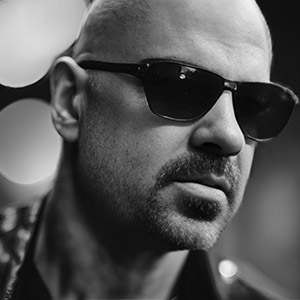
Sitting across from Gregory Zarian, you do not just see an actor who has survived the brutal cycle of daytime soaps and prestige dramas. You see a man who carries the weight of his history in his posture. He is lean, sharp and possesses that specific brand of Los Angeles kinetic energy that suggests he is always five minutes away from a breakthrough. We are talking in a space that feels curated for this exact brand of intensity—all glass, steel and the faint scent of expensive espresso.
Zarian has spent years in the trenches. He has done the time on *Days of Our Lives*, clocked hours on *Westworld* and earned his stripes in award-winning digital dramas like *Venice The Series*. But his latest turn in the video-on-demand thriller *86 Melrose Avenue* feels different. It is less about the artifice of the industry and more about a visceral, almost painful connection to his own lineage.
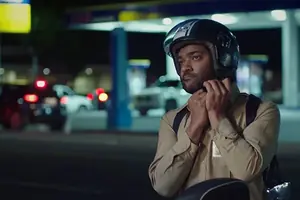
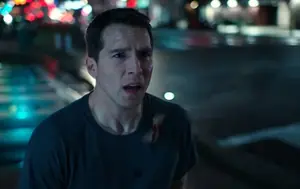
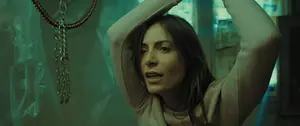
The film itself is a claustrophobic exercise in tension. It follows an ex-marine grappling with untreated PTSD who decides to take an art gallery hostage. It is the kind of indie project that could easily slide into melodrama, but Zarian anchors it. He plays Avi, a character who serves as the emotional lightning rod for the film’s exploration of mortality and the ghosts we carry.
When I ask him to break down the mechanics of the film, he does not give the standard PR fluff. He leans in. "86 Melrose Avenue is a hostage thriller. It is about an ex-Marine who was suffering from PTSD. He storms an art gallery showing and takes all 10 people hostage. It’s about culture clash. It’s about PTSD, mental health and it’s about these people from all walks of life. Given that one moment to make a decision, what would you do if this was the time that your number was up? And it is a thrill ride. You are cheering for one, you are empathetic to the other and you are rooting for the best of humankind. So that’s what it is. It opens on Apr. 20, on all video-on-demand platforms."
The film’s director, Lilly Mata, is not a new name in Zarian’s orbit. In an industry built on fleeting connections and "let's do lunch" promises that never manifest, their partnership is a rarity. It is built on a shared history that predates the current VOD boom.
"The story, the writer, the director and the creator: Lilly Mata. Her and I were together years ago on a different film, and we remained friendly. She reached out to me a couple years ago and said, 'Hey, you know what, I have this script, would you read it?' I loved it, because the movie is a thrill ride in itself, and it’s also about the human experience and what would you do if this happened or how would you approach this if that happened. There’s a character that I ended up getting—his name is Avi. He’s a kid that was expected to show up in life a certain way and wanted to do life differently," Zarian explains.
This idea of "doing life differently" is where the interview stops being about a movie and starts being about the man. Zarian is a twin. His brother, Lawrence, is a well-known lifestyle expert. They are two halves of a creative whole that grew up under the shadow of a father who valued traditional, stable success. In the immigrant experience, the arts are often viewed not as a career, but as a dangerous distraction.
Zarian does not hide the friction that created. "My father wanted his children to show up and do life a certain way. My twin brother Lawrence and I chose to go in different paths and we’re both in the entertainment business. I’m an actor and he’s a lifestyle expert. We also have an older brother who is very much business oriented. My character had to step outside of what was expected and do something different. I stepped outside of what my father expected of me and did something different. And here I am talking about a movie that I’m very passionate about."
There is a technical proficiency to Zarian’s acting that comes from this internal conflict. He does not just "play" a role; he colonizes it with his own truths. Some critics might call this Method, but it feels more like a survival tactic. He uses his own skin to bridge the gap between the script and the screen.
"I found that it made more sense. I believe in every part in every character that I play. There is so much of me going forward, making my storytelling authentic. The name is different, the location is different, however, I believe authentic acting is when you bring truth to who you are—just the name, statistics and facts are very different," he says.
He continues, unpacking the psyche of his character, Avi, with a surgical precision. "I believe that we boys were given this mission to make a name for ourselves. Avi, I believe, chose to make a name for himself. Ultimately, we want to make our parents proud, so I am very much part of the character that I play, although I would have made different choices. We are really every bit to every character that we play."
The film’s intensity is not just for show. It deals with the "inner demons" that most people spend their lives trying to drown out. For Zarian, those demons have names and faces. They are the voices of generations past, the expectations of an immigrant father who saw the American Dream as a rigid path of labour and logic.
"It does deal with inner demons, trying to make dad proud. My father came to this country wanting his boys to do X, Y and Z. I want ABC—I chose differently. There are generations and generations of people before my character, Avi, that just wanted it to look a certain way and my character didn’t want to go on the path that was hopefully decided for him. So it is a struggle, and a fight to make for me, as Avi, to make my own choices, create my own way and also at the end of the day, make my dad proud," he notes.
But there is a heartbreaking resolution to this narrative. Zarian tells the story of his father’s final days with a vulnerability that you rarely see in a press junket. It is the kind of story that grounds the artifice of Hollywood in the dirt of real life.
My character had to step outside of what was expected, and do something different. I stepped outside of what my father expected of me and did something different. And here I am talking about a movie that I’m very passionate about.
"My father passed away eight years ago, and he had a dance with the industry because he saw his son go to audition and not get everything. He considered my career a pipe dream. My older brother was successful and my twin brother was on a lot of TV shows talking about lifestyle and fashion and I was pounding the pavement," Zarian recalls.
Then came the breakthrough. Not just for the career, but for the relationship. "The beautiful part of that was when he was in the hospital, I had a great guest spot on the TV series The Mentalist, and I said 'Pop, do you want me to watch it with you?' And he said, 'No, no go home.' So he had his nurses around him. He watched that hour of TV, saying I’m proud of my son. So he saw my hope and dreams and my wish come to fruition. What more could someone want? He called me the next morning and said, 'I’m proud of you'."
It is a heavy moment, and Zarian lets it breathe. "All we want at the end of the day is for our parents, friends and siblings to be proud of the path we chose. Now when I think of my dad, I think Pop, I’m making you proud, I love you. And it’s a win win for both."
He then pivots to an anecdote that sounds like something out of a mid-century novel. It is the quintessential immigrant "sink or swim" moment. It defines the grit Zarian brings to every frame of *86 Melrose Avenue*.
"One of the biggest things my dad ever did, because he was an immigrant in this country, was that he came to this country with no money. I was a model and went to Europe, but my father didn’t believe in this career. I lived at home at the time and he said to me: 'There’s one of two things that can happen. One, you can stay in my house, get your degree and get a job, or two, you can move out of my house and move to Europe.' And I moved."
The struggle was real. No safety nets. No parental wire transfers. "I remember calling and saying 'Hey, Dad, you know, I’m in Italy, I’m learning the language, it’s great Pop, but I don’t have any money, I don’t know what to do'. He said 'I love you'. And I said, 'I love you too. Can you send me $1,000?' He said, 'No. What I can do is offer you two things. You can cash in your ticket. And you can come home, and you can go back to school or get a job'."
Zarian looks back on this not with resentment, but with a profound sense of respect. "It was when I heard from my twin that it was the hardest thing he had to say to me, as well as leave my home. He was proud of me because I thought I’m gonna do it and that’s why Avi, my character in the movie, and I feel so mirrored. It doesn’t mean that I’m going to walk my parents’ path. I’m going to take the history, the knowledge and the gift of their love. Come on, how lucky are we that we get to know that our fathers were proud of us?"
The conversation shifts toward the darker themes of the film—specifically PTSD. In an era where "awareness" is often just a hashtag, Zarian and Mata seem intent on showing the jagged edges of the condition. Mata’s own history in Lebanon informs the script, giving it a texture that feels uncomfortably real.
"Here’s what I think is so beautiful about Lily Mata. She took her personal experiences from Lebanon and survived such horrors that she put a lot of her past into a movie—and that’s what is so timely this film. As you know, the art gallery is stormed by an ex-Marine suffering from PTSD. It allowed me to dive more into that conversation with where we are in the world. Almost one in seven adults suffer from mental health. PTSD is mental health; it is mental illness; it is mental distress," Zarian says.
He has the stats memorized. This is not just a script to him; it is a research project. "I’ve done my research. The veterans that served our country from Vietnam, over 30% suffered from PTSD. The movie is based on an ex-Marine, and there are 11 to 20% that are dealing with PTSD as we speak. That’s not even including sexual trauma, sexual past. It is such a cry for help."
The timing of the film’s release, amidst the lingering shadow of the pandemic, is not lost on him. He views the collective trauma of the last year as a universal entry point into the film's themes. "Right now in the world, we are all surviving a global car crash called COVID. We were living our lives and then bam, we stopped. I believe that all of us are suffering from it in one way or another, but we are slowly building the pieces back."
Zarian also reflects on his work in *Venice The Series*, where he tackled the epidemic of bullying. He sees a direct line between the isolation of the lockdown and the rise in digital cruelty. "I was fortunate to be part of a great series last year called Venice: The Series, and my character dealt a lot with bullying. So when we were in lockdown, and I was doing interviews, I got to open up the conversation about bullying and how it is, double fold of an epidemic, especially with most of us living online."
His advice is practical, devoid of the usual celebrity platitudes. "I got to create this great platform of what to do if you’re being bullied—what to say, where to go. Close your computer, get off your phone, talk to your parents, ask if you have a moment to maybe engage with the bully, saying, 'Hey, what is that like for you?' It just means opening up your heart asking more questions and being compassionate to the person right in front of you. And even if you’re not going to address that person, have more empathy."
He draws a parallel to the basic hygiene of the pandemic. "We were taught last year, wear your mask, wash your hand, social distance. A year later, I wash my hands, I still wear my mask. I am above and beyond more kind to that person because I don’t know what they’re suffering from. I have no idea what’s going on in their world. So that’s all I know, and it’s a long answer, but PTSD is someone screaming, please help me. And that just means finding avenues realizing you’re not alone."
Transitioning from the heavy themes of mental illness to the high-concept world of HBO’s *Westworld* might seem like a jarring shift, but for Zarian, it was a career peak. Working on a Jonah Nolan set is a far cry from the shoestring budgets of indie film. It is the machinery of Hollywood at its most efficient and expensive.
"It was like Disneyland in every way possible. Did you watch the original movie? Richard Benjamin, the actor in the movie, and his wife, Paula Prentiss, are friends of ours. When I first got the job, I was able to say, Richard, I am joining season three of the movie that you are a part of. What do you have to say? And he goes, 'Are you a host? Or are you a robot? Don’t tell anybody'."
The experience was more than just a paycheck. It was a validation of his craft. "So I got that advice from him, and I had already worked on a series on the same location, same stage, same group, so the day that I got hired, it was kind of like I came home. The writer/director Jonah Nolan was so generous to me. He brought me back for more, so it was amazing to go to work on one of the biggest shows in the world. Working with Tessa Thompson and Vincent Cassel and everyone else was one of the best gifts. Tessa Thompson was so generous."
He recounts a moment with Thompson that highlights the professionalism at the top of the food chain. "On my very last day, she had a cold, and we had one more wraparound of my character. She came from her dressing room to deliver the same lines back to me that we had already done earlier in the morning for her, because it made it real. Vincent Cassel is a pro too and when you get to work with people that are internationally well known that treat you on the same level, it’s a dream come true."
Zarian does not take the "Disneyland" aspect of his job lightly. "I believe every job I get is Disneyland. On this job, I was in the head of the line every time. They’re filming season four now, and I just keep on thinking how great would it be to come back to work with those amazing people that allowed me to do what I do. It was one of the highlights in my career."
We talk about the longevity of characters in the sci-fi and soap realms. Fans are loyal, and they never forget. Whether it is the *Criminal Minds* crowd or the daytime devotees, Zarian maintains a direct line of communication with his audience.
"Well okay, from your mouth to God’s ears. We all have our fans and I’m grateful for that. I know daytime fans have been phenomenal to me. Up until Westworld, Criminal Minds fans have been so lovely to me. I try to respond to everything and anything because I know that when I reached out to somebody or something, that little fix, that little touch changed everything for me. It made me feel super grateful that I am now part of the story in that world," he says.
He still looks back at his time on *Days of Our Lives* with a sense of wonder. It was the foundation. "You have no idea what God’s plan is and you have no idea what the universe is gonna do here and there. I don’t take any of it for granted. I got to have lunch with some of the people that were part of Days and I got to look them in the eyes and say, 'Thanks you changed my life. And I am forever grateful'. I am still forever in the trenches of learning, honing my craft every day—every day is class to me. What we’re doing right now is class to me."
As we wrap up, I ask about his ink. Tattoos on an actor can be a logistical nightmare in the makeup chair, but for Zarian, they are his personal compass. They are hidden, etched into his left ankle, serving as a private tribute to his origins.
"I have, but here’s the thing about tattoos. I am not sleeved. When somebody says something about my tattoos, I always say you have to find them. They are on my left ankle and they are in script. The first one is the Hindu symbol of Om, which means the breath of God. And underneath it is the Kanji symbol of mom. So the breath of God to mom—right next to it is in Kanji—it’s me having my family with me—all five of us," he explains.
It is a quiet, spiritual end to a conversation that ranged from hostage crises to HBO sets. "My parents have gone on to another adventure and I am proud to be one of the five and I look at my leg often. With my parents being gone, I’m like 'Mama, how are you? What’s happening? What’s going on?' I talk to them all the time and they answer in a beautiful, beautiful way. So that’s where my tattoos are and what they are about."
Zarian is not just playing a character in *86 Melrose Avenue*. He is honouring a history of defiance, love and the complicated pursuit of making a father proud. In a city of facades, that is as real as it gets.
Get Tickets