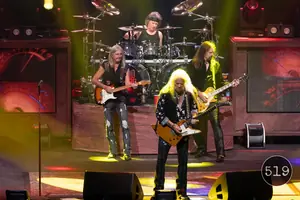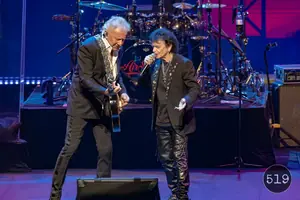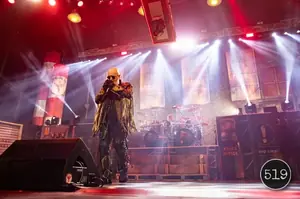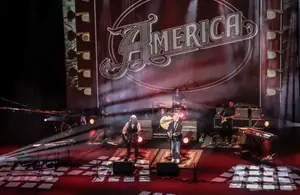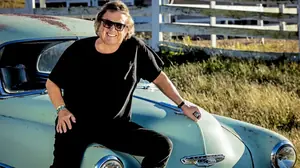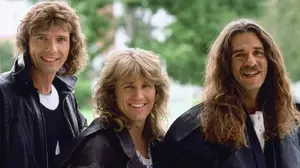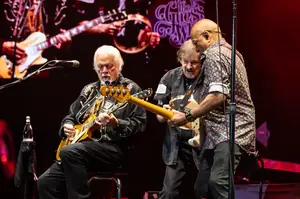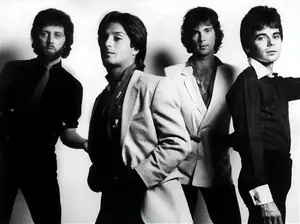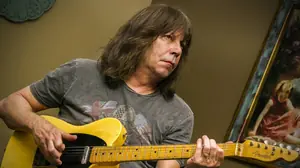
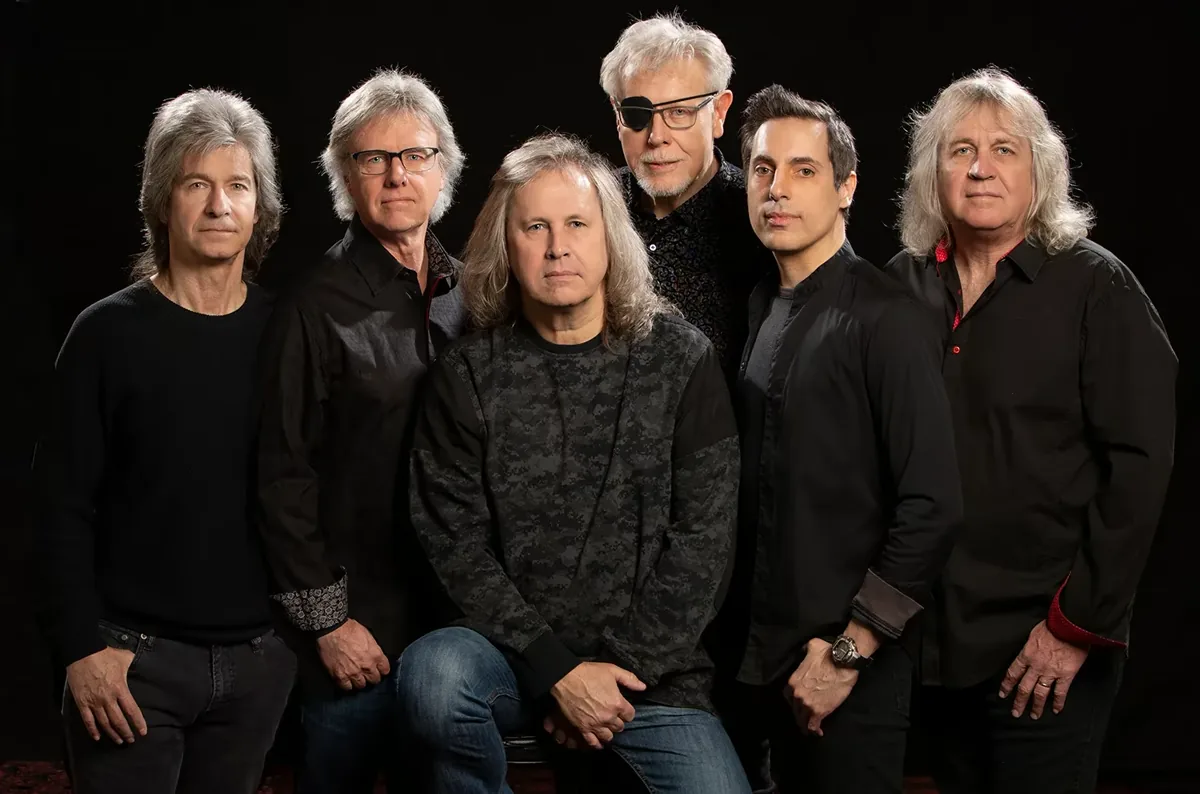
Looking at the raw transcripts from our late 2022 sit-down with Ronnie Platt gives you a real sense of the gravity facing Kansas at the time. The band was staring down the barrel of its 50th anniversary, a milestone most acts only dream of from a garage. But for Platt, the man who’s held the lead vocal spot since 2014, it wasn't about looking back. It was about managing the weight of a legacy while still pushing the train forward.
Platt isn't just a hired gun. He's a lifer, a fan who got the ultimate promotion. And he’s not shy about his roots in the genre. “I've always termed myself as a prog snob,” Platt says, a line that immediately establishes his credentials. “Just infatuated with progressive music, and you know, Kansas at the top of the list along with Yes and Genesis and Rush. God knows how many times I spun those albums.” This isn't corporate speak; it's the language of a kid who wore out the grooves on his vinyl collection.
His connection to the band’s landmark album Leftoverture is visceral and immediate. For him, it was more than just a hit record. It was a perfect storm of vocal arrangement and sophisticated musicality that cut through the noise of the era. He pinpoints the opening of “Carry On Wayward Son” as the hook, but his analysis goes deeper. “Hearing the textures and the chord changes, it wasn't, to me anyway, that one-four-five rock and roll progression,” he explains. “It was such a tasty collection of chord changes.”
That deep-seated respect for the material is what makes his perspective on the band’s 50th-anniversary compilation Another Fork in the Road so compelling. He immediately questions the title’s implication. It’s not about choosing a new path. It’s about continuing down the one paved by founders Phil Ehart and Rich Williams. “I don't know if you would call it a fork in the road, because you think fork in the road, you're gonna go one way or the other,” Platt argues. “Well, I think as far as Kansas is concerned, we're gonna keep going and doing what we're doing.”
That unwavering drive creates its own unique set of problems. How do you distill 50 years of music into a single concert? It’s a logistical and emotional nightmare. Platt admits that crafting a setlist is an exercise in sacrifice. Every song added means another beloved track gets cut. “Everyone in the band has their favorite songs and, you know, wants to play them, but there's just not enough time in a show to do that,” he admits. “And God forbid I made the set list; it would be five hours long.”
The collection itself made a bold choice, sequencing the tracks in reverse chronological order from newest to oldest. It’s a move that forces the listener to appreciate the band's modern output before arriving at the foundational hits. It’s also a nod to their prog-rock peers. Platt notes the similarity to a Rush stage show, a detail that only a true fan would connect.
Perhaps the most fascinating piece of the anniversary puzzle was the band's decision to re-record “Can I Tell You,” the very first song from their 1974 debut album. It was the track that reportedly caught the ear of legendary music mogul Don Kirshner. Platt describes the new version as bringing the raw essence of the original up to date with modern technology without losing its spirit. It was a full-circle moment, recorded piecemeal in home studios, a testament to how much the industry has changed.
Platt offers a candid look at the differences between then and now. The seventies were about capturing lightning in a bottle. “Back then it was pretty much off the cuff. Okay, here's the record button. Let's go. Count it down,” he says. Today it’s a meticulous process where every member is not just a musician but an engineer, obsessing over levels and microphone placement.
This band is just so obsessed with perfection. We we drill and it's it's funny... how many times have we played miracles out of nowhere? And we're still tweaking it in rehearsal.
But this obsession with quality is a double-edged sword. It’s the engine that drives the band’s famously tight live shows, but it can also lead to creative paralysis. “This band is just so obsessed with perfection,” Platt reveals. “We drill, and it's funny... how many times have we played 'Miracles Out of Nowhere'? And we're still tweaking it in rehearsal.” That work ethic is staggering. It speaks to a level of dedication that is almost unheard of after five decades.
The conversation turns to the dangers of that perfectionism. With the infinite possibilities of modern recording, it's easy to tweak a song to death. Platt knowingly references the lore around Steely Dan’s notoriously long sessions for Aja, a period where obsession nearly consumed the project. It’s a very real trap. “It's tough to decide when enough is enough, because you can get to a point where you're overdoing things,” he reflects. “It always helps to listen to things with fresh ears.”
Platt's own journey into Kansas is the stuff of rock and roll fantasy. It wasn't a cattle-call audition or a backroom industry deal. It started with a text message from a friend, Dina, who happens to be the niece of Styx’s Dennis DeYoung, pointing out that Steve Walsh had retired. On a whim, Platt sent a simple Facebook message to guitarist Rich Williams: “Rich, it's Ronnie Platt from Shooting Star. Give me some consideration.”
What followed was a whirlwind. A call from Williams just before a show in Houston. A conversation with Phil Ehart the next day. Then a flight to Atlanta, not for an audition, but for a vibe check. The band had seen him perform. They knew he could sing. They needed to know if he was a guy they could live with on a tour bus.
He invokes the wisdom of Alice Cooper from the documentary Hired Gun to make the point. “You can have the greatest musicians in the world, but you really need guys that everyone's gonna get along with, because you're with these people twenty-four/seven when you're on the road,” Platt says. “I mean, you're literally joined at the hip.” He flew to Atlanta, was there for four hours, and flew home. The next day an email confirmed it: “Congrats. You got the job. The band is pumped.”
That pressure didn’t vanish once he joined. He shares a story from the recording of his first album with the band, The Prelude Implicit, that is both hilarious and terrifying. As he prepared to lay down his final vocal tracks, Ehart offered some friendly advice. “He says, ‘Listen. Just have fun with this. Relax. Have a good time. Everyone's behind you here. Just totally put it out of your mind that there's 2,400,000 people waiting for this right now.’” No pressure at all.
That trial by fire has since produced two studio albums and two live albums, cementing Platt’s place in the band’s history. And as Kansas embarked on its 50th year, the music felt more relevant than ever. The band’s refusal to chase trends has ironically been the key to its survival. They weathered disco, hair metal, and grunge by simply being Kansas.
Platt credits pop culture for a crucial assist. The use of “Dust in the Wind” in the movie Old School and “Carry On Wayward Son” becoming the unofficial theme for the TV show Supernatural introduced their music to entirely new generations. It worked.
“I've actually witnessed our audience get younger,” he says with a hint of amazement. “When I first joined the band, I really didn't see a lot of teenagers or early twenties... and now I see a lot more of that, and that's great. We call that job security.”
It’s a powerful validation. In an industry defined by fleeting moments and shifting tastes, Kansas remains a constant. The band’s sound, much like AC/DC’s, is its identity. They never strayed from the path. And as this conversation from the archives shows, they have no intention of looking for a fork in the road anytime soon.
519 Magazine Archive: We are thrilled to officially unearth the 519 Magazine Digital Vault. This isn't just a re-post; it's a high-fidelity restoration of a pivotal era in music journalism. By pairing original print dates with modern retrospectives, we’re bridging the gap between historical rock-and-roll grit and the lightning-fast performance of today’s web. These stories—once locked in physical print and lost URLs—are now back, fully searchable, and optimized for a new generation of fans.

We are thrilled to officially unearth the 519 Magazine Digital Vault. This isn't just a re-post; it's a high-fidelity restoration of a pivotal era in music journalism. By pairing original print dates with modern retrospectives, we're bridging the gap between historical rock-and-roll grit and the lightning-fast performance of today's web. These stories—once locked in physical print and lost URLs—are now back, fully searchable, and optimized for a new generation of fans.