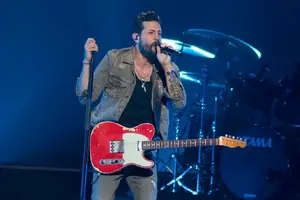
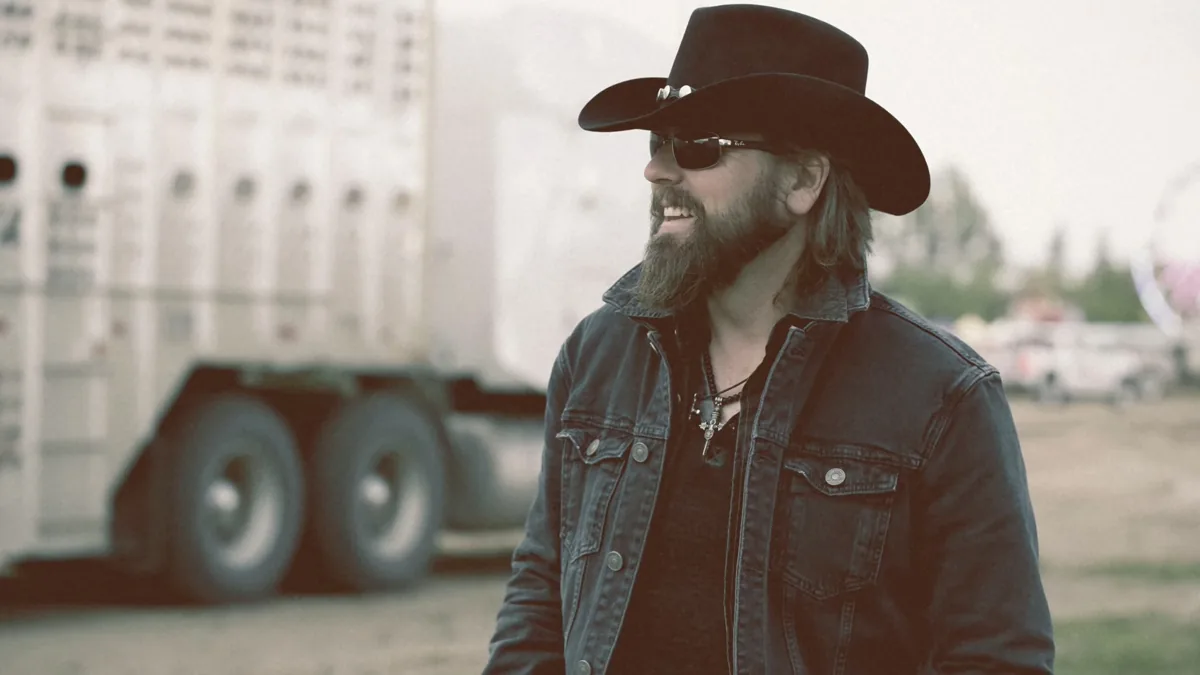
Revisiting the raw transcripts from our Jul. 2022 conversation with Jason McCoy offers a stark reminder of a specific cultural moment. The world was just cracking open again. And for bands like The Roadhammers that meant one thing: hitting the road. Hard. McCoy’s description of the post-pandemic touring landscape wasn’t just about logistics; it was a mission statement for an entire industry clawing its way back. “Now that COVID’s lifted, you know, all the festivals are back,” he says with a palpable sense of relief and urgency. “Everybody’s making hay while the sun shines and getting out there and making some noise.”
That mad dash to make up for lost time resulted in a chaotic schedule that saw the band ping-ponging across the country from Alberta to Saskatchewan and out to the East Coast before a lone summer date in Ontario at the Boot Hill Jamboree. It was a brutal itinerary, but for McCoy it was a necessary evil. And there were perks. A stop in his home province meant a rare night in his own bed, a small comfort in the whirlwind of a touring musician’s life.
But to frame Jason McCoy solely within the loud guitar-heavy context of The Roadhammers is to miss the point of the man entirely. Looking back at his hosting gig for the CMAO Awards reveals a performer of surprising range. He’s genuinely funny, a sharp and self-aware entertainer who understands the rhythm of a live audience far beyond the four-four time of a country song. Where did that come from? “I have no idea,” he admits. “I love, you know, I love entertaining, so it doesn’t, you know, whether it be comedic or just singing or whatever it is.”
That love for pure entertainment was honed long before The Roadhammers ever existed. Around 1998, during his solo run with the album Born Again in Dixieland, he made a pivotal shift from bars to theatres. It was a move that fundamentally altered his approach to performance. The space between the songs became as important as the songs themselves. “I really enjoyed those times in between songs where I would talk to the crowd,” he reflects. “It was almost like I sing songs. The songs were just a reason to get to meet the audience.”
This thirty-year career built on connection has left him with what he calls “second homes in all these little towns.” He remembers the specific theatre in Brockville, the venue in Belleville, and the familiar faces that populate them. This long history as a solo artist laid the essential groundwork for his second act. Without the trust and rapport he built crisscrossing the country for decades, The Roadhammers might have never found their footing.
And the most fascinating part of The Roadhammers’ story is that it was never supposed to happen. It was an accident. At the turn of the millennium, McCoy was at the apex of his solo career, coming off a CCMA Male Vocalist of the Year award for his album Sins, Lies and Angels. But the country music landscape was shifting and he felt creatively unmoored. “I didn’t know what to do solo,” he says. “I didn’t have anything pulling me.”
The solution was a lark, a passion project. “I had this idea to start, you know, to do a tribute band, Trucker songs, because I just love these old LPs I had,” McCoy explains. It was supposed to be a one-off, a fun detour. But then a friend programming CMT got wind of it. In the nascent days of reality television, they saw an angle and decided to follow him around as he put the project together. That simple tribute album morphed into a band, and that band is now a 20-year institution.
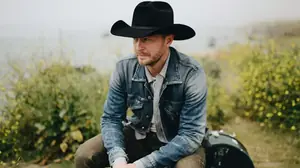
McCoy astutely draws a parallel between his own career trajectory and that of his friend Paul Brandt. Both were established Nashville-era hitmakers who later pivoted, embracing a more rugged blue-collar identity. Brandt had his string of hits like “My Heart Has a History” and “I Do” before reinventing himself with a more grassroots sound. For McCoy, The Roadhammers became that vehicle. He speaks of Brandt with deep respect, calling him an artist with a “great compass” and someone he often turns to for advice.
We're we're almost the tame guys, you know, and we're talking about doing an EP, doing another recording, and and we're we're just kicking around all these ideas. It's been, like, a couple of years. And I said, guys, we're just not dangerous anymore. So we gotta get dangerous again.
When The Roadhammers first hit the scene with tracks like “Girl on the Billboard” and “Eastbound and Down,” their sound was genuinely abrasive for mainstream country. They were pushing the envelope, blending Southern rock swagger with country storytelling long before it became the dominant formula in Nashville. “They were kinda rock and country. They were the front edge of that whole thing,” McCoy notes correctly.
But here’s the rub. The genre caught up. By 2022, that aggressive guitar-driven sound was no longer the exception; it was the rule. McCoy points to acts like Brothers Osborne as the new standard-bearers for that muscular country-rock sound. It’s a moment of stark self-awareness from a veteran artist realizing the ground has shifted beneath his feet.
This realization sparked a creative crisis. “We’re almost the tame guys, you know,” he confesses. The band had been kicking around ideas for a new EP for a couple of years with little progress. The breakthrough came from a moment of brutal honesty. “And I said, guys, we’re just not dangerous anymore. So we gotta get dangerous again.” It’s a profound challenge for any legacy act: how do you recapture the fire that made you vital in the first place?
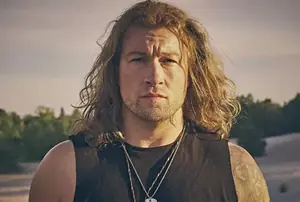
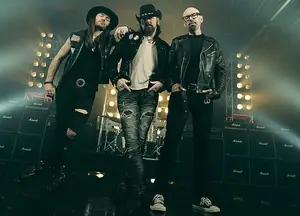
The interviewer’s off-the-cuff description of the band as a “lighter version of Rob Zombie doing country rock” lands perfectly because it captures the band’s almost cartoonish energy. McCoy loves the comparison, breaking down the band’s alchemy with a simple formula. “Clay is the rock star, Chris is the blues master, and I am country as cornbread. So when you put it together, it’s the hammers.” It’s that honest collision of influences that makes it work.
Their EP Back At It became the first step in that quest to get dangerous again, leaning heavily on collaboration. Bringing in Tim Hicks was a no-brainer, a perfect alignment of plaid-clad Ontario rock-country sensibilities. Then there’s Meghan Patrick on the ridiculously fun “Hillbilly Disco,” a title that is pure Roadhammers. McCoy describes her as the quintessential Ontario girl who can “hunt... fish... write a country song” and is “all that and a bag of chips.”
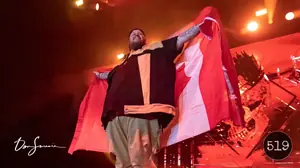
The EP’s centrepiece though is “All My Friends,” a track that serves as a celebration of their community and career. It’s a who’s who of Canadian country featuring Dan Davidson, Cory Marks, and most significantly, Terri Clark. “Terri was the first person to take me on a big tour across the country,” McCoy says, adding that having her on one of their songs feels “extra special.” It’s a beautiful full-circle moment connecting his solo past with the band’s present.
The EP’s very title is a direct product of its time. Written by Clayton Bellamy, Derek Gatien, and Jason Blaine, the song “The Boys Are Back At It” was a defiant anthem for a world emerging from lockdowns. “It just said everything we wanted to say, you know, getting out of the getting out of the pandemic,” McCoy states. “It just it feels like the world needed to say that at that at that time.”
Of course, no Roadhammers project would be complete without a healthy dose of pure unadulterated Canadiana. Enter “Zamboni.” After writing songs about every wheeled vehicle imaginable, McCoy’s friend Jim Paetta, owner of the OHL’s Barrie Colts, pointed out a glaring omission. “And he’s like, 'Well, you haven’t written about a Zamboni.' He’s got a hockey team. I’m like, 'Perfect.'” The result is one of their most beloved tracks, and it even got McCoy a ceremonial license to drive one for the video.
While The Roadhammers remain his primary focus, the conversation hints at a potential resurgence of his solo work. He confirms he’s been writing and exploring new musical partnerships. “A lot of things have changed since Born Again in Dixieland, and I feel this thing coming on,” he teases. It’s clear the creative itch that led to his solo success never fully went away.
The band’s structure is fluid enough to allow for these individual pursuits. McCoy uses a horse racing analogy: you ride the one that pulls ahead but you never lose track of the others. With Clayton Bellamy releasing rock records with his band The Congregation and Chris Byrne constantly in demand as a session player, The Roadhammers functions as a powerful home base for its members’ diverse talents.
They are in it for the long haul. McCoy jokes about taking a “Ross and Rachel break” but insists they’ll always be back. “We’re not I don’t think we’ll ever go away,” he says with conviction. “You know, we’re like the stones... You’re gonna have to get the oxygen out on stage. We’ll be doing it.”
Perhaps the song “Giver” best encapsulates the band’s entire ethos. Co-written with Tim Hicks and Nashville-based Ukrainian producer Pavel Dovgalyuk, it’s a high-energy track born from a caffeine-fueled writing session. Dovgalyuk, a pop-oriented track guy, was baffled by their uniquely Canadian slang. “And we’re like, 'All these Canadian things, like, Giver.' And he’s like, 'What’s Giver?' And boom, we wrote it.” That fusion of down-home authenticity, Nashville polish, and a uniquely Canadian perspective is the secret ingredient. It’s what keeps The Roadhammers running.
519 Magazine Archive: We are thrilled to officially unearth the 519 Magazine Digital Vault. This isn't just a re-post; it's a high-fidelity restoration of a pivotal era in music journalism. By pairing original print dates with modern retrospectives, we’re bridging the gap between historical rock-and-roll grit and the lightning-fast performance of today’s web. These stories—once locked in physical print and lost URLs—are now back, fully searchable, and optimized for a new generation of fans.
Get Tickets

We are thrilled to officially unearth the 519 Magazine Digital Vault. This isn't just a re-post; it's a high-fidelity restoration of a pivotal era in music journalism. By pairing original print dates with modern retrospectives, we're bridging the gap between historical rock-and-roll grit and the lightning-fast performance of today's web. These stories—once locked in physical print and lost URLs—are now back, fully searchable, and optimized for a new generation of fans.