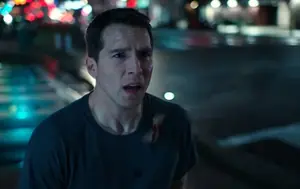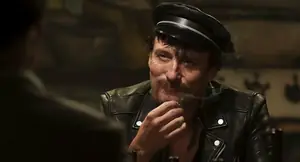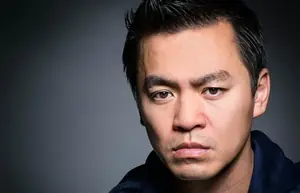

Watching *86 Melrose Avenue* feels like sitting in a pressure cooker with the lid jammed shut. It is an indie thriller that refuses to let the audience breathe, forcing a confrontation between a broken veteran and a group of civilians who thought they were just there for the wine and the art. Langston Fishburne enters this fray not as a hero, but as Dwayne, a man caught in the gears of a situation he never asked for.
The film serves as a grim reflection of the cracks in the American psyche. It follows an ex-marine spiralling through a PTSD-induced breakdown who storms a gallery, taking hostages and stripping away their social veneers. Fishburne, the son of industry titan Laurence Fishburne, plays a courier who happens to be making a drop-off at the worst possible moment.
When we sat down to discuss the project, the younger Fishburne was quick to lay out the stakes of the narrative. He says, "Well, it is the story of an army veteran who is in the middle of a mental breakdown, and he stumbles into this art gallery and, you know, everybody's in the wrong place at the wrong time. I'm a delivery man, and you get to see all of all of that play out over the course of about 95 minutes."
But the role is more than just a bit part in a hostage drama. There is a specific, uncomfortable tension in seeing a Black man trapped in a room with a volatile white veteran and a group of wealthy gallery-goers. It adds a layer of sociological horror to the standard thriller tropes.
Fishburne was acutely aware of this dynamic when he signed on. He says, "Well, when I was approached for the role, they mentioned that I would be the only Black character in an otherwise white situation. And while the gallery is dealing with this broken man, the cops do get called. I thought it was a great chance to explore the relationship that a Black person would have in this situation, you know, there are no safe people for him in this."
This lack of "safe people" is the engine that drives Fishburne’s performance. Dwayne is a man living the "side hustle" reality that defines the modern gig economy. He is invisible until he is a target.
Fishburne explains the internal logic of the character and the baggage he carries into the room. He says, "Dwayne is a courier who is going about his day and he tries to live that side hustle life that so many of us do. What I tried to bring to it was my experience in dealing or being a sort of fish out of water. Nobody there expects him to be around and in every interaction, he's being pushed to the side until he isn't and suddenly, it's expected that he had something to do with this. Even though he didn't and it's very clear that his skin colour is the reason any suspicion is thrown at him."
The film avoids the easy route of giving every character a tragic backstory. While the gunman, Travis, is haunted by the ghosts of combat, Dwayne is haunted by the reality of his environment. His "demons" are not internal; they are systemic.
Fishburne rejects the idea that Dwayne needs a psychological haunting to be compelling. He says, "Dwayne doesn't have inner demons. Dwayne's demons are the world. He is doing his best. He's delivering a package, suddenly and Travis emerges as a threat. The cops emerge as a threat. Even the detectives at the very end when he gets interviewed are, for most of the movie, a threat. He is, reacting to external conflict more so than anything internal."
There is a technical precision to the way Fishburne handles the character’s empathy. Even while being held at gunpoint, Dwayne recognizes the humanity in his captor, a nuance that prevents the film from becoming a one-dimensional "good guy vs bad guy" slog.
He notes the duality of seeing a veteran in crisis. He says, "Dwayne's opinion of Travis is that he can see another man suffering? He feels for him, of course - this other person who's been cast aside by society. But in the moment, while he may have an understanding of where this guy is coming from, he realizes that he is still a danger."
The subject of PTSD is handled with a heavy hand in the script, but Fishburne brings a grounded perspective to the conversation, informed by his own social circles. The reality of veteran reintegration is a recurring theme in American cinema, yet *86 Melrose Avenue* tries to strip away the glamour of the uniform.
Fishburne speaks on the importance of mental health support for those returning from service. He says, "I've had a few friends who've served in the military and they've been fortunate in that their experiences, while difficult, have been a subject that they can talk about, not just with me, but with mental health professionals - and they do what they can to make sure that something like what happens to Travis doesn't get to them. It's important that these veterans are welcomed back into society and not just cast out, as we've seen time and time again."
The production itself was a gauntlet. Shooting a hostage film requires a level of sustained anxiety that can bleed into the actors' real lives. It is a gruelling process that requires a strong rapport behind the scenes to survive the "action" on screen.
Fishburne admits the intensity was a primary draw for him. He says, "So far it is. And that is that is part of the drawn for me - wanting to be a part of it. It is reassuring to know that the art that we're part of is actually shining a light on society and showing things that are difficult. And that needs to be seen, talked about, and exposed."
And to keep from losing their minds during the shoot, the cast had to lean on one another. There is a strange irony in building deep friendships while pretending to be terrified of each other.
He credits the ensemble for keeping the set from becoming toxic. He says, "I was able to get through, thanks to the rest of the cast. We very quickly developed a friendship between all the members of it and we, spend a day being held hostage. We were able to help each other not get into a dark place that we couldn't escape from."
That camaraderie extended even to Dade Elza, the actor playing the erratic gunman. The ability to flip the switch between terror and empathy is what separates the pros from the amateurs.
I think things are changing. It is at times a frustratingly slow process, but I think things are improving little by little every day. ...you can't give up just because there are difficulties like this. So, I see progress and progress is good no matter how slow it is.
Fishburne recalls the relief of the breaks in filming. He says, "Yeah, it was really helpful. And Dade, the actor who plays Travis, he was there with us. And it really helps to have him as well, because, he's there holding gunpoint for hours and hours and having that break. They say cut and you could go over and hug him and realize we're still in this together."
But we have to talk about the name. Being the son of Laurence Fishburne comes with a set of expectations that would crush a lesser performer. Langston, however, seems to have navigated the shadow of the *Matrix* star with a level-headed grace.
He acknowledges his father’s influence while maintaining his own agency. He says, "He very much is. When I was younger, he made it a point not to push me towards acting. He was never shy about it, but he said if it's if it's a thing that I want to do, it's a decision that I had to make on my own. Before I got to acting, I was a dancer and tried all sorts of other things. And once I discovered performance, it drew me in."
The transition from the physical discipline of dance to the emotional discipline of acting happened later than most might expect. It wasn't a childhood dream but a discovery made on the cusp of adulthood.
Fishburne traces his origins back to his late teens. He says, "I would say I was about 17 when I started dancing. And it just really spoke to me. I started off as a classical ballet dancer and did that well into college. About 10 years ago, there was an audition for something and I was healing from an injury that I'd gotten at the time - but I could still walk and I could still move - so I figured why not try it? Why not give acting a go?"
The arts run deep in his DNA, extending beyond just his father. His mother and stepmother provided a support system that was rooted in the reality of the industry, not just the fame.
He reflects on the family connection to performance. He says, "They did. My mother happened to be a dancer when she was young as well. I didn't find that out until I've been in it for 5 or 6 years. She later went to casting and fitness. And my stepmother is also an actress and has really been a big fan and supported me as I've progressed down this road."
Most audiences first caught a glimpse of Fishburne in the Marvel Cinematic Universe. Playing the younger version of his father's character, Bill Foster, in *Ant-Man and the Wasp* was a meta-moment that resonated with fans.
He describes the secretive, high-stakes nature of a Marvel set. He says, "My part was fairly brief, so I only had a few days on set and it being a Marvel movie, they don't tell you too much. It was one of those situations where it's like okay, you're going to be here on this day and we'll tell you what you're going to do just before you do it. It was a lot of fun getting to play the younger version of my father - that was very interesting. I'd always been told how much I look and sound like him, but, it's one of those things you don't really think about until you see it like that."
That brief appearance was enough to trigger the first real taste of public recognition. It is the moment every actor remembers—the transition from being a face in the crowd to being "that guy from the movie."
He recalls a specific encounter in Georgia. He says, "It did. It led to the first time I was actually recognized out in public. I was connecting through a flight in Atlanta and there was this 'Oh, I recognize you. You're in that movie!' Well, yes, thank you."
And like many actors of his generation, Fishburne is a genuine fan of the source material. He isn't just looking for a paycheck in the comic book genre; he's looking for a character with weight.
He confirms his interest in returning to that world. He says, "Absolutely, I am a very big comic book fan and have been for quite some time. If there were a character out there, I would love to have chance at it."
When pressed for a dream role, he doesn't go for the obvious A-list names. He digs into the deeper lore of the Marvel universe, looking for a character that tackles complex social themes.
He points toward a specific 1960s hero. He says, "Oh, there's so many, but The Blue Marvel would be amazing. Adam Brashear is relatively new comic book character written in the last 10-15 years, but he's a super powered 1960s hero. His issue isn't what to do with all this power, it's whether or not people are worth saving. The Blue Marvel is awesome."
This interest in social dynamics isn't limited to fiction. Fishburne’s online presence, though sporadic, reflects a deep pride in his Bahamian heritage and a commitment to the ongoing struggle for racial justice.
He speaks with evident passion about his roots. He says, "I am very proud and beyond overjoyed being black and having a connection to my heritage. My family is from the Bahamas, so there's not only a whole Black America that I can relate to, but I also have 700 Islands and keys of the Bahamas that speak to me in a really powerful way."
In a post-2020 world, the themes of *86 Melrose Avenue*—racism, trauma and the failure of social safety nets—feel more urgent than ever. Fishburne remains a cautious optimist, watching the slow movement of history.
He notes the ebb and flow of progress. He says, "I think things are changing. It is at times a frustratingly slow process, but I think things are improving little by little every day. I remember with Obama's election, it was a huge step. Following that there has been some regression, but you can't give up just because there are difficulties like this. So, I see progress and progress is good no matter how slow it is."
Even as his acting career takes flight, the discipline of his first love—ballet—remains a core part of who he is. It is a foundational skill that informs how he carries himself in a scene.
He admits a lasting preference for the form. He says, "It is it is my favorite. It's what I started with. I've tried others and they all have their time and place. Tap can be fun, ballroom was a joy, but I always come back to ballet."
And while the opportunities to dance on film are rare, they are not non-existent. The physicality of dance translates into a unique presence on camera, a spatial awareness that many actors spend years trying to fake.
He recalls an early project where he got to showcase those skills. He says, "When I had started, one of one of the first projects that I worked on was a web series directed by Jon Avnet, and he actually had me dance. I don't know that it's going to come up again, but that was a lot fun. I'm happy to whenever I can. And it has proved useful in acting - to have an awareness of my body in a way that some other folks just don't when they haven't trained like this."
The journey from a Hallmark set in Detroit to the tension of *86 Melrose Avenue* has been a decade-long process of self-discovery. It was in Detroit that Fishburne first realized that acting wasn't just his father's world—it was his own.
He reflects on that pivotal first day. He says, "The first time I worked on a set goes back about 10 years. It was in Detroit and I was shooting a Hallmark TV movie called 'Have a Little Faith', also directed by Jon Avnet. I was nervous about lines. I performed before, I'm comfortable in front of an audience or in front of a camera, but never had a chance to say things. Once I wrapped my head around that, it was fine. But the rest of it felt really comfortable and it made me feel like an adult. I really felt grown up because it was one of those things that I hadn't acknowledged before. Having seen what my father did for work and having gone to work with him a few days over the years, it's like, 'Oh, right. This is an adult job'. This is what a grown person can do to earn a living. And it rushed in and hit me in that moment."
Ten years later, the nerves have shifted. The anxiety of "saying things" has been replaced by the quiet confidence of a man who knows he belongs in the room, even if he still gets a jolt when addressed by his surname.
He laughs about the adjustment to professional life. He says, "I'm less nervous about my lines. It is still something I stress over. But outside of that I've grown more used to being called Mr. Fishburne and actually realizing that it's me people are talking to. Hey, excuse me Mr. Fishburne is there anything you need? Yes. Thank you. That's me. Right. Got it."
Despite his frequent work in Detroit, Fishburne has yet to cross the border into Windsor. It’s a common story for actors working in the Motor City—the proximity of Canada is often a surprise.
He admits his lack of geographical awareness during those early shoots. He says, "I have not made the trip over. And oddly enough, I've worked in Detroit a fair amount. I think I've shot four or five different projects there and I had no idea how close you guys were the first time I went. I was like, I know Canada's close and everone was saying 'No, no, it's there. Just over there'."
As the industry begins to churn again following the global shutdowns of the previous year, Fishburne is looking toward a busy 2021. With a recurring role on the horizon and a slate of auditions, the "side hustle" life of Dwayne is firmly in the rearview mirror.
He looks forward to the next chapter with anticipation. He says, "Whoo, that is a great question. I am excited to find out as well. I've got a recurring role on a show that I'm not at liberty to discuss right now, but I'm looking forward to when I can talk about it. And you know, back at the grind now that things are starting to open up. I'm looking forward to auditioning more and getting back on set."
*86 Melrose Avenue* was released on Apr. 20 and is available on most major video-on-demand services. It is a film that doesn't offer easy answers, but in Langston Fishburne, it finds a steady hand to guide us through the chaos.
Get Tickets