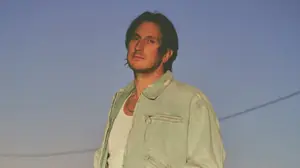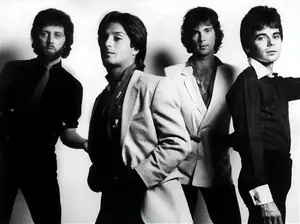


Sitting across from Andy Kim, you do not just see a Montreal-born songwriter who conquered the Billboard charts. You see the last of a breed. Kim carries that specific Brill Building energy, a mixture of sharp professional polish and an almost childlike reverence for the three-minute pop single. It is Oct. 24, and we are looking back at a half-century of a song that redefined the "bubblegum" genre, a track that arguably shouldn't have worked but became the definitive sound of 1969.
In a year defined by the mud of Woodstock and the grim shadow of the Vietnam War, a group of fictional teenagers from Riverdale provided the escape hatch. Kim, alongside the legendary Jeff Barry, penned a track for a comic book band called The Archies. The result was "Sugar, Sugar," a song that spent four weeks at the top of the charts and became Billboard’s Record of the Year. It outperformed the Beatles. It outperformed the Stones. And yet, it started as a gig for ink-and-paper characters.
I asked Kim what he recalls about the genesis of the track and why the vibe was so relentlessly upbeat. Kim says, "It was basically a moment in time where I felt like you’re given an opportunity to write for comic book characters. I never thought about it in any other form. Usually when you write for a band, or you write for an artist, you get to know the artist, you get to know them, you get a feel for their range. You’re writing a song thinking about how to help their career. This was, I grew up with, as most of my friends did, with Archie Comics and a whole bunch of comic books. It was a time to just kind of be free form. You need to understand that you’re talking to me now 50 years after the fact. When it really happened, it just happened pretty quick. There was no thought. I’ve always said I never take a bow for inspiration, and that was really an incredible moment of inspiration."
There is a technical brilliance in that "free form" approach. When you are writing for a real person, you are limited by their ego, their range, and their public image. But writing for Archie, Betty, and Veronica? That is pure pop architecture. You are building a world from scratch. Kim and Barry were not just writing a song; they were engineering a hit that had to live in the imagination of a television audience.
The recording process itself was a relic of a bygone industry standard. Back then, the studio was a factory, albeit a highly creative one. You did not have months to "find the vibe" in a multi-million dollar lockout. You had three hours. You either captured the lightning or you went home.
Kim remembers the friction of those sessions vividly. Kim says, "The recording session was fun. I love being in the studio and I love recording sessions. Recording sessions are different today than they were then. Then they were in clips of three hours. You were either in from 10 am to 1, from 2 to 5, or 7 to 10. This one here was just kind of... it got off to a funky start because nobody really had what one would call, we weren’t in the pocket yet. It just didn’t have a groove going to it. The genius of Jeff Barry, who’s been my songwriting mentor and co-writer, he was also the producer. We kind of looked at each other and took a break, and I kind of played him what was on my cassette player. When we wrote the song, I recorded everything. Everything sounded so great, I had this great cassette player that made me sound like I was the greatest guitar player in the world and the best singer in the world. It had some kind of condenser to it that I just loved the sound of it."
It was basically a moment in time where I felt you’re given an opportunity to write for comic book characters. I never thought about it in any other form. ...It was a time to just be free form. ...When it really happened, it just happened pretty quick. There was no thought. I’ve always said I never take a bow for inspiration, and that was really an incredible moment of inspiration.
This is where the "Information Gain" kicks in for the gearheads. That cassette player wasn't just a recording device; it was a filter that provided the essential grit. Pop music often fails when it becomes too sterile. The struggle to move from the raw, distorted energy of a demo to the polished finality of a master tape is where most hits are lost.
Kim continues the story of that pivotal break. Kim says, "We took this break and realized, oh yeah, that’s really... we had captured the sound when we were writing it. It was just a moment in time of inspiration. Sometimes when you’re inspired to do something and you do it, I think, at least for me, you have to now learn it. You’ve got to take the time to say, oh, that’s how I played this. That’s how I sang this. We just went back to square one and we kind of recreated, not so much to demo, because it just had guitar, vocals, and Jeff playing percussion in the writing room. But as soon as we went back to the idea of what the demo sounded like and the spirit of it, the record came together. And what a record it was. I was really excited about the song to begin with. To actually make the record is a different story."
The brilliance of "Sugar, Sugar" lies in its deceptive simplicity. It is a song built on a foundation of handclaps, a driving organ line, and a vocal hook that refuses to leave your cranium. But the industry was skeptical. In 1969, the world was heavy. Pop music was supposed to be getting "important."
I pushed Kim on why this specific brand of optimism resonates across generations while other "meaningful" tracks from that era have curdled into period pieces. Kim says, "It’s hard to ask me because I just love the sound of the words colliding, the melody, just on a personal level. Here’s the truth. The truth is, on May 24, 1969, Baby I Love You, a song that I recorded, hit the charts. On that same day, May 24, 1969, Sugar, Sugar was released, but didn’t make the charts for two months. Radio didn’t want to play it because it was really the kind of comic book that came to life on television. I think they were after songs with a little more meaning, and the fact that they played The Monkees and then stopped playing The Monkees because The Monkees started to kind of break up for a lot of reasons. I think that there was an issue, especially when you look at what was happening. We were going to the moon. The Vietnam War was raging. There was Woodstock. There was the Sharon Tate murders. There was Beatles breaking up, their last concert on the roof. There was so many things going on that were really meaningful, and I think radio thought that comic book characters would not be meaningful on the radio. That’s just me thinking, talking to you right now."
It is a valid artistic critique of the era’s gatekeepers. Radio programmers often mistake "gravity" for "quality." They wanted the grit of the counter-culture, yet the public wanted the sweetness of Riverdale. The tension between those two worlds is what makes the 1969 charts so fascinating. You had the Manson murders on one side and "Sugar, Sugar" on the other.
But the public eventually won out. It only took one spark to set the world on fire. Kim recalls the moment the tide turned. Kim says, "I think about the fact that it took just one spin from a radio station in San Francisco, and it ignited, I guess it was just lightning in a bottle. It traveled all over the world. I think a better answer comes from the people that I sing the song to in concerts. Everybody sings the song. I start with the word, 'Sugar,' and that’s it. It becomes an... I don’t know, just kind of a big, big choir singing the song. It’s really just filled with love, happiness, naivety. I think if you did a survey as to why people really like it, I think they’ll have a better answer than I have. I didn’t even know if people were going to like it when it came out."
Watching Kim discuss this today, you realize he isn't just a songwriter; he is the custodian of a specific kind of joy. When he performs, the audience isn't just listening to a 50-year-old hit. They are returning to a state of "naivety" that the modern world has largely beaten out of us.
However, the physical history of that era is surprisingly fragile. We live in an age of digital hoarding, but the 1960s were disposable. Pop was a commodity, something to be consumed and thrown away. Records were printed on cereal boxes. Promo items were tossed in the bin.
When I asked Kim if he still held onto the physical artifacts of his peak-chart years, his answer was a sobering reminder of how little we value the present while we are living in it. Kim says, "I used to, but I come from a time when I didn’t think anything would mean anything. Now I’m trying to find Andy Kim items that I don’t have. I do have the gold record for Sugar, Sugar and Jingle Jangle, and some stuff. A lot of that stuff went by the wayside. I wish I’d have kept the cereal box cutout where you could cut out the 45 and you can play it. That would have been really cool. Those are just memories now."
And that is the crux of the Andy Kim story. He is a man who helped create the biggest record of 1969, a song that defined "meaningless" pop, only to watch it become one of the most meaningful cultural touchstones of the century. He may have lost the cereal boxes, but he kept the melody. In the end, that is all that matters. The "Sugar, Sugar" legacy is not found in a museum; it is found in the way a room full of strangers still lights up when they hear that first organ trill. It is a sugary, sticky, perfect piece of Canadian music history that refuses to dissolve.