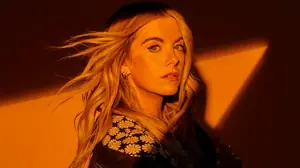

Sitting across a Zoom window from Brittany Kennell, you don't see the polished, sanitized veneer of a reality television product. You see a songwriter who has survived the Nashville machine and the high-pressure cooker of NBC’s *The Voice* with her soul intact. She is currently anchored in Montreal, a city not exactly known as a country music hotbed, but she is proving that the genre’s heart beats just as loudly in Quebec as it does in Tennessee.
The "first Canadian on *The Voice*" tag is a heavy mantle to carry. It’s a trivia note that usually defines a career, often trapping artists in a loop of singing other people’s hits. But Kennell is ready to bury that narrative. Her debut album, *I Ain't a Saint*, is a sharp, intentional pivot toward authenticity. It’s a record that smells like woodsmoke and expensive whiskey, balancing the radio-ready polish of Southwestern Ontario pals like The Reklaws with a grit that feels entirely her own.
We caught up with Kennell to discuss the long road to this debut. The conversation moved fast, much like her career trajectory since returning north of the border. When asked about the record finally hitting the light of day, she leans into the frame with a sense of relief.
"Yeah, it just came out. We’ve been working on it for the last two years. I’m super grateful for all the reception that we’ve had with the album and just getting to do it in the first place," Kennell says. "Initially, it started off as singles and it was an EP, and then I think the pandemic kind of prolonged everything enough to the point where I was like, well, I think we have an album. So, it’s for sure a very special album for me just being that it’s my first one and then also just getting to create it from Montreal from home. It’s pretty special for that reason."
There is a specific kind of creative alchemy that happens when a project is forced to sit in the dark for two years. What could have been a fleeting EP became a full-length statement of intent. The title track, "I Ain't a Saint", serves as the thesis statement for the entire project. It’s a refreshing departure from the "good girl" tropes that often plague female-led country radio.
"It’s a good question. I felt that every song on the album dealt with the theme of honesty and mostly for other people. But I felt like it was more important to be honest with yourself first before you can be honest with other people," she explains. "‘I Ain’t a Saint’ was really a nice reflection, and a nice umbrella, to all those songs, to be able to look at myself in the mirror and say, I’m not perfect either. And I’ve made mistakes, I’ve got regrets. I’m not easy to deal with either. When it comes to relationships, I know I can be difficult too and just to really hone into both those things, both sides of the coin, when it comes to being honest with ourselves and relationships."
Sonically, the title track is the record’s North Star. While much of modern country leans into 808s and snap tracks, Kennell leans into the dirt. There is a "B-side Miranda Lambert" energy here that feels earned rather than curated. The production, handled by John Anthony, doesn't shy away from the rough edges.
"Yeah, definitely. I’m glad you picked up on that. First, I wrote it with a guy named Nathan Meckel and we did this over Zoom. Then when I went to record it with John Anthony, initially the track was really slow. It was kind of more of this, B-side Miranda Lambert slower song," she says. "I felt it needed more of a push and more sassiness edge to the song. And at the time, I was also watching a lot of *Yellowstone* and the music in *Yellowstone* was just so raw and edgy, and just really that gritty kind of country. So I felt it could really lend itself to that. So I think that’s where a lot of influences came in production-wise for that song."
But don't mistake this for a concept album. Kennell isn't interested in the "studio mill" approach where 10 tracks are banged out in a week to satisfy a release schedule. She describes the process as a slow-burn evolution, where each song was allowed to find its own pulse before being stitched into the larger fabric of the LP.
"I feel like every song kind of took on its own personality just in the sense that the end goal wasn’t like I went in the studio mill and said okay, we’re working on an album we’re doing a full thing. It was really step by step," she explains. "We started with ‘Eat Drink Remarry’, and then came ‘You Don’t Get Me Stoned’ with each building block of its own. But all the while keeping in mind, at least some sort of cohesiveness. I think it was important for me to at least, if I was going to come up with my debut album, that it stayed in the same vicinity and same sound. Also for me to stay true to my influences, inspirations and to make sure that each song really carried that."
This commitment to her own sonic identity is a hard-won victory. Nashville is a town that loves to tell you who you are before you’ve even tuned your guitar. Kennell spent enough time in those writing rooms to know when she was being steered away from her own instincts.
"I think often and in my own career, I’ve experienced the need to do this because that’s working for so-and-so or I need to try this or I need to write like that. And for once I was able to say, this is what I like, this is why I like this sound, I want that sound on this emotion," she admits. "And so I focused more on that creating rather than what does this need to be? It was more how does this make me feel? Or how do I want this to feel?"
It’s all about the song, bare bones. How does that sound, make people feel just one on one playing it on guitar? ... There’s just something so special about the storytelling of a song and you’re right, it doesn’t matter what genre it is, at the end of the day, it’s just how does it make people feel? Stripped down and bare bones?
The visual identity of the record is just as personal. The cover art, a serene, sunset-drenched shot, feels like a deep breath after a long sprint. It lacks the over-processed gloss of a major label shoot, opting instead for something that feels like a family heirloom.
"Thank you. My sister actually took the cover and does all my photos, she’s my favourite. She’s been taking my picture since the beginning. In the early days and initially we didn’t really know what we wanted for the album cover," Kennell says. "So on a whim, we went out to this lake Cap-Saint-Jacques near our dad’s house during the golden hour sunset and we figured, just keep it simple. Focusing on the colours of the sunset, you see those kind of across all the singles, the pinks, the oranges, the yellows and for me, those colours, represented the chakra that I was in. And I say that in the sense that going through a breakup, this whole album came at that moment, just after the breakup where you realize, I’m okay, and things are gonna be okay. To me those emotions when seen through colours are the pinks, the oranges that sunset, so that’s where that all tied in, but really, my sister and I, when we create, we just go out to have fun and see what comes of it and we just had a great time getting to shoot that album cover."
And that breakup? It’s the engine under the hood of this record. But this isn't a collection of "woe-is-me" ballads. It’s what Kennell calls her "happy breakup album," a distinction that matters in a genre often obsessed with the tragedy of the rearview mirror.
"Yes, this is the breakup, I call it my happy breakup album because there’s a couple of obviously ‘Most Wanted’ and ‘Drunk Lips’, those songs are more of the darker tone when it comes to looking for relationships and finding love," she notes. "But everything else, I went through a pretty big breakup and I took time off from music and from my career and I just decided to focus on happiness and family and achieved goals that were not career related. And I think because I only really started writing music, in that time I dabbled, but I really did take quite a step back from music so it was really only in that period where I finally felt happy with my decision and I got to see everything unravel and unfold to see where that decision took my life and I just didn’t want any more sad breakup songs, I didn’t want to write about how hard or sad it was. I wanted to write about it’s gonna be okay and I wanted to share that message with people because I think it’s important to know during a hard time or a rough road, there’s always that place where you get to that tells you it’s gonna be okay."
One of the standout tracks, "Eat Drink Remarry", tackles a subject rarely explored in the three-chords-and-the-truth world: the success of the second (or third) act. It’s a song that celebrates the resilience of the heart, written with fellow Canadian Emily Reid.
"I actually wrote that with Emily Reid, another Canadian country artist and we wrote it actually quite a while ago and the title idea was from a book and it was such a term that I’d never heard and I thought, there’s so many people out there that have that, even in my own life," she says. "My parents are divorced and have met significant others and a lot of family members, tons of friends, family of people that have gone through divorce and then have remarried and even my grandparents. My grandparents are now remarried 35 years and I think it’s important to share that’s okay. Sometimes it takes first or second or third marriages to meet that one person and that there shouldn’t really be any shame associated with that, it’s just part of life, it’s a chapter and so it was tough in the sense to write because you’re right, it’s not a topic that isn’t really spoken about in songs that often. At the same time, it was easy in the sense to make a joy out of it and then seeing how my grandparents are happily remarried for 35 years and I can’t see them not having found that love again. In a way it was just a nice way to include those love stories for people that it took a couple tries."
Kennell’s songwriting style is methodical. She doesn't just wait for inspiration to strike; she builds "spider webs" of vocabulary. Take "Bought the T-Shirt", a track that takes a tired idiom and breathes new, cynical life into it.
"Yes and no, I think for me it makes it a little bit easier to have some kind of starting point. The way I write, I like to work with a vocabulary, in a spider web kind of way, so if I have my idea and my title for me ‘Bought the T-Shirt’ you hear words like souvenir, suitcase," she explains. "To me it was okay, how do I kind of encompass all these travel vocabularies into play on words for, a relationship that I need to leave in the past. So for me having that starting point is easy. And I think I keep a blind eye to that and it would be more of a catchphrase. I think when people hear it, they’re like, Oh, I know, it gives some sort of familiarity to them. So I think in a way, it’s a thin line - it’s easier for me to have that solid idea. Then how do I make it a little bit different? When people hear it, they’re like, Oh, that’s a neat way to put it. That’s a cool spin on it. So that’s probably more of a challenge when working with a phrase that people know."
This visual, sensory-heavy approach to writing is what separates Kennell from the pack. She isn't just rhyming "truck" with "luck." She is building worlds inside three-minute pop-country structures.
"Yes, 100%. I pull from experiences. So it has to be something that is truthful, something that I’ve lived, or a story that I can somewhat relate to, or understand. Then I visually, not necessarily physically, write out any sort of vision board. But in my mind, when I start to write a song, on my notepad or in my notes, I start with just writing a ton of different vocabulary words that could work within this. And again, how do I turn those words to create something new? How do I personify them? How do I, rhyme them?" she says. "And I find having that spider web of, Okay, well, here’s the idea. What other things can I pull from it? What are they? You know, what metaphors work with it? Which ones can I create from it? And I find diving into all my senses, what does the situation look like? Where and what time zone is it in? Who’s there? What do they look like? What does it smell like? All the visuals and then I can dive into the creative space of the lyrics."
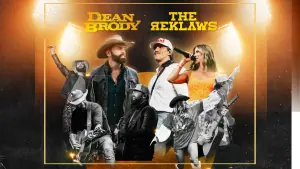
The collaboration on the record is top-tier Canadian talent. "Most Wanted" features The Reklaws and Nate Haller, a Southwestern Ontario powerhouse trio. The connection happened organically, born from the tight-knit Canadian diaspora in Nashville.
"I love them. Well, funny story, I actually met them when I lived in Nashville. Emily Reid, who’s a friend with them as well, was doing a music video, and we all ended up on the music video shoot together, Jenna, Stuart and myself. Then we kind of all kept in touch. We had such a great day filming for her music video," she recalls. "Even a year later, I was taking a trip to Toronto, because I was curious about the scene and wanted to experience it. So I went by myself to Toronto, and I reached out to Jenna and I just said, Hey, I’m coming. I would love to see you guys. And she was like, yeah, let’s write. And so we all wrote and then they brought Nate in as well. They were just so much fun to be around. We ended up writing a song and then going out to do karaoke that night. It was just such a highlight. I mean, they were so welcoming. I guess it’s not that rare, but when you reach out to people to write or hang out, you just never know what people are going to say. They were just open arms welcoming. So yeah, very grateful."
And then, we have to talk about *The Voice*. It’s the elephant in the room for any artist who has walked that stage. For Kennell, the show was less about the fame and more about the technical education of being an entertainer.
"No, I love this and honestly, it’s fun because it’s a good reminder. I always forget that it happened. Especially now, it’s been five years. Every time I think about it, I’m like, Did that actually happen? Or is that real? It was such a cool experience, and I always say at this point, it’s almost more of a turning point for me. I feel like at that point beforehand, I was so focused on writing and a publishing deal and wanting to take that route," she says. "The Voice was like, this is how you perform. This is how you work on performing the song and training went into that. And working with vocal coaches and stage coaches and learning that side of it. For me, I was like, Okay, I really like this. And so I feel like that turned a lot of things for me. Even still after the show, as an artist, I didn’t really know what I wanted to do. So I was exploring a little bit and I started doing some pop stuff and trying to explore that world. But it ultimately that whole story led me back here to Montreal and back into country music. So yeah, looking back on it I feel like it definitely made me grow up a little bit as an artist. I learned a lot and made me really take this career even just a little bit more seriously than I had been already."
That seriousness of craft leads her back to the basics. She cites Bruce Springsteen’s Broadway show as a touchstone—a reminder that a song must hold up when the lights are low and the band is gone.
"Yes. 100%. And I think that’s probably the biggest takeaway for me as a songwriter through my Berklee College, Nashville, and The Voice experience. It’s all about the song, bare bones. How does that sound, make people feel just one on one playing it on guitar? I’m with you on that. I tried to get tickets to The Walter Kerr Theatre in New York, they were insanely expensive, and I could not afford them. But I’ve watched it on Netflix a few times, and I’ve listened to it all the time too," Kennell says. "There’s just something so special about the storytelling of a song and you’re right, it doesn’t matter what genre it is, at the end of the day, it’s just how does it make people feel? Stripped down and bare bones? So yeah, I love that you said that, because that matters for me as a songwriter. And most the time when I’m writing songs and sending them to my manager, my family, it’s just my phone and me, playing it in my apartment and I can always tell if they like it, or if they’re like, yeah, or they don’t answer. But, I feel like that’s really important as a songwriter, if you can play that song with just you and your guitar, or you and your piano and how it resonates."
The ultimate validation of that bare-bones philosophy came recently when Kennell stepped into the circle at the Grand Ole Opry. As the first female Quebecois country artist to do so, the weight of the moment wasn't lost on her. It was a last-minute call that felt like destiny.
"It was very special. To be honest, it was a wild experience, because I was on my way back from a gig on a Tuesday night and driving and my friend Ryan Kinder, who I performed with, just texted me saying, Hey, I know, this is like a little crazy. But do you want to come sing on Saturday night at the Grand Ole Opry, how do you say no to that?" she says. "We pulled some serious, serious strings to be able to pull it off. And the next thing, we were there backstage and getting to work with the Opry band, and then just going out and getting to perform, not to mention, it was one of the first performances where there was an audience. That too, after two years of not having people in the crowd, and then just getting to go out and sing was really special and also just such a historical venue. I think any artists, walking out on stages, would agree that there’s some magic there and I think it humbles you a lot in the way that just the amount of people that have stepped on that stage and been out there. It’s a very humbling moment to be out there."
If there is a critique to be made of *I Ain't a Saint*, it’s that the middle of the record occasionally plays it a bit safe with the tempo. There’s a stretch where the "happy breakup" energy plateaus, and you find yourself wishing for one more "Yellowstone" style gut-punch to break the rhythm. But that’s a minor quibble for a debut this assured. Kennell has done the impossible: she has outgrown the reality TV shadow and emerged as a legitimate voice in the Canadian country landscape.
Brittany Kennell isn't a saint, and she isn't a reality show contestant anymore. She is a storyteller who has finally found her own language. And that is far more interesting than a four-chair turn.
Check out tour dates, music and more at BrittanyKennell.com.
Get Tickets