
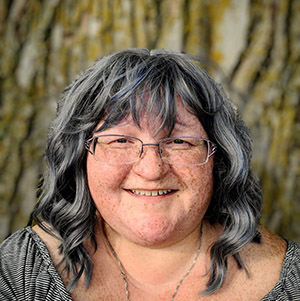
The humidity in Windsor during early July has a way of sticking to you like a bad reputation. Standing near the Riverfront Stage at Bluesfest Windsor, you can feel the heavy air vibrating with the bass from the soundcheck. It is a specific kind of heat, the kind that makes the asphalt on Ouellette Avenue feel soft under your boots. In the middle of this sensory overload stands Jacqui Childs, a woman whose career has been a series of pivots that would make a seasoned politician dizzy. She is back in the city where she once struggled, now rebranded as a high-velocity social media advocate for the festival, moving through the VIP area with the practiced ease of someone who knows exactly where the cameras are.
Childs is a former Windsor resident who occupies a unique space in the Canadian cultural consciousness. To some, she is the face of *Naked News*, the woman who stripped down to deliver the weather and sports with a wink and a shrug. To others, she is a fierce advocate for cannabis and natural living. But today, she is the engine behind the digital buzz of Bluesfest. When she sits down to talk, it is clear that the "influencer" tag sits uncomfortably on her shoulders, like a coat that is two sizes too small. She is sharp, occasionally messy in her delivery and entirely uninterested in the sanitized version of her own history.
"Influencer is not exactly a positive word anymore. It’s kind of a pain in the ass word!" Childs says, leaning in with a bluntness that is refreshing in an era of curated PR speak. "So this is to me, my meaning of a social influencer, not only do I share all sorts of my interests, things I am passionate about. I share them as authentically and openly as possible. But I do study algorithms and time to post and trending hashtags and I really listen to what sort of is hot, happening online and also support locals. So, it’s what’s happening right in my community and share stories and thoughtfulness as well as including a great picture, something that will catch attention and use the trending hashtags and use hashtags that will put my post where I want the people to see it."
The industry often ignores the sheer labour required to maintain a digital presence that feels "effortless." There is a technicality to it that borders on the scientific. It is a grind of data points and engagement metrics that would bore most people to tears. But Childs treats it with a level of professionalism that suggests she is well aware of the volatility of the attention economy.
"Well yeah you know how everyone is taking pictures of their food and they take pictures of their... There is all these weight loss challenges and they are doing whatever," she explains, dismissing the amateur hour of the typical Instagram feed. "Just recently I took a class on it, it’s a compliance class and it’s because I am a cannabis influencer and it’s a lot of rules and regulations. I was taking that course to see where I am breaking laws and where I need to improve and it is a lot more than just posting a picture. You have to be careful. And why am I posting that picture, who is my audience and what is my message and trying to stay on brand but also being really honest and trying to stay as authentic as possible, because I am not actually selling anything other a story."
This "story" she is selling began in the wreckage of a personal life that was coming apart at the seams. Six years ago, Childs was navigating the fallout of a divorce, a period of transition that would have broken most people. Instead of retreating, she stepped into the glare of the spotlight in the most literal way possible.
"Six years ago I started a Facebook page with my husband just to share," Childs says. "We were going through a crazy divorce and some life changes and things and it was just to share sort of our story and what was going on in our life. And I got a job at Naked News in Toronto and the job was, obviously it’s Naked News, I was traveling the world doing news, weather, and sports. And we were nude and that really took off because I was probably 12 to 15 years older than all my colleagues."
There is a definitive critique to be made here about the media's obsession with youth. By being the "older" woman on a platform built on nudity, Childs unintentionally subverted the genre. She was not just a body; she was a narrative.
"For some reason, people really liked that," she recalls. "It was a big deal. It’s not pornography, it is 18-plus, but because it’s a naturalist thing, you are naked. People first of all they were shocked. It was like a shock and awe thing. They followed my adventures and they followed along."
The transition from being a body on screen to being a brand on social media happened almost by accident. It is a rare thing to see a blue check mark appear without a desperate application process, but Childs managed to create enough friction in the digital space that the platforms took notice of her before she took notice of them.
"Once I turned 41, I stopped working for them on camera and started doing social media," she says. "And while I was working there, my Facebook page got verified and I didn’t apply for it and the blue check mark just showed up. I was creating enough noise and enough engagement on my page for someone to notice and for it to become verified. And it was actually once that page became verified is when it became my job. Then people were reaching out to me. Still just over five years in, I have not reached out to anyone, other than Bluesfest Windsor. They all come to me."
Her return to Windsor for Bluesfest, which runs from Jul. 5-13, is more than just a gig. It is a homecoming for a woman who has a complicated relationship with the city’s geography. Last year’s festival was a trial by fire—or rather, a trial by water.
Influencer is not exactly a positive word anymore. It’s kind of a pain in the ass word! So this is to me, my meaning of a social influencer, not only do I share all sorts of my interests, things I am passionate about. I share them as authentically and openly as possible.
"Oh my goodness! First of all, it was pouring rain on that last Sunday, pouring rain and instead of people walking out hundreds of people were walking in!" Childs says, her energy spiking as she describes the scene. "And it wasn’t just spitting, it was torrential, it was a downpour! I have a lot of health issues and I have massive anxiety and depression. And it’s sort of selfish reasons that I do what I do because I love being around the energy of the music and I sort of zone out and just connect to the music, especially outdoor music festivals. I feel great. I crash for days afterwards, but while I’m there I feel great. All the things that are actually wrong with me are not wrong."
There is a raw honesty in her admission of the "crash." The festival circuit is an exhausting marathon of performative joy, and for someone dealing with chronic health issues, it is a high-stakes gamble. But the payoff is the connection to the artists and the atmosphere.
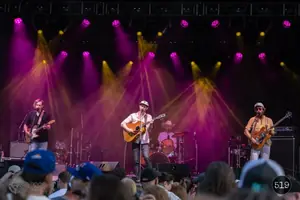
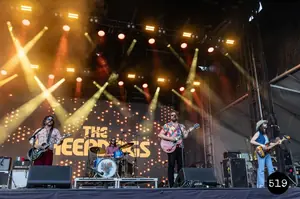
"And Windsor Bluesfest, that weekend was just amazing," she notes. "The year before, I am personal friends with The Sheepdogs, so it was great to be back stage and it was great to take their pictures and it was great to hang out all night. I’ve had a love hate relationship with Windsor over the years. I did live there many years ago for a few years while I was going to school and my parents lived in Detroit. And it was really rough for me. And to go back to Windsor and to be really celebrated, Windsor treats me like VIP and I have an amazing time. I absolutely love Bluesfest! It’s good for my soul!"
Walking through Windsor with Childs is like taking a tour of a ghost map. She remembers the city before the casino, before the gentrification of certain pockets, when the grit was a little more visible.
"Two years ago, I took my now husband, I had some drug and alcohol issues and I wrote about it in my book that became an international best seller, and that was all based in and around Windsor," she says. "I took my now husband, we went back to the spot where I lived, off of Ouellette and it was down near I believe it was Jason's and The Million Dollars and there was the bus station, I used to live right down there. We did a little drive around and there was a restaurant called Plunkett's, I believe, and then there was the sports bar Don Cherry's. I used to hang out at all those places many years ago."
The Windsor of today is a different beast, and Childs seems genuinely impressed by the evolution. The city has managed to pull itself up by its bootstraps, transforming from a border town with a chip on its shoulder into a legitimate entertainment hub.
"It was before the casino when I lived there, so it was a very different time and I love seeing Windsor succeed the way they are now," she says. "They are like the little engine that could, it's fabulous and the entertainment that is coming to the city over the last several years. Now with the casino built up there and you have world class talent and it's amazing. It's really great!"
Despite the confidence she projects in front of a lens, there is a profound disconnect between the Jacqui Childs the world sees and the woman who exists in the quiet of her own home. The "spotlight" is a mask she puts on, a performance that requires a significant amount of psychic energy.
"Well, I will share really briefly I do suffer from extreme anxiety and depression," she admits. "I stay home three or four... five months at a time. And I order my groceries in and I have adult children and my husband that sort of makes things happen. It's funny when I tell people that, and now I speak at conventions and festivals all over the world. I introduce bands at some concerts where there's thousands and thousands of people. When I'm in public it's a whole other... it's almost acting. I put on a whole other persona because I am pretty calm and quiet at home. I do a lot of writing. Our home is very quiet. I spend a lot of quiet time researching and writing whatever I'm actually into at the time. So, I don't know, it definitely is acting. I come alive when I'm in public. And I feed off energy, positive, I mean I feed off negative too unfortunately, but positive energy when you hear the music and the people are excited and there's fresh air. I feel fabulous!"
But the bill for that energy always comes due. The "massive let down" she describes is a common experience for those in the industry, but she articulates it with a visceral frustration.
"Now, the downtime, once it's done you get that huge crash," she says. "Every time I go to a music festival and I'm there for a couple of days it's so exciting and one day turns into the next and then when it ends, I'm exhausted. It's that massive let down. Ugh! It's over!"
The pivot to cannabis advocacy wasn't a lifestyle choice; it was a survival strategy. Her story is a damning indictment of the pharmaceutical industry and a testament to the efficacy of alternative medicine, though she is careful not to frame it as a miracle cure.
"Just over two years ago, my in-laws who are in their 70's, they suggested CBD for my Crohn's," Childs says. "They suggested it and I never sort of looked into the conversation any further. A little while later, my father-in-law suggested it again. On a visit to Canada they brought some, he was tired of sending me the emails and the little links to check it out. And he brought some and he said 'Do me this favor and just try it. It's helping my friends. I think it can help.' And they were also like, 'Who knows maybe it will help with your anxiety'. And at the time I was on about nine pharmaceuticals a day. And I was taking more than I should, I would ask 'What do you got?'. I was really, really abusing my pharmaceuticals."
The transition was brutal. Quitting nine different medications cold turkey is a medical nightmare, and Childs describes the process with a grit that suggests she is still processing the trauma of those weeks.
"I quit cold turkey, which they don't suggest, and started with heavy doses of CBD," she says. "And while I was weaning off my pharmaceuticals, I was very sick. But I wasn't as sick as I thought I was going to be and I was getting better, week two, week three, week four... I was not cured of anything, but I was definitely well. And, I could manage and I hadn't had any Crohn's flare up during this time of transition, it was just withdrawal from all the medication, I'm sure. I was on Wellbutrin, Cipralex, Ativan, Seroquel, Lithium, everything! I used the CBD instead and I started adding tiny bits of THC and it's just over two years now and I haven't touched a pharmaceutical since."
Today, her life is a whirlwind of conventions and public speaking, a far cry from the days of being "numb to life" on a cocktail of pills. She is not the stereotypical "stoner," a fact she finds somewhat hilarious given her history and her lack of grace when it comes to the actual act of smoking.
"I got home at 4:30 in the morning last night, I was at a convention speaking about cannabis the whole weekend and I do that probably three days a week," she says. "I'm more talking about how cannabis has changed my life and I was never, like my husband is for real, a hardcore stoner. I was never ever, I tried it here and there I didn't really like it. I'm not a very good smoker, I choke my head off, I look like Alice Cooper, when I have make-up on. I am not the cool kid; when it got passed to me, I was like 'What the hell!'"
She laughs about the "old school" methods of consumption that she bypassed during her younger years in Windsor, a period when hash was more of a mystery than a medicine.
"Back when I lived in Windsor, remember bottle soaks or hot knives or whatever that was where you had the hash on the knife... I don't know," she recalls. "It was something I was never involved in and I didn't know much about. But then when my life changed for the better and I was getting well and I was managing all my symptoms with just cannabis, which is a plant. I got right on board this, I was like I've lost a lot of my life to farting around with pharmaceuticals and sleeping half my life away and feeling sick and feeling miserable and then being numb to life. For real, that dumb hashtag, living my best life, I'm definitely living my best life thanks to cannabis."
As the sun begins to set over the Detroit skyline, casting a long shadow over the Bluesfest grounds, Childs is back on her phone, documenting the moment. She is a woman who has found a way to turn her own vulnerabilities into a brand, and while the "influencer" label may be a "pain in the ass," she wears it with a definitive sense of purpose. In a city like Windsor, which knows a thing or two about reinvention, Jacqui Childs fits right in.