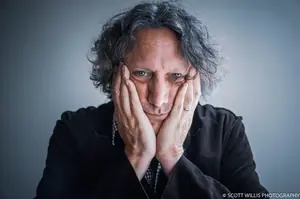

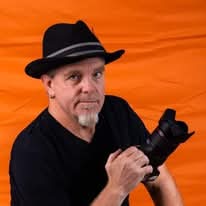
Sitting in a dim corner of a Toronto studio, holding the heavy weight of a fresh vinyl pressing, you realize Christopher Ward is not just a witness to Canadian music history. He is the architect of its most enduring furniture. As the nation’s first VJ, he was the face that launched a thousand teenage obsessions on *City Limits* and MuchMusic. But it was his pen, specifically the one that scribbled the diamond-selling "Black Velvet" for Alannah Myles, that turned him into a global force.
After decades of ghostwriting for icons like Diana Ross and Amanda Marshall, Ward is finally reclaiming his own narrative. His latest project, *Same River Twice*, is more than a comeback; it is a reckoning with his own legacy. We sat down to talk about the new record, the golden age of MuchMusic and a podcast that is currently digitizing the ghosts of rock and roll.
The podcast in question is *Famous Lost Words*, a collaboration with Tom Jokic that feels like a masterclass in archival excavation. Ward speaks of his partner with genuine heat.
"He’s such a great guy. I love working with Tom. He’s just a bundle of positive energy. And he’s resourceful, hard working and fun. He’s been a great guy to do this show with, I’ve loved it. I mean, he’s been getting some new interviews with artists, which have been really cool. He did Greg Keelor from Blue Rodeo on this week’s show and he got Speech from Arrested Development two weeks ago," Ward says.
The origin of the show is pure industry kismet—the kind of thing that only happens at summer parties hosted by radio royalty like Roger Ashby. It was there that the seeds for *Famous Lost Words* were planted.
"The way that our show came about was, we were at a garden party at Roger Ashby’s place, an event that was held for the radio and TV people every summer and he introduced himself and he said, 'I think there’s something that we may need to do together, can we have lunch?' I’m like, sure, and then he pitched me on the idea of the show that became Famous Last Words which was a great idea to use that incredible archive available to him in Bell. I mean, you think about the archives around the world, like places where they’ve been documenting music and all its forms from Elvis to Taylor Swift. There aren’t that many of them," he says.
And there is a certain tragedy in the fragility of these records. We often assume history is permanent, but in the world of magnetic tape, it is a race against decay. Ward knows this better than anyone who spent their formative years in a television booth.
"I know that from my days at Much, because the early stuff was on tape, I don’t even know to what extent they’ve digitized the library there but boy, that’s a rich resource," Ward says.
The podcast thrives on these unearthed moments. One recent episode featured a Peter Gabriel clip that stripped away the art-rock artifice to reveal something deeply human and terrifying. Ward gives all the credit for these deep cuts to Jokic.
"That was phenomenal wasn’t it? Yeah, it’s very revealing. Like that whole thing about when his child got sick, it was chilling for me to listen to. Tom is 100% responsible for curating the clips that we use in the show," he says.
But the show is not just a somber walk through the vaults. Segments like "TJ versus the VJ" and "Songs You Hate to Love" inject a much-needed levity into the proceedings, tapping into the collective guilt of 1970s pop fans.
"Oh, that’s our newest one. We have a few ones. We have one called songs you hate to love, where there’s songs that you know you like them a lot but you’re embarrassed to tell people?" Ward asks. When I mention my own stash of 70s shame, he laughs. "Yeah, well, of course we do, that’s what makes it funny."
As for the trivia battles? Ward admits he might be outmatched by Jokic’s encyclopedic brain.
"Oh, he beats me at all the trivia stuff; in fact, he throws me softballs intentionally just to keep me in the game," he says.
The conversation shifts to *Same River Twice*, which arrived on Sept. 28. It has been 30 years since Ward released his own music. For three decades, he was the man behind the curtain, crafting hits for everyone from teen idols to soul legends. It is a lucrative, exhausting gig that requires a specific kind of ego-suppression.
"I do, Same River Twice is the name of the record and it’s only been three decades since the last one. I’ve been writing songs, mostly for other people, as you may know and I love doing that. It’s a phenomenal gig. I literally would go from writing for Hilary Duff, to writing for Diana Ross and kind of everything in between and it’s very creatively challenging, it’s rewarding, and I love doing it. But I started writing songs that had this really kind of personal quality to them and I thought, well, who’s going to record these and then I went, maybe me. And it seemed far fetched at the time and actually, you know something? I keep forgetting something put me over the edge. Do you know Mark Jordan?" he says.
Jordan, the man behind Rod Stewart’s "Rhythm of My Heart," provided the necessary nudge. He framed the project not as a commercial endeavour, but as a piece of family history.
"Mark is a brilliant songwriter, and a very good friend. He wrote Rhythm of My Heart for Rod Stewart but he also had big hits himself with songs like, Living in Marina Del Rey. Yeah, that’s Mark, anyway, the only reason I tell you is that he came and said, 'Chris, you’ve got to make an album, man.' I’m like, really? He says, 'Yeah, do it for your daughter.' I’m thinking, oh, okay, yeah, he’s kind of has a point here. You know, there’s a legacy factor and you don’t think about that all the time but at a certain point in your life you have to and it just helped to fire me up with purpose, so that’s how this thing got going," Ward says.
Of course, any discussion of Ward’s purpose leads back to "Black Velvet." The song was a tectonic shift in his career. It transformed him from a television personality into a songwriter that the industry took seriously.
"Black Velvet was a game changer for me of course and once you have some success then you’re right, the bell rings and people want to talk to you and they want to write with you. It’s almost like the perception that you have the keys to the kingdom; you figured it out or something. But yeah, I got a lot of opportunities to work with artists that I never in a million years would have because of Black Velvet, so for that I’m always grateful. Yeah, you nailed it," he says.
There was a time... it really felt like the emphasis had changed from people wanting to be artists to wanting to be stars... Now it’s like, you have to take control yourself of your career, you have to be responsible for every tiny little incremental thing that you want to communicate to people. It makes artists more responsible for their own story, I think, which is arguably a good thing.
On the new album, Ward finally takes a crack at his most famous creation. It is a risky move. How do you compete with a vocal performance as definitive as Alannah Myles? You don't. You change the weather of the song entirely.
"I actually thought no, I can’t do that because I can’t possibly compare to Alannah’s version, which is just so phenomenal. And the two guys I’m working with Luke McMaster and Arun Chaturvedi, my co producer said, Oh, no, you’re doing it and I said, 'What?', and they said, 'Yeah, we’ve got to do it.' I thought, well, okay, we’ll try, we’ll go in there and we’ll do it as part of a group of songs and if it doesn’t work, I’m tossing it because I get final say, right? And so then it was a question of what kind of arrangement would we do that would differentiate it from the original? And I thought about how I wrote it as this front porch storyteller, kind of swampy sounding, you know, with the slide, guitar and all of that. I thought, yeah; let’s see if we can capture some of that because that suits me better as a singer anyway, I don’t have the big powerful voice. But I think whatever expressiveness I have in my voice I can bring to a song like Black Velvet, it was really fun and I’m actually proud of it," he says.
The origin of "Black Velvet" is a piece of Canadian lore. It started with a MuchMusic assignment: go to Memphis for the 10th anniversary of the death of Elvis Presley. Ward found himself on a bus, surrounded by a level of devotion that bordered on the occult.
"Oh, yeah. I was sent an assignment by Much Music to go to Memphis, Tennessee. It was the 10th anniversary of Elvis’s death and they wanted me to cover that and they thought that a good way to do that would be to put me on a Greyhound bus with forty Elvis fanatics and a camera person. So we documented their experience of going to Graceland and doing all the things and all the Elvis related events that they have. And the tenth anniversary was a big one of course and that was interesting. They were just the loveliest sweetest people, but their dedication was almost like a religious fervor and that was some of what I tried to capture in the song with a lot of new religion that will bring you to your knees, you know," Ward says.
The actual writing process was a lesson in persistence. It involved a single riff and a lot of patience from anyone within earshot.
"So I was just making notes while I was on that trip and then when I got home, there were the notes and then you know, when I’m writing stuff, musically, I just sit and drive everybody else completely crazy by playing the same riff over and over again, that’s what we songwriters do. I’d be sitting there literally playing that shuffle beat and every once a while I’d put in do da do da baa baa, do da do da baa baa, and gradually, slowly, the song builds, right. And then, you know, started plugging in the lyric and just went from there," he says.
The song has since been covered by everyone, including an 11-year-old Christina Aguilera. Hearing a child tackle such a heavy, sensual lyric is jarring, to say the least.
"Well, there’s one that’s kind of odd. Christina Aguilera covered it when she was eleven. You can find it on YouTube and she just sings her butt off. It’s crazy; she’s wailing on this, it’s just so startling to hear. Well, exactly. Kelly Clarkson did it on our show last year and she did a pretty good take on it," Ward says.
Recording *Same River Twice* presented its own set of hurdles, primarily thanks to the global pandemic. But Ward was adamant about the process. He didn't want the sterile, disconnected feel of digital file-sharing. He wanted the friction of a room.
"COVID challenges, I presume? Yeah, we did, in fact, we were really questioning, can we do this? Can we possibly pull this off? Is this something that’s better left for another day? But you know what? Coincidentally, right about the time that I was planning to come up to Toronto for you a couple of months to do this, the studios reopened for a time. So we booked two months at the Orange Lounge Studios on Queen Street and got a bunch of great players and for them it was like they were coming out of hibernation because everybody’s been recording digitally," he says.
He describes the modern technique—sending parts back and forth across the internet—as an accumulation rather than a collaboration. It was a deal-breaker for him.
"Creative people are always going to be resourceful and find ways of getting things done and that I think has been the case during this terrible time we’ve been through, but for me, I couldn’t work that way. It’s not satisfying creatively and I wouldn’t have bothered to do it. If it was the only way to go, I wouldn’t have made this record. I wanted to do it live, I wanted it to be like they did in Motown, like they did in Muscle Shoals, where they had a house band and you bring great musicianship to it. I wanted to have the players and this was really kind of wacky, I never heard the songs before we did the album. They knew Black Velvet, but aside from that I just taught it to them the day of on acoustic guitar. They started making notes and running it down and then once it felt good, we just hit record, and it was great," he says.
This preference for the organic likely stems from his MuchMusic days, where he rubbed shoulders with the elite. None was more impactful than George Harrison.
"Well, there were celebrity encounters just about every day at Much Music in those times. But there were a couple that were particularly meaningful to me. I remember being pretty jazzed to meet Peter Gabriel, you and I were just talking about him. Undeniably, the day that George Harrison walked into the studio for a live one hour sit down interview. I mean, if that’s not the highlight of your career as an interviewer, you know? It was just a Beatle walking in the room, alive. If you’ve seen many George interviews he’s remarkably open, despite the ridiculous amounts of fame that he experienced and he’s easy going. He’s also kind of tough minded, he doesn’t suffer fools gladly," Ward says.
Interviewing Leonard Cohen was equally daunting. There is a specific fear that comes with meeting a man whose poetry defined your youth.
"You wouldn’t want to make a big misstep talking to him but I remember the same was true with Leonard Cohen. That was maybe the most intimidating interview for me, because I had grown up reading his poetry and it meant so much to me and there’s a real risk, you know, because there’s that old expression, never meet your heroes. In this case, again, he could not have been more genteel and generous with his time. So yeah, those are a couple of big ones," Ward says.
Then there was Tina Turner. Some stars don't just occupy space; they alter it.
"The other one was Tina Turner and I’ve tried to describe the feeling again of when she walked in the room. It’s like she, in the old time star sense, lit up the room. She just illuminated the space. She walked in and she wasn’t pretentious or diva like or anything, but she was royalty, and you knew it and you felt it in her presence. Again just the generosity of spirit. The crew that day, who were all fans, asked if they could have a picture taken with her and she’s like, 'Yeah, sure.' So there’s this picture with about twenty-five people who are all working that day, all clustered around, she’s just beaming in the middle of the shot and that shot got framed and hung on the wall and remained there for years because of the goodwill that she created the day she came," he says.
Ward also recalls his time with Paul McCartney in London. It was 1989, and McCartney was prepping his first tour in over a decade.
"You know what, truer words were never spoken. I think back to some of the lesser stars who were just pains in the butt but McCartney, I interviewed McCartney in London while he was prepping for that 89 Tour which was the first tour he’d done in 12 years. Not only did I get a sit down interview with McCartney, but we got to see the entire show full production lights and sound and the whole deal in this giant sort of airplane hangar sized building. And again, he’s not like George who’s like very sort of quiet and thoughtful, and has a very wry sense of humor. McCartney is very alive, gestures a lot and he’s doing funny voices he’s making jokes. He is the entertainer in the group and he just never lets up. That’s just who he is, you know? As an interviewer it’s fantastic. You don’t have to do anything, just barely open your mouth and ask the question and he carries the day. Obviously it was a pretty big thrill to meet Paul McCartney," Ward says.
Watching the industry shift from the front lines of MuchMusic to the digital age has given Ward a cynical, yet pragmatic, perspective. He has seen the transition from "artists" to "stars"—a shift he attributes to the reality television boom.
"So many changes. There was a time I remember, I would say around the millennium, it really felt like the emphasis had changed from people wanting to be artists to wanting to be stars. It was the reality show phenomenon, the singing competitions where it was all about vocal histrionics more than just interpreting a piece of music. Now, I sound like one of the oldest of the old farts in the world, but who cares, right? I am," he says.
But he isn't a total Luddite. He recognizes that technology has democratized creativity, even if it has destroyed the traditional label model.
"The technological changes that music has gone through, that’s been a revolution. It’s been an enabler, it’s opened so many doors for so many people creatively, to be able to do things, no matter where they are, with minimal technology, as long as you know how to use it and I think that has been fantastic. In terms of how music is marketed there’s another revolution that’s taken place. It used to be back in the day if you had a record deal you’d be signed to the label and you just kind of do your thing as an artist and they would set everything up for you and then everything would happen or not. Now it’s like, you have to take control yourself of your career, you have to be responsible for every tiny little incremental thing that you want to communicate to people. It makes artists more responsible for their own story, I think, which is arguably a good thing. There are so many ways that the business has changed. It’s been kind of fun to observe," he says.
For the release of *Same River Twice*, Ward is leaning into the new reality. There are lyric videos and singles, though he jokes about his reluctance to be on camera.
"So yeah, I won’t be going out on tour with Taylor Swift lamentably, you know, I hoped! We’re going to do some singles. We did something that was sort of brand new which was a lyric video. I mean, I guess they’ve been around for a while, but I didn’t really know too much about them. And then I thought, we should try that because first of all, I didn’t want to put my ugly mug in a music video. It was really fun trying to create images that worked with the lyric of the song. Doing that was fun, we’ll do some more of those. There’s some things coming up that I’ll tell you about in a little while," he says.
And while this is his project, the songwriter in him is always open to a cover.
"I would be delighted. I mean, that’s my trade, that’s what I do. If somebody came along and went, Wow, I would love to cut such and such a song I would say, 'Please, yeah, have at it.' It wouldn’t in any way undermine my own project or my version of it. It’s just that’s what I’ve done for so long but it would be a little bit different in the sense that I wasn’t writing it with the intent of having somebody cover it but more just to be true to the song itself, and then see what happened with it," Ward says.
His songs are a "pastiche" of life—notes taken from books, overheard conversations and half-remembered stories. He avoids being too literal, preferring the mystery of the "tapestry."
"I hesitate to be too literal about it just because then people want to know who’s this person and what happened here and it just doesn’t make sense to me. Songwriting for me has always been this pastiche of different things, whether it’s stories that other people tell me or I mean, I read all the time, I make notes from things that I’ve read. If you overhear a conversation on the street, oh, there’s a phrase, there’s an idea. There’s so many things that make up the tapestry that is one song. Unless you just happened to be one of those songwriters, and there are some obviously, who focus on one particular event that happened once on one day and they write about it, and you get their perspective on this event, whether it’s something that happened to them personally or something that’s going on in the world. For me, it’s always just been more of a blend of things and that’s the fun of it because then you don’t have to tell the truth. You can just put in whatever seems true to the song rather than a certain set of events. Does that make sense?" he asks.
That ambiguity is what allows a song like "Black Velvet" to become a permanent fixture in the lives of strangers.
"I guess so, yeah. For all the years that I’ve been doing it, I’ve never quite figured out what it is about a particular song that attracts somebody or captures their imagination. I just try to do good work and let the rest take care of itself. Even Black Velvet you think by now I would have understood why that song was such a success. To this day when somebody says, 'You wrote Black Velvet? Oh, I love that song!' and they’ll tell me something that happened in their life that’s connected to that song and I think, wow! Up until a minute ago they were a complete stranger, they’ve opened up to me courtesy of this piece of music that I wrote and I guess, we have a kind of a connection and I can’t really explain it. Maybe it’s good that way, maybe it’s best left a mystery," he says.
The album will be available on all streaming platforms, but for the purists, there is a vinyl version featuring a stunning aerial shot of the Willamette Valley in Oregon.
"I just love vinyl myself. My manager Jeff Rogers found this beautiful image for the cover of the album. It’s an aerial photograph, sort of processed, of the rivers in the Willamette Valley in Oregon and I don’t know what the technique is that they got this photograph but it’s so beautiful. I said, 'We’ve got to put that on the cover and just not put a whole bunch of other information on it.' Just let it be an artistic piece of its own," Ward says.
The title, *Same River Twice*, is a nod to the Greek philosopher Heraclitus. It is a meditation on change and the impossibility of repetition.
"Well no, it’s a little obscure. It’s from a Greek philosopher from 400 BC whose name is Heraclitus. It turns out he had a lot of really interesting things to say but one of them was, 'You can’t step in the same river twice, for it’s not the same river and you are not the same man.' which could mean a variety of things like, Carpe Diem, make the most of every day, or just that nothing ever repeats itself, every day’s a new day, however you want to look at it. That just stayed with me and I don’t know where I heard it first. I know there was a book that was titled that that I read somewhere along the line. Again, that is that process with things that I remember, they just stick to me and then I’ll put them in a notebook and then years later I’ll go, 'Oh, that would be cool!' and you bring it back and put it into another form and it has a life of its own so hence the title," he says.
Ultimately, the album is a reminder to appreciate the present, even when you are digging through the past.
"Personally, it’s a reminder to appreciate the joy that’s in every day, be grateful, and just go ahead and step in the river one more time, because it’s going to be a completely different experience every time you do," Ward says.
Get Tickets