
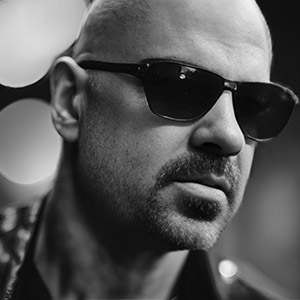
Sitting across a digital divide is never the ideal way to grill a musician, but when you are staring at the formidable, dark-bearded visage of Chris Duncombe over a Zoom link, the distance vanishes. Duncombe is one-third of The Washboard Union, the Vancouver outfit that essentially lived on every festival stage across Canada before the world hit the pause button in 2020. They are the blue-collar, high-octane engine of the domestic country scene, blending a traditionalist’s respect for the banjo with a stadium-rocker’s appetite for spectacle.
Before the global hiatus, you couldn't throw a guitar pick at a country fair without hitting these guys. They aren't your standard-issue radio fodder. They occupy a strange, wonderful middle ground—hardcore country with a bluegrass soul, spiked with enough energy to power a small town. It is emotional, loud and undeniably fun. Their signature anthem, "Shot of Glory", has become the de facto closing ceremony for any self-respecting summer circuit.
But the silence of the last year hasn't resulted in a lack of output. In March, the band pulled a move rarely seen in the genre, dropping two separate music videos on the same day. It was a flex of creative muscle that signaled they weren't content to just sit in their home studios waiting for the border to open. We sat down with Duncombe to talk about the mechanics of the washboard, the influence of KISS and the sheer endurance required to keep a band together for over a decade.
The lack of a live audience is a visceral blow for a band that thrives on the sweat and roar of a crowd. I asked him how they’ve managed the transition from the stage to the screen.
"Yeah, it’s been difficult for sure," Duncombe says. "I think that you know we’ve really challenged ourselves to find ways to stay creative together. We’ve done that in a bunch of different ways over the last year and we’ve just had to get used to the fact that playing live, which was kind of a foundation for the band from the outset, is just something we don’t have right now. We’ll be excited to get back to it but we’ve done everything from Quarantine Sessions recorded in our home studios, to special Zooms with our fans, our 'Live From the Mountain Series' and a bunch of classic cover songs we’ve been doing. We’ve just been trying to find ways to still make music together and stay in touch with our fans and we’ve been so lucky that they have stood by us through all of this."
That loyalty is likely why the band felt comfortable dropping a dual premiere. Producing a music video is a logistical nightmare even without a pandemic, yet they opted for two. It felt like a strategic gamble to keep the momentum of their latest record, *Everbound*, alive.
"They sure do," Duncombe laughs when I mention the time investment. "These ones were really interesting with the second wave of COVID looming, it’s really difficult to get a film crew together and to be able to shoot a video and so what we decided to do was shoot two videos over 48 hours. So two very different storylines and two very different songs, but with the same actors and us in both videos. We decided we would shoot them with our friend Stefano Barberis, over 48 hours - one day shoot, one night shoot. It only made sense that they both come out together."
There is an indie-spirit grit to that kind of production schedule. Barberis is a veteran in the director's chair, and his ability to pivot between narratives on a 48-hour clock is impressive. But for the band, it was about more than just efficiency.
"The other thing was we wanted to do something for our fans and we’d certainly never done something like this before and we weren’t aware of anyone else really in country who’d done this, so we just wanted to release both at once for our fans and it seems really well received - it’s more than we could hope," Duncombe adds. "Washboard Union doesn’t really do things the same way everyone else does, so we just decided it was a good idea and ran with it."
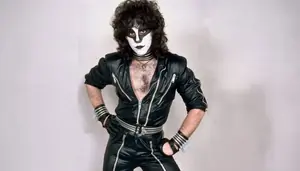
The move reminded me of 1978, when KISS famously dropped four solo albums on the same day. It was a massive, ego-driven spectacle that remains a piece of rock history. When I brought this up, Duncombe’s eyes lit up.
"Man great reference, absolutely," he says. "Did you know that David Roberts in Washboard Union is a card carrying member of the KISS Army?"
It turns out the connection to the Starchild and the Demon runs deeper than just fandom. On their debut album, The Washboard Union found themselves in the orbit of Bob Ezrin, the legendary producer behind *Destroyer* and Pink Floyd’s *The Wall*. It is an absurdly high bar for a debut.
"Yep we did," Duncombe notes. "Bob has been such a friend to us for so long. We met Bob when another good friend of ours and another incredible producer in the rock world, Garth Richardson, had a new recording school, where he and Bob were teaching sort of the next wave of engineers and producers everything that they knew. Bob had this really unique opportunity where he came to Vancouver and was going to basically demonstrate to a school of his brightest students what’s involved in producing a band from top to bottom and we got chosen as the band he was going to produce, so he produced the song with us from front to back and it was an incredible experience and spurred a relationship that we’ve been blessed to have ever since."
Ezrin isn't known for being soft. He is a sonic architect who demands precision. For a young band, that kind of baptism by fire is either going to forge you or break you.
"Bob is one of the most intense, creative people I’ve ever met," Duncombe says. "He has been a guiding force for us. He’s one of the most caring individuals, but he sees exactly what he’s doing before it happens. He told us some of the most amazing stories, some of which a lot of people know and others which not a lot of people know. It was an incredible experience and I’ve just been so lucky to have him in our lives, every day since."
From working with Ezrin, the band eventually transitioned into the making of *Everbound*. The recording process for this record was a departure from the "everyone in the room" vibe of their previous effort, *In My Bones*, which was tracked at the historic RCA Studio A in Nashville.
"Well, that was a very different record for us," he explains. "We wrote 32 songs for 'Everbound'. The songs that got picked had this consistent theme of hope and limitlessness, which we never really intended. But it was clearly what we were thinking about when we were writing a lot of these songs, and they ran as a thread through the album. This is an album we recorded differently than any of the others in that we recorded it in four studios at the same time, in Nashville. So between two sets of producers and studios all over the place, it happened. When you weren’t recording of the three of us, you were driving one of the other two to some other studio. So I might be laying banjo down at Sound Emporium and Aaron might be over at the Holodeck doing a vocal, and then David needs to go over here for a mandolin. All day long we’re just moving studio to studio doing our different parts, which is a very different process from 'In My Bones' where we were at RCA all in the same room and we did the whole thing there. And so this was a really cool experience, because it felt like the record was getting made at a really invigorating pace and you’re working on multiple songs at the same time. I really loved the challenge."
The washboard was something that every family had that they could bang a rhythm out on and it’s as fundamental to country music as the banjo, or the guitar or anything else. ... For me, it is a symbol of what’s authentic and genuine and that’s what we aspire to be - nobody but us.
One of the standout tracks on the record is "If She Only Knew", a song that captures that agonizing gap between internal feeling and external expression.
"That was a song that we wrote with one of our producers and we just had this feeling of ‘what if you could actually just say what was on your mind to somebody and they could actually understand how you felt about them’," Duncombe says. "So many things get in the way. It was just a song we wrote fairly quickly and we woke up singing it the next day, which is always the mark of a good song in my mind. It was a really fun one, and then I really loved how it sounded when we did the demo. The demo is not too much different from how the song actually turned out when we finally recorded it."
There is a certain purity in a demo that makes the final cut. It happened again with the album’s closer, "More Memories Than Wishes".
"It’s true. That happened actually - there’s a song on the record called 'More Memories Than Wishes', which is the ballad at the end of the record," Duncombe reveals. "The version that you actually hear on the album is the demo. We cut the demo and it captured the song so well, we didn’t really need to do anything else to it. We were kind of excited that was what you got to hear and literally what we walked out of the room having recorded."
Visually, the band has been leaning into a more whimsical aesthetic, specifically the cloud-patterned jackets seen in the "If She Only Knew" video. It’s a far cry from the dusty denim and Stetson hats usually associated with the genre.
"You know what, we don’t get too hung up on country convention," Duncombe says. "We have a lot of fun, and the cloud jackets were actually from a friend of ours. Emily is a lady that we write with. She’s just incredible. But beyond that, she’s a photographer and has rapidly become Washboard’s stylist as well. She came up with the idea when we were talking about Everbound and the limitlessness, possibility, hope and all the things that wrap up in that name. Everbound is a word we made up, but works for the situation so well. The cloud jackets just seemed like the perfect way to tell our story rather than three guys against a clouded sky - she found those for us. We literally just showed up at the photoshoot and she’d ordered them on Amazon or something like that and they showed up and they’ve been a blast. People just really love them and always ask about those jackets."
Then there is "Never Run Outta Road", which leans into Duncombe’s personal obsession with Formula 1. The video features the band in full racing kit, a look that fits their high-speed live show.
"I have one sport in my life," he admits. "David loves football, he’s a Manchester United fan and he will be up at three in the morning, in the bed next to you in the hotel room watching a game, that’s his sport. Mine is F1 Racing and so when we got a chance to do something with race cars, I jumped at the chance to have the race suits and actually if you look at it, I designed all the patches that show up on the race suits which say 'If She Only Knew Racing' and 'Everbound Racing' and all these other pieces. I’m a huge racing fan, so when we decided to do it, I was pretty excited. It was just a fun video, I mean that song is a neat one in that it’s really almost like how an Irish blessing would be. If you go out into this world, I hope nothing but great things surround you and that’s where the idea of 'Never Run Outta Road' comes from."
The racing suits and the swagger of the video brought to mind their early days as Run GMC—the precursor to Washboard Union. Back then, they were a basement unit playing trucker songs and bluegrass covers.
"Well, Run GMC was just a reason for us to get together and play music from some of our heroes," Duncombe recalls. "Tuesday nights, a bunch of guys who live together would descend to the basement and play trucker songs and old bluegrass songs and that washboard hung on the wall in that jam space the same one David plays now. The music was what was at the center of it, but it was playing songs that we all grew up on and loved and then everybody brought more and more every time - whether it was Red Sovine or C. W. McCall or Buck Owens or Marty Robbins or bluegrass traditional songs. Then from there we started writing our own songs and that’s really where it started as three of us writing. It’s starting out just being songwriters together, but probably in the very beginning emulating what we loved and then finding our own sound through there."
The pivot from a cover band to a national powerhouse happened when they realized the power of their three-part harmonies.
"I think what really turned Run GMC into Washboard Union was that love of the feeling that harmony can give you where I can make the hairs on your arm stand up, when three voices come together and sound like one," he says. "I think for us that’s something that was so important to us that we worked it into our songwriting, we made it a priority to get good at it and that’s where Run GMC and Washboard Union probably parted ways. We really wanted to get serious and dig in and make a life out of the music that we were creating because making music together was the one thing we all wanted to do all the time and if we could have a life that did that and allowed us to travel. If you can do those things with your best friends, you’d chase that to the end of the earth, and that’s literally what we’ve done. David describes it as a tree fort that is never going to get fully built. That’s where the adventure started, so it was a pretty unnatural transition obviously as Run GMC. We weren’t probably going to have much of a music career with that name and Washboard Union literally came out of that washboard hanging on the wall."
Despite the polish of their studio work, Duncombe is adamant that they are a live band first and foremost. They paid their dues in empty bars long before they were headlining festivals.
"I think we’re about a lot of things, songwriting is at the center of it," he notes. "We never just wanted to be a band that played other people’s songs, and for some that’s the road that they really wanted to charge down and absolutely they’ve done so well at it. We wanted to be able to write and perform our own music and there were going to be songs along the way that we’re going to fall in love with that we didn’t write but that’s largely what we’ve done. Beyond that we were a live band, we were a band that grew up on playing to empty rooms, to bartenders and waitresses and then people started discovering what we were doing and then it grew and grew and grew. So we’ve been part of every aspect of the live side of it, we didn’t just walk in because we had a song on the radio and people automatically showed up. We’ve spent a lot of time on the road and we love that as storytellers, as songwriters, and as performers because we know there’s something unique when we play live or people wouldn’t keep coming back. They just tell us that all the time that there’s just a feeling to a Washboard Union show and that’s the greatest gift a fan can give you to say something like that. So we’re certainly about the writing of songs, the craft of songs and the love of country music, but beyond that we’re a live band."
And then there is the washboard itself. It’s not just a gimmick; it’s a percussive bridge to the origins of the genre.
"If you think about the very earliest country music when there was no drum set and no real percussion, the washboard was something that every family had that they could bang a rhythm out on and it’s as fundamental to country music as the banjo, or the guitar or anything else," Duncombe explains. "It was just at the center of country music in the beginning because before there was a drummer there was a washboard. It was just at the center of it for us and quite frankly came out of the fact that when we would play acoustically together we needed some sort of backbeat and David could play the washboard and bang it out on that and so long before there was a drummer and Washboard Union, there was a washboard and so it became a symbol for the band. For me, it is a symbol of what’s authentic and genuine and that’s what we aspire to be - nobody but us. I think that it shares a lot of the same, if a washboard can share values, it shares our values."
The band has settled into a tight trio, though the lineup has seen faces come and go since 2012. The core, however, remains unbreakable.
"I think that bands evolve along the way," Duncombe says. "I think Washboard Union at the core of it was the three of us for sure. We’ve been lucky to play with some great friends along the way who had their own musical journeys, some still play music, some don’t but at the core of everything was the three of us. Aaron and I started that journey when we met at 13 years old. I think there have been guys who’ve come in and out, but at the core of it was the three of us. When we really decided to get serious about the band, it was gonna be the three guys that were writing the songs."
Their songwriting process is a democratic exercise in playing to their individual strengths.
"I think it changes song to song," he says. "We try when we write to really play to each other’s strengths. Aaron’s a really strong melody guy, I ‘m more of a lyricist and top liner and David can kind of float between both, so I think it works out to be a really cool dynamic. I know one of the other two is stronger at a particular song, so as we go, you can just see it dynamically flow and that comes from writing together for so long. I think that’s what we’ve always tried to do is play to each other’s strengths and it’s the same reason three guys can stay together this long spending as much time as we do together. You allow each other the room to do what it is you do well and let them know they shine at that and they need you to shine at the things you’re good at. I think that’s a recipe for great songwriting teams, but I also think it’s a recipe for why bands can stay together."
When asked if there is one definitive song that sums up their legacy, Duncombe is hesitant to pin it down.
"Wow, I hope not," he laughs. "I think there’s a lot of different stories that we’ve managed to tell along the way and so I really hope it wouldn’t come down to one thing. There’s lots of songs that I’m really proud of some of which are singles and some of which aren’t. There are songs like 'Be Mine' which was never a single that I think is really meaningful. I’m always gonna remember 'Country Thunder' because we played that song live long before we ever recorded it. And people were singing the chorus, by the second time it came around, the first time they’d heard it. So, it was a real eye opener for us. We knew we should probably get in the studio and record this song, because people seem to like it. My favorite song is the one I haven’t written yet."
The video for "Country Thunder" is a fan favourite, largely due to the use of full-sized Muppet-style puppets. It was a risk that paid off, thanks to the support of Warner Music Canada president Steve Kane.
"Going back to the beginning, the concept came from a phone call," Duncombe says. "Our friend Stefano Barberis has done a lot of our videos. We were on the road and we had to start thinking about what the video for 'Country Thunder' was going to be. Stefano phoned us in a hotel room and we must have been in Ontario or Quebec, and said, I’m thinking the time has come for us to do puppets, like full size Muppet puppets. And we said yes, if, the record company is gonna go for this. So, we phoned Warner Music and said, we’re going to do puppets for the 'Country Thunder' video. There’s silence on the phone, and we’re like, oh, god, here we go. They’re not gonna like it. And then they just said they loves it and to go for it. We’ve been really lucky to have a great relationship with Warner Music. Our work with them started with Steve Kane, the president, loving our music."
The puppets have since become unofficial members of the touring crew.
"We were still on the road leading up to making that video," he continues. "We didn’t even see a drawing of those puppets on a cocktail napkin, or a file, or anything - we had no idea what they were actually going to look like. We showed up to that video shoot and walked into a tent all rushed because we were late. They told us to quickly throw these clothes on. And sitting across the table, were these three puppets dressed in exactly what we were about to change into. It was just mind blowing and when we saw them perform the first time, it was just awesome. They travel with us now. We do have them with us. They have their own sort of road case tour bus kind of thing. They’ve got lots of clothing to change into. They were all Spiderman for Halloween and Elves and Santa for Christmas. They are a lot of fun."
Finally, we had to address the facial hair. The beards have become as much a part of the brand as the washboard, though Duncombe insists it wasn't a calculated marketing move.
"Oh man, I just don’t think it was that thought about," he says. "People obviously often wonder if we did intend to do that. David started growing his and then we just kind of left it and it just became part of the fabric. I never really thought about it too much and I just couldn’t imagine getting rid of it. I always had a standing deal with my wife that the day this becomes too long and I’m not the man you fell in love with looking at it anymore, you get to call it. Now it’s just 'don’t you dare touch it', so we got used to them along the way."
The look certainly fits the bluegrass aesthetic, even if it was accidental. It makes the band instantly recognizable, whether they are on stage or navigating an airport terminal.
"Yeah, it’s probably a bit of that. I mean not intentional on our part," Duncombe admits. "It’s interesting to me how recognizable the three of us are now and just not by trying, but I guess I never really expected that attention. It’s hard as a band to know what’s actually happening, but you are really made aware of it when you walk through an airport. I appreciate that people love our music, I appreciate that people come up to us and talk to us and tell us and I think we’re pretty approachable guys, so it’s always been great to meet people along the way who appreciate what you do."
As for the future, the *Everbound* cycle is far from over, but the wheels are already turning on what comes next.
"There’s more music still coming out from Everbound and we’re writing like crazy right now too," Duncombe concludes. "I think we’re always continuing to make music but as far as the new album, there’s still lots to go on Everbound. There will be new music hot on the heels of it for sure. We’re literally the boys who are coming up to me this week and we’re writing nonstop.