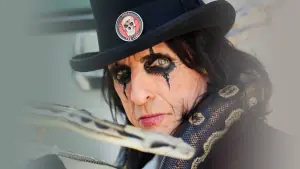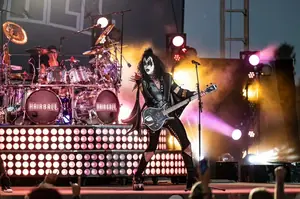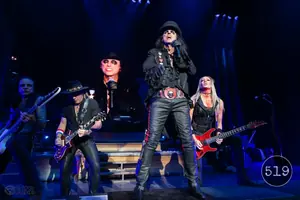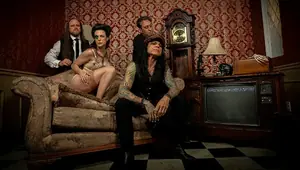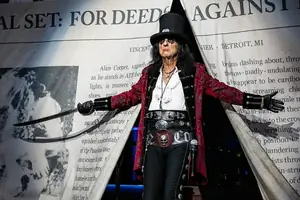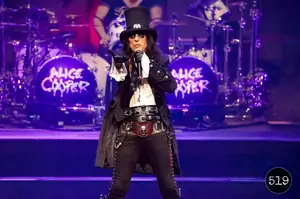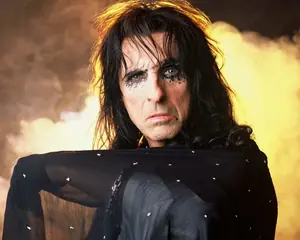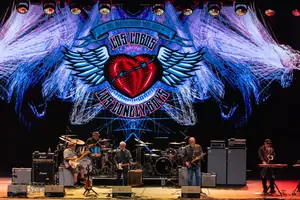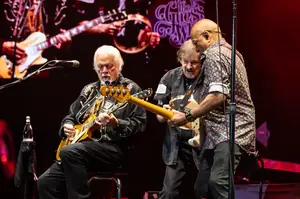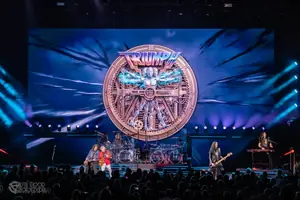

The sun is barely over the horizon in Phoenix, but Alice Cooper is already thinking about the back nine. At 73, the man who once famously shared drinks with Jim Morrison and Jimi Hendrix has traded the bottle for a bag of Titleists, and the results are statistically improbable. Most rockers his age are content to lean on their legacy, but Cooper is out here chasing pars with the same obsessive precision he used to craft the shock-rock blueprint.
Watching him navigate the current landscape is like watching a veteran shark move through familiar waters. He is lean, sharp and perpetually in motion. When I ask him about his morning on the greens, he doesn't just give a vague answer; he gives me the scorecard.
"Ah let’s see, I shot two birdies and I shot even. I’m actually playing better now at 73. I’ve had 10 rounds under my age in the last month," Cooper says. It is a staggering admission of vitality. While his peers are retiring to the shadows, Cooper is sharpening his edge, preparing for a massive homecoming at the DTE Energy Music Theatre in Clarkston on Sept. 25.
To the locals and the lifers, that venue will always be Pine Knob. It is a place of pilgrimage for the Detroit faithful, a venue where the smell of pine needles and stale beer creates a specific kind of Michigan magic. Cooper’s latest offering, *Detroit Stories*, hit the top of the Billboard Sales Charts back in March, proving that the appetite for his brand of Motor City mayhem hasn't waned.
"Pine Knob, yeah! Every 48 years I try to get a number one. The last number one was 'Billion Dollar Babies' and it’s a different world now though with album sales and things like that, but I think that album came along at the right time when people just needed a good rock album and there it was. I’m glad people accepted it like that. It was all Detroit players and it was just all about Detroit. I was born there and then we moved back there in the early 70s and actually we got our start there, because that’s where 'I’m Eighteen' broke out of," he notes.
The history of Alice Cooper is inextricably linked to the signal strength of CKLW, the legendary "Big 8" out of Windsor. It was there that Rosalie Tremblay, a woman with an ear for hits and a heart for the weird, decided that a bunch of cross-dressing creeps from the desert had something special.
"Rosalie was our savior. We were a band just like The Stooges, MC5, Bob Seger, The Amboy Dukes, we were all just local bands there in Detroit and Bob Ezrin came into our life. We lived out in Pontiac and we spent eight, nine hours a day in the barn out there relearning how to be Alice. Actually, Bob came in and he says, 'You know, why it is when you hear The Doors, you know it’s The Doors?' He said, 'They have a signature sound.' And you hear the Rolling Stones, you know it’s The Stones, you know it’s The Who because they sound like who they are," Alice explains.
That barn in Pontiac was the laboratory for what we now know as shock rock. It wasn't about the makeup yet; it was about the architecture of the song. Ezrin was the taskmaster, stripping away the psychedelic fat until only the muscle remained.
"Everybody loves your show, but you don’t have a signature sound that’s all yours.' That’s when we spent nine, 10 hours a day doing that, developing a sound, and that’s when 'Love it to Death' came out. And, you know, 'I’m Eighteen' is on it and 'Ballad of Dwight Fry', when you heard it, that’s Alice Cooper, that’s what Bob did for us. I still work with Bob, I’m working on three albums right now with him," Cooper says.
The productivity is relentless. Even during the global shutdown, when the rest of the world was sourdough-obsessed and stagnant, Cooper was grinding. He sees the pandemic not as a pause, but as a pressure cooker that is about to burst.
"Yeah, working with the touring band and of course there’s always The Hollywood Vampires, we’re always writing and we’re getting ready for our third album. It’s one of those things where in this business you just stay busy because you love doing what you’re doing, even during the pandemic. What do you think bands were doing? They couldn’t play so they were writing and recording. You’re going to get an avalanche of records coming out in the next year or two because every band I can think of was doing just that, recording," he predicts.
But it wasn't just about the studio. Alice Cooper, the man who once threw a chicken into a crowd in a moment of accidental performance art, found himself navigating the bizarre digital intimacy of the 2020s.
"We decided that we’re not going to sit down and just do nothing. You know, let’s have some fun with this. I never did so many Zoom calls in my life, I didn’t even know there was such a thing as a Zoom call and then all of a sudden I’m doing five a day. And Cameos, these Cameo things I was all of a sudden doing 20 of those a day and at least it kept you going and kept you from sitting in front of Netflix all day," Alice admits.
The momentum was nearly derailed in December when the virus finally caught up with him. It was a sobering reminder that even the villains of rock and roll are mortal.
"I finally ended up catching COVID-19 in December and I had it the entire month. Then when I came out of it, it takes another two months to get back to normal, maybe more than that. But even during that time a writer always has a pad next to him and a little tiny tape recorder. Somebody will say something on TV and you’ll go, oh what a great line and you write that down because that could be a song," he says.
The result of that persistent writing is *Detroit Stories*, a record that feels like a gritty, oil-stained love letter to the city that birthed him. He didn't just write about Detroit; he recruited the ghosts and legends of the city to play on it.
"Oh yeah, he’s my go to guy," Alice says of Steve Hunter. "First of all, it’s one of those things where once we got to Detroit, to be honest with you, we didn’t have a concept for this album. Bob and I almost always work in concepts, Paranormal, Welcome to My Nightmare, they’re always sort of thematic and we didn’t really have one, we just wanted to make a really good hard rock album. We decided that we could only do that in Detroit because that’s the home of hard rock and then once we got there we started writing songs in Detroit, about Detroit and the obvious thing was, well, we use all Detroit players."
The roster for the album reads like a Hall of Fame induction ceremony. You have Johnny "Bee" Badnajek, Wayne Kramer and Mark Farner. These aren't just session guys; they are the DNA of the Michigan sound.
"Once we got Johnny 'Bee' Badnajek, and Wayne Kramer, I said now we have the heart and the soul of Detroit right here. Johnny 'Bee' is like walking Detroit, and same with Wayne Kramer and Mark Farner comes in and we just filled it up with great players. We had one guy that was not a Detroiter, Joe Bonamassa but he was just so perfect for this, for that blues song and the Velvet Underground song and some of the other stuff. He was just such a great straight up guitar player and put him with Steve Hunter, oh my gosh, that’s a pretty good dynamic duo right there," Cooper says.
The history goes back to the Saugatuck Pop Festival, where the Alice Cooper band first realized they weren't the only ones bringing fire to the stage. Detroit was a different animal than the "peace and love" nonsense happening on the West Coast.
Rosalie was our savior. We were a band just like The Stooges, MC5, Bob Seger, The Amboy Dukes, we were all just local bands there in Detroit and Bob Ezrin came into our life. ...Bob came in and he says, “Why it is when you hear The Doors, you know it’s The Doors?” He said, “They have a signature sound.” ...Everybody loves your show, but you don’t have a signature sound that’s all yours.” That’s when we spent nine, 10 hours a day doing that, developing a sound, and that’s when “Love it to Death” came out.
"Well, you know, we brought a very different kind of rock and roll to Detroit. That was very funny because we were already a theatrical band. L.A. already knew us as this notorious dark vaudeville monster. People were all into peace and love and Alice Cooper was not into that. We were more Clockwork Orange and in fact a lot of Clockwork Orange was borrowed from Alice Cooper," he claims.
There is a definitive pride in how they stood apart. While San Francisco was wearing flowers in its hair, Alice was sharpening the guillotine.
"And there we were, we didn’t fit in L.A. or San Francisco or in New York. We got to Detroit, and brought our brand of hard rock in and our brand of craziness. And we saw The Stooges who had their own brand of whatever they were doing. Iggy Pop was the absolute king of punk and there wasn’t even the word punk at that time. He was just that and he always will be the biggest punk influence of all time. And then the MC5 was the show band that was political. They were all really good bands and we usually didn’t play with bands that did a show," Alice recalls.
The transition from opening act to headlining terror was swift. They were louder, meaner and more theatrical than anything the local scene had produced.
"We opened for The Doors, and we opened for The Mothers and that was different, they had their own kind of style of doing that. But when we showed up and played, all those fans looked at us and said, 'What the hell was that?' We’ve never seen that before. And, we were louder than The Stooges and louder than the MC5 and we had more attitude so we fit right into Detroit. The great thing about Detroit was everybody was supporting everybody else. We were fans of The Stooges and MC5 and Bob Seger and Suzi Quatro, and they were fans of Alice Cooper. It wasn’t like we were at each other’s throat, we were actually helping each other," he says.
The new tracks, like "Independence Dave" and "Hail Mary", are vignettes of a city that never stops moving, even when it’s falling apart. Alice paints these characters with a cinematic eye.
"Yeah, we wrote enough songs that were about characters that we thought would live in Detroit, or people that we remember in Detroit. 'Independence Dave' was the guy who was the biggest con man ever. His name wasn’t that but I figured that was a great name for him, Independence Dave. And, the three guys in the alley drinking a bottle of wine and watching the girl go by everyday Hail Mary. That was the high point of their day watching the secretary go by," Cooper says.
The album even detours into the soulful roots of the city, proving Alice can pivot from punk to Motown without losing his grip.
"I kept picturing scenes in downtown Detroit. The blues song, here’s the guy that lives under the bridge in a box and there’s a girl that lives under that bridge, also in another box. That love story is just as valid as Romeo and Juliet but let’s make it a blues song. '$1,000 High Heel Shoes', I said, let’s tip our hat to Motown, that’s how the album kind of progressed. 'Go Man Go' was just a total punk song. That was the great thing about it. We just wrapped up Detroit’s music on one album and that was the whole idea behind the album," he explains.
And then there are the cars. You can't talk about Detroit without talking about iron and rubber. Alice isn't just a casual fan; he’s a collector who treats his garage like a curated museum of cinematic history.
"Oh, yeah, I actually have a purple Hellcat. I did a commercial for Hellcat and then the thing was, when I got home, there’s a purple Hellcat sitting in my garage. And I said, 'Where did this come from?' And they said, 'They gave it to you.' I’ve got a 68 Bullitt Mustang," he says with a grin.
The obsession runs deep. It's a healthy replacement for the vices that nearly ended him in the late 70s and early 80s.
"This car is the identical one except underneath it has a Coyote engine. It’s all brand new underneath so I can drive in 120 degrees and it doesn’t overheat. I’ve got a 63 Studebaker Avanti and that car I found out belonged to a Soviet spy that was busted in it. Also I’ve got the new Stingray and I’ve got the 2003 Vanquish, the James Bond car. I kind of pick cars that appear in a movie that really affected me and I went, 'Oh, yeah, I’ve got to have that car.' So yeah, I’m a car guy absolutely. It’s the only thing I spend money on. I used to spend that money on drugs and alcohol, now it goes into cars," Alice admits.
The mention of alcohol brings us back to the darker days. There was a show at Joe Louis Arena in 1980 where the lights came on, but the crowd refused to leave. It was a moment of pure, unadulterated Detroit loyalty that Alice still carries with him.
"Detroit’s been so loyal to me and it’s because I’m a hometown guy, I’m one of the guys. And here’s the thing about Detroit. I played in every city in this country and I know every band, when you look at your itinerary and you see there’s New York, L.A., those are target cities, but when you see Detroit, that’s the one place where you better bring it because that audience will not stand for a half-assed show. They won’t stand for a band that comes up and goes, 'Gee, I hope you like us tonight.' That’s not their style. What they want is the band to come on, grab you by the throat and shake you, and that just has always been the style of Detroit," he says.
The 1986 "Nightmare Returns" show at the Joe was the official rebirth. It was the moment Alice stopped being a victim of his own excesses and started being the master of the macabre again.
"Right, that was The Nightmare Returns," he confirms. "Oh yeah, and Toronto and all those places, because I think they want to see what happened. I was in a period where I just didn’t know what to do anymore and I got way into coke because I was living in L.A. where it was a blizzard. Every single person I knew. It was just so normal they didn’t even think about it. But when I got clean, I got sober. I said I’m going to put a show together now, and I’m going to show the audience that Alice is back and this time Alice is not a victim, this time Alice is going to be the villain. And he’s not going to slouch over, he’s going to stand up straight."
That era brought in Kane Roberts, the "Rambo of Rock," and a new level of sonic aggression.
"I had Kane Roberts in the band who looked like Sylvester Stallone, he has this gigantic body and I said every single song is gonna just crush. And it was triumphant to me because I felt great and I didn’t feel I was that same Alice that I was before, it was a new rebirth of Alice and this Alice was going to be this absolutely condescending villain," Cooper says.
Today, his touring band is a well-oiled machine of virtuosity and ego-free camaraderie. Led by Nita Strauss, they represent the pinnacle of modern rock performance.
"The last few years the band I have now on tour is the best touring band I’ve ever worked with, I’ve got Nita Strauss, who is a force of nature unto herself. She looks like a Victoria’s Secret model and plays like Steve Vai. She was voted guitarist of the decade. And then I have Ryan Roxie who is one of the best rock guitar players ever. Tommy Henriksen, another great guitar player, Chuck Garric on bass, and Glen Sobel who was voted best drummer in rock and roll. This band, not only are they the best band I’ve ever worked with, but they’re best friends. You never hear ego from anyone, you never hear anyone yelling or throwing things at each other. It just doesn’t happen. And the crazy thing about that is The Hollywood Vampires are just like that," he notes.
Working with Johnny Depp and Joe Perry in the Vampires has provided a similar sanctuary of professionalism.
"The Hollywood Vampires have been together seven years. You have three alpha males up front. You’ve got Joe Perry, Alice and Johnny Depp and there’s never been one argument in that band and there’s never been one person that’s ever yelled at anybody or walked off the stage mad or anything like that. It’s just you work with people that are going to be fun to work with," Alice says.
The excitement for the upcoming Pine Knob show is palpable. After 18 months of silence, the "Ol' Black Eyes" is ready to reclaim his throne.
"Oh they’re amazing and here’s the great thing. We’re coming in there and it’s been almost a year and a half and we’re all giddy. We’re almost like little kids going to a party. We’re sitting there going, 'You mean we get to rehearse?' We can’t wait just to rehearse the show so when we get back on stage, it’s going to be such a great relief," he says.
The memory of their last show before the world stopped still haunts him—a massive stadium gig that felt like the end of an era.
"Our last show before this pandemic happened we were in Australia and it was Alice Cooper and Queen and we did an outdoor show for 95,000 people in a football stadium and we had no idea that was going to be our last show. We had no idea that that was going to be the last thing we did for a year and a half. We figured if this pandemic happens, well, it’ll last for a month, maybe, but we had no idea the world was going to close down. So a year and a half later, everybody had to stay in shape in order to get back out there so everybody can’t wait to get back up on stage," he adds.
Fans can also expect a heavy dose of the classics, as Cooper continues to integrate the original band members into his current projects.
"Well, we always have, we always go back to those albums all the time. Another thing I should say is the original band has been on the last four albums. The original band is playing as good as they’ve ever played. I include them as much as I can in everything because they’re writing for the new album, they’re going to play on the new album. Dennis, Neal, Mike and I, when we broke up, we didn’t divorce, we just separated. The whole time there was never any bad blood, nobody hated anybody, nobody was angry. Dennis and Neil and I always stayed in touch with each other through all of this, and then when I started finding a way to get them back involved in the show and in the writing and everything, it was really fun for me and them to get back on stage," Alice explains.
There is a specific grit to the original lineup that even the most polished touring professionals can't replicate. It’s a sound born of 1970s Detroit basement sessions.
"My favourite review was this. We did a thing in England where my touring band would do the show and the curtain would come down, and more and more and more and more, curtain comes up and it’s the original band. We would do four or five songs and the review says, 'The Alice Cooper show was just sparkling. It was so crisp, and it was on and everybody was just having the greatest time. And then it got dangerous.' The original band plays a lot heavier than my touring band. Dennis, Neal and Mike, when they play 'I’m Eighteen' or when they play 'Billion Dollar Babies', it’s got more of a threat to it. They still are very threatening in how they play so it was funny that the reviewer said, 'And then it got dangerous,'" Alice laughs.
But the danger had its casualties. Glen Buxton, the band’s original lead guitarist, remains the missing piece of the puzzle.
"He was our Keith Richards. There was a time when he was the best guitar player in Arizona. It got to a point where everybody else was cooling out and everybody else kind of saw the writing on the wall. We can’t party like we used to party, we’ve got to stop this, we’ve got to stop that and Glen just went full speed ahead. Three packs of cigarettes a day, who knows what illegal drugs he had with him. He drank a bottle of Scotch a day and you know, the last time I saw him he was 48 years old and if you would have saw him you would have figured he was 78. He just blew himself out, but that was Glen and he was never going to slow down. That was not him, he was a Bowery Boy. He was going to live life to its fullest and that’s how he was going to go out and what can you do, you can’t talk him out of it," Alice says.
As the interview wraps, Cooper is already looking at the calendar. The road is calling, and he’s ready to answer.
"Oh, absolutely," he says when asked about returning to Caesars Windsor. "Once we get going again, we’re doing 25 shows down the east coast and then we’re taking a break for Christmas. Then when we start in the spring, it’s going to be probably seven months or eight months on the road. We’re going to be making up all those shows that we had to cancel."
The villain is back, the golf game is tight and Detroit is waiting. Turn it up.
Get Tickets