

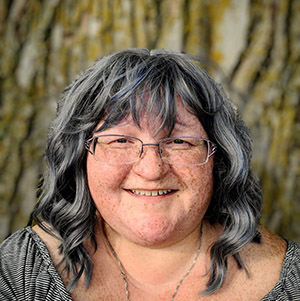
The air inside the Kordazone Theatre in Windsor carries that specific scent of old floorboards and new ambition. It is the perfect venue for a woman who has spent her life being told where she can and cannot exist. Terri-Jean Bedford, known to the legal world and the leather community as Madame de Sade, is back in her hometown. She is not here for another deposition or a Supreme Court hearing. She is here for the premiere of *Dominatrix On Trial*, a stage adaptation of her life that feels less like a play and more like a long-overdue reckoning.
The production, which opens tonight, May 5, 2022, is a gritty look at a Windsor native who became the face of a national firestorm. Bedford did not just fight for the right to work; she fought for the right to be safe. Her battle for bodily autonomy and labour rights went all the way to the Supreme Court of Canada, dominating headlines and forcing a polite nation to look at its own hypocrisies. But the theatre is where the nuance lives, far away from the dry legalese of a courtroom.
Kianna Porter takes on the role of Bedford, stepping into the boots of a woman who has been both a pariah and a pioneer. The transition from activist to subject of a theatrical memoir is a strange one, but for Bedford, it is about control. It has always been about control. When you ask her what ignited the spark that turned a dominatrix into a constitutional warrior, she points directly to a specific moment of state overreach in Thornhill.
"I was raided in Thornhill in 1994 and there was no basis for the charges because I wasn’t having sex or procuring sex or anything of that nature," Bedford says, her voice carrying the weight of decades of litigation. "I had a role-play facility that catered to cross-dressers and people who wanted to role-play, which was very therapeutic for them. After a nine-week investigation, the police found no grounds to charge me with acts of prostitution. However, they felt that because of my reputation and what I was doing, they would go ahead and see if the charges would stick anyway."
It was a classic case of the police trying to legislate morality when the law failed to provide a hook. They spent nine weeks watching, waiting and finding nothing, yet they proceeded regardless. This was the catalyst. But taking a fight against the Crown all the way to the highest court in the land is a Herculean task that drains both the bank account and the spirit. It is not a path for the faint of heart.
"No. I’ve attempted to go to the Supreme Court on a couple of occasions, but Alan Young approached me after he had represented me in my case," Bedford explains. "About six years later, he thought that he had enough to proceed with a Supreme Court challenge regarding the seasonality of our constitution."
The legal weeds are thick here. The Canadian government had long maintained that sex trade laws were a necessary evil for public order. Bedford and her legal team saw it differently. They saw a system that was designed to fail the very people it claimed to protect.
"The sex trade laws were constitutional, and we discovered that they worked," she says. "But because of my case, and after several weeks of a trial that was highly publicized, they couldn’t find any grounds to charge me or to keep the case going. Oh, by the way, the first time I went to court in 1995, the judge threw the case out. The Crown attorney appealed it. The judge threw the case out because there were no grounds for the charges. The Crown attorney appealed it, went to the appeal court and the appeal court decided that there could be, they said, 'We’ll take it back to trial.' And I appealed that to the Supreme Court and they said that it was out of their jurisdiction."
This procedural nightmare would have broken most people. It is a war of attrition where the state has infinite resources and the individual has a ticking clock. Bedford was caught in a loop of appeals and jurisdictional hand-waving that felt more like a circus than a justice system.
"So we went back to trial where my lawyers were disqualified because they were helping my co-defendants," Bedford recalls. "So there was a delay there. And then I had to hire another lawyer, which was Alan Young, and he came forward pro bono and they dropped the charges on my co-defendants. I flew solo through the courts for another four years challenging their decision. The judge didn’t tell me what I did wrong, but he found me guilty. I kept appealing and I lost my appeal again because the Supreme Court said it was out of their jurisdiction. So in 2006, Alan Young approached me about becoming part of the challenge and I accepted. I put my voice out there and my face as a figurehead and the rest is history."
That history is now bound in a memoir titled *Dominatrix on Trial*. Writing a book is one thing, but reliving the trauma of a SWAT team invading your private sanctum is another. The book does not pull punches regarding the way elected officials and law enforcement treat women who operate outside the traditional domestic sphere.
"Well, it’s a story that needed to be told," Bedford says. "It didn’t need to fall by the wayside unheard, that’s for sure. Because we want to point out all the discrepancies and—what am I looking for?—the ways that an elected official treats women. And if you read my story, you’ll find that, like I said, they had no basis for the charges, but came in with a SWAT team and 15 armed officers to arrest three women who had no ties to prostitution. After a nine-week investigation, they had no evidence yet. I guess they felt that they had every right to dismantle my house. They threw me out of my house and my home and my job and they took everything I owned, except the piano, and made me fight for it. And after four years they had to give it all back regardless of the judge finding me not guilty of any charges."
There is a visceral cruelty in leaving a woman with nothing but a piano. It is a detail that sticks in the throat. But the book also digs into the roots of Bedford’s resilience, which were planted long before she ever picked up a whip. Her early life was defined by the kind of rigid discipline that often breeds either total submission or total rebellion.
"Yes, it was," she says of the difficulty of writing the memoir. "A lot of stuff I left out of the book because I’ve had a very hard life. There was a lot of adversity. I was adopted when I was six years old into a family of Baptists and they were very strict and my mother was very hard on me. She used to beat me with the belt a lot and I only stayed with that family for six years before my mother gave my father the ultimatum. Either I go or she goes. I was a bit of a precocious youngster and it really had an adverse effect on my mother. And so I was made a ward of the Children’s Aid again."
The system failed her early. By the time she was 16, she was pushed out into a world that offered no safety net. It is the classic pipeline from state care to the streets, a reality many in Windsor know all too well.
They had no basis for the charges, but came in with a SWAT team and fifteen armed officers to arrest three women who had no ties to prostitution. After a nine week investigation, they had no evidence yet. ... They threw me out of my house and my home and my job and they took everything I owned, except the piano, and made me fight for it. And after four years they had to give it all back regardless of the judge finding me not guilty of any charges.
"When I was 16 they let me loose without any support," Bedford says. "I was on the streets and I had to take care of myself somehow. So a lot of times I would couch surf or bag blow and then I found out that men would pay me for sex. I started working with some girls and learned a few tricks of the trade and over the years I evolved into a dominatrix. A true dominatrix facilitates role-play, pain and torture per se. Nobody really gets hurt, but it’s safer than sex."
Windsor is the backdrop for much of this evolution. Long before the Supreme Court, Bedford was running a house on these very streets. In 1986, she was raided here, an event that saw her sent to prison for 15 months. She was charged with keeping a common bawdy house and living off the avails, but Bedford viewed her role as a protector.
"Quite a bit," she says of Windsor’s presence in her story. "My first house was a brothel in Windsor and I was raided in 1986 and a lot of my girls I took off the street because I felt it was unsafe for them to be out there and I facilitated their needs. I gave them money and a job. If they needed a place to stay, they could hang out and I’d have their backs. I had security personnel and everything was run really well. Even the judge complimented me on my business acumen, but I was sent to prison for 15 months for keeping a common bawdy house, living off the avails, procuring, exercising control—they threw the book at me."
The irony of a judge praising her business skills while sentencing her to over a year in prison is not lost on anyone. But that grit is what caught the eye of the Windsor Feminist Theatre. The play is an adaptation of her memoirs, a project that has been bubbling under the surface for years as Bedford sought ways to keep her story alive after Hollywood directors passed on the project.
"I’m really excited about that," Bedford says. "The play is an adaptation of my memoirs. My first book, my second book—but the first book is self-published. It’s been picked up by a New York publishing house, Riverdale Books. And there was, as I said, I have supporters and people who keep nudging me to do things and one of my supporters said, 'Let’s do a play. Let’s write a play about your story.' Because we did try to approach movie directors and people like that in Hollywood. Nick turned us down, so we wanted to keep getting the story out. So we wrote a play and then Joey Ouellette—he’s a playwright and he works with the women’s feminist theatre group—and there’s a few people I have to thank over there. Julie Frazer and the gorgeous Julia Burgess. They took an interest in the story and have run with it and now it’s going to be premiered this month at the KordaZone Theatre in Windsor. It’s a fringe kind of theatre group; it’s really exciting. Kianna Porter, she’s a beautiful Black girl, is going to play me as my character, Madame de Sade."
Bedford is quick to credit the people who kept her upright when the weight of the Canadian legal system threatened to crush her. She speaks of her supporters with a reverence that borders on the spiritual.
"I have supporters around me who keep me activated," she says. "They don't let me get down. They lift me up if I've seen farther because I stood on the shoulders of my supporters and they could see the future. However, they need their autonomy because they're outstanding citizens in their own right. They are willing to help me as long as I was willing to help myself. And I am and always will be. I put the women out there first over anything else. I don't own the rights to my story because I do owe a lot of money to my supporters. So I thought the one way that I could pay them back would be to sign off on the rights to my book and help them promote it so that they could get their money back. The challenge itself took many years and a lot of law students and other lawyers came in to help. It was amazing. It was something that was meant to be because the universe will pave the road for you if it was meant to be."
The political landscape of sex work in Canada remains a battlefield. Bedford is particularly biting when it comes to the way the government tries to dictate female sexuality. She sees the current laws as a breach of basic freedom, a way to force women into a submissive, non-commercial box.
"And women," she adds when asked about the beneficiaries of her work. "A lot of people still have this idea that women are cloistered and submissive and waiting for someone to come along to marry them. And that's not the case because over the years I found that a lot of young women are really out there with their sexuality and they don't want the government telling them who they can have sex with and under what terms. There are more women out there performing sex work on their own terms and then there are women on the streets doing it against their terms. I think that made sense. But there's a paradigm shift in women's sexuality and they don't want to be told what to do. They don't want to be told that they have to have sex for free. And that's what the government is saying. You can't sell it, you have to give it away. And that's a breach of our freedom."
But the government’s counter-argument usually involves the spectre of human trafficking. Bedford views this as a tactical conflation designed to strip rights from consenting adults.
"Well, what they want to do is tie in human trafficking, right? With consenting adult behaviour, that's a mess because you have to take away the rights of individuals in order to placate a group of people who challenged this along with us in the court and had their evidence thrown out," she explains. "As you can see, we won because they didn't have the right evidence to win the case."
The lack of safety for workers is the most damning indictment of the current legal framework. In Windsor, as in any border city, the risks are heightened. Bedford argues that the law itself is the primary source of danger.
"Well that's the law. That's a law that you see and is a result. The sum total of everything that we've been fighting for. It's the law that makes it the way it is, unsafe," Bedford says. "Because when they tell women that they can't protect themselves, it's against the law. They can't hire bodyguards, it's against the law. They can't hire managers, it's against the law and they can't work from home, it's against the law. You can sell your body, but don't ask for any money. I mean it's a conundrum. It's very vague. And when you write a constitution or a law, when the government writes a constitutional law, they use the foreseeability tests. Is anybody going to get hurt, maimed or killed because of these laws? And they seem to have it out for sex trade workers because they set them up for murder. They set them up for abuse and all kinds of unsafe working conditions. But it's a legal occupation and as well for the men, they've totally stripped the men of their rights. There's no such thing as equal rights, I think that's a shame. And there's a lot of innocent well-heeled men that don't want any trouble who are being extorted because they can't call the police if they see or hear of anybody trying to extort them for money. They're in a very vulnerable situation right now. And there are a lot of bad pimps and sex trade workers that work with bad pimps to extort money from good people."
Bedford lays the blame for this moral policing squarely at the feet of the previous Conservative administration. She sees a Christian moralism that refuses to acknowledge sexual agency.
"Well that's Stephen Harper for ya. Like I said before, they have it in their heads that all women are vulnerable and susceptible to bad pimps or being trafficked, and that's not the case," she says. "But they want you to believe it is. They fudge numbers and everything. And if you go back and look at their Supreme Court evidence, you'll find that it was thrown out at every turn. The moralists want us to be just like them. They don't want us to have our sexual freedom and they want women to have sex for free. They want us to toe the Christian line."
As for the play itself, Bedford has been a shadow director of sorts, ensuring that the production stays true to the grit of her reality. She hasn’t lived in Windsor for a while, but her influence over the staging is absolute.
"Very involved," she says. "Well I haven't been to Windsor. I'm going on the first and I believe I'll be at the dress rehearsal on the second, but I have someone in Windsor who's my eyes and ears and he works studiously with these people. He's known me for 28 years, so he's able to help the director and everybody, and I've gotten called a few times and asked a few things. So it's all gone really well, very smoothly."
While she jokes about wanting a musical comedy, the play remains a stark, unembellished look at her life.
"I wish it was a musical. I wish there was a comedy and musical, but yeah, it sticks pretty close," she notes. "There were a lot of funny moments, serious moments. It's true to form. It's true to life. There are no embellishments or anything like that."
Kianna Porter has had the daunting task of channelling Madame de Sade. It is a role that requires more than just a costume; it requires an understanding of the power dynamics Bedford mastered.
"Well, she's got a good coach," Bedford says. "There are miles and miles of footage and I've met her. We've spoken on occasion for quite a while. We had lunch together. And as I said before, my main mentor lives in Windsor and he's been a rock of support. He works with these women to make sure that the play is true to form."
The hope is that *Dominatrix on Trial* moves beyond Windsor. Bedford sees it as a story of leadership and resilience that could resonate globally.
"It's going to be an eye-opener for a lot of people, and I'm really glad that it's going to be available hopefully worldwide, if it's successful in Windsor," she says. "If it can make it there, it’ll make it anywhere. But I'm really happy the story’s being told. I have a lot of women that come to me who know who I am or don't know who I am or even when they find out I've had such an impact on their lives. Unbelievable. So I hope that this is another way I can lead women to a better understanding about what's out there, about themselves, what they're capable of and what they're capable of overcoming. It's amazing. It's a story of a champion and a leader who started off very humble. I'm not one to gloat or boast. I'm very humbled by my experiences."
Tonight, the KordaZone will be packed. Bedford expects a crowd similar to the one that jammed the courtrooms during her legal battles.
"All my family and friends are there," she says. "Hopefully I can come back and there will be enough seats in the theatre, overflow room. I have to put a TV on. Just like in court, there was an overflow room because so many people wanted to see the proceeding, but they had to be ushered into an overflow room where the TV camera was set up."
She will be there in the flesh, signing books and meeting the people of the city that first tried to lock her up.
"Yes you will," she confirms. "And there's going to be books. I'll be signing books and shaking hands and kissing babies. I’m really looking forward to it."
Get Tickets