
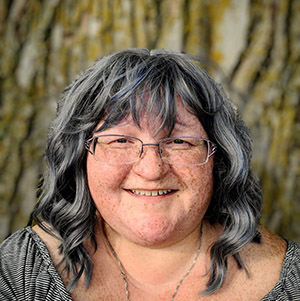
The interior of Windsor’s Club 9 Banquet Hall has that specific, nostalgic scent of industrial floor wax and anticipation. It is the kind of room where the lighting is just dim enough to hide the cracks in the plaster but bright enough to spotlight the grit required to command a stage. On Feb. 24, that stage belongs to Tiffany Barber. Known to the circuit as T.Barb, she is not just another touring comic looking for a paycheck. She is a Detroit export with a pedigree that stretches back to the roots of American performance.
Watching her prep is a lesson in composure. There is no frantic pacing or last-minute script-shuffling. Instead, there is the calm of a woman who spent 14 years in the high-stakes trenches of social work and protective services. That background provides a layer of skin thick enough to deflect any heckler. She understands the human condition because she has seen it at its most broken.
"I've been funny my whole life," T.Barb says. Her voice carries the weight of someone who has navigated the bureaucracy of the state and the chaos of the streets. "I always was an unofficial comedian to begin with."
The transition from the cubicle to the comedy club was not a slow burn. It was a combustion. For over a decade, she served as a social worker, a role that demands a specific kind of emotional labour. But the call of the microphone was persistent. It culminated in an open mic night that acted as a catalyst for everything that followed.
"Once I did it and I went up there, it was like a magical spark set off in my head, and I was like, yo, this is what I was meant to be doing my whole life," T.Barb recalls. That moment was a collision of past and future. It was the realization that her ability to find the punchline in the pathos was not a hobby. It was an obligation.
But the Detroit comedy scene is a carnivorous environment. It does not hand out participation trophies. For an established adult and a mother, the barriers to entry were high. The industry remains a boys’ club, and the venues in a city often ignored by major comedy scouts are few and far between.
T.Barb did not wait for an invitation to the A-list clubs. She built her own circuit out of necessity. "I'm doing comedy at bars, in the backyard, anywhere and everywhere, wherever you say, you got $14, I'm on the way in the back of a truck," she quips. It is a raw admission of the early hustle. There is no ego in the back of a pickup truck, only the drive to sharpen the set.
Her career trajectory is a study in calculated risks. Moving from a stable government salary to the volatility of the stage requires a specific brand of madness. Or, perhaps, a specific brand of clarity. She viewed the financial hit not as a loss, but as an investment in her own autonomy.
"Sometimes you have to take three steps backwards to take four steps forward," she muses. This philosophy governed the early years of her pivot. It meant budgeting, sacrificing the comforts of a middle-class career, and maintaining a relentless focus on the long game.
As a first-generation college graduate, Barber views her degree through a lens of utility rather than just prestige. The classroom was her first stage. It was where she learned to navigate spaces that were never designed for her.
"Education was a gateway for me," she shares. "It was the culture, the networking, the learning... everyday life skills that I didn't have." This academic foundation provided the structural integrity for her comedy. She isn't just telling jokes; she is constructing narratives with the precision of a scholar.
The crossover between social work and stand-up is more significant than most would assume. Both require an acute awareness of the room and the ability to manage volatile energy. In the field, fear is a survival mechanism. On stage, it is an obstacle to be dismantled.
I'm doing comedy at bars, in the backyard, anywhere and everywhere, wherever you say, you got $14, I'm on the way in the back of a truck.
"Being a social worker also helped me because I was in situations constantly where I was fearful. So now I may be afraid to go on stage, but I know how to handle and walk and work through my fear," T.Barb says. This is the technical edge she holds over her peers. While others are paralyzed by a cold crowd, she is merely managing a familiar physiological response.
Her versatility is her greatest asset. She can pivot from the vernacular of the streets to the rhetoric of the boardroom without losing her soul. It is a bilingualism born of survival and success.
"I'm from the hood, so we got that… check. I'm educated, so then we can switch to that… check," she says. This adaptability allows her to bridge the gap between disparate demographics. She is as comfortable in a gritty Detroit basement as she is in a polished Windsor banquet hall.
The comedy, however, is not just a personal choice. It is genetic. T.Barb is the descendant of vaudeville royalty. Her great-grandparents were Jodie "Butterbeans" Edwards and Susie Edwards. As the duo Butterbeans and Susie, they were the architects of Black entertainment in the early 20th century.
When she told her family she was following in those ancestral footsteps, the reaction was a mix of shock and irony. "Hell, yeah, they were surprised," T.Barb says. "Here I am thinking, you all ex-convicts, and I’m telling you something cool that happened." It is a sharp observation on the family dynamic, where a career in comedy is seen as a radical departure from a more tumultuous history.
The history of Butterbeans and Susie is a masterclass in resilience. They began their partnership in 1917, a time when the Theatre Owners Booking Association (T.O.B.A.)—often referred to by performers as "Tough On Black Asses"—governed where and how they could work. They were not just performers; they were survivors of a segregated industry.
Between 1924 and 1930, they recorded extensively for Okeh Records. Their work was a blend of biting wit and blues, often centring on the domestic skirmishes of a married couple. They were the bridge between the minstrel shows of the past and the sophisticated comedy of the future.
Their 1926 collaboration with Louis Armstrong’s Hot Five on "He Likes It Slow" remains a landmark. It showcased a sexual agency and a comedic timing that was decades ahead of its time. Even when they were immortalized on King Records’ Festival label in 1960, they remained mentors, famously guiding the career of Moms Mabley.
T.Barb carries this weight with her. She is the continuation of a lineage that thrived when the odds were stacked against them. Like her ancestors, she makes bold, often baffling choices to the outside observer. This includes the day she walked away from her career to "tell jokes and sell hot dogs."
The hot dog cart is not a metaphor. It is a literal business. "My family was like, this girl is a nut job," she laughs. But the venture was about more than just encased meats. It was about showing her son that the traditional path is not the only path to fulfillment.
Her lifestyle is as disciplined as her writing. She transitioned to veganism two months before she started her comedy career, moving from vegetarian to pescatarian to a strict plant-based diet over 18 months. It was a move for clarity and focus.
"I have a few vegan jokes that are naughty," she teases. This dietary shift led to the creation of "The Hood Rat Kitchen," a cookbook designed to demystify veganism for those in underserved communities. "It opened up another lane for me," she says.
Balancing the roles of producer, author, and mother requires a level of time management that borders on the surgical. She does not believe in the myth of "having it all" without the work of scheduling it all.
"I prioritize working out, getting that time in by myself," she explains. She integrates her son into her professional life, ensuring he sees the labour behind the laughter. Even during a busy concert schedule, she finds the pocket of time to be present.
As a motivational speaker, her message is stripped of toxic positivity. It is grounded in the reality of her own life. "You don't have to stay where you start," she states. It is a directive for young women who feel trapped by their circumstances.
Looking at the horizon, Barber is focused on the concept of the "generational curse." She wants to be the point where the cycle of poverty or limited expectation breaks. "I want to show people what it's like to be authentically you," she says.
Her philanthropy is the tangible extension of this philosophy. Through her nonprofit, T.Barb and Friends, she provides hygiene kits and meals to the homeless in Detroit. She is not interested in the "influencer" version of charity. She is interested in the social work version—direct and impactful.
"I use my celebrity and my comedy for that," she explains. It is the marriage of her two lives. The fame provides the platform, but the social worker provides the mission.
The Windsor show at Club 9 for Ford City Funnies on Feb. 24 is a homecoming of sorts for her regional fans. The fact that the event supports the Amherstburg Freedom Museum adds a layer of historical significance to the evening. It aligns with her own respect for the past.
Ultimately, T.Barb is a woman who has stopped apologizing for her nature. She has traded the security of the state for the honesty of the stage. "There's a reason I was so goofy. And it wasn't to help kids, even though I’ve helped a lot of kids, it was to make the world laugh," T.Barb states.
Visit her online at www.tbarbisfunny.com.
Get Tickets