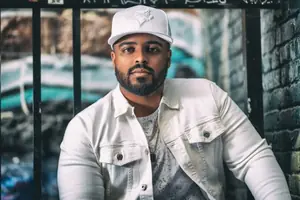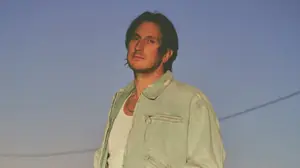


Leaning back in a cramped, dimly lit dressing room that smells faintly of industrial cleaner and stale coffee, Tyler Shaw doesn't look like a man burdened by the weight of Platinum plaques. He looks like a guy who just finished a soundcheck and is already thinking about the next city. The Chinese-Canadian artist has been a fixture on the airwaves since "Kiss Goodnight" became a ubiquitous earworm in 2012. But the Tyler Shaw of today is a different beast than the kid who emerged from the MuchMusic Coca-Cola Covers contest. He’s sharper. More intentional.
The stats are there if you need them. A JUNO nomination for Breakthrough Artist of the Year in 2014. Gold certifications for "House of Cards" and "Wicked" from his debut, *Yesterday*. Then came *INTUITION* in 2018, spawning the Top 10 hit "Cautious" and the Platinum-certified "With You." He’s shared stages with Shawn Mendes, Alessia Cara and Selena Gomez. Now, he’s mid-trek on The Wanted Tour, hitting Sarnia on Nov. 5 and Guelph on Nov. 7 before dragging his gear out to the Maritimes.
We caught up with him to talk shop, heritage and why Southwestern Ontario feels different.
It has been nearly a year since Shaw last rolled through this corner of the province. There is a specific grit to the crowds in Guelph, London and Windsor that you don't find in the polished theatre circuits of Toronto or Vancouver. Shaw notices it too.
"Both have been fantastic," Shaw says, shifting in his chair. "I’ve also played in Windsor at the casino there, and that was amazing. It’s always, always a good response with the crowd in Southwestern Ontario. I love it. I really do. Everywhere is great, but there’s something in the water down in Southwestern Ontario."
That "something in the water" usually translates to a lack of pretension. These are crowds that want to be entertained, not just seen at a show. And Shaw has spent his entire life preparing for that kind of scrutiny. His rise was televised, documented and dissected, but the roots go much deeper than a reality TV segment.
"Music runs in the blood in my family," he explains. "My grandparents played music. My great-grandparents were actually one of the few wedding bands out in Saskatchewan back in the day. So it runs in the family, which is great. So it’s definitely in my veins. And the day I picked up a guitar, I taught myself how to play. But the day I picked up my guitar, something magical happened, something sparked in my brain. And things just started rolling. I think, ever since then, it’s just been totally a focus. But like I said, even before picking up the guitar, it’s been living in me for quite some time."
It is easy to forget that Shaw was almost a casualty of the professional sports machine. In Canada, the pipeline from elite youth sports to a "real job" is a well-worn path. But the pipeline from the pitch to the JUNO stage is a rarity.
"To be honest, I was actually very headstrong on becoming a professional soccer player," Shaw admits. "And I was on my way to doing that. And then I got an opportunity with music, and I was like, 'You know what? Let’s do it.' I loved both. I played soccer for a long time, but I was playing music for a longer time. And I enjoyed both equally. So they were not surprised, I guess you could say. They were always supportive, which definitely helped. Definitely."
That support system allowed him to lean into the craft of songwriting, a skill that separates the flash-in-the-pan pop stars from the careerists. While the industry is full of performers who merely "rent" their hits from Swedish production camps, Shaw insists on owning his narrative.
"Absolutely," he says when asked about the importance of the pen. "You get a better emotional connection to the songs that you write. If you are given a song, you could connect to it on some level, but it doesn’t run as deep as if you were to write it yourself. So that’s why I love to write my own music. It just makes more sense, and it makes you feel better when you’re performing it because you can have a true connection to the lyrics, then to the melody. It’s the feeling that you portray when you’re performing the song."
And that connection is what builds the camaraderie among the current crop of Canadian heavyweights. There is a sense that the "Great White North" is no longer just a feeder system for American labels. It is the destination.
"As Canadian artists, we all got to stick together because for a long time, the Canadian industry I believe wasn’t really taken seriously," Shaw notes. "And so now, we have tons of people coming out. And then everyone’s looking to Canada, Toronto, specifically where the hub is in Canada. We’re hitting all the genres: hip hop, country, and pop, all of them. So having that connection and a relationship with each other is very important as Canadians."
But who does he actually want to share a bus with? The answer is a mix of nostalgia and a keen understanding of brand alignment.
I love our diversity and our multiculturalism, honestly, and of course, our politeness. It’s amazing to live in, especially in Toronto, where you can walk down one street and experience Greek town. And then on the other side of the city, not too far, there’s Chinatown, and little India, and little Italy. It’s just incredible to see.
"Ooh, that’s a good question. That’s something I got to think about," he says. "I’ve been a huge fan of Marianas Trench for a long time. So I would love to go on the road with them. Yeah, I don’t know. You asked me about who I would want to go on tour with, but what would make sense to go on tour with is another question. Right? I would love to go tour with Michael Bublé, but our music doesn’t quite make sense. You know what I’m saying? So yeah, that’s something I got to think about."
Every professional songwriter has a skeleton in the closet—that first attempt at a ballad that feels like a fever dream of puberty and bad metaphors. For Shaw, that skeleton has a name.
"Oh, man. Yeah. I was about 13 or 14 years old, and I had a crush on this girl named Tara," he laughs. "And I wrote a song called The Tara Song. And I’ll leave that as it is because it wasn’t very good. But it’s all part of the journey. So it happened."
When asked if the subject of his affection ever actually heard the track, Shaw's memory is conveniently hazy. "I don’t remember if she did or not. I’m not sure," he says.
Fortunately, his more recent output is a far cry from "The Tara Song." His sophomore effort, *Intuition*, shows a level of maturity that his debut only hinted at. There is a technical precision to the vocal arrangements that suggests a singer who has finally figured out how to use his instrument without over-singing.
"Ooh, that’s a tough question because every song is important," Shaw says regarding his personal favourite. "You write every song in the moment that you’re feeling, and you feel very proud that you’ve written a song about what you want to talk about in that moment. Probably my favourite song on my new album, Intuition, is Overthink. I think it’s just very powerful lyrically and melodically. And it just... it makes me feel so good. So I’d have to say Overthink then."
But the most striking thing about Shaw’s current era isn't just the music; it’s the visual identity. He has begun incorporating Chinese characters into his branding, a move that feels less like a marketing pivot and more like a reclamation of self.
"So when I was younger, my parents, they got split up," Shaw reveals. "And it wasn’t until pretty recently, like four or five years ago, that I finally had a strong connection with my father. And my father is the one who grew up in Hong Kong. So growing up, I didn’t really get to experience that culture too, too much. So over the past four or five years, I’ve learned and experienced this culture. And it’s a part of me that I knew was there, but I just didn’t really understand it. And I took a trip to Hong Kong with my father. And he showed me everything: where he grew up, where my great-grandparents on his side were buried, and just going through the whole family history on that side. And that really inspired me to have the artwork reflect this part of me now. Because it is a part of me, and it will always be a part of me. So I wanted to have that."
For now, the heritage stays on the jacket and the posters rather than in the lyrics. He’s not quite at the stage of dropping Mandarin verses into his pop hooks, but the intent is clear.
"It doesn’t really reflect too much in the music," he says. "It’s just more the artwork. And I want to express myself in my fashion sense, and basically just letting people know that yes, I am a Chinese Canadian."
The importance of this cannot be overstated. For decades, Asian-Canadian representation in pop music was virtually non-existent or relegated to the periphery. Shaw is part of a tidal shift in how the industry views diverse leads.
"Oh, absolutely," Shaw says. "And I think now, more than ever, Chinese Canadians, Chinese Americans, or just half Asians, or Asians, in general, have broken into some sort of bigger scene you could say. There’s an actor from Toronto who’s going to be a Marvel superhero. We’re no longer the nerd, or the guy that gets killed off first on a horror film. We’re the superhero. We’re the main character, the sex symbol. It’s very refreshing to have that. I’m very proud of the culture."
When he talks about that culture, he skips the clichés and goes straight for the two pillars of any immigrant household: family and food.
"The detail and attention to how much family means to us. It really runs deep," he says. "I know every culture has their family-orientated cultures, and norms, and stuff like that. But it runs very deep in Chinese culture. That and the food, of course. Who doesn’t like a Chinese takeout? And I’m not talking Chinese-Canadian takeout. I’m talking Chinese takeout, you know?"
Yet, Shaw is equally rooted in the Canadian experience. He speaks about the country with the kind of earnestness that would feel cheesy if it weren't so obviously sincere.
"I love our diversity and our multiculturalism, honestly, and of course, our politeness," Shaw notes. "It’s amazing to live in, especially in Toronto, where you can walk down one street and experience Greek town. And then on the other side of the city, not too far, there’s Chinatown, and little India, and little Italy. It’s just incredible to see. So I’m super, super happy to live in a country where that’s accepted."
That stability extends to his personal life. In an industry that eats marriages for breakfast, Shaw is the vocal, proud husband. He isn't hiding his ring to preserve a "single guy" image for the fans.
"Yes. Yes, yes, yes. 100%," he says with a grin. "My wife is the absolute best, and I love her to death. We’re just over a year married now. And we’re going strong, and I can’t wait to spend the rest of my life with her."
She is also his primary muse. If you’re looking for the subtext in his recent singles, you don’t have to look very far.
"100%, yeah," Shaw confirms. "From my second single, With You, to the most recent one, To the Man Who let Her Go. She’s been the inspiration on both and many others on the album as well. There’s a song called The Wall, which kind of explains the tension that sometimes is between relationships. So of course, no relationship is perfect. So I don’t have sad songs, but difficulties within relationships, songs about that, and ballads."
Beyond the studio, Shaw is dipping his toes into the acting world. It’s a natural progression for a guy with his look and charisma, though he’s quick to point out where his priorities lie at the moment.
"I really love acting, but right now I’m just focused on The Wanted Tour," he says. "And that’s kind of where my head’s at right now. Maybe when I have some downtime, I’ll maybe go into a movie or two or some TV show. I’d love to continue acting. I think it’s one of the funniest things I’ve ever done besides music. I definitely want to continue to explore that world."
There is a certain resemblance to a young Dean Cain—the jawline, the easy confidence. When the comparison is brought up, Shaw doesn't miss a beat. He’s ready for the cape.
"I will take that. Yeah, I could definitely be a Superman," Shaw laughs. "Sign me up right now. Let’s do it. Yeah, I’m in. Let’s go."
For now, the only thing Tyler Shaw is saving is the Canadian pop scene from mediocrity. And he’s doing a damn good job of it.