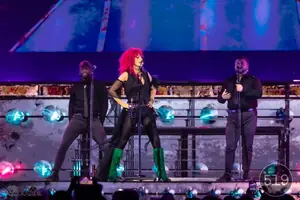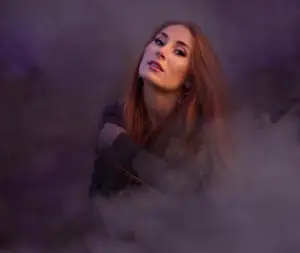
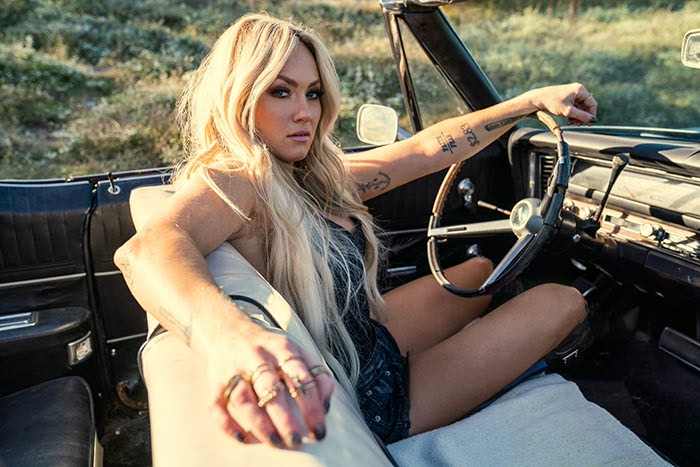
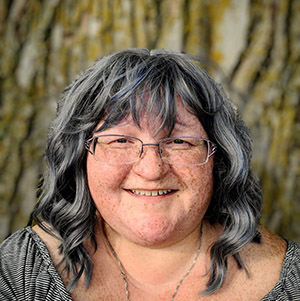
Standing in the wings of a darkened theatre, watching Meghan Patrick check the tuning on her acoustic guitar, you don’t see a typical Nashville-groomed starlet. You see a survivor with a spine literally reinforced by surgical steel. There is a grit to her that the industry usually tries to polish away, but Patrick has spent the last few years leaning into the jagged edges of her own history.
Her latest offering, "The Boy Who Cried Drunk," isn’t just another radio play. It is a calculated, heavy-hitting interrogation of trauma released during Domestic Violence Awareness Month. While most artists treat social causes like a wardrobe accessory, Patrick wears this one like a scar. It is a narrative pulled directly from the wreckage of her past.
“It’s my own story,” Patrick says, her voice steady but carrying the weight of the admission. She isn’t looking for pity. She is looking for resonance. She wants her music to act as a survival manual for anyone currently trapped in the same cycle of abuse she managed to escape.
The track explores the suffocating reality of toxic relationships—the kind that don't just break your heart but try to break your spirit. Patrick has reached a point where she is no longer interested in keeping those secrets.
“It’s reached a point where I’m ready to unfold that chapter of my life,” she explains. There is a clinical bravery in the way she talks about her pain. “The aim is to transform a period of profound pain and trauma into a healing experience for others.”
But the impact of the song has already moved beyond the digital streaming charts. Since the track hit the airwaves, the feedback hasn't been about hooks or melodies; it has been about life and death.
“We’ve received an outpouring of personal stories from women,” Patrick says. The reality of her influence is clear in the messages filling her inbox. “Some have even informed me that the song was a catalyst for them to leave their abusers.”
This isn't to say she’s abandoned the rowdy energy that built her brand. She knows the market requires a certain level of levity. But she refuses to let the "beers and trucks" trope define her entire existence as a songwriter.
“There’s a necessity for music that tackles the fun and light-hearted aspects of life, like beers and trucks. And yes, I will always bring that to the table,” Patrick asserts. She understands the business, but she also understands the responsibility of the microphone.
“I have been blessed with the gift of songwriting, and I feel compelled to touch upon the weightier aspects of the human experience,” she says. It is a refreshing stance in an industry that often prefers its women to be decorative rather than disruptive.
Patrick views her career through the lens of connection. If she isn't saying something that matters, she doesn't see the point in saying it at all.
“Music has the incredible power to impact lives,” she remarks. It is a simple philosophy that governs her output. “If my songs can make even one person feel less isolated in their struggles, then I consider my work meaningful.”
The creation of “The Boy Who Cried Drunk” happened almost by accident. She was in a room with Billy Dawson and Jacob Hawksworth when a specific melody caught her ear. It wasn't planned, but the mood of the room shifted the moment she decided to go there.
She walked into the session and didn't mince words. “How heavy do you guys want to get today? Because I’ve got an idea,” she recalls telling them.
Writing about domestic violence requires a certain level of emotional safety. You can't just do that with anyone. Dawson and Hawksworth stepped back and let Patrick lead the way through the darker corners of her memory.
“They both just handled it so well and were just incredibly supportive,” she recounts. The session became as much about her own healing as it was about the technical aspects of the song.
Performing the track live is a different beast entirely. It turns the concert floor into a confessional. Patrick notes that the atmosphere changes the second the first chords of the song hit the air.
I just felt like I was hearing a lot of ‘not good enough, not yet’ for a long time. To be invited to play the Opry was kind of like this big, ‘Yes.’
“To stand there, performing live, has been both a weighty and empowering experience,” she says. It is a high-wire act of vulnerability. Fans often approach her after the set, their faces streaked with tears, finally seeing their own private hells reflected in her lyrics.
“It’s raw, real, and it feels like there’s a deeper bond forming with my fans as we navigate these experiences together,” Patrick shares.
Her advocacy isn't limited to the recording booth. She has put her money and her time where her mouth is, partnering with the YWCA of Nashville and Middle Tennessee. Her management team did the legwork to ensure they were backing an organization that actually produces results.
“The YWCA has over a hundred years of experience in supporting those affected by domestic violence,” Patrick notes. She isn't interested in superficial partnerships. She wants to support the infrastructure that helps women and children rebuild.
“Their enduring impact made them an obvious choice for us,” she explains. It is a logical extension of the song’s mission.
While she’s currently out on the "Run Baby Run" tour with LANCO, her path to this point was anything but linear. Long before she was a CCMA winner, she was a teenager obsessed with gravity and snow.
“I was a competitive snowboarder for a long time...that was kind of the big dream for a long time,” she says. But that dream ended in a catastrophic heap during her senior year of high school.
The accident was brutal. It wasn't a minor tumble; it was a total body collapse.
“I broke my back, dislocated my shoulder, snapped my collarbone, broken ribs, severe concussion,” Patrick lists the injuries with a detached, almost mechanical tone. “Honestly, I was lucky to walk after that injury.”
With snowboarding dead in the water, she pivoted to McGill University. But she wasn't studying country. She was studying opera. It gave her a vocal foundation that most of her peers in Nashville lack, even if the genre itself felt like a suit that didn't fit.
“I met a lot of great musicians there,” she says. Her time in Montreal was a musical melting pot. She fronted the New Groove Orchestra, a funk band that she describes as a "tower of power."
But it was a bluegrass band that finally pointed her toward home. “I had a bluegrass band, which I loved... bluegrass was kind of like my gateway drug to country music,” she admits.
When that band dissolved, she was forced to look in the mirror and figure out who she was without a group to hide behind.
“Once I kind of went separate ways from the bluegrass band, it was the first time I ever was trying to be like, Megan Patrick the artist,” she explains. The transition was terrifying, but the songs that came out of her were undeniably country.
“When I was writing songs by myself... they were country songs just without really trying,” Patrick says. The genre chose her as much as she chose it.
“When I started playing some of the country festivals... I just really fell in love with the fans and felt really at home in that genre,” she says.
Her opera training remains her secret weapon. She doesn't sing Puccini anymore, but the technical discipline allows her to belt out power ballads night after night without shredding her vocal cords.
“I learned some great technique and how to sing well and breathing techniques and stuff like that,” Patrick shares. But the rigid world of the Royal Conservatory wasn't her destiny. “That wasn’t really what I wanted,” she says.
The industry tried to mould her early on. There were suggestions on what to wear, how to sound, and which stories to tell. Patrick resisted.
“There’s going to be a lot of people that are going to try and tell you, you need to do this and you need to do that,” she says. By ignoring the noise, she evolved “into a more confident and sure version of myself.”
That confidence led to her first number one single in Canada. It was a victory for authenticity, proving that audiences crave truth over artifice.
“It was an amazing experience,” Patrick says of the chart-topping success. “It felt like I was able to really make my mark as an artist with a song that really mattered.”
Breaking into the U.S. market with "Heart of Glass" was the next logical step, though the timing was cursed by a global pandemic. It was a bittersweet period of being a rising star trapped in a living room.
“My hope is as I continue to build my fan base here in the U.S. and back home in Canada, that more and more people will find that record and find something they love about it,” she says.
But the ultimate validation came from a circle of wood in Nashville. Playing the Grand Ole Opry is the high-water mark for any country singer, but for Patrick, it was a middle finger to everyone who told her she wasn't ready.
“There’s an energy there when you walk on that stage,” Patrick remarks. It was the light at the end of a very dark tunnel.
The years leading up to that debut were brutal. She had split from Warner Music and was navigating the industry as an independent force during a time when the world was shut down.
“Were very challenging in my career,” she admits. The silence from the industry was deafening.
“I just felt like I was hearing a lot of ‘not good enough, not yet’ for a long time,” she shares. But the invitation to the Opry changed the narrative instantly.
“To be invited to play the Opry was kind of like this big, ‘Yes,’” Patrick says. It was a "really incredible, monumental acknowledgment" of her survival and her talent.
It ended a "long drought of feeling like no one was paying attention, like no one cared."
For Patrick, the Opry isn't a destination; it’s a home. “I don’t think playing the Opry will ever get old for me,” she asserts. It is the proof that she didn't just survive her past—she conquered it.