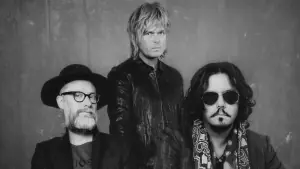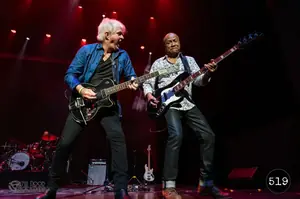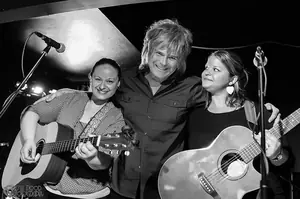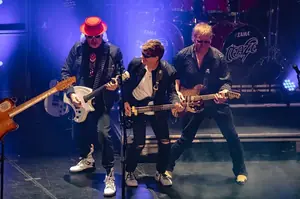
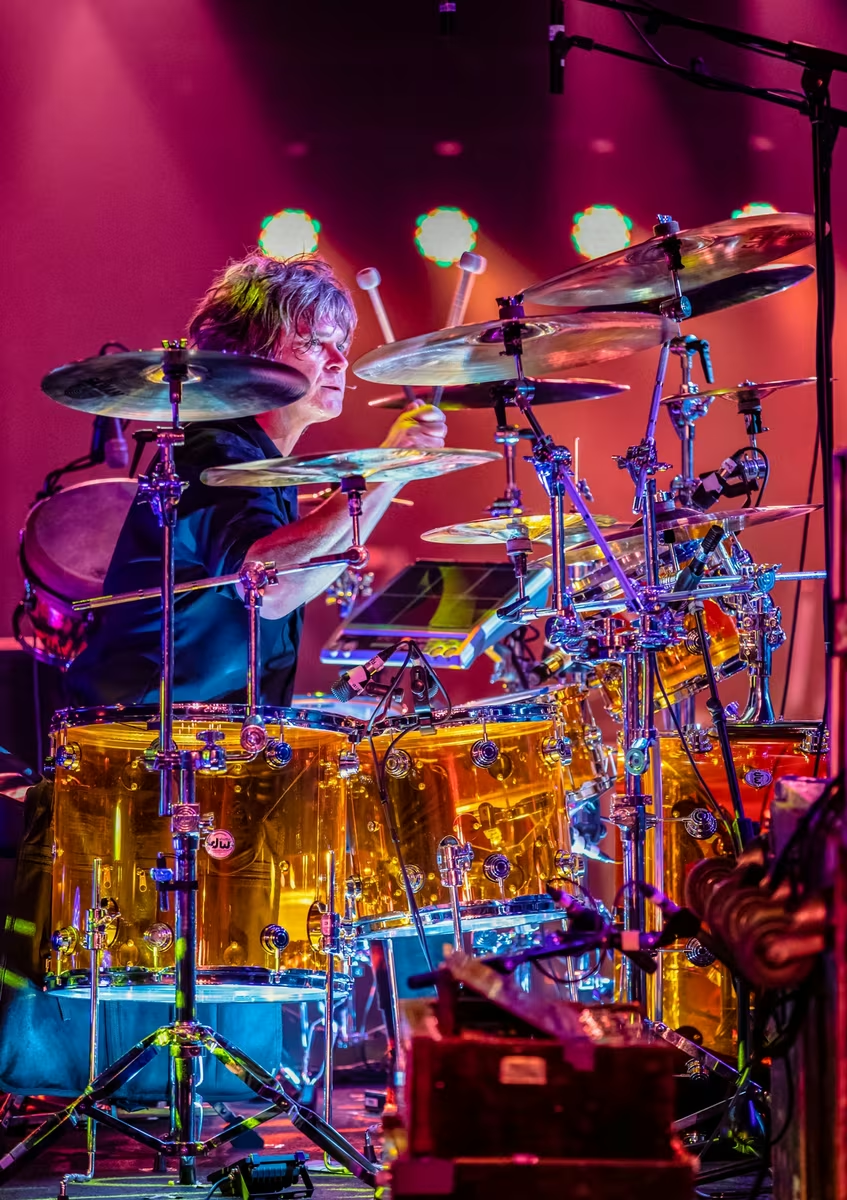
The rock and roll machine did not just grind to a halt in the spring of 2020; it shattered. For Jeff Burrows, the LaSalle-based powerhouse behind the kit for The Tea Party and the festive engine of The S’Anints, the silence was deafening. His annual 24-hour drum marathon, a gruelling test of physical endurance and community spirit, was slated for May. But the pandemic had other plans, turning the vibrant streets of Windsor into a ghost town and forcing every artist to rethink their relevance in a world without stages.
Burrows is not the type to let a kit gather dust while the community suffers. He pivoted, reconfiguring the marathon into a leaner, meaner 12-hour broadcast. The event, cheekily rebranded as The 1/2 Drum Marathon, is set to go live on June 20. It is a logistical tightrope walk, streaming from the empty interior of Good Time Charly in Windsor via the Bluesfest Windsor YouTube channel. It is a necessary evolution. And it proves that even when the world stops, the beat has to find a way to carry on.
The shift to a digital format is a compromise, but it is one born of necessity. Fans can find the stream at the Bluesfest channel, which has become a makeshift digital hub for local and international talent trying to bridge the gap between their living rooms and their audience. The June 20 event starts at 9 a.m. and hammers through until 9 p.m., featuring a rotating cast of local solo acts and duos. It is a far cry from the sweat-soaked, 24-hour marathons of years past, but the stakes are arguably higher now.
But the marathon isn’t the only thing on the docket. The Tea Party has been quietly productive in the shadows. They dropped a cover of Joy Division’s "Isolation" in May, a choice so on the nose it almost hurts. It is a track that has been finding its way onto rock radio playlists across the country, serving as a bleakly appropriate anthem for a society under lockdown. When I caught up with Burrows, we skipped the pleasantries and got right into the grit of surviving a global shutdown.
"Like many, I’m trying to keep my distance and stay within my bubble of family at home," Burrows says when asked how he is navigating the new normal. "We’ve been doing our morning and evening walks and keeping our distance. We’re finding more time as a family too. It’s almost like when my kids were younger again. So there’s certain elements to it that are refreshing, such as having dinners together at meal time and those simple pleasures. I do worry about my wife going in as a nurse, but she’s doing well given the circumstances. As I mentioned too, some good things have come out of it like more talking with family and better communication with people you haven’t been in touch with. I’ve even just been reading about people burying old hatchets they’ve never thought they would have to bury and now are realizing how ridiculous it is to hold those types of grudges, right? So of the worst possible element we’re in right now, there are some good things to come out of it, so we just have to try to stay as positive as possible."
The optimism is tempered by the reality of an industry in freefall. The entertainment business is not just "affected"—it is being dismantled and rebuilt in real-time. For a band like The Tea Party, who thrive on the visceral energy of a live crowd, the future is a blurred map. They had a massive summer planned, including the "Saints and Sinners" tour alongside Moist, Headstones and Big Wreck. That tour is a casualty of the times, leaving a void where the roar of the amps should be.
"Everything is so touch and go and everyone seems to have answers but no one seems to have the right answers," Burrows admits. "So, we already had an EP that we intended on releasing the first single in June to coincide with the Canadian tour, Saints and Sinners that we were doing with our friends in Moist, Headstones and Big Wreck. So that’s done. Our manager is discussing with Warner Brothers when to release so that’s all still in motion. Also, in the meantime, we came up with the idea of doing a cover that we enjoyed playing when we were kids by Joy Division called Isolation. And it just seemed apropos so that had a soft release last week. Radio stations are starting to pick up."
The "Isolation" cover is a fascinating pivot. It is less of the brooding, Moroccan-roll grandiosity we expect from The Tea Party and more of a lean, rhythmic exercise. It was a DIY effort, recorded in fragments across thousands of miles. The biggest rock station in the country, CHOM-FM in Montreal, has already hopped on it. It is a testament to the band's durability that they can still command airwaves while stuck in their respective basements.
"The biggest rock station in Canada, CHOM-FM out of Montreal, just added it today or tomorrow," Burrows explains. "So now we all did our parts isolated in our own areas and we all live thousands of miles apart anyway. We iPhone videoed each of our performances and we have a friend in Australia who is putting a video together for that song as well. There’s not much really we can do in the meantime for planning. Everyone seems to think that everything is going to be good by the fall. And it’s not. You just don’t know and neither do I. I don’t really know what to say beyond that."
There is a raw honesty in that admission. The "fall will be fine" narrative was a comforting lie many in the industry told themselves in the early days. Burrows sees through it. He knows the road back to the stage is long. When we discussed the "Isolation" cover further, he noted that the song was a throwback to the band’s formative years, though the execution has certainly matured since their garage days.
"It’s better because we were kids, but not really all that much, to be honest," he says with a laugh. "It’s a simple song and I did it in 1 take and I just thought, let’s just have fun and put it out. So it sounds good. It’s not a difficult song. It’s not very Tea Party-esque, but it’s very danceable and we thought why not do something like that in the midst of this, just for a change and for people to enjoy themselves a little bit."
The recording process itself was a study in social distancing. Burrows does not have a full kit setup at home, so he had to venture out to SLR Studios. The session was a surgical strike—minimal contact, maximum efficiency. Marty Bak, the man behind the board, has been navigating these waters for weeks, ensuring the studio remains a sterile environment for creativity.
"No, I went to SLR, because Marty has only been doing this for six weeks," Burrows says regarding his drum setup. "So I just went directly into the isolation room and he stayed in the mixing room and in 40 minutes, I had done two songs. So it was great. Quick and easy and done."
And there it is. The slip of the tongue. Two songs. When pressed on the second track, Burrows plays it close to the vest, though his excitement is obvious. The Tea Party has always been a band of secrets and layers, and even in a pandemic, they are keeping the fans guessing.
"Yeah," he confirms when I ask about the second song. "Yeah. It sounds really good though, I can tell you that. It just got mastered. I heard it and it sounds really good."
I always feel bad asking for money and this makes it tougher because of the situation that everyone finds themselves in economically. ...LIUNA 65, the Labors International Union of North America, they’ve stepped up and they have agreed to pay the musicians to come in... I couldn’t ask anyone to do any freebies, regardless. They all want to, but I’m just saying no.
It is not an original, but another cover. The band's original EP is "in the can," waiting for the right moment to strike. For now, they are leaning into the "apropos" nature of their selections. It is a smart move. In a time when the future is uncertain, nostalgia and familiar melodies offer a bridge.
"No, another cover," Burrows reveals. "We, like I said, the originals, the EP’s done and it’s in the can. So it’s just another apropos cover and had a lot of fun and it sounds really good. I’m very impressed with that one."
The timing of these releases is a moving target. In the music industry, radio rotation is the sun that everything orbits. If "Isolation" becomes a staple, the follow-up gets pushed. It is a game of patience in an era where everyone is losing theirs.
"I think management’s just deciding because the plan was to do them three, four weeks apart," Burrows says. "But if radio stations are now grabbing isolation and they’re going to put it in heavy rotation for eight to 10 weeks, then everything changes, right? So like everything, it’s in flux. Everything keeps changing."
That sense of flux brings us back to the marathon. Usually, this is a 24-hour endurance test that pushes Burrows to his physical limits. He has been doing this for 14 years, and he is already eyeing the finish line of the project's lifespan. He has set a 20-year limit on the event, a realistic acknowledgement of the toll it takes on a drummer who hits as hard as he does.
"This year was going to be the 14th annual of 20," Burrows notes. "I did put a 20 year limit on it, only because I’ll be older and it doesn’t get any easier on the body or mentally. And over the years, I’ve changed and adjusted and done this event with different charities. It began with my friends at Transition to Betterness. They all do such amazing work locally. And then once the provincial government came in, most recently, a few years ago, the slashing of the mental health budget from 5% down to about 3.5%. I don’t know the numbers exactly, but it’s right around there. I thought let’s help out our local community mental health associations, so that’s the road I’ve gone. And the way it’s always worked is, I would play for 24 hours and different bands would join me every hour."
The history of the marathon is a history of Burrows connecting with his own backyard. When The Tea Party was at its commercial peak, he was a ghost in Windsor, always on a plane or a tour bus. The marathon forced him to plant roots and discover the local scene he had been missing. It grew from a four-band struggle into a 22-band circus, with the Twisted Sisters famously taking the graveyard shift.
"The first year I started, unfortunately for the bands, they were in six hour slots because I only had four bands coming in," he recalls. "But then as it grew and I got to know more of the local scene, because when it started, I just really didn’t know a lot about the local scene because I was always touring and always on the road. And at that time, the Tea Party wasn’t doing anything. So I got to know more and more people and they started coming out. So I’d extended it and now usually there’s probably max 22 bands because the Twisted Sisters always do my middle of the night hours. The way we raised funds is, I get sponsors by the hour and I try to sell them on sponsoring it and getting a radio push through either of my radio friends, both at Blackburn and at Bell."
The mechanics of the fundraiser are straightforward but effective. Sponsorships, a $20 entrance fee, silent auctions and donated gift cards. It is a grassroots effort that has raised massive sums for mental health. But this year, the physical gates are closed. When Kosta at Good Time Charly offered up his empty building, Burrows saw a chance to save the year.
"I get sponsorship that way. And then we have a $20 entrance fee. It started at 10, and then I moved into $20 about two years ago. There’s been no complaints, I just thought you can come for 24 hours literally and be entertained. So the $20 is a good deal for all of these bands that you get to see. And then we have silent auctions and big auctions. Also gift cards that you can buy for $20 and they each have $25 values and those are all donated. So that’s kind of normally how we do it. This year, of course, I cancelled it and I was pretty bummed and I felt horrible for the charities. But then I got a call from Kosta who is the owner of Good Time Charlie and he said, “The building’s going to be empty, but you’re more than welcome to do something if you’d like to do it online or a stream.”"
The decision to cut the time in half was a tactical one. A 24-hour stream is a different beast than a 24-hour live show. Without the physical crowd to feed off in those final 12 hours, the mental toll would be staggering. So, the 1/2 Marathon was born. It is a solo and duo affair to keep the headcounts low and the safety high.
"And I thought, wow," Burrows says. "And in a day, I put together the half marathon, only because the 24 hours marathon is difficult enough, but those last 12 hours are always great because there was a lot of people and it just gets you through it. And I don’t know how a 24 hour stream would roll. So I thought, you know what? Let’s do a half marathon and see if we can raise a little bit of funds. And literally, in eight hours, the artwork was done. I kept it to solo or duo artists, which again, I felt bad because so many bands have helped me for so many years. But that way, we can properly dismiss ourselves. And then Christopher Marentette and A.J. Vanden Berghe are organizing livestream through the Blues Fest site on Facebook and that’s that. So in the meantime, I’ve re-upped or reopened my PayPal me account for anyone outside of Canada or in Canada."
The money trail is transparent. Donations go through PayPal or a Facebook fundraiser directly to the Canadian Mental Health Association (CMHA). Burrows is sensitive to the fact that everyone is hurting financially right now. He feels the weight of asking for money when the economy is in a tailspin, and he refuses to let the participating musicians work for free.
"Doesn’t matter if you have a PayPal account, you can use it," he explains. "But that’s one way to donate. And then the other way is just the Facebook fundraiser where the funds go directly to the CMHA. And I’m using the CMHA specific out of the six that we raised money for because of their recognition and people would understand, okay, it’s mental health. And then CMHC will subsequently cut checks to the other five charities once we have our final tally. It’s working out good. I always feel bad asking for money and this makes it tougher because of the situation that everyone finds themselves in economically. I mean, there’s maybe 5% whose lives maybe haven’t changed during this. But the rest, it really has. And even worse, I feel bad asking musicians to donate their time."
This is where LIUNA 65 stepped in. The Labourers' International Union of North America has taken on the role of benefactor, ensuring the artists—many of whom have lost their entire livelihoods—are compensated. It is a rare moment of industry solidarity.
"So LIUNA 65, the Labors International Union of North America, they’ve stepped up and they have agreed to pay the musicians to come in because of most of the popular musicians are up in that top rank, especially the ones who do this for a living," Burrows says. "Your Jody Raffoul’s and your Mark Chichkan’s. I mean, I feel horrible for these guys because that’s what they do all the time to feed their families and so on. And so I couldn’t ask anyone to do any freebies, regardless. They all want to, but I’m just saying no. So they’re getting paid and LIUNA’s a great sponsor. So that’s how that’s going to roll out."
The logistics of the June 20 event are strict. This isn't a party; it's a broadcast. Social distancing is the rule of the day, with Burrows isolated on stage and the performers kept at a significant distance.
"Well, I’ll be on the stage and say, for example, the Twisted Sisters, they’ll be probably 12 feet apart," Burrows details. "And then the video cameras and such, everyone will be quite a distance away from each other. So I mean, that’s about as best as we can do at that point."
This is Burrows' first foray into personal livestreaming, but he is no stranger to the tech. The Tea Party was actually a pioneer in this field, streaming shows in the late 90s when most people were still trying to figure out how to use a mouse. Bassist Stuart Chatwood has always been the band's tech whisperer, ensuring they were ahead of the curve.
"For this, yes," Burrows says of the livestream. "And what I’m excited about is the fact that next year, hopefully, I’m assuming, but who knows? I’ll be back to the 24 hour drum marathon, but we’ll live stream it as well. The Tea Party had live streamed, it was one of the first bands to ever do a live stream, literally in the world, back in ‘97 or ‘98. It was in the early, early, early stages. We’ve done things like that but never personally because I really don’t have the technical skills. But Christopher and AJ are very proficient and are very generous with their time. So they’re also performing, which is fantastic for one deal."
Chatwood’s foresight is legendary in Canadian rock circles. He registered the band's domain name before most people knew what a URL was. "Stuart spearheaded that," Burrows says. "Stuart Chatwood, our bass player, he registered our band name within the first year of the internet. You know what I mean, it was just crazy. Our website band, he’s very techie and loves all of that, has always been on top of it."
But for all the tech and the global tours, Burrows remains a Windsor man through and through. He is one of the few artists who puts as much labour into his community as he does into his art. He rejects the old "Windsor gets a bad rap" trope, choosing instead to focus on the region's unmatched generosity.
"I do," he says of his love for the area. "Windsor seems to get a bad rap. Or it used to, anyway. I think it’s changing, but I love Windsor. I love Essex County. I love Chatham-Kent. It’s a great part of the world and has a lot to offer, and probably one of the more generous places in the entire world as well as far as I see it, because people will literally come to me and say, “What are you doing next?” Or “What’s coming up?” Because I’ll save it for this. And you can’t really ask for much more than that. And sometimes you have to be a little bit picky and choosy about what you agree and don’t agree to. I have a hard time saying no, but sometimes I just have to be straight honest with people and just say, “Look, I would not be a good host for this event because...” You don’t want to spread yourself too thin."
It is a delicate balance. Success brings opportunity, but it also brings a responsibility to "keep it real." Burrows credits his family and a tight-knit circle of friends for keeping the marathon alive for 14 years. These aren't corporate suits; they are regular people who believe in the cause.
"I love being able to raise funds and use the modicum amount of success that I’ve earned through the Tea Party to help do that," he says. "But in order to fully commit yourself to what I do, you have to keep it real. You don’t want to spread yourself too thin and you need a great support system. So my family’s A1 in that department and there are some friends that have literally spent hundreds of hours working with me, cheering me on at the drum marathon for literally 24 hours, donated tens of thousands of dollars of their own money. And these are just regular everyday working people, these aren’t big companies giving me thousands of dollars. So it pays to have a good support system around and it pays to be in such a giving community and bless us all for being able to live here. It’s good."
The goal for this year’s 1/2 Marathon is modest compared to the usual $60,000 haul, but it is no less vital. Burrows is aiming for $20,000. It is uncharted territory, but the momentum is already building.
"My goal this year originally was $60,000," Burrows admits. "I’m not going to get that, of course. Because we do make a lot of money on the raffles, gift cards and people coming in. So honestly, I’m hoping if we can do $20,000, each charity walks away with three, that would be amazing. So far, I’m up to around $2,100 each charity. That being said, we’re still close to three weeks away, so I’ll think we’ll hit the three. Maybe we’ll do even more. I know they all understand and they’re all grateful and that’s all that matters. And hopefully, we can entertain people and give them something different to do on a Saturday."
On June 20, the drums will sound again. It won't be in a packed room smelling of stale beer and sweat, but the rhythm will be the same. Jeff Burrows is proving that while you can stop the tour, you can't stop the heart of the drummer. And in Windsor, that heart beats for more than just the music.
Get Tickets