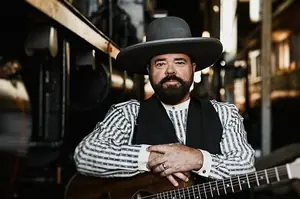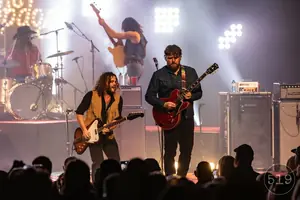


There is a specific kind of cognitive dissonance that occurs when you stand in the middle of a Canadian December, shivering in a parka, while listening to the sun-baked reverb of Australian surf rock. It is a collision of climates. Windang, New South Wales, is a world away from the grey slush of London, Ontario, yet Hockey Dad manages to bridge that gap with a sound that feels like a warm front hitting a frozen lake. The duo, comprised of childhood friends Billy Fleming and Zach Stephenson, is currently prepping for a Dec. tour that brings them into the 519 territory at Rum Runners.
Formed in 2013, the band has spent the last several years refining a two-man assault that defies the thinness usually associated with duos. They have two full albums and an EP under their belts, but the new material suggests a pivot toward something more structured. It is catchier. It is more deliberate. It lacks the aimless wandering of their earlier garage sessions, replacing it with a sharp, melodic edge that should see their North American footprint expand significantly in 2020. I caught up with guitarist and vocalist Zach Stephenson to talk about the transition from the beach to the bush, and the looming reality of a Canadian winter.
The band has not stepped foot on Canadian soil in a minute. The return feels overdue, especially for a group whose name carries such heavy cultural weight in the Great White North. Stephenson is leaning into the anticipation, even if he is not entirely ready for the thermal shock.
"I'm super excited," Stephenson says. "Love's gone to Canada and loves touring in Canada, so it's going to be good to be back."
But the timing is the sticking point. Booking a tour through multiple provinces in the dead of winter is a bold move for two guys who live in board shorts. There is a certain masochism in leaving the Australian summer for the biting winds of the Ontario 401 corridor.
"Yeah, I know," he admits. "Really worried about it because right now it's really hot at home, and it's going to be a rude shock when we get there. It's going to be a very big indoors trip."
The name Hockey Dad is a peculiar bit of branding. In Canada, it evokes images of 6:00 a.m. practices and overpriced coffee in freezing arenas. In Australia, it is a quirky pop-culture relic. The origin story is less about sports and more about the golden era of Matt Groening.
"Name's actually from the Simpsons," Stephenson explains. "There's an episode where Bart and Millhouse are playing a video game, and the video game is called Hockey Dad. It's just about two angry dads in a little league game having a fight over the children, so we thought we'd just name our band after that video game."
Despite the name, the band has yet to actually witness the sport that defines their moniker. There is a charm to the idea of these two surfers sitting rink-side, baffled by the violence and the ice. Stephenson seems keen on fixing that particular gap in his resume during this run.
"No, we never have," he says regarding attending a live game. "It's the one thing I want to do, I've never done it in Canada. I just want to go to a division two game or something. It would be so awesome."
The trajectory of Hockey Dad is a classic case of small-town boredom fueling creative output. Windang is not exactly a bustling metropolis of industry. When you grow up in a place where the primary activities are surfing or staring at the wall, you eventually pick up a guitar. Music was the background noise of their upbringing, a constant presence that eventually became a vocation.
"I guess it was always around when we were kids," Stephenson says. "Both my dad and my parents really loved music and listened to it all the time. Siblings really loved music, so I guess we kind of grew up always having it in our lives anyway, not knowing that maybe we would be playing it every day, but at least it was going to be a big part of our lives. Then I think we just kind of got bored when we were teenagers and as everybody does, just picked up an instrument for something to do. Then I guess it was the same as every other kind of band. It was started like that. We just got bored and started playing around and then figured out how fun it was. Then as soon as you started playing shows, we were like, okay, this is all we want to do. This is awesome."
That realization—that the stage beats the cubicle—happened early for the duo. There was no backup plan. Once the adrenaline of a live set hit, the path was set. It was about longevity from the jump.
"I guess that came probably when we first started this band, I guess after six months or so," he tells me. "We were having much fun, and people were having a good time at the shows. We felt that playing shows was the best thing and having fun with everybody. Let's just try and do this as long as we can."
We've been playing that one for a while now actually. That's just the fastest song we've ever written and an absolute ear blaster... I just had that riff idea, and I had nothing else. I was playing it with Tim [Rogers] and he just said, 'Oh that sounds like a good song.' I just ran with that. I said okay, well I definitely have to make this a song now that Tim Rogers thinks this is a song.
The decision to remain a duo was not a calculated aesthetic choice or a minimalist manifesto. It was a matter of attrition. Bands are fragile ecosystems, and sometimes the only people left standing are the ones who actually want to be there. For Stephenson and Fleming, the departure of other members was a blessing in disguise. They looked at the landscape and realized they did not need a crowd on stage to make a noise.
"I don't know," Stephenson says. "We were both in band together before this one, and I guess the other three members just bailed. Then we just kept going. We never really thought of it as a problem because The White Stripes are probably one of my favorite bands of all time, and I was really into two pieces at a time, like White Stripes, and then there was a local band from Wollongong called Mother and Son. They were a two-piece, real dirty surf rock band. Then we saw them playing, and thought this is all we need then because there was only two of us. I guess we were waiting for something to turn off or somebody to turn up and play, but once we saw that we could do this ourselves and then we never, never thought about it after that."
And yet, playing as a duo is a high-wire act. There is no rhythm guitarist to hide behind. No keyboard player to fill the sonic gaps. You have to be loud, and you have to be precise. Standing in the crowd at a Hockey Dad show, you can hear the strain and the effort it takes to fill a room like Rum Runners with just six strings and a drum kit.
"It can be, yeah, sound-wise to try and fill up the room," he says. "It's a little bit harder, but it's a challenge. When it is sounding good, you can't really beat it. It's such a good feeling to have it sounding good with just two of us. Then people come up and say, 'I really thought there was an extra person out there,' but it's a fun challenge that we always tried to still be the loudest band, only just the two of us."
The DNA of their sound is a messy blend of eras. You can hear the ghosts of '80s skate punk and the fuzzy distortion of '90s college rock. Fleming handles the aggression from behind the kit, while Stephenson provides the melodic hooks. It is a partnership built on shared history and divergent tastes that somehow meet in the middle.
"I guess? Yeah, you could probably say it's half of it because Billy grew up listening to a lot of '90s punk and probably late '80s punk," Stephenson says. "I feel the drumming side of it would be most affected, and that would be Billy's weapon of choice to draw back on. He gets really inspired by all those old beats and loves that sound. Then I listened to maybe a little bit different '90s rock when I was growing up. I guess the other half, my house kind of draws off there, and then it molds together to just make what we are."
But for all the musical success, the ocean still exerts a powerful pull. There is a legitimate question of priorities when your hobby is as physically and mentally consuming as surfing. If forced to choose between the tour bus and the board, Stephenson does not hesitate, even if the thought keeps him up at night.
"That's a really hard question," he admits. "I think about this late at night all the time in bed, and I'm so glad I don't have to choose in my life, but I'd probably have to choose surfing. I think I love it more. I think it does more for me. It's probably healthier for me than music is, that's for sure. If I went surfing every day, I'd probably live longer than if I went on tour every day."
The upcoming 2020 record marks a shift in their professional process. They returned to producer John Goodmanson, but this time, the frantic energy of their earlier sessions was replaced by a more seasoned approach. They had the luxury of time, and they used it to actually build songs rather than just capturing a moment.
"In some ways, I guess we did," Stephenson says of their new approach. "We recorded it in the same studio with the same producer with John Goodmanson again. We wanted to start with a comfort in the studio, which means we could approach the record a little differently cause we were so comfortable and could spend more time on it. We spent more time crossing the songs in the studio and working out ideas while we're there. The sounds found themselves because we'd been there before, and had more time to experiment. We knew what works. The record has a little bit more craftsmanship in it with the songwriting and all the little nuances."
That craftsmanship is evident in the visual side of the band as well. The video for *I Miss Out* is a trip into analog glitch-art, a far cry from the standard "band playing in a garage" tropes. It feels like a relic from a late-night '80s broadcast, all distorted signals and eerie textures.
"Yeah. We were at a festival in Australia and this band Methyl Ethyl was playing," Stephenson tells me. "They had a background projection, live projections going on at the back of their set, and they looked really, really cool. It turns out the guy that was doing those was a local from where we are anyway. We got in touch with him, and we wanted to work with him and see what he could do for us. He worked with other bands from Woolongong, and Pinheads, who are friends of ours. We got in touch with him. He uses a lot of analog video gear. You can never get back the same glitch twice. He's just pulling out cables and messing with signals. We shot this stuff on a clean black or green screen and got the vibe of the video what we wanted and then sent it to him and just said, f— make it look crazy. He cut it up to see what we could do. He sent it back and it was a really weird spooky vid, I like it."
The song itself, *I Miss Out*, is an exploration of the isolation that comes with a life on the road. It is a guitar-driven track that abandons simple chord progressions for something more intricate. It is the sound of a songwriter trying to challenge himself while stuck in the vacuum of a tour cycle.
"I think I just wrote that song at home," Stephenson says. "I was sick of just playing chords for a second and was listening to a lot of dives and a lot of solo-y, lead line music. Then I wanted to write an actual lead line that wasn't just a chord, like a chord-based riff I wanted to play and write a song with no real chord structure going on underneath. It just ended up working out like that. The lyrics probably came from me just being on tour a lot and missing important home things that I've got to be at. The song came pretty smooth, and in the studio it became really fluid and we stuck with it. I was stoked with the guitar sounds and how it ended up, and it sounded pretty good live. I’m pretty excited to start playing it on this tour."
The jump in production quality is not an accident. On their previous outing, the clock was the enemy. They were forced to split their time between a proper studio and a home setup, which often results in a disjointed final product. This time, they stayed in the room. They let the songs breathe.
"The last record, we only had a limited time in the studio, so we recorded drums and a little bit of the bass in the main studio," he explains. "Then we went away into John's smaller home studio and recorded all the guitars and all the vocals there. This record, we had a lot more time in the studio, so we had time to do pretty much everything in this one room. I guess it took a little more time to figure out what we really wanted to do. I think this record comes out a little less of a rush job. It's got the thought in there, and the production was similar but we had more time to tinker around, find cool sounds that we'd never really done before and some new songs that didn't sound how we could really take them another way and do a really different country vibe song. We just went down over the different alleyways because we had so much more time."
One of the standout tracks from these sessions is *Germaphobe*, a song that was birthed in the Australian bush. There is something about the isolation of the outback that brings out a different kind of energy in a band. It is less about the surf and more about the grit.
"We had two weeks before we were about to go into the studio, we just got a house out in the Bush in Australia," Stephenson says. "We had probably 25 demos and we were just trying to work an hour, get live rough recording so we knew what we were going to do when we got in the studio. Four or five songs just came out of those that week, organically and Germaphobe is one, so it's a classic jam, along song that popped up out of nowhere that I'm pretty happy with the way it turned out. That's a good one to play."
Then there is *Milk in the Sun*, a track that pays homage to Australian rock royalty. It leans into a specific kind of pop-sensibility that balances weirdness with accessibility.
"That's another one that came out of nowhere in a jam session," he says. "That one's really You Am I inspired. I think we were going for a big You Am I sound on that. Just something a little strange in the verse and then pops into a little bubble gum pop chorus."
The band has also been road-testing *In this State* for a significant amount of time. It is a high-velocity track that received a literal stamp of approval from one of their heroes. When Tim Rogers tells you a riff is good, you finish the song.
"We've been playing that one for a while now actually," Stephenson notes. "That one came around I'd say June or July, 2017? We've been playing out one in the set for a long time. That's just the fastest song we've ever written and an absolute ear blaster. That was another one where we'd just did a live show, and we had Tim Rogers from You Am I come up and play Purple Sneakers, one of their songs, and we were rehearsing with him the week before. I just had that riff idea, and I had nothing else. I was playing it with Tim and he just said, 'Oh that sounds like a good song.' I just ran with that. I said okay, well I definitely have to make this a song now that Tim Rogers thinks this is a song."
As for the title of the new record, the mystery remains. Stephenson is keeping his cards close to his chest, likely under orders from the label. But if the singles are any indication, the name will be the least interesting part of the package.
"Yeah, there is," he says regarding the title. "I don't know if I can tell you that now actually though. I'd have to talk to the big bosses."
Hockey Dad hits Rum Runners on Dec. 12. Bring a coat, but expect to take it off once the first riff hits. This is surf rock with a hangover, and it is exactly what London needs in the middle of a freeze.